The Decision Backlog: How to Manage Uncertainty
byProjects often stall because decisions take time, not because work can’t progress. If we can make pending decisions visible, we can focus on getting them made—and that should reduce the waiting.
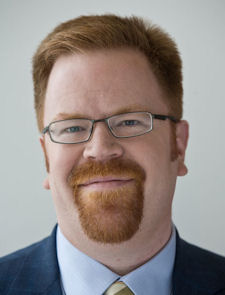
Mark Mullaly is president of Interthink Consulting Incorporated, an organizational development and change firm specializing in the creation of effective organizational project management solutions. Since 1990, it has worked with companies throughout North America to develop, enhance and implement effective project management tools, processes, structures and capabilities. Mark was most recently co-lead investigator of the Value of Project Management research project sponsored by PMI. You can read more of his writing at markmullaly.com.


In last month's column, we explored the necessity of an effective project initiation strategy to support the evaluation and estimation of projects before they are approved. Equally important is determining what projects should actually be initiated in the first place.
For too many of us, the means of identifying which projects will be conducted in a given year is all too similar to how many of them are estimated: in a meeting room far removed from the immediate needs and challenges of the organization, based upon a quickly cobbled-together wish list of ideas. While the majority of these ideas are well-meaning and intended to benefit the business, they can reflect immediate problems, opportunities and fads rather than focusing on the strategic needs of the organization.
There are a number of key barriers to effectively identifying and selecting project ideas:

|
The Decision Backlog: How to Manage UncertaintybyProjects often stall because decisions take time, not because work can’t progress. If we can make pending decisions visible, we can focus on getting them made—and that should reduce the waiting. |
Update on Contributing Content to ProjectManagement.combyAs part of our ongoing efforts to improve the contributor experience, we will be transitioning to new submission platforms. To help us prepare for this change and work through the current review queue, we will be temporarily pausing new content submissions. |

|
Missing: The Conversations We Never ScheduledbyIn recent years, we have become exceptionally good at replacing planned communication with technology. What we may not have noticed at the time was the gradual disappearance of the conversations we never planned to have. |
To address these issues, a more objective and transparent method of idea generation and evaluation is necessary. Organizations need an idea repository that can capture input from any individual, department or unit within the organization, and a framework for reviewing, evaluating and selecting those ideas which meet objectively defined criteria for project identification and prioritization.
While this approach runs the risk of appearing to borrow an analogy from the universally derided employee suggestion box, creating a mechanism that allows an idea to be submitted from anywhere within the organization harnesses the creativity and ingenuity of its greatest asset: its staff. The simple reality is that by the time the senior management team becomes aware of an issue, it is in all likelihood a very big problem, and therefore generally very expensive and very painful. Putting the tools to identify potential issues at the lowest level of the organization costs little, but can yield significant savings and returns.
The real cost of such a framework--if cost is the right expression--is the time it takes to evaluate the ideas as they are generated. An exponential increase in input creates a proportional increase in effort to review and select the ideas that should be explored further. It is necessary to adopt filters to efficiently weed out the half-baked suggestions, as well as eliminate redundancies and find opportunities that are suggested by combining several independent ideas into a single initiative.
The evaluation process should objectively review proposed initiatives against a standardized set of criteria, which in turn determines the relative prioritization of each idea. This immediately enables not only the management team, but also the rest of the organization, to apply the same criteria in answering two questions:
The result of this approach is not only transparency in how prioritization rules are applied by the organization, but also the development of a clearer understanding by all staff of what the priorities of the organization should be. The rules are easily comprehended, and their application is readily verified.
The impact for the management team is an even greater one. Once the ideas have been evaluated, prioritized and ranked relative to each other, the process of identifying projects becomes one of identifying available staff and budget amounts, and working down the list until one or both run out. Only priority projects are allowed to proceed, and politics and influence take a back seat to organizational need and the capacity for work.
Next Month: Balancing the project management role between doing, managing and leading.
Mark Mullaly is president of Interthink Consulting Incorporated, an organizational development and change firm specializing in the creation of effective organizational project management solutions. Mark is also the author of Interthink's Project Management Process Model (PM2), a maturity model that has been used to assess more than 550 companies worldwide.
|
"The reason why worry kills more people than hard work is that more people worry than work." - Robert Frost |


