Are You Delivering Tangible Results?
From the Voices on Project Management Blog
by Cameron McGaughy,
Lynda Bourne, Kevin Korterud, Peter Tarhanidis, Conrado Morlan, Jen Skrabak, Mario Trentim, Christian Bisson, Yasmina Khelifi, Sree Rao, Soma Bhattacharya, Emily Luijbregts, David Wakeman, Ramiro Rodrigues, Wanda Curlee, Lenka Pincot, cyndee miller, Jorge Martin Valdes Garciatorres, Marat Oyvetsky

Voices on Project Management offers insights, tips, advice and personal stories from project managers in different regions and industries. The goal is to get you thinking, and spark a discussion. So, if you read something that you agree with--or even disagree with--leave a comment.
View Posts By:
Cameron McGaughy
Lynda Bourne
Kevin Korterud
Peter Tarhanidis
Conrado Morlan
Jen Skrabak
Mario Trentim
Christian Bisson
Yasmina Khelifi
Sree Rao
Soma Bhattacharya
Emily Luijbregts
David Wakeman
Ramiro Rodrigues
Wanda Curlee
Lenka Pincot
cyndee miller
Jorge Martin Valdes Garciatorres
Marat Oyvetsky
Past Contributors:
Rex Holmlin
Vivek Prakash
Dan Goldfischer
Linda Agyapong
Jim De Piante
Siti Hajar Abdul Hamid
Bernadine Douglas
Michael Hatfield
Deanna Landers
Kelley Hunsberger
Taralyn Frasqueri-Molina
Alfonso Bucero Torres
Marian Haus
Shobhna Raghupathy
Peter Taylor
Joanna Newman
Saira Karim
Jess Tayel
Lung-Hung Chou
Rebecca Braglio
Roberto Toledo
Geoff Mattie
Recent Posts
Project 2030: Skills We Need to Cultivate Now
The Technical Program Manager: How to Stay Relevant in 2025
5 Things Your Operational Plan Should Do
5 New Project Guardrails for Adaptive Leaders
The Leader's Voice: Respect It, Protect It, and Use It Properly!
Categories
2020,
Adult Development,
Agile,
Agile,
Agile,
agile,
Agile management,
Agile management,
Agile;Community;Talent management,
Artificial Intelligence,
Backlog,
Basics,
Benefits Realization,
Best Practices,
BIM,
business acumen,
Business Analysis,
Business Analysis,
Business Case,
Business Intelligence,
Business Transformation,
Calculating Project Value,
Canvas,
Career Development,
Career Development,
Career Help,
Career Help,
Career Help,
Career Help,
Careers,
Careers,
Careers,
Careers,
Categories: Career Help,
Change Management,
Cloud Computing,
Collaboration,
Collaboration,
Collaboration,
Collaboration,
Collaboration,
Communication,
Communication,
Communication,
Communication,
Communications Management,
Complexity,
Conflict,
Conflict Management,
Consulting,
Continuous Learning,
Continuous Learning,
Continuous Learning,
Continuous Learning,
Continuous Learning,
Cost Management,
COVID-19,
Crises,
Crisis Management,
critical success factors,
Cultural Awareness,
Culture,
Decision Making,
Design Thinking,
Digital Project Management,
Digital Transformation,
digital transformation,
Digitalisation,
Disruption,
Diversity,
Diversity,
Documentation,
Earned Value Management,
Education,
EEWH,
Enterprise Risk Management,
Escalation management,
Estimating,
Ethics,
execution,
Expectations Management,
Facilitation,
feasibility studies,
Future,
Future of Project Management,
Generational PM,
Governance,
Government,
green building,
Growth,
Horizontal Development,
Human Aspects of PM,
Human Aspects of PM,
Human Aspects of PM,
Human Aspects of PM,
Human Aspects of PM,
Human Resources,
Inclusion,
Information Technology,
Innovation,
Intelligent Building,
International,
International Development,
Internet of Things (IOT),
Internet of Things (IoT),
IOT,
Knowledge,
Leadership,
Leadership,
Leadership,
Leadership,
Leadership,
lean construction,
LEED,
Lessons Learned,
Lessons learned;Retrospective,
Managing for Stakeholders,
managing stakeholders as clients,
Mentoring,
Mentoring,
Mentoring,
Mentoring,
Mentoring,
Mentorship,
Mentorship,
Methodology,
Metrics,
Micromanagement,
Microsoft Project PPM,
Motivation,
Negotiation,
Neuroscience,
neuroscience,
New Practitioners,
Nontraditional Project Management,
OKR,
Online Learning,
opportunity,
Organizational Culture,
Organizational Project Management,
Pandemic,
People management,
Planing,
planning,
PM & the Economy,
PM History,
PM Think About It,
PMBOK Guide,
PMI,
PMI EMEA 2018,
PMI EMEA Congress 2017,
PMI EMEA Congress 2019,
PMI Global Conference 2017,
PMI Global Conference 2018,
PMI Global Conference 2019,
PMI Global Congress 2010 - North America,
PMI Global Congress 2011 - EMEA,
PMI Global Congress 2011 - North America,
PMI Global Congress 2012 - EMEA,
PMI Global Congress 2012 - North America,
PMI Global Congress 2013 - EMEA,
PMI Global Congress 2013 - North America,
PMI Global Congress 2014 - EMEA,
PMI Global Congress 2014 - North America,
PMI GLobal Congress EMEA 2018,
PMI PMO Symposium 2012,
PMI PMO Symposium 2013,
PMI PMO Symposium 2015,
PMI PMO Symposium 2016,
PMI PMO Symposium 2017,
PMI PMO Symposium 2018,
PMI Pulse of the Profession,
PMO,
PMO,
pmo,
PMO Project Management Office,
portfolio,
Portfolio Management,
Portfolio Management,
portfolio management,
presentations,
Priorities,
Probability,
Problem Structuring Methods,
Process,
Procurement Management,
profess,
Program Management,
project,
Project Delivery,
Project Dependencies,
Project Failure,
project failure,
Project Leadership,
Project Management,
project management,
project management office,
Project Planning,
project planning,
Project Requirements,
Project Success,
Ransomware,
Reflections on the PM Life,
Remote,
Remote Work,
Requirements Management,
Research Conference 2010,
Researching the Value of Project Management,
Resiliency,
Risk Management,
Risk Management,
Risk management,
risk management,
ROI,
Roundtable,
Salary Survey,
Schedule Management,
Scheduling,
Scope Management,
Scrum,
search,
SelfLeadership,
SelfLeadership,
SelfLeadership,
SelfLeadership,
SelfLeadership,
Servant Leadership,
Sharing Knowledge,
Sharing Knowledge,
Sharing Knowledge,
Sharing Knowledge,
Sharing Knowledge,
Social Responsibility,
Sponsorship,
Stakeholder Management,
Stakeholder Management,
stakeholder management,
Strategy,
Strategy,
swot,
Talent Management,
Talent Management,
Talent Management,
Talent Management,
Talent Management,
Talent Management Leadership SelfLeadership Collaboration Communication,
Taskforce,
Teams,
Teams in Agile,
Teams in Agile,
teamwork,
Tech,
Technical Debt,
Technology,
TED Talks,
The Project Economy,
Timeline,
Tools,
tools,
Transformation,
transformation,
Transition,
Trust,
Value,
Vertical Development,
Volunteering,
Volunteering #Leadership #SelfLeadership,
Volunteering Sharing Knowledge Leadership SelfLeadership Collaboration Trust,
VUCA,
Women in PM,
Women in Project Management
Date
by Cyndee Miller
George Lucas was a project manager. And the Star Wars production team? A PMO.
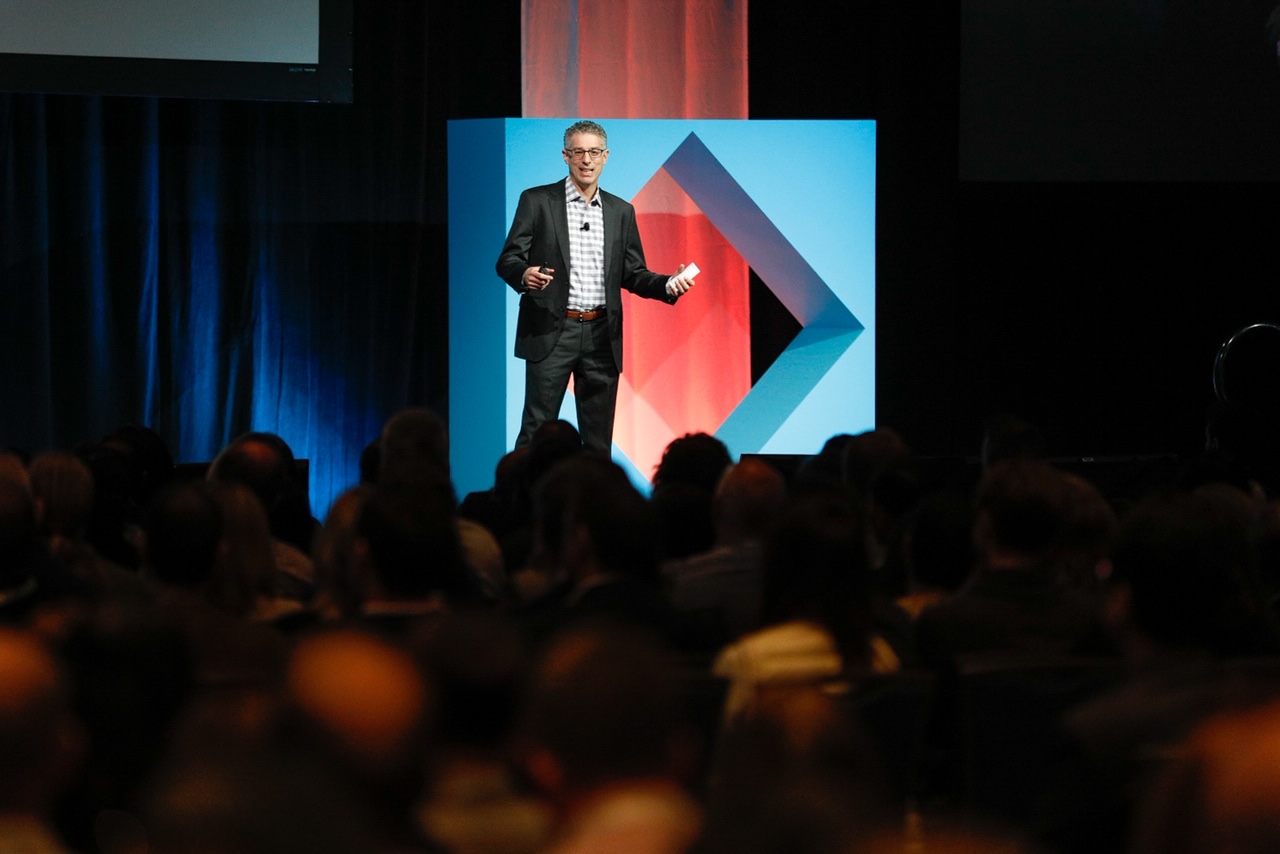
So declared Bob Safian, former editor of Fast Company, at the start of PMO Symposium. Sure, Star Wars may be a 1970s-era example from PMI’s list of 50 Most Influential Projects, but it also embodies a mentality that speaks to the future. We’re entering The Project Economy, where people have the skills to turn ideas into reality, and organizations deliver value through the successful completion of projects. Work is no longer about static job responsibilities, but a sequence of tasks.
Why the switch? “The Project Economy is about the need for speed, flexibility and learning,” Mr. Safian said.
It’s a way to try things out—and get things done. Young workers today aren’t looking to land the job they’ll have for the rest of their lives. They’re looking for the tasks and experiences that will grow their skills, he explained. And organizations are seeing the payoff, too.
It’s just part of the deal for Daniel Ek, CEO and co-founder of music streaming giant Spotify. He hires top leaders for a two-year “tour of duty.” At the end of that cycle, they may re-up for another tour—but only if the goal still makes sense. “It’s how he builds fluidity, adaptability and effectiveness into the company,” Mr. Safian explained.
With so much changing so fast, he encouraged project leaders to continually ask themselves three key questions:
1. Is this Day One? It’s a maxim that Jeff Bezos uses at Amazon. In other words, are you going into work every day as if it’s your first and you can start from scratch?
2. Is what you’re doing relevant to the next generation?
3. Are you embracing and encouraging a growth mindset?
“If you resolve all these questions, we can make tremendous change and make a tremendous impact on the world ahead of us,” Mr. Safian said.
Because whether they’re working on a construction project or a blockbuster film franchise, project leaders everywhere share a common purpose: delivery.
“In business there’s a lot of dialogue, a lot of talk about strategy, leadership, metrics and planning. But at the end of the day it’s about producing tangible results,” Mr. Safian said. “That’s what you all do. That’s the purpose of project management. That’s the purpose of business. And that’s the purpose of humanity—to get something tangible done.”
Let’s hear it: How is The Project Economy changing how you get something tangible done?
Posted
by
cyndee miller
on: November 04, 2019 09:56 PM |
Permalink
Comments (5)
Please login or join to subscribe to this item

Luis Branco
CEO| Business Insight, Consultores de Gestão, Ldª
Carcavelos, Lisboa, Portugal
Dear Cyndee
Interesting this reflection
Thanks for sharing these three questions:
1. Is this Day One? It's a maxim that Jeff Bezos uses at Amazon. In other words, are you going into work every day as if it's your first and you can start from scratch?
2. What are you doing relevant to the next generation?
3. Are you embracing and encouraging a growth mindset?
I particularly like the second and third questions

Drew Craig
Sr. Agile & Product Coach| Vanguard
Philadelphia, Pa, United States
We are certainly in a time when our professional development is non-stop. We continue learning, developing, adoption, and applying new skills and experiences as a way to hone our craft for the next adventure.

Suneel Kumar Nadella
Director (Self Employed)| Manasai Services Pvt Ltd (Self Employed)
Solihull, West Midlands, United Kingdom
Dear Cyndee, Good reflection and overall summary. I believe there is another aspect to ask every day is "What is one unique thing I am going to do today to enable a "better tomorrow". If this is embraced and adopted rigorously, then you may not be embracing too many projects at short notice(continuous improvement or learning). I have seen several organisations adopting the above three approaches but in unstructured manner.

Marcus Udokang
Project Manager| Aivaz Consulting
Calgary, Alberta, Canada
Wonderful summary. Continuous learning is vital. Many thanks for a great article.
Please Login/Register to leave a comment.
|
"Life is a great big canvas; throw all the paint you can at it."
- Danny Kaye
|




