Seek Better Questions, Not Answers
From the Voices on Project Management Blog
by Cameron McGaughy,
Lynda Bourne, Kevin Korterud, Peter Tarhanidis, Conrado Morlan, Jen Skrabak, Mario Trentim, Christian Bisson, Yasmina Khelifi, Sree Rao, Soma Bhattacharya, Emily Luijbregts, David Wakeman, Ramiro Rodrigues, Wanda Curlee, Lenka Pincot, cyndee miller, Jorge Martin Valdes Garciatorres, Marat Oyvetsky

Voices on Project Management offers insights, tips, advice and personal stories from project managers in different regions and industries. The goal is to get you thinking, and spark a discussion. So, if you read something that you agree with--or even disagree with--leave a comment.
View Posts By:
Cameron McGaughy
Lynda Bourne
Kevin Korterud
Peter Tarhanidis
Conrado Morlan
Jen Skrabak
Mario Trentim
Christian Bisson
Yasmina Khelifi
Sree Rao
Soma Bhattacharya
Emily Luijbregts
David Wakeman
Ramiro Rodrigues
Wanda Curlee
Lenka Pincot
cyndee miller
Jorge Martin Valdes Garciatorres
Marat Oyvetsky
Past Contributors:
Rex Holmlin
Vivek Prakash
Dan Goldfischer
Linda Agyapong
Jim De Piante
Siti Hajar Abdul Hamid
Bernadine Douglas
Michael Hatfield
Deanna Landers
Kelley Hunsberger
Taralyn Frasqueri-Molina
Alfonso Bucero Torres
Marian Haus
Shobhna Raghupathy
Peter Taylor
Joanna Newman
Saira Karim
Jess Tayel
Lung-Hung Chou
Rebecca Braglio
Roberto Toledo
Geoff Mattie
Recent Posts
Project 2030: Skills We Need to Cultivate Now
The Technical Program Manager: How to Stay Relevant in 2025
5 Things Your Operational Plan Should Do
5 New Project Guardrails for Adaptive Leaders
The Leader's Voice: Respect It, Protect It, and Use It Properly!
Categories
2020,
Adult Development,
Agile,
Agile,
Agile,
agile,
Agile management,
Agile management,
Agile;Community;Talent management,
Artificial Intelligence,
Backlog,
Basics,
Benefits Realization,
Best Practices,
BIM,
business acumen,
Business Analysis,
Business Analysis,
Business Case,
Business Intelligence,
Business Transformation,
Calculating Project Value,
Canvas,
Career Development,
Career Development,
Career Help,
Career Help,
Career Help,
Career Help,
Careers,
Careers,
Careers,
Careers,
Categories: Career Help,
Change Management,
Cloud Computing,
Collaboration,
Collaboration,
Collaboration,
Collaboration,
Collaboration,
Communication,
Communication,
Communication,
Communication,
Communications Management,
Complexity,
Conflict,
Conflict Management,
Consulting,
Continuous Learning,
Continuous Learning,
Continuous Learning,
Continuous Learning,
Continuous Learning,
Cost Management,
COVID-19,
Crises,
Crisis Management,
critical success factors,
Cultural Awareness,
Culture,
Decision Making,
Design Thinking,
Digital Project Management,
Digital Transformation,
digital transformation,
Digitalisation,
Disruption,
Diversity,
Diversity,
Documentation,
Earned Value Management,
Education,
EEWH,
Enterprise Risk Management,
Escalation management,
Estimating,
Ethics,
execution,
Expectations Management,
Facilitation,
feasibility studies,
Future,
Future of Project Management,
Generational PM,
Governance,
Government,
green building,
Growth,
Horizontal Development,
Human Aspects of PM,
Human Aspects of PM,
Human Aspects of PM,
Human Aspects of PM,
Human Aspects of PM,
Human Resources,
Inclusion,
Information Technology,
Innovation,
Intelligent Building,
International,
International Development,
Internet of Things (IOT),
Internet of Things (IoT),
IOT,
Knowledge,
Leadership,
Leadership,
Leadership,
Leadership,
Leadership,
lean construction,
LEED,
Lessons Learned,
Lessons learned;Retrospective,
Managing for Stakeholders,
managing stakeholders as clients,
Mentoring,
Mentoring,
Mentoring,
Mentoring,
Mentoring,
Mentorship,
Mentorship,
Methodology,
Metrics,
Micromanagement,
Microsoft Project PPM,
Motivation,
Negotiation,
Neuroscience,
neuroscience,
New Practitioners,
Nontraditional Project Management,
OKR,
Online Learning,
opportunity,
Organizational Culture,
Organizational Project Management,
Pandemic,
People management,
Planing,
planning,
PM & the Economy,
PM History,
PM Think About It,
PMBOK Guide,
PMI,
PMI EMEA 2018,
PMI EMEA Congress 2017,
PMI EMEA Congress 2019,
PMI Global Conference 2017,
PMI Global Conference 2018,
PMI Global Conference 2019,
PMI Global Congress 2010 - North America,
PMI Global Congress 2011 - EMEA,
PMI Global Congress 2011 - North America,
PMI Global Congress 2012 - EMEA,
PMI Global Congress 2012 - North America,
PMI Global Congress 2013 - EMEA,
PMI Global Congress 2013 - North America,
PMI Global Congress 2014 - EMEA,
PMI Global Congress 2014 - North America,
PMI GLobal Congress EMEA 2018,
PMI PMO Symposium 2012,
PMI PMO Symposium 2013,
PMI PMO Symposium 2015,
PMI PMO Symposium 2016,
PMI PMO Symposium 2017,
PMI PMO Symposium 2018,
PMI Pulse of the Profession,
PMO,
PMO,
pmo,
PMO Project Management Office,
portfolio,
Portfolio Management,
Portfolio Management,
portfolio management,
presentations,
Priorities,
Probability,
Problem Structuring Methods,
Process,
Procurement Management,
profess,
Program Management,
project,
Project Delivery,
Project Dependencies,
Project Failure,
project failure,
Project Leadership,
Project Management,
project management,
project management office,
Project Planning,
project planning,
Project Requirements,
Project Success,
Ransomware,
Reflections on the PM Life,
Remote,
Remote Work,
Requirements Management,
Research Conference 2010,
Researching the Value of Project Management,
Resiliency,
Risk Management,
Risk Management,
Risk management,
risk management,
ROI,
Roundtable,
Salary Survey,
Schedule Management,
Scheduling,
Scope Management,
Scrum,
search,
SelfLeadership,
SelfLeadership,
SelfLeadership,
SelfLeadership,
SelfLeadership,
Servant Leadership,
Sharing Knowledge,
Sharing Knowledge,
Sharing Knowledge,
Sharing Knowledge,
Sharing Knowledge,
Social Responsibility,
Sponsorship,
Stakeholder Management,
Stakeholder Management,
stakeholder management,
Strategy,
Strategy,
swot,
Talent Management,
Talent Management,
Talent Management,
Talent Management,
Talent Management,
Talent Management Leadership SelfLeadership Collaboration Communication,
Taskforce,
Teams,
Teams in Agile,
Teams in Agile,
teamwork,
Tech,
Technical Debt,
Technology,
TED Talks,
The Project Economy,
Timeline,
Tools,
tools,
Transformation,
transformation,
Transition,
Trust,
Value,
Vertical Development,
Volunteering,
Volunteering #Leadership #SelfLeadership,
Volunteering Sharing Knowledge Leadership SelfLeadership Collaboration Trust,
VUCA,
Women in PM,
Women in Project Management
Date
by Cyndee Miller
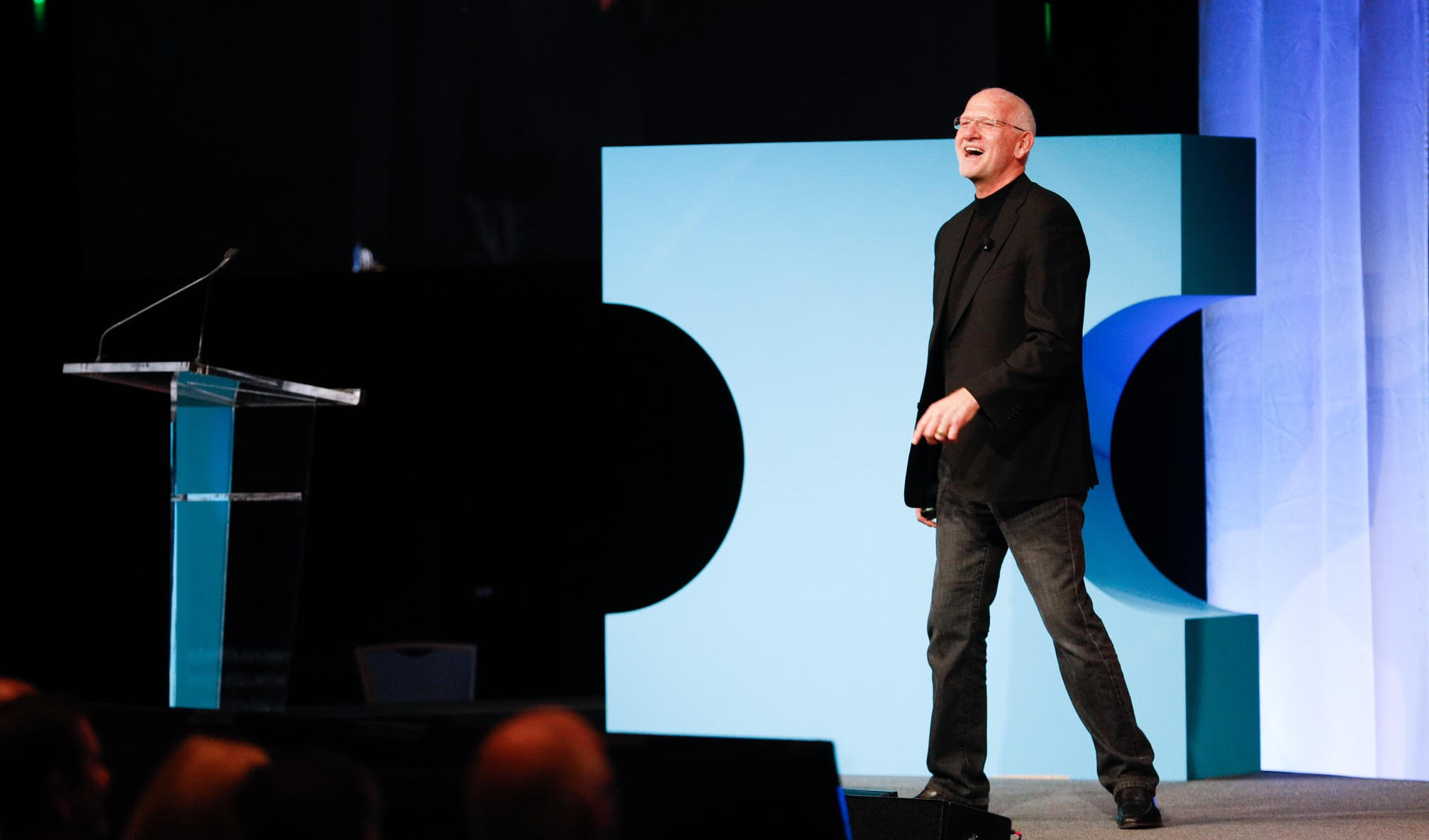
It’s not often I’m told to act like a 4-year-old—and by the executive director of the MIT Leadership Center, nonetheless.
But stick with me, there’s actually a sound business case here. Anyone who has ever been around a 4-year-old knows they ask lots of questions. And apparently, it’s a trait they share with CEOs at some of the world’s most innovative companies, from Pixar to Salesforce, explained Hal Gregersen.
“Questioners are truth seekers. They can’t afford errors. They have to get to the truth of the matter—and often it’s the tough fearless question that gets us there,” he said at PMO Symposium.
To be clear, we should strive to be innovative 4-year-olds as adults—and that means not only asking lots of questions, but better questions.
“The way we build better systems, better organizations and a better world is by asking the better question,” he said.
So how do you do it? Default to ask, not tell, Mr. Gregersen said, whether it’s an individual conversation, a team discussion or a customer interaction.
And you better make them good questions. That means devoting time specifically to coming up with questions—just as you would for brainstorming answers. Sit down with your team. Set a timer. And then write down as many questions about the problem as possible.
Now the whole point of asking questions is to take the time to learn, not act. So listen up and flex the power of the pause: Wait three to four seconds after someone stops talking—that’s typically when you’ll start to get the good stuff.
“In the hectic world of projects and leadership, we sometimes don’t stop enough,” Mr. Gregersen said. “But that’s how we build the trust to get the data in order to not get blindsided.”
It all boils down to one key question: “What are you doing to actively figure out what you don’t know you don’t know before it’s too late?”
Listening was also the lesson at the closing session of PMO Symposium. During an interactive musical performance by The Music Paradigm, maestro Roger Nierenberg urged the audience to tune into the dynamics of the orchestra—and observe the behaviors that allow the ensemble to succeed as a team.
“Musicians have the ability to play and listen at the same time,” he said. “It makes us alert and capable. It makes us very agile.”
And that goes for leaders most of all.
“As a conductor, when I was clear and dictatorial, I thought I was being kind by telling the orchestra exactly what to do. But it killed the listening,” Mr. Nierenberg said. “And that’s a precious thing.”
And that’s an official wrap for me. See you next year at PMO Symposium, 8-11 November 2020 in Orlando, Florida, USA.
I’ll be back on the event beat. As a reporter, I’ve spent years honing my questioning (and listening) skills, but I’m always looking for new ideas. What’s your top tip for asking the right questions?
Posted
by
cyndee miller
on: November 07, 2019 02:18 PM |
Permalink
Comments (9)
Please login or join to subscribe to this item

Luis Branco
CEO| Business Insight, Consultores de Gestão, Ldª
Carcavelos, Lisboa, Portugal
Dear Cyndee
Very interesting this reflection
Thanks for sharing
Excellent question:"What are you doing to actively figure out what you don't know you don't know before it's too late?"
As important as asking is listening carefully (called empathic listening)
Some of us focus on what we are going to answer (I think the vast majority of people) ... the big challenge is listening, just listening and understanding

Drew Craig
Sr. Agile & Product Coach| Vanguard
Philadelphia, Pa, United States
Interesting timing. I literally was having a similar type of conversation yesterday afternoon. It was centered around not just listening, thinking there is an understanding, then providing a solution, BUT rather ask additional questions to get at the core rationale of where the ask is coming from. There could be opportunity to take them down the same direction, though, a slighlty different pathway and provide a more useful and sustainable solution.
Anyway, good stuff. Thanks, Cyndee.
Hi Cyndee, indeed, the underlying reason of getting questions across to is to learn from people diligently.
Agree with Luis's suggestion of empathic listening to be open-minded in receiving answers or feedback and truly build mutual understanding.
We need to be clear in explaining the context of the question relating to listeners' background, as well as be objective in shaping the words and projecting the tone of question.

LORI WILSON
RETIRED - Technical Project Manager| RETIRED - LifePoint Health
Clarkston, Wa, United States
Hi Cyndee: I was privileged to be in the audience for this meeting at the recent PMO Symposium 2019 in Denver, Colorado and I really appreciated not only the presentation, but the time where we broke out into groups of 2 and shared a challenge we currently face with the other person. After sharing the challenge we wrote down at least 15 questions - this was an eye opening exercise and I left the session with some good ideas to bring back to my team. This meeting, along with the TED talks meetings were definite highlights for me. I have also been trained in motivational interviewing, which is a technique born out of behavioral health where you ask questions in such a way that it makes the other person think more deeply, but also in a way that is inspiring or motivating. I wish this was something we could incorporate in project management training because it is so valuable!
"Musicians have the ability to play and listen at the same time,” he said."
Cyndee - as a church choir member, you just reminded me of that unique ability we have to play/sing and listen at the same time.
This quality should help a lot on the project management field as well. As we lead with passion, we need to also pause and listen with passion, the concerns and great contributions our stakeholders bring to the table.
Thanks for sharing!
Interesting reflection Cyndee!...Thanks for sharing...

Omer Ombadi
Project manager /PMP| Advanced Engineering Works (AEW)/ Khartoum /Sudan.
Kartoum, Khartoum, Sudan
Very interesting article, thanks for sharing.
Please Login/Register to leave a comment.
|
"Life is but a walking shadow,
a poor player that struts and
frets his hour upon the stage
and then is heard of no more.
It is a tale told by an idiot,
full of sound and fury,
signifying nothing."
- William Shakespeare
|




