How can we evaluate risks more objectively?
From the Easy in theory, difficult in practice Blog
by Kiron Bondale

My musings on project management, project portfolio management and change management.
I'm a firm believer that a pragmatic approach to organizational change that addresses process & technology, but primarily, people will maximize chances for success.
This blog contains articles which I've previously written and published as well as new content.
Recent Posts
Leading Through Crisis Means Leading Through Context
"It's the end. But the moment has been prepared for." - retirement lessons from the Doctor
Just because they are non-critical, doesn't mean they are not risky!
Just because they are non-critical, doesn't mean they are not risky!
How will YOU avoid these AI-related cognitive biases?
Categories
Agile,
Artificial Intelligence,
Career Development,
Change Management,
Communications Management,
Decision Making,
Governance,
Hiring,
Kanban,
Lessons Learned,
Personal Development,
PMO,
Portfolio Management,
Project Management,
Resource Management,
Risk Management,
Risk Management,
Schedule Management,
Scheduling,
Tools
Date
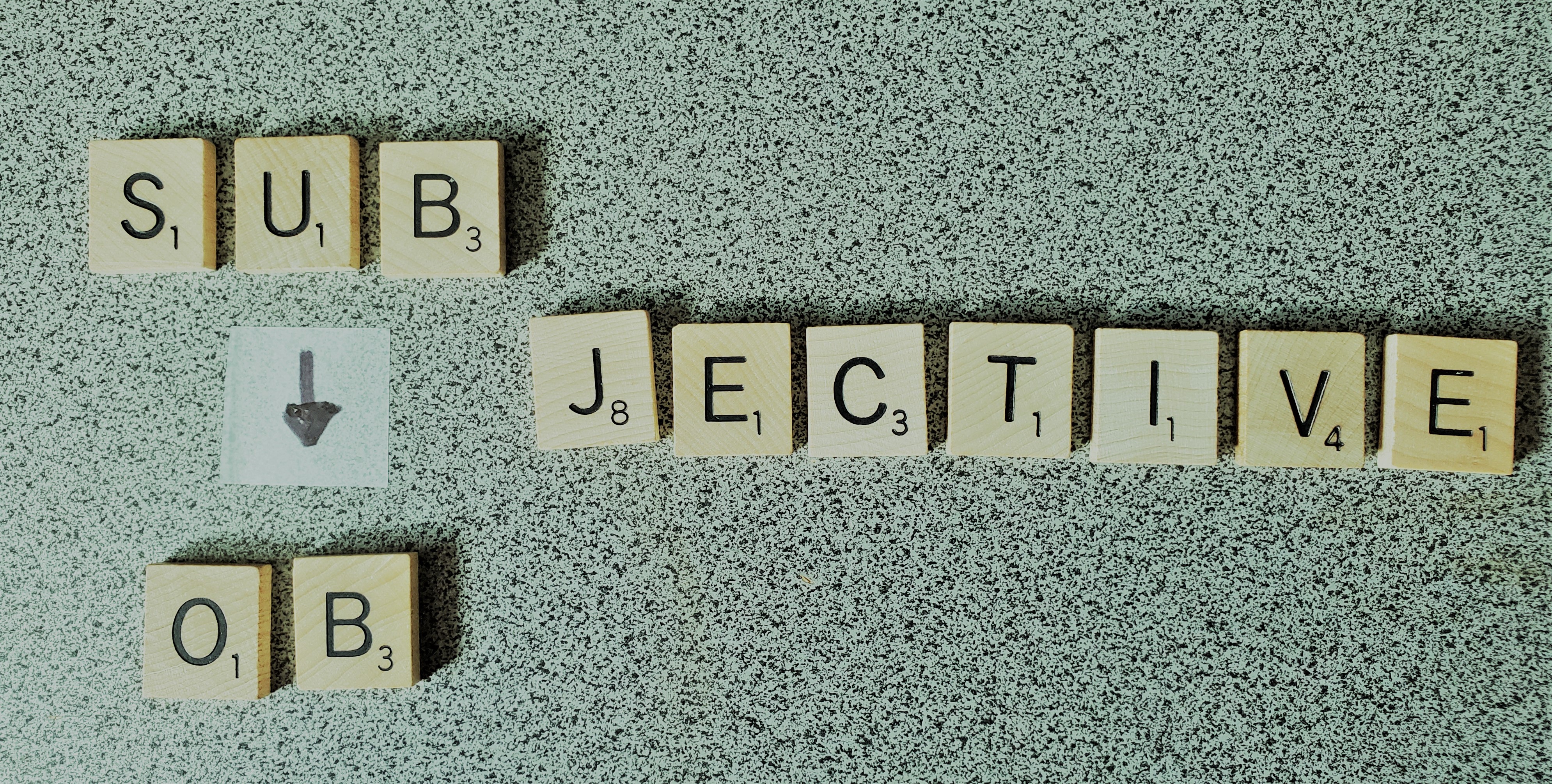 Objective: Expressing or dealing with facts or conditions as perceived without distortion by personal feelings, prejudices, or interpretations (Merriam-Webster)
I responded to a discussion thread on ProjectManagement.com this week about categorizing risks and after doing so, I spent some time thinking about the impacts of bias on how we evaluate risks.
While subjectivity affects all aspects of delivery, when we evaluate risks, these impacts can get compounded through the combination of the intrinsic uncertainty of risks with our own biases. And if we think about a department or enterprise portfolio with each team perceiving risks through their own biased lenses, there will be very little precision to support a portfolio-level evaluation of risk.
Tailoring risk management to fit the context of a given project means that we may not always capture the same information, but at a bare minimum, we usually have a risk description, impact and probability.
How could we become more objective in stating or evaluating these?
There is no need for us to become template zombies by imposing "if-then" or other rigid format to how risks are described. What is important is to clearly articulate the uncertain event as well as the impact to the project. We should try to be as specific as possible with regards to the event and, ideally, time box it. This will help us both in getting the attention needed from risk owners, designing effective risk responses, and being efficient about use of buffers and contingency reserves. Whereas "If we lose a team member, our timelines will be impacted" is not particularly effective, "If we lose a business analyst during the first month of the project, it will delay the project on a day-for-day basis" provides greater clarity and focus.
While we will usually restrict quantitative analysis to higher criticality risks, if we provide thresholds for assigning qualitative impact values (e.g. high, medium, low), we can help teams to get more objective. For a frugal stakeholder, a $1,000 cost overrun might seem high. But if we have threshold guidance which states that negative cost variances under $5,000 and which are under 5% of a project's total budget should be considered to be low impact, they will be less likely to let their own biases skew their evaluations.
If the project in question is very similar to others we have done in the past, risk evaluators could ask the question "How frequently was this risk realized in the past?". But in many cases we don't have the benefit of good historical data to substantiate our evaluation and the current project may be sufficiently different to make it impossible for us to look in the rear view mirror. The only way in which we could get more objective is to involve a sufficiently diverse group of stakeholders utilizing Delphi or similar methods to reduce the impacts of external bias.
Increasing the objectivity of how we analyze risks could help us to become more precise, which might then help us over time to improve the effectiveness of our risk management practices.
Posted on: May 17, 2020 07:00 AM |
Permalink
Comments (11)
Please login or join to subscribe to this item

Alok Priyadarshi
Project Manager| Tata Consulting Engineers Limited
Jamshedpur, Jharkhand, India
Very true. Dealing with situation based on real fact without alternation is really important. Thanks for sharing this perspective !!

Alexandre Costa
Scrum Master| Integer Consulting - Pictet technologies
Loures, Portugal
Good Point Kiron.
Sometimes involving someone that isn't in anyway connected with the business can also open our perspectives, because his thinking is out of the box and can bring to our attention something that no one never had mentioned before.
Alexandre
Thanks Alok, Alexandre & Eduin!

Milena Ilieva
Program Manager Global accounts| VMWare
Vienna, Austria
Thank you, Kiron.
Agree with you that involving more stakeholders in risk assessment can lead to more objectivity.

Drew Craig
Sr. Agile & Product Coach| Vanguard
Philadelphia, Pa, United States
Great points! Just recognizing ones (or ours) subjectiveness is a great start shifting to a more objective perspective.
Couldn't agree more Kiron! To add, the risk mitigation plan should also be objective with clear and measurable steps that address the original risk statement and impact. Sometimes, a risk could be so severe it could bring the project to a complete halt.

Engdaw Admasu
Construction Project Manager| Water Works Corporation (WWC)
Kombolcha Town, Ethiopia
Thanks, I agree with your idea. The subjective description of risk evaluation is qualitative in nature, and the objective evaluation of risks is just a quantitative one and more over it leads to better solutions. As to me, I feel such things when I read your posts.
Sincerely
Engdaw A.
I love the transformation from subjective to objective.
Thanks for the article. I'm not sure if we can ever be 100% objective when managing risk on a project. Managing project risks always comes down to how well or not the project manager communicates risk within the organization.
Did the PM up front communicate the worst case scenario for risk? Communicate what the worst is that could happen if we take on the project? Or did the PM paint a rosy picture of the project that is not reality?
If it is clear to the organization up front what the project risk is, risk management during the project becomes much more easy to handle, however, it will never be objective.
Please Login/Register to leave a comment.
|
"The man who does not read books has no advantage over the man that can not read them."
- Mark Twain
|







