Race to the Red Planet—And Why Mars Matters
From the Voices on Project Management Blog
by Cameron McGaughy,
Lynda Bourne, Kevin Korterud, Conrado Morlan, Peter Tarhanidis, Mario Trentim, Jen Skrabak, David Wakeman, Wanda Curlee, Christian Bisson, Ramiro Rodrigues, Soma Bhattacharya, Emily Luijbregts, Sree Rao, Yasmina Khelifi, Marat Oyvetsky, Lenka Pincot, Jorge Martin Valdes Garciatorres, cyndee miller

Voices on Project Management offers insights, tips, advice and personal stories from project managers in different regions and industries. The goal is to get you thinking, and spark a discussion. So, if you read something that you agree with--or even disagree with--leave a comment.
View Posts By:
Cameron McGaughy
Lynda Bourne
Kevin Korterud
Conrado Morlan
Peter Tarhanidis
Mario Trentim
Jen Skrabak
David Wakeman
Wanda Curlee
Christian Bisson
Ramiro Rodrigues
Soma Bhattacharya
Emily Luijbregts
Sree Rao
Yasmina Khelifi
Marat Oyvetsky
Lenka Pincot
Jorge Martin Valdes Garciatorres
cyndee miller
Past Contributors:
Rex Holmlin
Vivek Prakash
Dan Goldfischer
Linda Agyapong
Jim De Piante
Siti Hajar Abdul Hamid
Bernadine Douglas
Michael Hatfield
Deanna Landers
Kelley Hunsberger
Taralyn Frasqueri-Molina
Alfonso Bucero Torres
Marian Haus
Shobhna Raghupathy
Peter Taylor
Joanna Newman
Saira Karim
Jess Tayel
Lung-Hung Chou
Rebecca Braglio
Roberto Toledo
Geoff Mattie
Recent Posts
Project 2030: Skills We Need to Cultivate Now
The Technical Program Manager: How to Stay Relevant in 2025
5 Things Your Operational Plan Should Do
5 New Project Guardrails for Adaptive Leaders
The Leader's Voice: Respect It, Protect It, and Use It Properly!
Categories
2020,
Adult Development,
Agile,
Agile,
Agile,
agile,
Agile management,
Agile management,
Agile;Community;Talent management,
Artificial Intelligence,
Backlog,
Basics,
Benefits Realization,
Best Practices,
BIM,
business acumen,
Business Analysis,
Business Analysis,
Business Case,
Business Intelligence,
Business Transformation,
Calculating Project Value,
Canvas,
Career Development,
Career Development,
Career Help,
Career Help,
Career Help,
Career Help,
Careers,
Careers,
Careers,
Careers,
Categories: Career Help,
Change Management,
Cloud Computing,
Collaboration,
Collaboration,
Collaboration,
Collaboration,
Collaboration,
Communication,
Communication,
Communication,
Communication,
Communications Management,
Complexity,
Conflict,
Conflict Management,
Consulting,
Continuous Learning,
Continuous Learning,
Continuous Learning,
Continuous Learning,
Continuous Learning,
Cost Management,
COVID-19,
Crises,
Crisis Management,
critical success factors,
Cultural Awareness,
Culture,
Decision Making,
Design Thinking,
Digital Project Management,
Digital Transformation,
digital transformation,
Digitalisation,
Disruption,
Diversity,
Diversity,
Documentation,
Earned Value Management,
Education,
EEWH,
Enterprise Risk Management,
Escalation management,
Estimating,
Ethics,
execution,
Expectations Management,
Facilitation,
feasibility studies,
Future,
Future of Project Management,
Generational PM,
Governance,
Government,
green building,
Growth,
Horizontal Development,
Human Aspects of PM,
Human Aspects of PM,
Human Aspects of PM,
Human Aspects of PM,
Human Aspects of PM,
Human Resources,
Inclusion,
Information Technology,
Innovation,
Intelligent Building,
International,
International Development,
Internet of Things (IOT),
Internet of Things (IoT),
IOT,
Knowledge,
Leadership,
Leadership,
Leadership,
Leadership,
Leadership,
lean construction,
LEED,
Lessons Learned,
Lessons learned;Retrospective,
Managing for Stakeholders,
managing stakeholders as clients,
Mentoring,
Mentoring,
Mentoring,
Mentoring,
Mentoring,
Mentorship,
Mentorship,
Methodology,
Metrics,
Micromanagement,
Microsoft Project PPM,
Motivation,
Negotiation,
Neuroscience,
neuroscience,
New Practitioners,
Nontraditional Project Management,
OKR,
Online Learning,
opportunity,
Organizational Culture,
Organizational Project Management,
Pandemic,
People management,
Planing,
planning,
PM & the Economy,
PM History,
PM Think About It,
PMBOK Guide,
PMI,
PMI EMEA 2018,
PMI EMEA Congress 2017,
PMI EMEA Congress 2019,
PMI Global Conference 2017,
PMI Global Conference 2018,
PMI Global Conference 2019,
PMI Global Congress 2010 - North America,
PMI Global Congress 2011 - EMEA,
PMI Global Congress 2011 - North America,
PMI Global Congress 2012 - EMEA,
PMI Global Congress 2012 - North America,
PMI Global Congress 2013 - EMEA,
PMI Global Congress 2013 - North America,
PMI Global Congress 2014 - EMEA,
PMI Global Congress 2014 - North America,
PMI GLobal Congress EMEA 2018,
PMI PMO Symposium 2012,
PMI PMO Symposium 2013,
PMI PMO Symposium 2015,
PMI PMO Symposium 2016,
PMI PMO Symposium 2017,
PMI PMO Symposium 2018,
PMI Pulse of the Profession,
PMO,
PMO,
pmo,
PMO Project Management Office,
portfolio,
Portfolio Management,
Portfolio Management,
portfolio management,
presentations,
Priorities,
Probability,
Problem Structuring Methods,
Process,
Procurement Management,
profess,
Program Management,
project,
Project Delivery,
Project Dependencies,
Project Failure,
project failure,
Project Leadership,
Project Management,
project management,
project management office,
Project Planning,
project planning,
Project Requirements,
Project Success,
Ransomware,
Reflections on the PM Life,
Remote,
Remote Work,
Requirements Management,
Research Conference 2010,
Researching the Value of Project Management,
Resiliency,
Risk Management,
Risk Management,
Risk management,
risk management,
ROI,
Roundtable,
Salary Survey,
Schedule Management,
Scheduling,
Scope Management,
Scrum,
search,
SelfLeadership,
SelfLeadership,
SelfLeadership,
SelfLeadership,
SelfLeadership,
Servant Leadership,
Sharing Knowledge,
Sharing Knowledge,
Sharing Knowledge,
Sharing Knowledge,
Sharing Knowledge,
Social Responsibility,
Sponsorship,
Stakeholder Management,
Stakeholder Management,
stakeholder management,
Strategy,
Strategy,
swot,
Talent Management,
Talent Management,
Talent Management,
Talent Management,
Talent Management,
Talent Management Leadership SelfLeadership Collaboration Communication,
Taskforce,
Teams,
Teams in Agile,
Teams in Agile,
teamwork,
Tech,
Technical Debt,
Technology,
TED Talks,
The Project Economy,
Timeline,
Tools,
tools,
Transformation,
transformation,
Transition,
Trust,
Value,
Vertical Development,
Volunteering,
Volunteering #Leadership #SelfLeadership,
Volunteering Sharing Knowledge Leadership SelfLeadership Collaboration Trust,
VUCA,
Women in PM,
Women in Project Management
Date
by Cyndee Miller
Like most kids, I was obsessed with space. The thought of wandering the solar system blew my wee little mind. That sense of sheer wonderment hasn’t diminished—I’m a space geek for life. And there’s certainly been plenty to pique our interest. Look no further than PMI’s 2020 top 10 list for Most Influential Projects in space. And now there’s a new space race among the earthlings. Last July, Earth and Mars aligned at their closest points in two years—and space agencies around the world jumped at the chance to explore the Red Planet. Following successful launches last July, spacecrafts from China, the United Arab Emirates and the United States are all now officially checking out Earth’s closest neighbor. Another mission, ExoMars by the European Space Agency and Russia’s Roscosmos, aimed to join the action but ran into delays and must now wait for the next opportune planetary alignment in 2022.
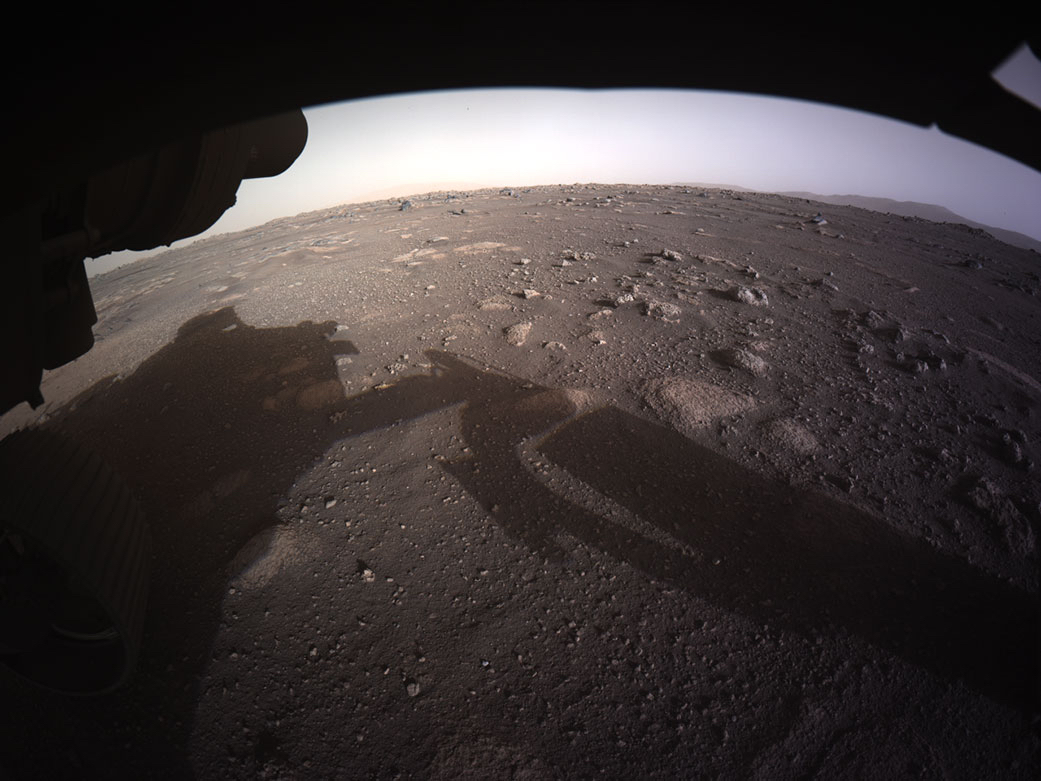
Following seven or so months of travel, the UAE’s first interplanetary spacecraft, Hope, and China’s Tianwen-1 were already exploring the Marian orbit by mid-February—and sending back amazing pictures of volcanoes and other features. And so it was that last Thursday I found myself cranking Bowie’s Life on Mars? and watching NASA’s Perseverance make its amazing touchdown. Entry, descent and landing is often dubbed the “seven minutes of terror” because of the precision required—and Perseverance was headed to “the most challenging Martian terrain ever targeted,” according to NASA. But the rover landed—and now even has its own Twitter feed. (Hobbies: Photography, collecting rocks, off-roading.) China’s space agency plans to place its lander and rover later this year.
Some might question the wisdom of investing all these dollars, dirham, euros and yuan into such an esoteric pursuit, especially in the middle of a pandemic and one of the worst economic meltdowns of the past century. NASA alone estimates it spent roughly US$2.4 billion to build and launch Perseverance.
It’s a fair question, although awfully short-sighted. And it also overlooks all the benefits space exploration can bring to life here on good old Earth.
NASA estimates more than 1,600 innovations grew out of the Apollo space program—changing the trajectory on everything from mattresses to mobile phone cameras. (There’s a reason it came in at number 3 on PMI’s list of Most Influential Projects of the past 50 years.) And the Mars program is no slouch, either. Just one example: Autonomous navigation on the planet requires complex neural networks and deep learning algorithms—tech the space agency says can also be used here on Earth in cars, drones and toys.
And it doesn’t stop there. Along with its trip to Mars, NASA is ready to embark on the first foray into extraterrestrial construction, joining forces with U.S. construction tech firm Icon, U.S. startup SEArch+ and Danish architecture hotshots Bjarke Ingels Group (BIG). The goal for Project Olympus is to develop a space-based construction system for creating small cities—complete with landing pads, habitats and roads—on the moon and eventually Mars. But all that pioneering of new frontiers “materially, technologically and environmentally” may also help advance construction on Earth, too, said Bjarke Ingels, BIG founder and creative director. “The answers to our challenges on Earth very well might be found on the moon.”
At the same time, we have a slew of private companies— SpaceX, Blue Origin, Virgin Galactic—plotting out the business of space tourism. Now that coffeemaker Lavazza and the Italian Space Agency figured out how to make zero-gravity espresso, I’m good to go.
Do I expect to be packing my bags for an interplanetary trip anytime soon? Nah. For right now, though, the Mars missions spark new ways of thinking—a much-needed dose of joy and astonishment to an exhausted humankind. And that’s some impressive ROI.
What do you think of the Mars projects? Can they help teams here on Earth deliver more innovation?
Posted
by
cyndee miller
on: February 22, 2021 12:06 PM |
Permalink
Comments (3)
Please login or join to subscribe to this item
Thanks for sharing, very interesting! definitely yes, Mars Projects could result on innovation on Earth; as new technology, methods and process.
When i heard about Project management years ago i did not realized how important this would be in my life, definitely an important goal in my personal and professional development path. Thanks PMI.

Manuel Ancizu
Program Manager Wind Energy| Siemens Gamesa Renewable Energy
Pamplona, Navarra, Spain
really a team effort around a project; it's in these special big projects where it's really visible the value added by project management, standardization and risk management.
Please Login/Register to leave a comment.
|
"I'm not afraid to die, I just don't want to be there when it happens."
- Woody Allen
|




