"What certification should I get after the PMP?"
From the Easy in theory, difficult in practice Blog
by Kiron Bondale

My musings on project management, project portfolio management and change management.
I'm a firm believer that a pragmatic approach to organizational change that addresses process & technology, but primarily, people will maximize chances for success.
This blog contains articles which I've previously written and published as well as new content.
Recent Posts
Leading Through Crisis Means Leading Through Context
"It's the end. But the moment has been prepared for." - retirement lessons from the Doctor
Just because they are non-critical, doesn't mean they are not risky!
Just because they are non-critical, doesn't mean they are not risky!
How will YOU avoid these AI-related cognitive biases?
Categories
Agile,
Artificial Intelligence,
Career Development,
Change Management,
Communications Management,
Decision Making,
Governance,
Hiring,
Kanban,
Lessons Learned,
Personal Development,
PMO,
Portfolio Management,
Project Management,
Resource Management,
Risk Management,
Risk Management,
Schedule Management,
Scheduling,
Tools
Date
 The reason the title of this post is in quotes is that this is a frequently asked question in both the projectmanagement.com discussion groups and PMI's LinkedIn Project, Program, and Portfolio Management group. I, along with a number of other contributors, have seen and responded to it sufficient times that I felt it would be worth sharing my thoughts with my readership.
The PMP credential is the project management designation which most recruiters and hiring managers are aware of. Savvy folks will know that it provides no guarantee of competence but does at least demonstrate that a practitioner has some basic understanding of nomenclature, tools and techniques.
While possessing it was a differentiator in the first decade or so after it was introduced, at this point it is less so, but in specific industries and geographic regions, not having it might result in a job application being rejected by the initial filtering process.
But once a practitioner has attained their PMP credential, what next? Professional development should be a life (or at least career) long pursuit, and certifications provide tangible evidence of an individual investing in their development, so it would seem to be a reasonable question.
Before asking this question, the individual should have identified a specific career or development goal. In some cases, this might be simple such as if a particular credential is required as part of the company's prerequisites for advancement.
But this is rarely the case, and that's what makes things more difficult.
The companies which develop and administer credentials will all state with confidence that their products will help you advance your career. Any why not? For every person who buys into this justification, the credential company will usually earn a healthy one-time and ongoing revenue stream.
But unless a particular role you aspire to requires that you have a specific credential, in most cases, all it will prove is that you have learned something and have passed a test. You may have done so with no hand-on practice in that domain.
Now if you have already gained experience within a domain and then wish to have visible evidence of your having acquired certain knowledge, then a credential is one way to do so. But if you want to learn a skill, you'd be better of self-study or taking a non-certification course and following that up with actual hands-on work supported by a seasoned practitioner.
So the only correct responses to the titular question is "What are your development goals?" or "Why are you seeking another certification?"
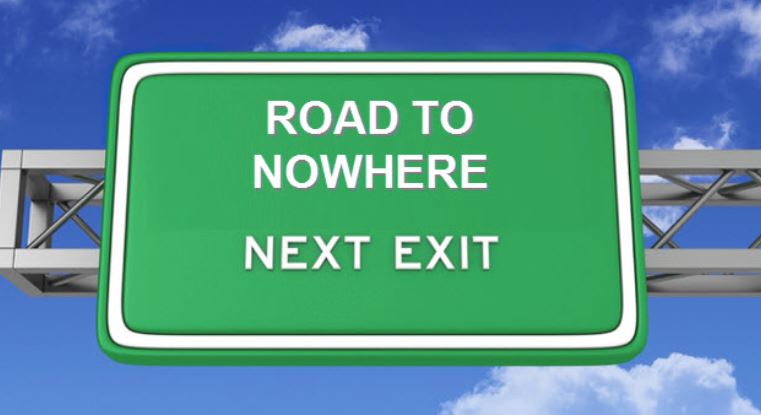
"If you don't know where you are going, any road will get you there" - Lewis Carroll
Posted on: August 28, 2022 08:45 AM |
Permalink
Comments (13)
Please login or join to subscribe to this item

Michael Hilbert
Director of Project Management| TuWay Communications
Bethlehem, Pa, United States
I agree that this a goal and situation driven decision. In my own situation, I noticed that our customers were using varied Project Management methodologies and techniques. I did not have the experience for the PM-ACP, so I opted for the DASM to obtain some level of training and experience with varied ways of working. This path was supported by our company management and worked well with our current project / customer load. We will see that tomorrow brings and how we will need to adapt to the every changing market place.

Rami Kaibni
 Community Champion
Senior Projects Manager | Field & Marten Associates
New Westminster, British Columbia, Canada
Kiron
Very well said and I couldn’t agree more with you. You know exactly my opinion when it comes to this question.
Credentials are merely a proof that someone has in-depth knowledge about certain field but by no means reflect that someone is capable to do the job. Experience is what matters.
On another note, candidates should be the ones deciding which credentials or professional development is best for them. They can consult with a mentor but first, they need to understand that whoever they consult, needs to have a depth understanding of their career plans, goals and path before they can answer. It surprises that some believe credentials are a one size fits all.
Glad you wrote about this topic.
RK
Thanks Michael and Rami! It'd be great if there was a way to make this article "sticky" or an FAQ in the Certification Central discussion group to cut down on the frequency that this question gets asked...

Luis Branco
CEO| Business Insight, Consultores de Gestão, Ldª
Carcavelos, Lisboa, Portugal
Dear Kiron
The topic you brought to our reflection and debate is very interesting.
What is the value of PMI's PMP certification?
Who is certified had to fulfill 3 requirements:
1. Have proven experience in the certification domain(s)
2. Have attended a 35-hour training course on the domains of certification
3. Pass an exam with 200 situational questions on the certification domains
What is in favor of this certification
However, I have a few questions:
A. Is it a requirement for the exercise of the project manager profession to have the PMP certification?
B. How many PMP certified people are there in the world and how many projects are managed by PMP certified people?
C. Is there any reason why many people who have become PMP certified do not want to renew their certification?
Many other questions could be asked related to the results achieved by PMP certified people in project management
I will not comment on the other certifications proposed by PMI
Luis Branco
CEO| Business Insight, Consultores de Gestão, Ldª
Carcavelos, Lisboa, Portugal
Dear Kiron
It makes sense to me to have "an FAQ in the Certification Central discussion group to cut down on the frequency that this question gets asked"
Thanks Luis -
My article was focused on those who have already attained their PMP credential, but your questions are valid ones and could be asked about any popular credential in a different domain where certification is not a mandatory requirement to perform the role.
Kiron

Tiago Romao
Project Manager - PfMP | PgMP | PMP | ACP | PBA | CBAP | CSM | MSc.| Altice Portugal | Meo
Sobreda, Setubal/Almada, Portugal
my 5cents
PMBok, Project Management "book of knowledge", documents the experience of its authors, contributors, reviewers. Some of which don't, didn't had, at the time of writing the document, PMI certifications. The PMBOK encompasses the theory and practical experience of all those individuals (with and without certifications). To hold a PMP certification an individual has to attest high school degree, training from a more "experienced" individual, perform a 200 hundred test. No doubts a PMP, knows about PM terminology, tools, techniques. It may have no experience on the organization, industry, but holding a certification it's definitely a good start. Certifications are not a end, they are a begin. For the individual and for the organization. For the individual that may apply the principles, tools and techniques implicit to the certification and for the organization who will benefit from the knowledge of hundreds of people knowledge exposed on the body of knowledge. I'm certified and intend to keep it up because i don't want to manage projects "my way" or "ad-hoc way", or "organization way". I want to do it "best way", best way, assuming other people have thought about it before myself or my company.
romão
I am trying hard to develop myself
thanks

Stéphane Parent
Self Employed / Semi-retired| Leader Maker
Prince Edward Island, Canada
All my PMI certifications were a reflection of the experience I had acquired. But I also believe that a finish line is often a start line, in disguise.
Everything is important at its place. If you are performing the role of project manager without the knowledge of management tools and techniques, then you are shooting an arrow targeting in the dark. Gaining the knowledge is the first step followed by its application in your role. Certification is the reflection of your knowledge which gives you strength in performing your role and showing your experience.
Agree.
Thank you for sharing.

Kwiyuh Michael Wepngong
Community Champion
Financial Management Specialist | US Peace Corps
Yaounde, Centre, Cameroon
Thanks for sharing, the next phase for us all is always a critical decision to make
I couldn't agree more about the topic of a life-long pursuit.
Please Login/Register to leave a comment.




