The Problem with Waterfall, Agile & ‘Other’
From the Voices on Project Management Blog
by Cameron McGaughy,
Lynda Bourne, Kevin Korterud, Conrado Morlan, Peter Tarhanidis, Mario Trentim, Jen Skrabak, David Wakeman, Wanda Curlee, Christian Bisson, Ramiro Rodrigues, Soma Bhattacharya, Emily Luijbregts, Sree Rao, Yasmina Khelifi, Marat Oyvetsky, Lenka Pincot, Jorge Martin Valdes Garciatorres, cyndee miller

Voices on Project Management offers insights, tips, advice and personal stories from project managers in different regions and industries. The goal is to get you thinking, and spark a discussion. So, if you read something that you agree with--or even disagree with--leave a comment.
View Posts By:
Cameron McGaughy
Lynda Bourne
Kevin Korterud
Conrado Morlan
Peter Tarhanidis
Mario Trentim
Jen Skrabak
David Wakeman
Wanda Curlee
Christian Bisson
Ramiro Rodrigues
Soma Bhattacharya
Emily Luijbregts
Sree Rao
Yasmina Khelifi
Marat Oyvetsky
Lenka Pincot
Jorge Martin Valdes Garciatorres
cyndee miller
Past Contributors:
Rex Holmlin
Vivek Prakash
Dan Goldfischer
Linda Agyapong
Jim De Piante
Siti Hajar Abdul Hamid
Bernadine Douglas
Michael Hatfield
Deanna Landers
Kelley Hunsberger
Taralyn Frasqueri-Molina
Alfonso Bucero Torres
Marian Haus
Shobhna Raghupathy
Peter Taylor
Joanna Newman
Saira Karim
Jess Tayel
Lung-Hung Chou
Rebecca Braglio
Roberto Toledo
Geoff Mattie
Recent Posts
Project 2030: Skills We Need to Cultivate Now
The Technical Program Manager: How to Stay Relevant in 2025
5 Things Your Operational Plan Should Do
5 New Project Guardrails for Adaptive Leaders
The Leader's Voice: Respect It, Protect It, and Use It Properly!
Categories
2020,
Adult Development,
Agile,
Agile,
Agile,
agile,
Agile management,
Agile management,
Agile;Community;Talent management,
Artificial Intelligence,
Backlog,
Basics,
Benefits Realization,
Best Practices,
BIM,
business acumen,
Business Analysis,
Business Analysis,
Business Case,
Business Intelligence,
Business Transformation,
Calculating Project Value,
Canvas,
Career Development,
Career Development,
Career Help,
Career Help,
Career Help,
Career Help,
Careers,
Careers,
Careers,
Careers,
Categories: Career Help,
Change Management,
Cloud Computing,
Collaboration,
Collaboration,
Collaboration,
Collaboration,
Collaboration,
Communication,
Communication,
Communication,
Communication,
Communications Management,
Complexity,
Conflict,
Conflict Management,
Consulting,
Continuous Learning,
Continuous Learning,
Continuous Learning,
Continuous Learning,
Continuous Learning,
Cost Management,
COVID-19,
Crises,
Crisis Management,
critical success factors,
Cultural Awareness,
Culture,
Decision Making,
Design Thinking,
Digital Project Management,
Digital Transformation,
digital transformation,
Digitalisation,
Disruption,
Diversity,
Diversity,
Documentation,
Earned Value Management,
Education,
EEWH,
Enterprise Risk Management,
Escalation management,
Estimating,
Ethics,
execution,
Expectations Management,
Facilitation,
feasibility studies,
Future,
Future of Project Management,
Generational PM,
Governance,
Government,
green building,
Growth,
Horizontal Development,
Human Aspects of PM,
Human Aspects of PM,
Human Aspects of PM,
Human Aspects of PM,
Human Aspects of PM,
Human Resources,
Inclusion,
Information Technology,
Innovation,
Intelligent Building,
International,
International Development,
Internet of Things (IOT),
Internet of Things (IoT),
IOT,
Knowledge,
Leadership,
Leadership,
Leadership,
Leadership,
Leadership,
lean construction,
LEED,
Lessons Learned,
Lessons learned;Retrospective,
Managing for Stakeholders,
managing stakeholders as clients,
Mentoring,
Mentoring,
Mentoring,
Mentoring,
Mentoring,
Mentorship,
Mentorship,
Methodology,
Metrics,
Micromanagement,
Microsoft Project PPM,
Motivation,
Negotiation,
Neuroscience,
neuroscience,
New Practitioners,
Nontraditional Project Management,
OKR,
Online Learning,
opportunity,
Organizational Culture,
Organizational Project Management,
Pandemic,
People management,
Planing,
planning,
PM & the Economy,
PM History,
PM Think About It,
PMBOK Guide,
PMI,
PMI EMEA 2018,
PMI EMEA Congress 2017,
PMI EMEA Congress 2019,
PMI Global Conference 2017,
PMI Global Conference 2018,
PMI Global Conference 2019,
PMI Global Congress 2010 - North America,
PMI Global Congress 2011 - EMEA,
PMI Global Congress 2011 - North America,
PMI Global Congress 2012 - EMEA,
PMI Global Congress 2012 - North America,
PMI Global Congress 2013 - EMEA,
PMI Global Congress 2013 - North America,
PMI Global Congress 2014 - EMEA,
PMI Global Congress 2014 - North America,
PMI GLobal Congress EMEA 2018,
PMI PMO Symposium 2012,
PMI PMO Symposium 2013,
PMI PMO Symposium 2015,
PMI PMO Symposium 2016,
PMI PMO Symposium 2017,
PMI PMO Symposium 2018,
PMI Pulse of the Profession,
PMO,
PMO,
pmo,
PMO Project Management Office,
portfolio,
Portfolio Management,
Portfolio Management,
portfolio management,
presentations,
Priorities,
Probability,
Problem Structuring Methods,
Process,
Procurement Management,
profess,
Program Management,
project,
Project Delivery,
Project Dependencies,
Project Failure,
project failure,
Project Leadership,
Project Management,
project management,
project management office,
Project Planning,
project planning,
Project Requirements,
Project Success,
Ransomware,
Reflections on the PM Life,
Remote,
Remote Work,
Requirements Management,
Research Conference 2010,
Researching the Value of Project Management,
Resiliency,
Risk Management,
Risk Management,
Risk management,
risk management,
ROI,
Roundtable,
Salary Survey,
Schedule Management,
Scheduling,
Scope Management,
Scrum,
search,
SelfLeadership,
SelfLeadership,
SelfLeadership,
SelfLeadership,
SelfLeadership,
Servant Leadership,
Sharing Knowledge,
Sharing Knowledge,
Sharing Knowledge,
Sharing Knowledge,
Sharing Knowledge,
Social Responsibility,
Sponsorship,
Stakeholder Management,
Stakeholder Management,
stakeholder management,
Strategy,
Strategy,
swot,
Talent Management,
Talent Management,
Talent Management,
Talent Management,
Talent Management,
Talent Management Leadership SelfLeadership Collaboration Communication,
Taskforce,
Teams,
Teams in Agile,
Teams in Agile,
teamwork,
Tech,
Technical Debt,
Technology,
TED Talks,
The Project Economy,
Timeline,
Tools,
tools,
Transformation,
transformation,
Transition,
Trust,
Value,
Vertical Development,
Volunteering,
Volunteering #Leadership #SelfLeadership,
Volunteering Sharing Knowledge Leadership SelfLeadership Collaboration Trust,
VUCA,
Women in PM,
Women in Project Management
Date
By Lynda Bourne
A couple of days ago, I received a survey from PMI asking about portfolio management. There’s nothing unusual about PMI undertaking a survey, but the types of project management approaches mentioned for the projects in the portfolio gave me cause for concern. The three choices offered were Agile, Waterfall and Other.
My response was ”Other”—the portfolios I have direct experience with involve heavy engineering. Here is my perspective on the options offered by PMI:
Agile: A well-defined flexible process, based on the Agile Manifesto, applicable to software development and a wide range of other “soft projects” such as business change.
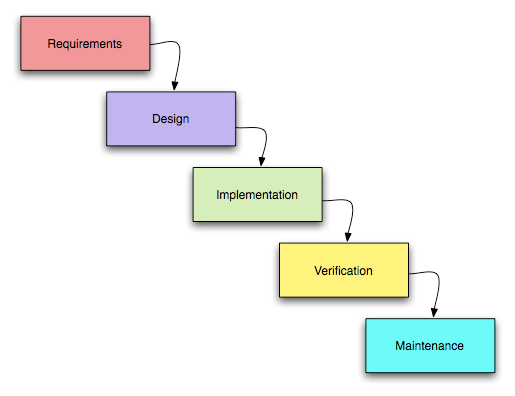
Waterfall: A five-stage software development methodology from the 1970s focused on designing a product (based on requirements) before starting development. The waterfall methodology is still used in some software development projects, but has never been applied to other types of projects.
Other: The vast majority of projects in the construction, engineering, oil & gas, defense, and aerospace industries based on the approaches described in A Guide to the Project Management Body of Knowledge (PMBOK® Guide)—Sixth Edition.
These “other” projects generally have three phases:
- A definition phase undertaken by the client organization to define the capabilities of the product being developed
- A procurement phase where the client selects a delivery agent for the development of the product
- A delivery phase where the delivery agent builds and delivers the product
The design of the product (ship, building, rocket, etc.) may be undertaken in full or in part during any one of the three phases. A minimum level of design is required to initiate procurement, but for simple buildings and civil engineering projects, it is not unusual for a complete design and specification to be provided by the client.
The procurement phase may be a simple pricing exercise, or a complex and phased design process (sometimes even involving the production of working prototypes), with selection being based on the capabilities of the design produced by the successful tenderer. In many projects, a significant amount of detailed design is still required during the delivery phase, including shop drawings produced by subcontractors and suppliers.
Similarly, the procurement arrangements vary widely. The client may choose to enter into some form of alliance or partnership with the preferred delivery agent based on shared risk and profits, or the client may choose a hard-dollar contract based on a fixed price to deliver a fixed scope, or some other setup. There are multiple forms of contract arrangement.
The only certainties are that the typical project approaches used for the vast majority of “other” projects bear no resemblance to the waterfall approach, and this “other” classification includes more than two-thirds of the world’s projects by value.
So, my questions are:
- Has “waterfall” become a shorthand term for any project that is not agile? And if this is the case, what does the new “waterfall” terminology mean?
- Is there a better term for this very wide grouping of projects that generally follows the concepts in the PMBOK® Guide (as it was up to the Sixth Edition)?
How should different types of project management be described? Your thoughts and ideas are welcome.
Posted
by
Lynda Bourne
on: October 24, 2022 09:33 PM |
Permalink
Comments (8)
Please login or join to subscribe to this item

Hillel Selznick
Hillel Selznick| Hillel Selznick Art Studio
New York, Ny, United States

Stéphane Parent
Self Employed / Semi-retired| Leader Maker
Prince Edward Island, Canada
Waterfall is meant to represent predictive approaches while Agile represents adaptive approaches.
Predictive approaches try to determine what needs the be done (scope), how it will be done (schedule) and how much it will cost (budget). The reason for sequential phases is because we are trying to nail the proverbial jello to the wall before proceeding to the next step.
It doesn't matter what the phases are named. If the second phase requires the first one to be mostly completed, then you are in a waterfall apporach.

Lynda Bourne
Director, Professional Development| Mosaic Project Services Pty Ltd
South Melbourne, Vic, Australia
Thanks for the comment Stephane. With a civil engineering project - before you drive the first of 100s of foundation piles, the designers have to know precisely what load it will carry, future change is not possible and the design has to be resolved to the point this calculation is possible. But many other design problems can be resolved much later. So in one sense there is a flow of design before you build something that is literally set in concrete. But this is nothing like the concepts in Waterfall and it is an element based approach, not a phase based approach to the design. With that said, 'predictive' may be a better generic term for projects that require a more traditional approach to design.

Jessica Reid
Configuration Management Specialist| Thales Canada Defense and Security
Dartmouth, Nova Scotia, Canada
Why is Hybrid not an option? In my industry, Hybrid seems more apt than "other" as we utilise a combination of Waterfall/Predictive, but also must be agile due to shifting priorities of the client. Naval ships be it new ones, or modifications to current ones are the end product, but depending on the type of modification, depends on which methodology is used.

Binay Samanta
Director| Project & Environment Consultants
Dhanbad, India
Excellent analysis as Waterfall is meant to represent predictive approaches while Agile represents adaptive approaches. Very nice Lynda

Sergio Luis Conte
Helping to create solutions for everyone| Worldwide based Organizations
Buenos Aires, Argentina
Thank you for sharing. THis is not waterfall life cycle. This is sequential life cycle. My recommendation is going to Royce paper to see that waterfall has feedback loops. On the other side, is a big mistake (but lot of people do that) to compare a life cycle (waterfall) with an approach (Agile). Agile approach can be used with waterfall life cycle. To understand that my recommendation is going to the papers created where Agile approach was created in 1990 in the manufacturing domain: USA DoD/NFS Agility Forum inside the Leihigh University. AGILE WAS NOT created in software (sorry for the capital letter). It was created in manufacturing. Starting for the PMI itself this big mistake and confusion jeopardize the work of lot of people like me whom are using Agile from long time ago.
Great article gathering good contributions of the colleagues to the understanding and practice of these technical and methodological approaches to the different projects, Mrs. Bourne. Thanks for sharing and congrats on bringing the topic to the reflections of the community.
Very good questioning. PMBOK certainly the sixth edition I think is the best reference for traditional projects, particularly engineering projects focused on the steel sector, which is where I work.
However, I do not deny that agile methodologies also greatly contribute to results, so I think that when referring to "others" it should be understood by "hybrids".
Please Login/Register to leave a comment.
|
If you haven't got anything nice to say about anybody, come sit next to me.
- Alice Roosevelt Longworth
|





