


Corralling An Insane Number of Small Efforts


| Situation: You have a small to mid-size business and need to get a handle on all of those small projects. The needs of a small to sort of "mid-size, but still small" companies are different from those of the Fortune 500 crowd.  People wear more hats at smaller companies and sometimes "Project Manager" is just one of those hats. In instances where there is little complexity and structure, but a lot going on - you still need a view of what's on the organization's "list" of efforts. Entry software is one of the companies working to address those needs. People wear more hats at smaller companies and sometimes "Project Manager" is just one of those hats. In instances where there is little complexity and structure, but a lot going on - you still need a view of what's on the organization's "list" of efforts. Entry software is one of the companies working to address those needs. We recently spoke with Barry, Cousins, CEO of Entry Software and author of One Task List, a teamwork fable to get an overview of what makes Entry Software special and his insights on the "One Task List" concept. Here is what he had to say... Q. Tell us about the "One Task List" concept and why its so powerful. One Task List is about managing all of an organization's work in a single place. Most of our clients are small to medium sized organizations made up of employees who have to balance a variety of roles between projects and support work. Having all of the work in a single system makes it easier to prioritize, allocate resources, and ensure that the right work is done by the right people at the right time. Q. What industries are the best fit for Entry Software? Entry's products and services fit best in the IT shops of Health Care, Education, Government, Professional Services, and Software Development organizations. Q. What size projects are the best fit for Entry Software? We specialize in organizing work for people who manage a large number of smaller projects, typically less than 50 Effort-Months. Q. Who do you consider to be competitors? What makes Entry software different from them? Our competitors are the identifiable stand-alone HelpDesk and Project Management vendors targeting the Small and Medium Business marketplace. What makes Entry.com different is our ability to provide an integrated environment for both Project Management and Help desk and that it is available as a hosted managed service. Q. When I looked at the components of the system, "Help Desk" seemed out of place, sitting alongside Portfolio Management, Project Management, and time sheets. Looking at it more deeply it seems that the value is more in the capture of best practices. Could you talk a little about that? Our mix of functionality makes perfect sense to those organizations who have to balance project and support work. When projects fail to deliver on time, it's often because support tickets are taking resources away from project allocations. Many support issues arise from recently implemented projects, and many projects are funded as a result of support incidents. As a result, we built our software to allow new support incidents to be related directly back to projects and quality assurance cycles. We developed the ability to start a new project directly from a support ticket, and that project's requirements can be developed by dragging in other tickets. For the executive leadership, we make it possible to allocate resources and manage a portfolio that incorporates both kinds of work, across the entire enterprise. People in smaller organizations tend to wear many different hats, and our software helps them to succeed in those different roles within one toolset. Q. If you have project management software and a time sheet system in house that you are already happy with, can it be integrated with Entry Software? We have a variety of ways to integrate with other systems, from feeding data into a common reporting platform to feeding support requests from external sources. We look at each need on an individual basis to determine the best fit. Q. How do you deal with requirements tracking and financial management within this toolset? Is there integration with other tools to address these issues? Requirements tracking is one of our hidden gems, because our users can assemble project requirements from other projects, past support incidents, and the body of requirements that are documented on a day to day basis. Regardless of their source, requirements carry the comprehensive historical audit trail of our support tickets so that product managers have access to the richest possible context for each requirement. Our software includes functionality to manage the budget, cost, and benefits associated with any activity. Integrating with other tools for transaction processing and/or reporting is possible through our XML Web Services layer Q. Who should NOT use Entry Software? With our software and service design, we targeted smaller organizations who have to manage a variety of project and support activities. Entry's offerings have 10 years of traction within that customer profile. |
It’s All About Building Bonds Of Trust
| Situation: You want a simple way to tell whether you're a good leader. I just finished watching Colin Powell deliver the keynote speech on Leadership at the PMI Global Congress,  North America. He began by touching on his busy day – having just endorsed Barack Obama on Meet the Press this morning. Speaking for well over an hour , including some pretty decent impressions of Arnold Schwartzenegger, Ronald Reagan and others. His presentation was, of course, filled with impressive war stories and he did a good job of relating much of his military experience to Project Management. Early on, he said that prepping for this presentation made it clear to him that he had been a Project Manager all of his life. North America. He began by touching on his busy day – having just endorsed Barack Obama on Meet the Press this morning. Speaking for well over an hour , including some pretty decent impressions of Arnold Schwartzenegger, Ronald Reagan and others. His presentation was, of course, filled with impressive war stories and he did a good job of relating much of his military experience to Project Management. Early on, he said that prepping for this presentation made it clear to him that he had been a Project Manager all of his life.After many colorful examples and stories he said it all comes down to one thing. “Leadership is all about building bonds of trust – and that’s all I know about Leadership.” He followed that up with, “ you know you’re a good leader when the mission is going bad, men are falling all around you – but your people are still following you.” I thought it was a beautifully simple assessment of what it takes to be a leader. If you look at it one way, he skips over the detail so many of us become preoccupied with - that the leader has great communication skills, paints a clear view of the future, and has all of the other qualities that we have come to expect from a leader. On the other hand, perhaps if you consider General Powell’s trust goal – maybe you cant get there from here without having all the right stuff. What do you think? Is it really that simple? |
A New Online Benchmarking Tool
| Situation: You want better assess project risk. ITProjectMetrics.com is a rather crude looking online tool - but the people who put it together may have really hit on something. The site gathers project information (both demographics and performance data) from people like you, then lets you know how different factors might affect project success. At this point the sample size is too small (86 projects), but we could all help change that if we were so inclined. Everyone wants benchmarks and everyone wants to better understand risk from every angle. These sorts of things help you define success and make sure you don't stumble over common obstacles that should have been avoided. You only enter project data on completed efforts. Here's what the current breakout looks like:
Here are a few examples of the data you'll get back from the site:    |
StrengthFinder 2.0
| Situation: You want to create a stronger personal brand. Being a Project Manager means you are in one of the hottest professions out there today. In the current economy, that's 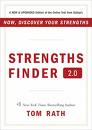 a really good thing. So you have solid experience. You're either certified or "certifiable". -- but can you name your top 3-5 strengths? Even more importantly, is your every day work playing to those strengths? a really good thing. So you have solid experience. You're either certified or "certifiable". -- but can you name your top 3-5 strengths? Even more importantly, is your every day work playing to those strengths? Sometimes the hardest part of this sort of self-reflection is finding an easy way to get started. Now, there's a quick and easy to do just that with StrengthFinder 2.0. About StrengthFinder 2.0 (from the website) "Hide not your talents. They for use were made. What's a sundial in the shade?" — Benjamin Franklin Do you have the opportunity to do what you do best every day? Chances are, you don't. All too often, our natural talents go untapped. From the cradle to the cubicle, we devote more time to fixing our shortcomings than to developing our strengths. To help people uncover their talents, Gallup introduced the first version of its online assessment, StrengthsFinder, in the 2001 management book Now, Discover Your Strengths. The book spent more than five years on the bestseller lists and ignited a global conversation, while StrengthsFinder helped millions to discover their top five talents. In StrengthsFinder 2.0, Gallup unveils the new and improved version of its popular assessment, language of 34 themes, and much more. While you can read this book in one sitting, you'll use it as a reference for decades. Loaded with hundreds of strategies for applying your strengths, this new book and accompanying website will change the way you look at yourself — and the world around you — forever. A week ago, a friend (Jim Garrettson) recommended this book and described the impact it had on his life. He said,"Imagine being able to name your top five strengths - what a gift that is!" I think he had a point - most people can't do that. So I grabbed the book, took the test and ended up buying several for some of the folks in gantthead. In fact, I think I'm going to buy one for everyone that works with me. It's not perfect, but it only takes about an hour to read the book and another half hour to take the test. At the very least, it causes you to stop and think about your strengths and what you are doing to leverage them. |
Corporate Twitter?
| Situation: You think that constant communication may make your organization more effective. At least ten times over the past month I've been asked, "Does gantthead offer the equivalent of Twitter?" To which I've  responded "no" repeatedly. For most people, Twitter is one of those things that you either get and love or think is completely pointless. I have a Twitter account that I've not used in a year, but every week more people "follow" me on it. responded "no" repeatedly. For most people, Twitter is one of those things that you either get and love or think is completely pointless. I have a Twitter account that I've not used in a year, but every week more people "follow" me on it.For those of you who don't know what Twitter is - it's a "micro blogging" tool. This means that people with accounts are constantly texting short blurbs about what they are doing in to the system. They are also receiving "Tweets" from those who they are following. It's sort of a "Everybody knows what everyone else is doing" sort of thing. In theory, there might be some utility in this sort of thing within the context of your work environment. It could answer questions like: What does Joe do all day? or Is Sarah is finishing up that report? After a long hot day of "tweeting" it could also make you a touch more reflective about how you spend your own time. Looking at it as a running logbook or diary kind of makes you think about whether you should have spent an hour chatting in Mark's office or 15 minutes posting to your blog --- oh enough about me. Well at least one tool vendor believes that microblogging is in your future. Yammer is Twitter for corporate types. Here's how they describe their tool. Yammer is a tool for making your organization more productive through the exchange of short frequent answers to one simple question: "What are you working on?" You can use Yammer to:
|


