It’s All About Building Bonds Of Trust
From the Project Management 2.0 Blog
by Dave Garrett

New technologies, concepts, and Web 2.0 tools are popping up everywhere. How can you use them to help your project team collaborate, communicate - or just give your project an extra boost? [Contact Dave]
Recent Posts
Are You Prepping For The PMP 24/7?
Are You Just Too Darn Busy?
Eliciting Requirements... Creatively!
What To Expect When Your Stakeholders Are Expecting
8 More Templates to Save You Time
Categories
Advice,
Certification,
Collaboration Tools,
Decision Making,
Estimating,
Interviews,
Learning,
Management Approaches,
New Templates,
Personal Productivity,
PM Software,
PPM Software,
Presentation Tools,
Reporting Tools,
Requirements Management,
Research,
Risk Management,
Scheduling Software,
Security,
shameless self promotion,
Techie Tools,
Time Killers,
Time Tracking Software,
Training,
Virtual Team Tools,
Web-based Tools,
workshops
Date
Situation: You want a simple way to tell whether you're a good leader.
I just finished watching Colin Powell deliver the keynote speech on Leadership at the PMI Global Congress, 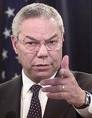 North America. He began by touching on his busy day – having just endorsed Barack Obama on Meet the Press this morning. Speaking for well over an hour , including some pretty decent impressions of Arnold Schwartzenegger, Ronald Reagan and others. His presentation was, of course, filled with impressive war stories and he did a good job of relating much of his military experience to Project Management. Early on, he said that prepping for this presentation made it clear to him that he had been a Project Manager all of his life.
After many colorful examples and stories he said it all comes down to one thing. “Leadership is all about building bonds of trust – and that’s all I know about Leadership.” He followed that up with, “ you know you’re a good leader when the mission is going bad, men are falling all around you – but your people are still following you.”
I thought it was a beautifully simple assessment of what it takes to be a leader. If you look at it one way, he skips over the detail so many of us become preoccupied with - that the leader has great communication skills, paints a clear view of the future, and has all of the other qualities that we have come to expect from a leader. On the other hand, perhaps if you consider General Powell’s trust goal – maybe you cant get there from here without having all the right stuff.
What do you think? Is it really that simple?
Posted on: October 20, 2008 01:51 AM |
Permalink
Comments (6)
Please login or join to subscribe to this item

Aaron Porter
 Community Champion
IT Director| Blade HQ
Payson, UT, United States
While nothing involving people is ever that simple, the details, while important, are not necessary for the point. If you can't build trust with the people who follow you, you can only lead them so far - a hammer only accomplishes so much. Even though I am not sure if the military, where there is a certain amount of "follow orders no matter what" engrained into solders, is the best example for illustrating one's leadership ability, I can see a parallel to project management. A Project Manager not only needs the confidence and trust of those serving under him/her, a Project Manager also needs the trust and confidence of those he/she reports to. Some people will follow orders no matter what, but I think most PMs have experienced roadblocks caused by stakeholders or project team members. It is the details that Powell skips over that make it possible to build the trust needed to get past or avoid the roadblocks.

Hans Robbers
Senior Director| Salesforce
Vlissingen, Netherlands
A leader only exists because of his/her followers. If there are no followers you are alone in the dessert talking to an ocean of sand. So leaders need to bond and build relations. One of main reason people, besides famiy ties, is trust. I very much agree with COlin and Dave it all boils down to trust.

Naomi Caietti
Senior Project Manager | ePMO | Higher Education | Healthcare & IT| Linkedin.com/In/NaomiCaietti
Dave:
Although, Colin Powell made it sound simple, it takes daily and regular "acts of kindness" to establish your credibility so people believe you are sincere, responsible, supportive, honest and, well, trustworthy. Simple things like, thank you notes, coffee cards and a sincere compliment on their outstanding performance from time to time. Trust is a key tenet a successful leader must build to earn respect and trust over time. Colin Powell suggested that, if you "Take care of your troops, inspire your followers, and recognize and reward them - you will earn and build trust."
Last year, I met and received a book from Judy Ullmas, called "The Power of Acknowledgement" which defines "Seven Principles of Acknowledgement". An excerpt regarding Principle #6 suggests that "acknowledgment can improve the emotional and physical health of both the giver and the receiver." Leaders must express courage and sincerity and provide acknowledgement in the way each individual is comfortable receiving it for it to be effective.
Judy’s book was great, but I also ran across a a leadership model called "It''s All About Trust - Success Model" (http://www.ellencastro.com/success.html) developed by Ellen Castro. It depicts a pyramid that shows as we move from a survival mode of compliance to commitment and fear to trust we are able to thrive as individuals and organizations.
Truly, soft skills are important for leaders to learn. Over time, leaders must make a conscious effort to practice these skills to continue their personal growth and development as leaders in their organizations.

STEVE ROLLINS
Chief Project Strategist| ALLPMO Network Inc
Fort Mill, Sc, United States
So much of what project managers do in the field is more about behavior management than it is about project management. The same is true for our executives. This is not to disparage project management.
The value of leadership performance is acquired by those executives that can transform strategic thinking into execution management in project delivery.
This competency requires constant transparency. As soon as transparency diminishes you can begin short-selling trust becuase it will degrade over the time of the project life cycle.
Constant transparency is sustain when performing role levels maintain their accountability to perform and deliver. This feeds the life blood to common trust.
 | alf06 |
Please, do us a favour. Publish Colin Powell's speech.
Tanks :) in advance

Dave Garrett
 PMI Team Member
Senior Advisor to the CEO| PMI
Sterling, Va, United States
Hi alf06 -
I would absolutely do that, but its not mine to post.
Best,
Dave
Please Login/Register to leave a comment.
|
Love can sweep you off your feet and carry you along in a way you've never known before. But the ride always ends, and you end up feeling lonely and bitter. Wait. It's not love I'm describing. I'm thinking of a monorail.
- Jack Handey
|




