


Antemortem Confession of an Ant
Categories:
Philosophy
Categories: Philosophy


|
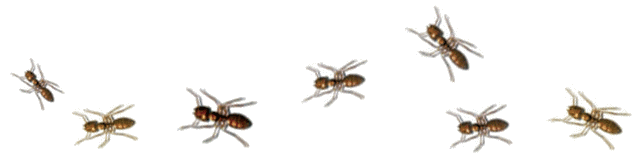
I stay with my family, working day and night to grow our colony. As we live most of our lives in underground darkness, we have to rely on the use of a special chemical called ‘pheromone’ to communicate. This is both a blessing and a curse. Be it a discovery of a new food source or a warning of a looming danger, we benefited much from this unique way of communication. I know you Homo sapiens hate your own body odor, but for us, it is our fundamental survival skill. Since young, we were taught to obey instructions dutifully like a law-abiding citizen. Likewise, we apply the same herd mentality in the way we doggedly track down pheromone scent along the trail that leads to our food source. We have been practicing this over and over again with an unwavering faith. So far, it has yet to fail us. Everything was fine until recently. It seems like we have been following the same track for quite some time. At first, there was no sign at all. As fatigue started to sink in, some of us got grouchy and broke away from the file. Nobody knows what is going on although a few of the veterans suspect that something strange is happening. Apparently, we have unknowingly fallen into an ‘ant mill’ entrapment – a phenomenon in which each of us staunchly follows the one in front, thereby forming a continuously rotating circle. Sometimes, this rare phenomenon is also known as ‘Spiral of Death’. It is a taboo in our clan. So, no one dare to talk about it openly. Nevertheless, recently there was this valiant fool who was bold enough to suggest that we might have been trapped in this fatal entanglement. As expected, his voice was instantly crushed under the barrage of vitriolic rebuttals from the gainsayers and authorities. The poor chap was eventually brushed aside and dismissed as having a hallucinated fantasy. This is a common tragedy in large primeval families like us. We get too entrenched in our heredities, both good and bad ones, unwilling to shake them off. It looks like the several millions years of evolution has not made us any smarter. Once we have identified something that works, we will cling on to it like a limpet, reluctant to let go. “Is this right?” I have been asking myself over and over again lately. Ironically, this is the same old culture that we have lived in for millions of years. Although we may have evolved physically, our culture remains untainted by time. And culture is a strange thing – we are part of it, yet so apart from it. Hence, I guess there is no straight answer to my dilemma. The closest explanation that I can find is perhaps a stigmergic coordination failure resulting from the impact of the ‘Abilene paradox’ complication. Sounds esoteric? Okay, in layman’s terms, it means “the blinds following the blinds with a naïve fear of rocking the boat”. Every morning, we embark on a food-hunting expedition with this foolhardy goal in mind – to find new food sources. However, I have never seen any proper plans or instructions. Everything is ad hoc and depends on spontaneity. The only strategy we count on is ‘the blinds following the blinds’ with the help of the pheromone cue of course. We repeat this cycle every day, rain or shine. Be it skittering across the torrid sand or tiptoeing around the puddles of water, we move on without questioning the sanity of the mission or the risks we have to take. No one knows if we will get lucky and achieve our goal for the day or we will fall into another unforeseen deathtrap. Each trip is a new challenge. No time to bid farewell. We just ‘trial’ our best. Unfortunately, the food supply in our nest continues to deplete, yet there is still no sign of new food sources. Our foragers are still on the march, full of hope, with the rest of us catching up from behind in a frenzied manner. I am not sure how long we can keep going at this rate as the tired legs have started to take their toll. Perhaps, all of us will die of exhaustion very soon unless there is a change. And yes, there should be a change if we want to have ourselves extricated from this entanglement. We need a leader to guide us through this. Well, we do have a leader although most of us have probably forgotten that. She is the ‘Red Queen’ – this is what we call her. The problem is she is not with us in this expedition. Perhaps she is now in the nest, happily indulging herself over the supreme power of her reign while waiting to be fed, oblivious to the calamity that is going to befall on us in the field. What a superb personification of a lousy, yet extremely common, leadership. Is she doing anything at all to save us? Obviously not. Maybe she is just too far away to be able to know what to do. In other words, we have to depend on ourselves and hang on to the last streak of faith that is left in us. Yet, there is only a thin line between faith and foolishness. Many of us still believe that there will be a miracle. That explains why we are still on the march. Pretty naïve huh? I do remember what Orson Welles once said – “If you want a happy ending, that depends, of course, on where you stop your story.” It is time to stop dreaming. There will be no miracle waiting for us ahead, only debacle. When the sun rises again, there will be another forager group sent out to replace us. I wish them the best of luck. I wish we will be remembered for our pluck. |
Revenge Moment
Categories:
Business
Categories: Business
|
There are already a lot of write-ups and propagandas out there flooding the streets, intoxicating the feeble minds with praises of green initiatives and sustainability. In fact, some would even consider it overhyped – good from far, but far from good. This does not come as a surprise with the long, and increasing, list of failed green innovations that includes some of the craziest ideas that look good on the paper, but bad in practical application. However, nothing is perfect. We should not imprudently abandon the entire basket full of apples just because a few rotten ones were found. Sustainability does have its value and purposes and is something that worth our effort to explore further particularly in the domain of project management. The word ‘sustainability’ has various definitions affixed to it. What do we actually mean when we mention ‘sustainability’ especially from the perspective of project management? Wikipedia provides some interesting definitions of ‘sustainability’ that includes, “For humans, sustainability is the long-term maintenance of responsibility, which has environmental, economic, and social dimensions, and encompasses the concept of stewardship, the responsible management of resource use. In ecology, sustainability describes how biological systems remain diverse and productive over time, a necessary precondition for the well-being of humans and other organisms.” In addition, Alan Atkisson gives a more specific definition by saying “Sustainability is the ability of a system to continue working (and evolving) over the long term within certain boundaries and under certain conditions.” From this, if we take project as the system and triple constraints as the conditions, we may then interpret sustainability for project management as the ability to keep the project going, without prematurely exhausting all its resources, until it has achieved all its predefined objectives. As Janine Benyus, co-founder of Biomimicry 3.8 and author of “Biomimicry: Innovation Inspired by Nature”, aptly advises, “You cannot use more energy than you need. You've got to sip energy and you've got to share every material use that you possibly can, because it's expensive to procure that material.” The same thing should apply to managing projects. We have to be prudent with our scarce resources as we work within the boundaries of the triple constraints. So what can we learn from the environmentalists? Perhaps, we may borrow some ideas from the three R’s concepts – Reduce, Reuse and Recycle – which are at the core of sustainability and green movement. These are separate, yet interconnected, concepts that share the same goal of reducing waste.
Alright, enough of greenwashing for now before I start calling my project managers the ‘Green Lanterns’ and forcing them to recite “In brightest day, in blackest night, No evil shall escape my sight…” |
 Okay, I admit. The title of this article ‘Revenge Moment’ is an anagram of ‘Green Movement’. Perhaps, nature is sending us a subtle warning message about its sweet revenge moment if we do not take green movement seriously. Sounds spooky.
 Let’s start with
 The
The
Reverse Delegation
Categories:
Business
Categories: Business
|
As a project manager, we often need to rely on others to help us with tasks that we either do not have the capability or do not have the capacity to handle. Delegation is, therefore, a crucial skill that project managers should excel in. Ironically, this is the area where most of us had flunked badly. What can we do to improve our delegation effectiveness in order to avoid reverse delegation embarrassments like those described above?
|
 What is reverse delegation? Reverse delegation is a term that describes a situation whereby a manager delegates a task to his or her direct report, but only to take it back, for one reason or another, to work on it sometime later. There are two ways, forced and unforced, that this may take place. In the forced way, the push back comes directly from the direct report that received the delegated task, whereas in the unforced way, the manager voluntarily takes back the delegated task and work on it. Regardless of whether it is forced or unforced, when it occurs, it reflects an ineffective delegation from a weak leadership. Most of you should be familiar with this and perhaps, involved in similar situations in the past. If not, below are some scenarios that may help ring a bell.
Proven Method
Categories:
Philosophy
Categories: Philosophy
|
“This method is proven, so I am pretty sure it will work.” a colleague once said that to me. “Do you actually mean ‘tested’ instead?” was my reply to him. It is very common for us to hear this word in our day-to-day conversations. People try to shun other alternatives by self-proclaiming that their methods are proven. In fact, according to the psychology department at Yale University, the word ‘Proven’ is among the top ten power words that the marketing folks like to use in advertising. This is much expected. Why not? It is easy to remove fear and boost confidence with such a powerful word, isn’t it? Subconsciously, we tend to associate proven method with guaranteed success without giving it a second thought. This makes it convenient for people to abuse the use of the word to gain quick buy-in. However, can anything be proven at all? In these days, people usually rely on scientific method to help them test hypotheses and confirm theories. Unfortunately, this has been frequently mistaken as an evidence of proof itself. That is why we often hear things like “MSG is scientifically proven to cause obesity” and “50 Scientifically Proven Ways to Be Persuasive” etc. Testing hypotheses and confirming theories do not lead to a proof of anything; they are just telling us that the observations we obtained in repeated experiments corroborate with the explanations we have on the subject we are investigating. In fact, in his foundational work, “The Logic of Scientific Discovery”, Karl Popper argued that science cannot prove anything at all. No, this is not a typo error and there is nothing wrong with your eyes. According to Popper, the very fundamental criterion for a hypothesis, proposition or theory to be considered scientific is that it has to be falsifiable or refutable. In other words, although science cannot help us to prove anything, it can, on the contrary, help us to reject theories and axioms that are currently believed to be true. For instance, if someone claims that his method has never failed; can he then assert that his method is proven to work every time? He might have provided evidence and facts to justify that his method had worked N number of times in different contexts in the past, but from a scientific perspective, he is still not able to prove that his method will never fail unless he has tested it infinitely, which obviously can never happen. Therefore, the only conclusion we may draw is that his method has a very good chance to work in the next time round. In a way, this reminds me of a well-known saying – “the absence of evidence is not evidence of absence”; just like we cannot prove that “all swans are white” simply because no one has seen a swan that is not white in color. The interesting part in this whole dilemma is that most people are susceptible to powerful words like ‘Proven Method’. Of course, we love encouraging and positive claims, don’t we? How many times have you found yourself buying a product just because it has the words ‘Scientifically Proven’ printed on its packaging? We succumb too easily and willingly even though, deep inside, we know the problems and the lack of validities of these claims. So, why are people still falling preys to these meaningless word games? Perhaps, it is as a result of laziness, or simply down to the fact that we are naturally inclined to false hopes. We just accept the claims happily, blindly and without doubt. However, something that works for others may not necessarily work for you as there are too many factors that will affect the outcome. Not to forget that there are also various validity issues related to the evidence presented that need further evaluation before you can give any reasonable conclusion. For example, are the evidence measured objectively or subjectively? Is the sample size appropriate? Watch out also for the ‘cum hoc ergo propter hoc’ and ‘post hoc ergo propter hoc’ fallacies. Without scrutinizing the validity of the evidence, there is no way that we can confidently accept any claim. So, next time when you bump into an ignorant, yet bigheaded, vendor that says something like “Don’t worry. Trust us. Our method is proven!” I am quite sure you will know what to ask. Okay now, after rambling through all these, what am I trying to prove? |
 My heart cringes whenever I hear someone says ‘Proven Method’. What do we mean when we utter the word ‘Proven’?
Tips on Running PMO
Categories:
Business
Categories: Business
|
I replied with a willy-nilly shrug. Not sure when it all started, but the once promising Project Management Office (PMO) has somehow fallen and become a bête noire to most people. Some of them would just loathe it like what my ex-colleague did. Then there are those who would shun the PMO folks entirely as if they are from the insurance companies. Patience and confidence ebb away as more and more PMOs fail to live up to their promises. J. LeRoy Ward, Executive Vice President of ESI International, sent off a clear warning message when he reported that the average life expectancy of a PMO is 4.1 years according to the “Global State of the PMO for 2012” survey recently conducted by ESI. Setting up a PMO is not easy. Running the PMO and sustaining its operations in the long run is even tougher. Do you have the mettle to take up the challenge? After a couple of years of setting up and managing PMO, I have managed to pick up a bundle of tips along the way on how to make this journey a more fruitful one. The basic idea is to manage each PMO setup like you would for a new product. Many PMO setups failed because they were treated as a one-time endeavor. So far, people were mainly interested in the initial work of bringing a PMO into live with very little attention given to nurturing and sustaining the newly established team. By running the PMO in a product management way, it forces one to come up with better plans to manage the team’s developments and growths throughout its entire lifecycle. Below are some useful tips for your consideration.
By all means, the tips given above are never meant to be all-inclusive and they are just based on my personal experience. Nevertheless, I hope these tips will be able to help those who have or intend to embark on this adventurous journey. Remember, you are never alone. |
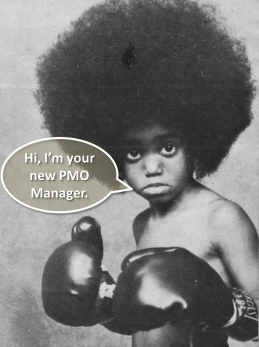 “Oh! So you’re from the

