Home
/
Blogs
/
Voices on Project Management
/
Voices on Project Management
by Cameron McGaughy,
Lynda Bourne, Kevin Korterud, Peter Tarhanidis, Conrado Morlan, Jen Skrabak, Mario Trentim, Christian Bisson, Yasmina Khelifi, Sree Rao, Soma Bhattacharya, Emily Luijbregts, David Wakeman, Ramiro Rodrigues, Wanda Curlee, Lenka Pincot, cyndee miller, Jorge Martin Valdes Garciatorres, Marat Oyvetsky

Voices on Project Management offers insights, tips, advice and personal stories from project managers in different regions and industries. The goal is to get you thinking, and spark a discussion. So, if you read something that you agree with--or even disagree with--leave a comment.
View Posts By:
Cameron McGaughy
Lynda Bourne
Kevin Korterud
Peter Tarhanidis
Conrado Morlan
Jen Skrabak
Mario Trentim
Christian Bisson
Yasmina Khelifi
Sree Rao
Soma Bhattacharya
Emily Luijbregts
David Wakeman
Ramiro Rodrigues
Wanda Curlee
Lenka Pincot
cyndee miller
Jorge Martin Valdes Garciatorres
Marat Oyvetsky
Past Contributors:
Rex Holmlin
Vivek Prakash
Dan Goldfischer
Linda Agyapong
Jim De Piante
Siti Hajar Abdul Hamid
Bernadine Douglas
Michael Hatfield
Deanna Landers
Kelley Hunsberger
Taralyn Frasqueri-Molina
Alfonso Bucero Torres
Marian Haus
Shobhna Raghupathy
Peter Taylor
Joanna Newman
Saira Karim
Jess Tayel
Lung-Hung Chou
Rebecca Braglio
Roberto Toledo
Geoff Mattie
Recent Posts
Project 2030: Skills We Need to Cultivate Now
The Technical Program Manager: How to Stay Relevant in 2025
5 Things Your Operational Plan Should Do
5 New Project Guardrails for Adaptive Leaders
The Leader's Voice: Respect It, Protect It, and Use It Properly!
Categories
2020,
Adult Development,
Agile,
Agile,
Agile,
agile,
Agile management,
Agile management,
Agile;Community;Talent management,
Artificial Intelligence,
Backlog,
Basics,
Benefits Realization,
Best Practices,
BIM,
business acumen,
Business Analysis,
Business Analysis,
Business Case,
Business Intelligence,
Business Transformation,
Calculating Project Value,
Canvas,
Career Development,
Career Development,
Career Help,
Career Help,
Career Help,
Career Help,
Careers,
Careers,
Careers,
Careers,
Categories: Career Help,
Change Management,
Cloud Computing,
Collaboration,
Collaboration,
Collaboration,
Collaboration,
Collaboration,
Communication,
Communication,
Communication,
Communication,
Communications Management,
Complexity,
Conflict,
Conflict Management,
Consulting,
Continuous Learning,
Continuous Learning,
Continuous Learning,
Continuous Learning,
Continuous Learning,
Cost Management,
COVID-19,
Crises,
Crisis Management,
critical success factors,
Cultural Awareness,
Culture,
Decision Making,
Design Thinking,
Digital Project Management,
Digital Transformation,
digital transformation,
Digitalisation,
Disruption,
Diversity,
Diversity,
Documentation,
Earned Value Management,
Education,
EEWH,
Enterprise Risk Management,
Escalation management,
Estimating,
Ethics,
execution,
Expectations Management,
Facilitation,
feasibility studies,
Future,
Future of Project Management,
Generational PM,
Governance,
Government,
green building,
Growth,
Horizontal Development,
Human Aspects of PM,
Human Aspects of PM,
Human Aspects of PM,
Human Aspects of PM,
Human Aspects of PM,
Human Resources,
Inclusion,
Information Technology,
Innovation,
Intelligent Building,
International,
International Development,
Internet of Things (IOT),
Internet of Things (IoT),
IOT,
Knowledge,
Leadership,
Leadership,
Leadership,
Leadership,
Leadership,
lean construction,
LEED,
Lessons Learned,
Lessons learned;Retrospective,
Managing for Stakeholders,
managing stakeholders as clients,
Mentoring,
Mentoring,
Mentoring,
Mentoring,
Mentoring,
Mentorship,
Mentorship,
Methodology,
Metrics,
Micromanagement,
Microsoft Project PPM,
Motivation,
Negotiation,
Neuroscience,
neuroscience,
New Practitioners,
Nontraditional Project Management,
OKR,
Online Learning,
opportunity,
Organizational Culture,
Organizational Project Management,
Pandemic,
People management,
Planing,
planning,
PM & the Economy,
PM History,
PM Think About It,
PMBOK Guide,
PMI,
PMI EMEA 2018,
PMI EMEA Congress 2017,
PMI EMEA Congress 2019,
PMI Global Conference 2017,
PMI Global Conference 2018,
PMI Global Conference 2019,
PMI Global Congress 2010 - North America,
PMI Global Congress 2011 - EMEA,
PMI Global Congress 2011 - North America,
PMI Global Congress 2012 - EMEA,
PMI Global Congress 2012 - North America,
PMI Global Congress 2013 - EMEA,
PMI Global Congress 2013 - North America,
PMI Global Congress 2014 - EMEA,
PMI Global Congress 2014 - North America,
PMI GLobal Congress EMEA 2018,
PMI PMO Symposium 2012,
PMI PMO Symposium 2013,
PMI PMO Symposium 2015,
PMI PMO Symposium 2016,
PMI PMO Symposium 2017,
PMI PMO Symposium 2018,
PMI Pulse of the Profession,
PMO,
PMO,
pmo,
PMO Project Management Office,
portfolio,
Portfolio Management,
Portfolio Management,
portfolio management,
presentations,
Priorities,
Probability,
Problem Structuring Methods,
Process,
Procurement Management,
profess,
Program Management,
project,
Project Delivery,
Project Dependencies,
Project Failure,
project failure,
Project Leadership,
Project Management,
project management,
project management office,
Project Planning,
project planning,
Project Requirements,
Project Success,
Ransomware,
Reflections on the PM Life,
Remote,
Remote Work,
Requirements Management,
Research Conference 2010,
Researching the Value of Project Management,
Resiliency,
Risk Management,
Risk Management,
Risk management,
risk management,
ROI,
Roundtable,
Salary Survey,
Schedule Management,
Scheduling,
Scope Management,
Scrum,
search,
SelfLeadership,
SelfLeadership,
SelfLeadership,
SelfLeadership,
SelfLeadership,
Servant Leadership,
Sharing Knowledge,
Sharing Knowledge,
Sharing Knowledge,
Sharing Knowledge,
Sharing Knowledge,
Social Responsibility,
Sponsorship,
Stakeholder Management,
Stakeholder Management,
stakeholder management,
Strategy,
Strategy,
swot,
Talent Management,
Talent Management,
Talent Management,
Talent Management,
Talent Management,
Talent Management Leadership SelfLeadership Collaboration Communication,
Taskforce,
Teams,
Teams in Agile,
Teams in Agile,
teamwork,
Tech,
Technical Debt,
Technology,
TED Talks,
The Project Economy,
Timeline,
Tools,
tools,
Transformation,
transformation,
Transition,
Trust,
Value,
Vertical Development,
Volunteering,
Volunteering #Leadership #SelfLeadership,
Volunteering Sharing Knowledge Leadership SelfLeadership Collaboration Trust,
VUCA,
Women in PM,
Women in Project Management
Date
| By Conrado Morlan

As a project management practitioner, I’ve been lucky enough to deploy programs and projects across the Americas, supported by teams in South Asia and Europe.
Working on those assignments enriched my multicultural background and helped me learn and become proficient in Portuguese. But as I’ve learned throughout my career, language is just the tip of the iceberg.
Based on my personal experiences, here are three key areas of focus I recommend that practitioners consider before, during and even after their next global assignment:
- Gain Cultural Awareness
It is imperative that global project management professionals understand an individual's personal, national and organizational cultures, so they can better align the team and gain greater influence.
Learn about the country’s culture—do your research and find out similarities and differences. Include cultural differences as one of the topics on the agenda of the kick-off meeting. Use that time as an open forum for everyone to share and record their cultural experiences. Keep those cultural experiences in a repository with documents and useful video clips that can be later used to induct new team members.
Cultural awareness is a skill that should be developed and mastered. Incorporating a cultural differences exercise establishes respect and empathy for diverse values and behaviors, which in turn creates an open and accepting team environment.
- Embrace the Chinese Army Approach
As a global project management professional, you may worry about resource planning. Resources may not be your direct reports, meaning you don’t have control over their schedules.
Instead of struggling, apply the Chinese army approach: Imagine you have unlimited resources available. Assume you have resources with the right skills who can be assigned to the different roles in your project. Do not worry yet about assigning names to the roles.
You may find that the roles can’t be filled with internal resources because of a lack of required skills or capacity, so your solution may be to outsource resources.
To complement the approach, you’ll need to adapt and remaster communication and negotiation skills, which will help you get the best resources.
- Be SMART
The project management profession now goes beyond just managing projects. The profession helps to achieve business objectives and explore new ways to lead, execute and deliver. Technical expertise in project management is not enough; global project management practitioners must adopt a business-oriented approach.
My suggestion is to become SMART. The SMART concept includes a portfolio of skills the global project management practitioner must master to meet the needs of the organization in the coming years.
Being SMART means you are:
- Strategic. Demonstrate an understanding of the organization’s business goals to help it get ahead of the competition.
- Mindful. Develop cultural awareness and leadership styles to influence and inspire multicultural and multigenerational project teams. Foster strong relationships across the organization’s business functions.
- Agile. Business strategy is not static and is frequently impacted by internal and external factors. Projects will need to be adjusted to remain aligned with the business strategy, so embrace change.
- Resilient. Remain committed and optimistic. Demonstrate integrity when realigning or repairing projects facing hardships because of miscommunication and problematic behaviors, as well as cross-cultural issues and conflicts.
- Transparent. Whether the project is in good shape or facing challenges, the status needs to be shared promptly with relevant parties.
To become SMARTer, global project management professionals need to continually strive for excellence and master new skills to support professional growth and help the organization achieve its business strategy.
If you’ve been exposed to global programs or projects, what advice would you offer to other practitioners?
|
Posted
by
Conrado Morlan
on: November 20, 2019 09:52 AM
|
Permalink |
Comments (12)
| 
By Christian Bisson
When I was asked to write about a project that inspired me in the last 50 years, I didn’t have to look back further than last year. That’s when I had the chance to act as scrum master for a newly formed team.
The Challenge
We had seven weeks to build software from scratch that would be demonstrated at a conference and used by hundreds of people. Since the conference was centered on artificial intelligence, it was mandatory that our demo used AI. Our idea was a game where the player spelled words using real sign language. The game was displayed on a television hooked up to a camera, which filmed the player’s hand.
The hand’s position was then recognized and matched to a letter of the alphabet. The player received points based on the speed at which he was spelling the words displayed on the screen.
The Team
We had a great team composed of two developers, a designer, two AI researchers, a product owner and me (scrum master). Our small, dedicated team would empower us to deliver the software we needed to build from A to Z.
Although concerned about the short time available, everyone was motivated and excited to build this amazing software, knowing the visibility it would get.
How We Would Work
Since the scope wasn’t fully defined and the user experience was key, we needed to deliver usable increments to test. We needed a framework that would allow us to deliver quickly and adjust to the requirements as they were refined. Scrum was the obvious choice, even though most of the team was completely new to it. The majority of the team came from a software background, so they knew what it was on paper. However, for the AI researchers, it was completely unknown.
Where it All Came Together
Many start off with the team they need, but then obstacles come their way and prevent them from moving forward. These could be anything from unavailable stakeholders to people being pulled off the team to poor requirements.
However, in this case, it was everything you would want from agility/scrum:
- A team collaborating together without anyone coordinating them
- Busy stakeholders making themselves available for us to collaborate
- Everyone following scrum, even though it was new to them
- The team working at a sustainable pace
- A usable increment of the game delivered every sprint
- Continuous improvement through the retrospectives
- A healthy backlog that was properly refined by the team
It was amazing to see the collaboration when we needed users to test; after a quick Slack message to everyone in the company, we would suddenly have a lineup of people available to play the game.
What Inspired Me
When I think back on our success, all I remember are the people working together to create something great. It wasn’t even about being “agile.” For the team it was, “Let’s get this done!” and for everyone who supported us, it was “Let’s help our colleagues!” There was nothing more, nothing less—exactly how it should be.
I’d love to hear about the most inspiring project you’ve worked on in your career. Please share below!
|
Posted
by
Christian Bisson
on: November 13, 2019 03:13 PM
|
Permalink |
Comments (7)
| 
By Peter Tarhanidis, PhD
I’ve been fortunate to have a career that constantly challenges me and my team to apply new approaches to achieve an organization’s mission. I believe that adapting these contemporary management practices and innovative operating models has helped me become the project leader I am today.
Below are select project initiatives that have helped me develop my skills:
- I integrated process and technology to drive staff productivity. Customer centricity is at the heart of the experience. While working in a call center, my team and I initiated a training process improvement for onboarding new hires. I drafted process steps and key instructions for each one, and then connected the technology opportunities to automate non-value steps. This resulted in reduced training cycles and onboarding staff time from eight weeks to two weeks. It also increased customer satisfaction.
- I quantified assumptions with data and facts. I remember one instance where senior leaders did not have the data to explain consumer behavior and decided to stick with the status quo of the same services at the same rate—not realizing consumer segments had changed. By applying statistical analysis and regression theories, I was able to identify pricing elasticity levels that formed a new strategy to increase revenues and attract new consumers.
- I leveraged standards-based solutions to scale growth and introduce emerging technologies. Prior to standards adoption, I relied on international standards bodies to align on the highest operating performance of disparate systems. This helped to standardize new telecommunication technologies that architected new building designs with IT infrastructure to integrate disparate HVAC, security, green services, data centers, retail systems and real estate development opportunities across the U.S. This led to increased revenue and operating efficiencies by creating an online retail catalogue and also reduced the cost of managing business services.
- I extended expertise across the globe by managing vendor partnerships. I established a vendor management practice to oversee strategic partnerships, outsourcing and offshoring to improve from hybrid technical data centers to Global Business Shared Services across non-core services in organizations. This extended needed services in local countries in their time, language and at lower costs—and also enabled increased market share for commercial operations.
- I designed business operating models to align strategy across an organization. This included key projects to benchmark customer market space, work with senior leaders and define a gap analysis to address via business cases. This allowed me to transform departments, business units and re-engineer organizations.
- I worked across diverse geographies and industries. For example, I drove cultural and change management in R&D, operations and supply chain. This exposed me to business development and mergers and acquisitions, and allowed me to learn the latest in designing user experiences, advanced robotic automation and AI technologies to connect to deeper business insights.
- I led a nonprofit organization of volunteers to develop my leadership skills. When individuals give their time, it is important to be clear and align the volunteers to action. These interactions and relationships are truly based on a work-at-will agreement. If you treat everyone with dignity and a set of behaviors that empower purposeful action, you will achieve a great leadership style that supports many environments and solves social and business needs.
What themes have you identified in your career? How have you broadened your range?
|
Posted
by
Peter Tarhanidis
on: November 13, 2019 10:59 AM
|
Permalink |
Comments (7)
| 
by Cyndee Miller
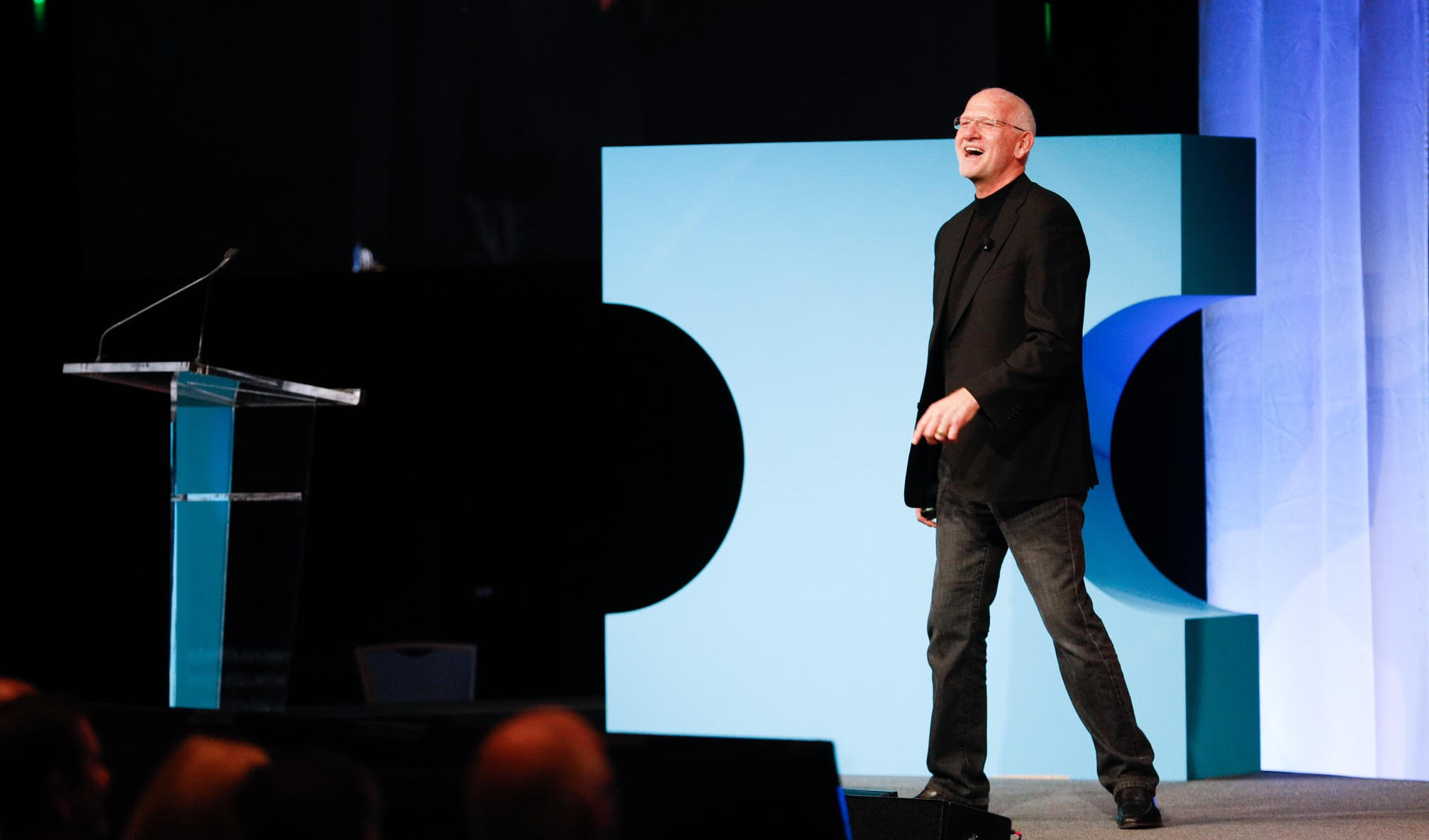
It’s not often I’m told to act like a 4-year-old—and by the executive director of the MIT Leadership Center, nonetheless.
But stick with me, there’s actually a sound business case here. Anyone who has ever been around a 4-year-old knows they ask lots of questions. And apparently, it’s a trait they share with CEOs at some of the world’s most innovative companies, from Pixar to Salesforce, explained Hal Gregersen.
“Questioners are truth seekers. They can’t afford errors. They have to get to the truth of the matter—and often it’s the tough fearless question that gets us there,” he said at PMO Symposium.
To be clear, we should strive to be innovative 4-year-olds as adults—and that means not only asking lots of questions, but better questions.
“The way we build better systems, better organizations and a better world is by asking the better question,” he said.
So how do you do it? Default to ask, not tell, Mr. Gregersen said, whether it’s an individual conversation, a team discussion or a customer interaction.
And you better make them good questions. That means devoting time specifically to coming up with questions—just as you would for brainstorming answers. Sit down with your team. Set a timer. And then write down as many questions about the problem as possible.
Now the whole point of asking questions is to take the time to learn, not act. So listen up and flex the power of the pause: Wait three to four seconds after someone stops talking—that’s typically when you’ll start to get the good stuff.
“In the hectic world of projects and leadership, we sometimes don’t stop enough,” Mr. Gregersen said. “But that’s how we build the trust to get the data in order to not get blindsided.”
It all boils down to one key question: “What are you doing to actively figure out what you don’t know you don’t know before it’s too late?”
Listening was also the lesson at the closing session of PMO Symposium. During an interactive musical performance by The Music Paradigm, maestro Roger Nierenberg urged the audience to tune into the dynamics of the orchestra—and observe the behaviors that allow the ensemble to succeed as a team.
“Musicians have the ability to play and listen at the same time,” he said. “It makes us alert and capable. It makes us very agile.”
And that goes for leaders most of all.
“As a conductor, when I was clear and dictatorial, I thought I was being kind by telling the orchestra exactly what to do. But it killed the listening,” Mr. Nierenberg said. “And that’s a precious thing.”
And that’s an official wrap for me. See you next year at PMO Symposium, 8-11 November 2020 in Orlando, Florida, USA.
I’ll be back on the event beat. As a reporter, I’ve spent years honing my questioning (and listening) skills, but I’m always looking for new ideas. What’s your top tip for asking the right questions?
|
Posted
by
cyndee miller
on: November 07, 2019 02:18 PM
|
Permalink |
Comments (9)
| 
by Cyndee Miller
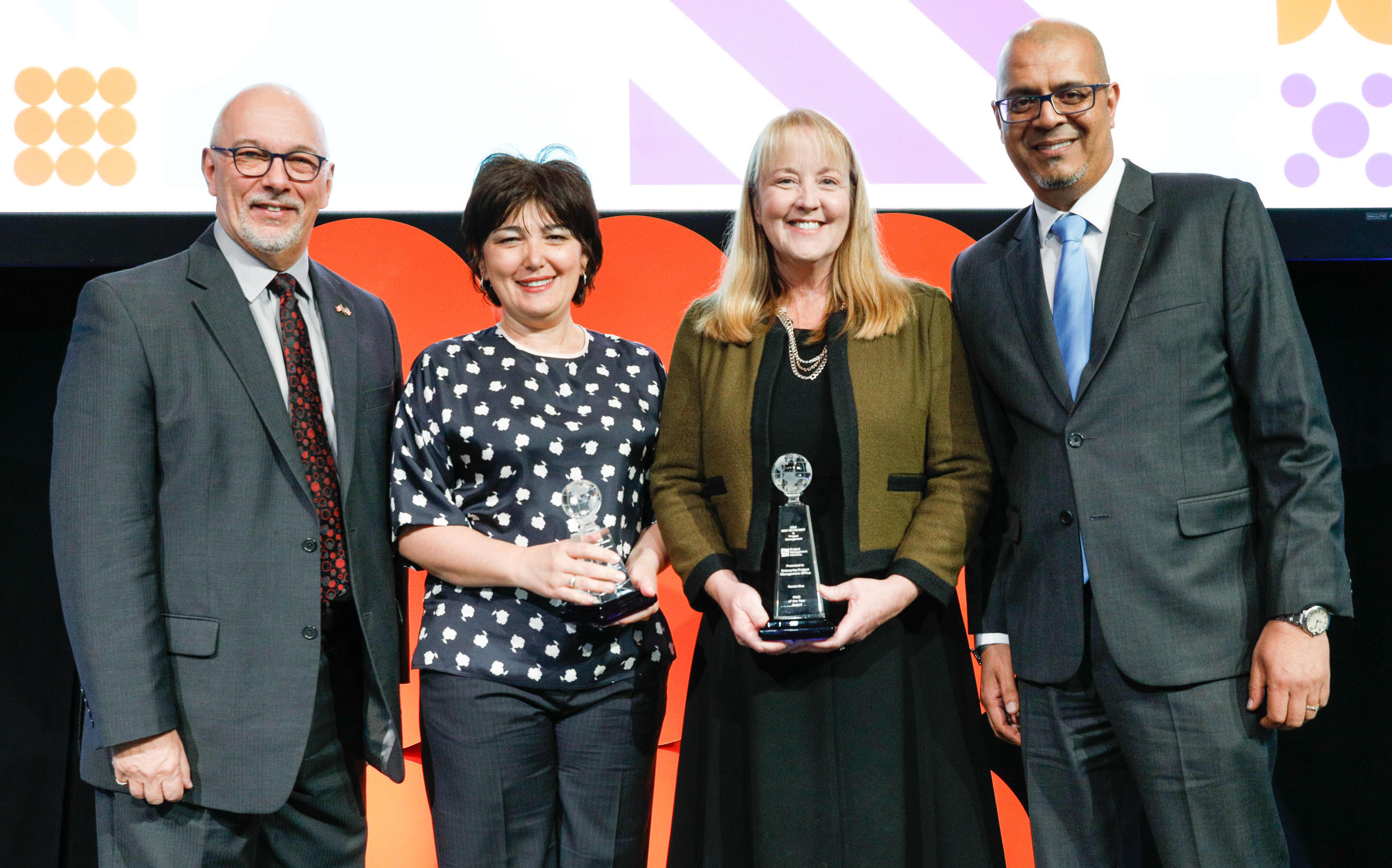
How did Fannie Mae go from bailout to business transformation? In part through an extraordinary enterprise project management office, 2019’s PMO of the Year.
In the wake of the U.S. housing crisis in 2007—and a rescue by the U.S. Treasury Department—Fannie Mae set out to improve its business model to better serve the housing industry. In particular, leaders at the government-sponsored mortgage backer knew they had to confront its technological shortcomings.
Enter the EPMO, dedicated to modernizing the mortgage process through digital transformation. Part of that process included an enterprise-wide move to agile: Today, teams manage more than 90 percent of projects with it.
And PMO leaders have the numbers to prove their progress: Over the last three years, the EPMO has increased its releases by more than 160 percent, while also reducing incidents by more than 65 percent.
"PMOs are more relevant than ever," said Fannie Mae’s Amilda Gjecovi, in accepting the award at PMO Symposium.
Her colleague Joyce Walsh commended the other two finalists: McDonald’s Corp. and Saudi Aramco. “I am humbled by the competition,” she said. “They are truly impressive leaders and have made a real impact in their organizations.”
No doubt. Here’s a quick look:
McDonald’s has been serving up some serious digital transformation. The company’s push to develop and install a mobile ordering technology across seven countries in just 12 months was a 2018 PMI Project of the Year finalist. A year after project completion, global sales at McDonald’s jumped 4.5 percent. Behind that big win: the fast-food giant’s Global Technology PMO (GTPMO), focused squarely on digital-driven growth. Since then, the GTPMO has helped McDonald’s stake its claim as a true digital leader, overseeing the next generation of customer relationship management projects, beefing up programs to find, retain and develop tech talent, and moving to a full-on agile transformation.
Even as one of the world’s largest oil and gas enterprises, Saudi Aramco isn’t content to just stay put. So when the company’s PMO noticed a gap in its capital expenditures compared to similar projects at other industry leaders, it launched a range of initiatives to generate more efficiencies across project management processes and delivery. The payoff: A 2017 study of projects over US$10 million revealed the implementation of 10 value improvement practices resulted in cost avoidance of more than US$1 billion for the capitol program—and improved project cost performance by 11 percent.
Want to learn more? Look for in-depth features of the three PMOs in upcoming issues of PM Network, and head over to PMI’s YouTube channel for video case studies.
|
Posted
by
cyndee miller
on: November 06, 2019 02:10 PM
|
Permalink |
Comments (4)
|
I did this thing on the Ottoman Empire. Like, what was this? A whole empire based on putting your feet up?
- Jerry Seinfeld
|




