
Viewing Posts by Ramiro Rodrigues


What Can We Learn From the Movies?


|
By Ramiro Rodrigues
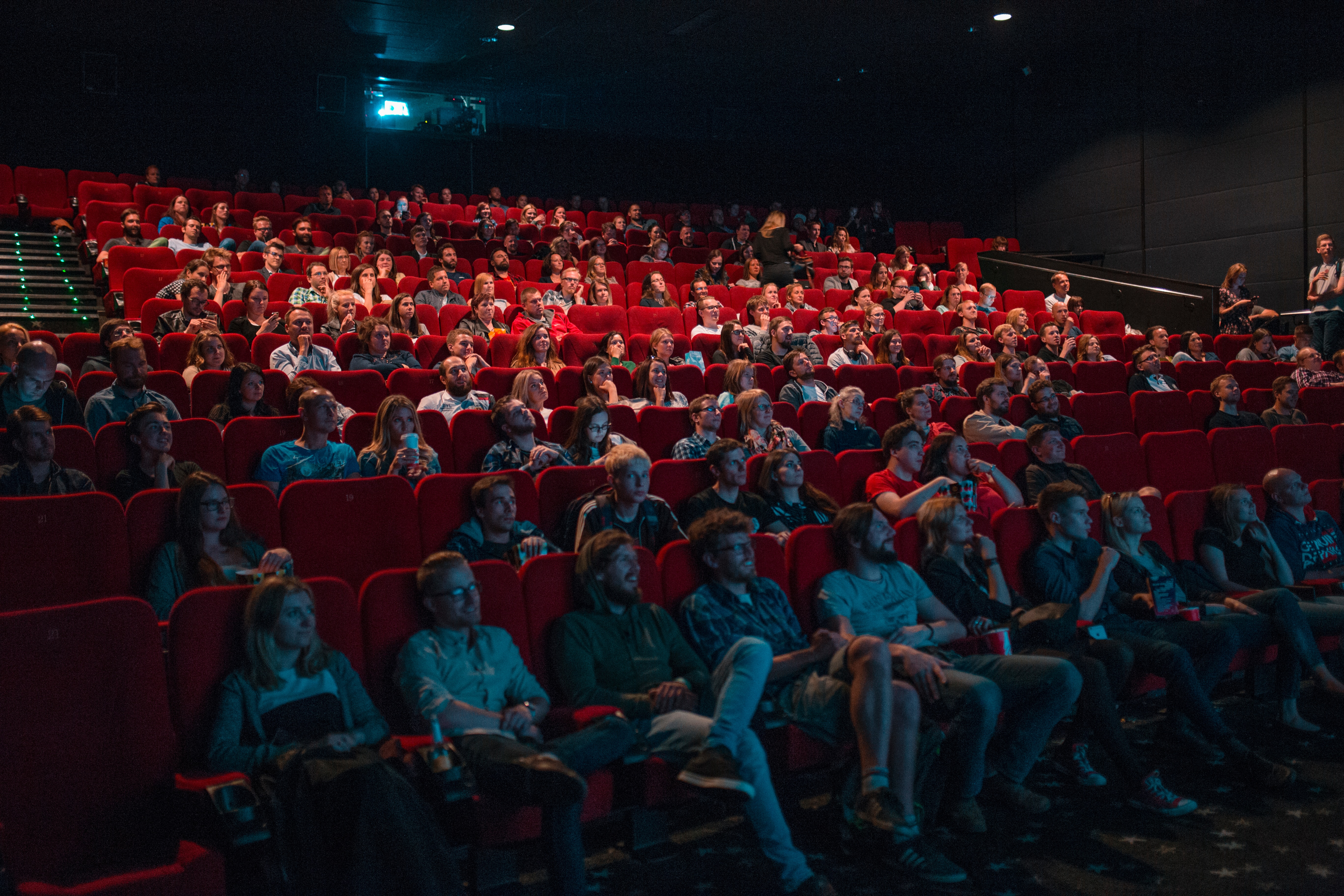
I'm 50 years old, which means I was born the same year PMI was founded. The last half century has seen a lot of interesting projects across industries, but today I’m going to focus on one area in particular: cinema. I’ll start with a question: What swept the Oscars in 1969? You may know it was Oliver!—a British musical based on the work of Charles Dickens. In addition to best picture, the movie also won the awards for best director, musical score, art direction and sound. The magic of cinema progressed in parallel to the 20th century at large, and I’ve long admired its ability to create fantasies and magnetize audiences. These same capacities evolved as technology and investments provided more technical resources for the enchantment of the audience. The delivery of a movie has always impressed me, as it has all the ingredients of a project. There is conception, planning, execution, control and conclusion—all with the added complexity of dealing with human emotions even more so than in other business segments. Today's major productions involve hundreds of professionals, suppliers and deliveries, so they require a well-structured project management model. And if the delivery of a movie provides all these difficulties, imagine what it takes to deliver a saga of 23 films? Well, this was the case for the so-called Marvel Cinematic Universe. Why should we consider this a grand project? Starting with the first movie, Iron Man, in 2008, you can find several “Easter eggs” referencing the other Avengers. And in the post-credits scene (a practice that started there), Nick Fury appears to talk about the Avengers initiative. Thus begins an intricate sequence of characters and films over 12 years, which translated into the largest franchise and box office phenomena of all time. If it was not enough complexity to produce a single film of this nature, imagine the magnitude of a long-term project that would involve scores of producers, suppliers and actors. And this was accomplished while delivering a structured and coherent plot that lived up to the expectations of a global audience. This gives us clues into why more and more cultural producers are looking to specialize in the best practices of project management. These principles have much to contribute to ensure organization and control, without interfering with the magic and emotions that art provides. After all, the show must go on! I’d love to hear from you. Do you see movies as projects? Share why or why not below. |
5 Steps to Reverse a Project in Chaos
|
By Ramiro Rodrigues
Recently, an acquaintance pointed out to me that the projects environment is susceptible to chaos. In his view, all it takes is a lack of effective leadership. If leaders aren’t constantly focused on solving the problems that occur in an environment of resistance and change, chaos will take place. After 20 years of professional work on corporate projects, I couldn’t disagree.
Obviously, the forces that pave the path to chaos in projects are not exact, but rather derived from human factors. Without adequate leadership, distinct interests, personalities and priorities will drive any corporate enterprise to disorder and, consequently, failure.
But if chaos has already taken hold, is there a way to reverse it?
In order to determine an effective solution, you’ll need to research and analyze the environment. Here, I present a practical and relevant framework for projects in this situation:
Step 1: Investigate carefully and critically all the variables that are exerting power in the project. These could include the political context, governance, financial and operational applications, organizational models, skills and the human characteristics of those involved.
Step 2: Based on these investigations, develop a list of items that are bringing negative interferences to the success of the project and seek to prioritize them with the support of the project sponsor. Consider all the layers of issues that are creating turmoil on the project.
Step 3: With the list in your hands, develop a proposal of actions aimed at the effective recovery of the items. The tip here is that one should be attentive so that the proposed actions to recover the specific items do not divert at any time from the ultimate goals of the project.
Step 4: Validate whether the project sponsor is truly engaged and committed to making the proposed recovery plan viable. Without their engagement, the effort will be worthless.
Step 5: Execute the recovery plan as a parallel project, albeit one related to the original project. In this stage, it is important to implement best practices of project management, such as status meetings with the analysis of obtained results and clear communication with those involved.
It’s obvious this process will require more effort from the leadership, but if the sponsoring organization is committed and interested in project recovery, the investment is justified. And in this context, the project manager will have a great opportunity to demonstrate his or her resilience and ability to overcome challenges.
Have you turned around a project in chaos? Share your experiences below. |
.jpg)
4 Tips for Project Closing Parties
|
By Ramiro Rodrigues
A great deal of effort is often put into a project kick-off meeting—so why isn’t that visibility just as important on the other end of the project?
What is a project closing party? A project closing party is an event that intends to provide visibility and recognition to the main professionals involved in a completed project. Obviously, there is no sense in celebrating a project that got aborted or that didn’t reach its main goals and targets. So, we are talking about those projects that managed to get to end with the best combination of its intended results.
Within this proposal, it is reasonable to say that what will drive the size of the closing event will be the size (and budget) of the specific project, since it is necessary to achieve coherence between these variables.
What are the benefits? I see two arguments for hosting these events at the end of a project—one strategic and one motivational.
On the strategic side, a closing party brings visibility to the executing organization (and, if applicable, the hiring organization) that the project has reached its predicted goals. It will help to reinforce to those at the strategic level of the organization that the team is capable and reliable.
From a motivational standpoint, these events will help recognize the efforts of the project team.
How should they be executed? If you think a closing event could benefit your project efforts, here are some tips to abide by:
Done well, events like a project closing party can have positive repercussions on your next projects.
Do you regularly host or attend closing events at the end of your projects? I’d love to hear your thoughts!
|
.jpg)
Project Planning Using Canvas
| by Ramiro Rodrigues
Developed in the 1980s, design thinking is a structured mental model that seeks the identification of innovative solutions to complex problems. Although the concept has existed for decades, it’s only made its presence known in the corporate environment over the last 10 years. Swiss business theorist and author Alexander Osterwalder similarly sought to accelerate collaborative reasoning when he introduced the Business Model Canvas. Canvas helps organizations map, discuss, rework and innovate their business model in one image. But a series of proposals for the use of the Business Model Canvas for various purposes outside of business models has also appeared — including innovation, corporate education, product development, marketing and more. For project professionals looking at alternatives to developing quicker and more collaborative planning, Canvas may sound like a great option. Of all the proposals that come up for the use of Canvas in a project environment, integrating stakeholders may be the best. Canvas brings stakeholders into the process and will help to minimize resistance and increase collaboration, resulting in a better proposal for planning problems and making the project more aligned to the interests of organizations. But while the arguments put forward for Canvas all seem positive, there is still a dilemma: Can Canvas fully replace the overall project plan and the planning process? Is it possible to do without a schedule of activities, a detailed cash flow, a matrix of analyzed risks — just to limit ourselves to a few examples? That is probably too extreme. The general sense is that the integration of Canvas with specific planning — such as the cost plan and the risk plan — is the most productive and generates the best results. It may be worth asking your project management office for their thoughts. Have you ever used a Canvas for your project planning efforts? If so, what tips can you share? |
 Project managers: Are you sometimes looking to make plans faster but without being superficial and therefore riskier to the project?
Do Incentives Pay Off?
|
Among consultancies it’s common to reward project teams for good results with financial incentives. The question is: Does this practice lead to better results? There’s a clear difference in position depending on which side the respondents are on. The dilemma is easy to understand. When you’re in the position to be rewarded for the results achieved, it’s natural to see the positive side of this approach. But when you are responsible for delivering the bonus, some doubt will naturally exist. After all, what guarantees that this strategy will lead to projects with better results (regarding time, cost or quality)? Many feel these rewards act as great incentives for project teams, thus leading to better performance. But one should also consider the concerns of those who fear that, in the name of this search for metrics, some values—such as professional ethics, transparency and lawfulness—may be compromised. To find out if the bonus strategy should be implemented at your organization, have a look at the following four steps: Step 1: Evaluate your organization's values. More aggressive companies that encourage internal competition tend to favor this strategy. Knowing your organizational environment well will help you determine whether to adopt the financial incentive strategy or not. Step 2: Define quality metrics. Interpreting success only by the results related to project time or costs may lead to short-sightedness regarding customer satisfaction. Therefore, develop templates for satisfaction surveys that can help measure the quality of the delivered product and the opinion of the customer who receives the final result. Step 3: Encourage mutual collaboration. Dividing the bonus between specific members or projects creates a great risk of dissatisfaction among those who have been excluded. Thus, sharing the bonus between all team members, depending on the results of the overall project portfolio of the organization, is an interesting idea to consider. Step 4: Start slowly and measure results. Treat the implementation of this assessment as a project and aim to progress gradually, so that you can evaluate any impacts of this strategy on the culture and value perception of your company. Good luck and much success! |
.jpg)


