


Emergent Strategy: How To Lead Now
Categories:
Leadership
Categories: Leadership


|
by Dave Wakeman Did you get your vaccine yet? In the United States, we’ve done a good job of getting shots into people’s arms—and for the first time in a long time, things are starting to look normal. For project leaders, the ramp up and ramp down of the vaccination program is likely to be a good case study. But I don’t want to talk about that today, even though it’s amazing. Instead, I want to discuss an idea that’s close to the vaccine rollout and the leadership topics that I’ve been hitting on for the last year: the idea of how to lead now. Over the last year, I’ve gone back and taken a few classes so that at the end of the pandemic, I could be in a position to deal with whatever came next. One of the ideas I’ve been grappling with during my schoolwork has been the idea of emergent strategy. It’s a branch of strategic thinking that says that you might make a strategic plan, but what comes out the other side might be entirely different because your strategy has to react to the world it exists in. Sounds familiar, right? Isn’t that the world that project managers live in every day? Digging deeper, I realized that we can actually learn a few lessons on leading through the end of the pandemic using emergent strategy: Flexibility wins: I’m all for planning like I’m sure most of the folks reading this are. But the pandemic has laid bare the idea that we can plan anything with certainty given how chaotic some of the news around the virus, the vaccines and the economy was. The lesson here is that we have to maintain our flexibility. This is the heart of emergent strategy. You pick a destination, make a plan, but recognize that you’re going to have to change course throughout the project to achieve success. The big difference I see from normal project thinking is that in an environment like this, the formal change process likely must be managed more tightly. Don’t be wed to preconceived ideas: Change is constant—we know that now more than ever. One challenge of leadership in modern times, especially on projects, is that we can’t know everything. The thing about this is that we also tend to hang onto our preconceived view of the project, the plan or the world around us. This “change is happening faster than ever before” narrative is a bit overblown, but what I do know is that our day-to-day reality can be impacted pretty quickly and we need to be able to rethink the context of a project. Be open to feedback all around you: The key here is to pay attention to what the world is telling you. These “signals” may come in the form of news reports, conversations, premonitions or experience. Be aware of what’s going on around you and try to gain a holistic feeling for the world that your project exists in. This can be difficult to do because in the same way that there’s a lot of important information to study and deal with, there’s a lot of noise that can get in the way of good decision making as well. So you need to constantly balance the signals and the noise to keep your project moving forward. Let me know what you think in the comments below. |

7 Ways to Influence without Authority
| By Sree Rao, PMP, PgMP, PMI-ACP
The ability to influence is one of the most valuable—and Here are 7 ways to influence: 1. Identify your styleWe all have our own ways of trying to impact other people’s thinking and We often try to influence the way we like to be influenced—but that doesn’t 2. Establish trustInfluence is based on a foundation of trust and credibility that’s been 3. Build social capitalLook beyond your role and offer help: Volunteer to pitch in on mentoring or 4. Think like a hotshotConsider this as a variation of what former Focus Brands COO Kat Cole calls 5. Influence the influencerIf you’re trying to influence a team, identify the person on that team with 6. Unlearn what you knowKeep an open mind and don’t write anyone off. There might be ways to win 7. Know your valueThe Cohen-Bradford influence model recommends that you think of what you
|

Want Innovation and Collaboration? Rethink Your Office Space
|
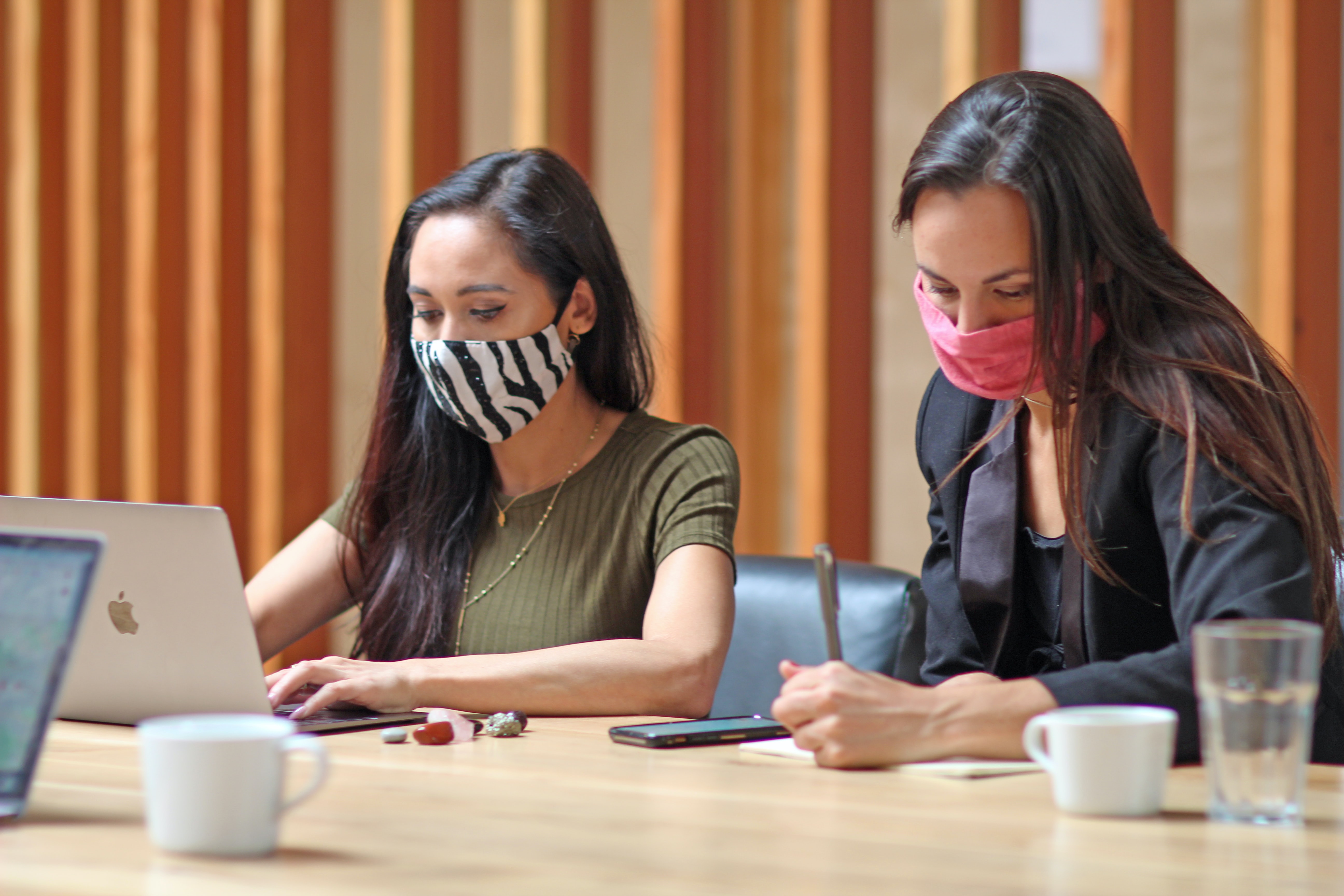
By Cyndee Miller I’m headed back to my office for the first time in six months—taking the train and maybe even collaborating with my team IRL. I’m not going to lie. It feels really, really strange. Like most companies, mine is opting for hybrid: three days in, two days working from home. It’s looking like the next norm—and it’s not hard to see why. A study from HR consulting firm Mercer found 94 percent of U.S. employers reported productivity was the same as or even higher than it was before the pandemic. And employees—now accustomed to the flexibility—are less likely to compromise. A March Boston Consulting Group survey found that 89 percent of workers from across 190 countries said they’d prefer a job that allows them to work from home at least occasionally. Yet that same study found that only 1 in 4 workers would switch to a completely remote model if they could. “A lot of companies underestimate the power of workplace,” said Kahn Yoon, director of international projects at global workplace design firm M Moser Associates in Singapore. “Whilst I’ve enjoyed working from home to a degree, once I started coming back, I also realized how much I missed having collaboration with colleagues and having those innovation moments,” he told Projectified®. Okay, so clearly Yoon isn’t alone. Most people want to spend at least some time in the office. But what does that actual physical space look like? As we wrote about in PM Network, at first the focus was on “pandemic resistant” offices. Salon Alper Derinbogaz, for example, revealed plans for a single-story office building connected by open-air and semi-covered walkways and terraces—perfect for outdoor meetings. Guallart Architects took pandemic-proofing to the next level with its proposed Self-Sufficient City in Beijing. The project aims to eliminate any disruption to daily life in the case of future lockdowns by designing and building a mixed-use community with supercharged amenities, like a communal greenhouse for food production, solar-paneled roofs to produce energy, an on-site co-working office and 3D printers and rapid prototyping machines to produce everyday goods. They’re super interesting concepts, but what about the good old offices many people are heading back to right now? To safely transition from the home-office back to the office-office, leaders will have to reboot their thinking about how to work—but also the purpose, role and design of the workspace. And that requires lots of pilot projects, lots of iteration—and probably saying good riddance to the once ubiquitous open office plan. (As someone who did serious time in one of those arrangements, I will not mourn its loss.) “It’s really time to rethink the open plan,” said Todd Heiser, principal and co-managing director of Gensler’s Chicago office. “For as long as I’ve been doing this, individual workstations have become more open with ever-increasing density, and I think as we return, these spaces really need to flip. Meetings need to happen more in the open, and focused work probably needs to be reconsidered,” he said on Projectified®. Even Google is rethinking its famously open offices. The New York Times dubbed one of the concepts as “Ikea meets Lego,” creating team “pods” with chairs, desks, whiteboards and storage units on casters that can be arranged—and rearranged—however the group sees fit. The company is also trying out a new meeting room called Campfire that intersperses in-person attendees with very large displays of virtual participants in a circle. It sounds weirder than it looks and could actually help remote team members feel like they’re part of the action. For its Working from Home, Working from Work project, architecture firm Woods Bagot proposed keeping employees remote for “solo activities” and saved the office for team activities. That makes sense to me. Because let’s face it, brainstorming on a Zoom call is … rough. For Kahn, that means “more meeting spaces, more open collaboration spaces—because you always rely on serendipitous discussions that spark a bit of that innovation.” But he also acknowledged that offices are going to have to compete with work from home. So along with boosting collaboration by tricking out the office with the right technology, companies would be wise to invest in biophilia so you “don’t feel like you’re in a big sort of a factory of desks.” Uh, yeah, that just doesn’t seem like an effective way to foster that kind of innovation we all keep saying we need more of. Will hybrid teams working in hybrid offices be business as usual in the future? How are you help reimagine your office as an incubator for new ideas? |

Let Team Preferences Guide Knowledge Sharing Practices
|
By Yasmina Khelifi, PMP, PMI-ACP, PMI-PBA In my last post, I wrote about the benefits of sharing knowledge. Now it’s time to talk about how you’ll document and maintain that information. And this is where project leaders should turn to their teams for ideas. A few years ago, I belonged to a very efficient and collaborative project team. We were all responsible for a service deployed across different manufacturers’ models, hence the importance of having up-to-date information. We maintained a spreadsheet file shared on a cloud service and we updated it regularly, as agreed on by the team. Then a new manager decided to implement a different system. The team was told to send all information to two administrators who would handle updates. You can imagine what happened. Almost no one sent the information and the system was decommissioned after two years. As a result, all the knowledge our team had built over the years was lost. What was deemed a more professional or advanced tool ended up crippling the knowledge base. As a project leader, we need to trust our teams and let them define the best ways to share and store information. We’re not talking here about an encyclopedia of knowledge. It’s really just enough documentation to help handover and onboarding. One of the best ways to ensure knowledge sharing is to record presentations and conference calls. You can also take detailed notes to share with other project team members. Another major part of closing the information loop within teams is to solicit and give constructive criticism and feedback. Postmortems, retrospectives or lessons learned are an invaluable opportunity to share knowledge and ultimately document it. How do you let team preferences shape your approach to sharing knowledge? |
Earth Day: Urgency Meets Action with Projects to Heal the Planet
Categories:
Disruption,
Technology,
Tech,
The Project Economy,
Career Development,
Innovation,
Leadership
Categories: Disruption, Technology, Tech, The Project Economy, Career Development, Innovation, Leadership
|
By Cyndee Miller It’s Earth Day and this year’s event comes with an even greater level of urgency—and action. Two-thirds of people say climate change is a “global emergency,” per a survey by United Nations. And some high-profile government and business leaders are stepping up. The United States rejoined the Paris climate agreement, and after unveiling its bold Green Deal in 2019, the European Union announced yesterday it’s increasing the number of companies required to publish environmental and social data. On the business side, General Motors proclaimed it plans an all-electric vehicle future by 2035 and BASF is sharing its map to achieve net zero emissions by 2050. While acknowledging Asian companies have lagged on investing in environment, social and governance efforts, Loh Boon Chye, chief executive of the Singapore Exchange, called 2020 an “inflection point.” Of course, turning that sort of big thinking into reality requires an exceptional mix of capital, commitment, creativity—and projects. Consider this your whirlwind tour: As you might expect, there’s been serious action on the renewable energy front. Some are small-but-smart efforts, like the Spanish city of Seville launching a biogas pilot, turning its abundance of oranges into the power ingredient for clean energy at one of its wastewater treatment plants. And some are larger. Campos del Sol, number 43 on PMI’s Most Influential Projects 2020 list, is a US$320 million solar plant under construction in Chile. At full capacity, the 382-megawatt installation will generate enough energy per year to help slash annual carbon dioxide emissions by as much as 900,000 metric tons. That’s the same as taking nearly 200,000 cars off the road for a year—and could put the country a whole lot closer to meeting its goal to be carbon neutral by 2050. Project leaders are also mobilizing to reimagine urban development in more eco-friendly ways. Danish design studio C.F. Møller Architects is working on Storkeengen. What’s especially interesting about this project is that it balances needs on three fronts: urban planning to satisfy the city’s expansion needs, climate-change adaptation to help mitigate the impact of flooding and nature conservation to stabilize the local ecosystem. Another approach that’s gaining traction is nature-based solutions, which promote climate resilience in urban areas by tapping into nature itself. One example is CityAdapt, a project by the United Nations Environment Programme. In El Salvador, the group reduced surface runoff from a coffee plantation, which can cause erosion and flooding in the ecosystem. Here, too, the project wasn’t just a good move for the local environment, it also improved coffee productivity, meeting local business needs. (For more on that one, check out the Projectified interview with Leyla Zelaya, the national coordinator for the CityAdapt project in San Salvador, El Salvador.) A core piece of any urban development is mobility, and project leaders are making big, bold moves here as well. One of the biggest changes: bike and pedestrian paths—and lots of them. Even fashion, not exactly known for its high sustainability cred, is coming around. Ecoluxe designer Stella McCartney is working with Google on a pilot project using data analytics and machine learning to give brands a more comprehensive view of their supply chain, with the goal to better measure the impacts of its raw material sourcing on air pollution, greenhouse gas emissions, land use and water scarcity. It’s not just the posh designers, either. Fast-fashion giant H&M launched Looop, billed as the world’s first in-store garment-to-garment recycling system. And footwear giant Nike is embedding sustainability into its product development projects. Look no further than Space Hippie, a line of eco-friendly sneakers made from yarns containing at least 85 percent rPoly made of recycled plastic water bottles, T-shirts and yarn scraps. We can’t talk about Earth Day without mentioning some of the amazing projects to protect and preserve the plants and animals that we share our planet with. (They also happen to be some of my very favorite projects to follow.) Case in point: Elephant World Cultural Courtyard, a sanctuary designed to bring the Kui people and their elephants back to their homeland in northeast Thailand. Launched in collaboration between the Surin Provincial Administrative Organization and architecture firm Bangkok Project Studio, the space spans 8,130 square meters (87,510 square feet) and includes a programming space, elephant hospital, temple, graveyard for elephants and museum dedicated to showcasing the Kui culture. The need for these kinds of projects has only been accelerated by the climate crisis. When wildfires consumed half of Kangaroo Island, they decimated one of the world’s most iconic biodiversity hubs. Tens of thousands of creatures—from kangaroos to cockatoos—were left stranded in a barren wasteland without food, water or shelter. As the smoke cleared, rescue teams raced in to launch the Kangaroo Island Recovery, number 11 on our list of Most Influential Projects of 2020. Now the team is out to minimize the impact of future bushfires by planning buffer zones, fire breaks and small-scale ecological burnoffs. “If we can protect lots of small patches, it gives these threatened species a greater chance to survive a bushfire in the future,” says Pat Hodgens, a fauna ecologist at Kangaroo Island Land for Wildlife. Last year around this time, I wrote about prospects for a green economic recovery: With the right investments in the right projects led by the right people, we can conquer the coronavirus, rebuild our fragile economy and protect our planet—all at once. Now I had no idea we’d still be in that same situation, but I still believe that’s the path forward. And on Earth Day this year, it’s worth considering how project leaders can step up and take responsibility for delivering a more sustainable future. |


