


Project Controls for an Unknowable Future


|
by Lynda Bourne One thing we learned from 2020 is that it's difficult to make predictions, especially about the future. (Danish physicist Niels Bohr’s words from 1971 still ring true.) Still, the world doesn’t stand still, and project managers need to keep looking ahead. That’s the whole purpose of a project controls function: to produce information that helps us make decisions about the future. In many respects, project plans (schedules, budgets, etc.) are similar to economic forecasts. For decades, both have been used to make predictions more academically rigorous through mathematical techniques. The problem is these models are suited to the stationary physical world, where everything that happens is governed by the unchanging laws of physics—or to games of chance, in which the probability of something happening can be calculated fairly easily and accurately. They do not neatly apply to the intricacies of a dynamic project or economy. Two leading British economists, professor John Kay of Oxford University and professor Mervyn King, a former governor of the Bank of England, recently launched a critique of the unrealistic assumptions their peers have added to conventional economics in the book, Radical Uncertainty: Decision-Making for an Unknowable Future. Their view is that making predictive models more mathematical does not improve the accuracy of the predictions. The models assume the decision-maker and all of the other actors will follow the logic underpinning the model. But we all know the people being modeled do not behave rationally and rarely, if ever, actually work to the plan. Kay and King call this type of modeling “small world,” as the right and wrong answers can be clearly identified. Projects (and economies) operate in a “large world” occupied by consumers, businesses and government policymakers, and characterized by what they call “radical uncertainty.” People in the large world have to make decisions based on a small part of the information actually needed about both the present and the future. Most of the time we can never really know if we made the best decision, even after the event. Fortunately, like Alice in Wonderland facing the appearing and disappearing Cheshire cat, people are very good at coping with uncertain situations. And it’s amazing how often we get it right. Kay and King conclude: “Our knowledge of context and our ability to interpret it has been acquired over thousands of years. These capabilities are encoded in our genes, taught to us by our parents and teachers, enshrined in the social norms of our culture.” Human intelligence is effective at understanding complex problems within an imperfectly defined context, and at finding courses of action that are good enough to get us through the remains of the day and the rest of our lives. They are not necessarily the best solutions, but they’re ones that are good enough. So where does that leave project controls? We have predictable tools such as earned value, critical path and the like built on the basis of predictable calculations. Unfortunately, these calculations are rather bad at accurately predicting actual future outcomes. But is the imprecise information useful? My thinking is that control tools can provide useful insights, but only if you accept there will always be a difference between the prediction and reality as the future unfolds. How do you use project controls to chart paths forward into the unknown? |

How Will You Become a Better Project Leader in 2021?
|
by Dave Wakeman, PMP I’ve worked on political campaigns, in sports, in theater, in ticketing, in marketing and a lot more. I like to consider myself a good example of all the ways a Project Management Professional (PMP®) certification can be helpful in industries of all sorts. Over the last month or so, I did some research to figure out how I could grow my skills in 2021. While the focus of my research directly related to my work as a marketer, the data still has some utility for project managers. First, the details. In looking to see what CEOs thought of their marketing departments, I found that in a survey of over 500 mid-to-large businesses, 80 percent of CEOs didn’t trust their marketing departments. That was stunning and I went to look to see what I could make out of it by checking out the marketing and strategy folks to see where their heads were. In a sample of just over 1,100 marketers, 73 percent were looking to grow their businesses in 2021, 40 percent don’t have a strategy and 53 percent who want to grow don’t know where to start. I’m sure you’re wondering where I’m going with this. Project managers should pay attention to these numbers for a few reasons. First, in our roles, we have to win the support of our sponsors. I don’t know if the number of sponsors who are uncertain about what their project leaders are doing is similar to my research findings, but the bigger question is: Are we making certain that we have the trust of our sponsors? The second point here is that we need to know what we want to achieve—and we need a plan to get there. That’s reflected in the marketing survey: Folks know they want to grow, but about 40 percent of them don’t have a plan to get started. As project professionals, this hits close to home, because if we aren’t careful, our plans get overrun by other activities. It’s our job to always keep our goals in mind as we move forward. Finally, if we don’t know where we’re heading or how to get somewhere, it’s totally fine to ask for help. In fact, doing our jobs well means we need to ask for help. For me, these discoveries led to brand articulation for the new year built around being a more focused, effective and profitable project manager. What are your biggest goals or areas of growth you’ve identified for 2021? |

How Are You and Your Teams Practicing Gratitude?
|
by Christian Bisson I’m always trying to find ways to help my project teams forge connections with one another. And one of the things I’m trying is to incorporate expressing gratitude. Along with helping teams bond, it can help improve team performance, too, especially with all the uncertainty of today’s workplace. An October 2020 poll by Monster, for example, found the overwhelming majority of workers believe that expressing gratitude at work helps ease stress and anxiety (97 percent) and receiving gratitude motivates their daily work (94 percent). Here are a couple ways you can get your project team to practice gratitude: Thank You Card RetrospectiveFirst, provide blank thank you cards and pens to your entire team. Then, allow several minutes for everyone to fill out a few cards, writing who they want to thank on the team, what action they’re thanking the person for and the positive impact it had on them. A variation on this would involve asking everyone to write at least one card to someone outside the team and delivering it to them after the activity. Note that it’s important for people to specify the exact action and impact that it had. This allows for meaningful gratitude to be shared, as opposed to generic answers like: “Thank you for your great work.” Kudos RetrospectiveStart by writing four titles over over “boxes” where people will be able to add notes. The titles might be something like:
Then, tell everyone to think about latest sprint and write notes that align with those four boxes. Once that’s is done, have everyone take turns presenting what they wrote. I’ve found this so effective that I now use it as part of all my retrospectives to close out on a positive note. Simple activities like these can help people share gratitude they would most likely keep to themselves. These exercises, as well as recognizing the great work of your team, helps the team grow together and strive to continue doing outstanding work. What activities have you used to practice gratitude among your team?
|

Are You Stifling Your Team’s Creativity?
|
by Yasmina Khelifi, PMI-ACP, PMI-PBA, PMP Having an innovative mindset isn’t as simple as having good ideas. It takes strong project leaders who create an empathic culture in which people can share their ideas and feel empowered to challenge the status quo. According to PMI research, 3 in 4 project professionals say their organization has sponsored or invested in innovative ideas brought forward by teams or individuals. Unfortunately, that doesn’t always happen. Here are three ways project leaders stifle the creativity of their teams—and why you should avoid them at all costs. 1. Sticking to the same old routine Teams should always be looking critically at how they’re navigating project challenges. Sure, some techniques and ideas stand the test of time, but the team should feel supported to bring fresh perspectives and experiences to the table. When I joined a new team many years ago, I ferreted out some process inefficiencies and some requirements that weren’t tracked properly and alerted the project managers. They had their reservations but remained open to my input. We delivered the projects successfully and the team as a whole gained valuable lessons. To keep you and your team receptive to new ideas and new ways of working, ask yourself:
2. Deprioritizing new ideas When I joined a team as a new volunteer, the team was encouraged to generate new ideas, but then leadership ignored them. This crushed team morale and held me back from making any proposals. Remember: A motivated project team is an effective project team. To keep the ideas flowing, take team suggestions, challenges and recommendations seriously and prioritize them as part of your project strategy. Ask yourself:
3. Failing to secure team buy-in A few years ago, my team wanted to consolidate different trips to Africa among multiple departments. I proposed that we use a shared digital spreadsheet to keep track of these trips, while a senior manager, instead, proposed a new tool not yet adopted by most team members. The goal was to push the new tool, but the team wasn’t open to it at that time. As a result, we had this shiny, new resource that cost money and that few knew how to use. Getting feedback and buy-in from the team is integral in creating meaningful change. Here are a few suggestions for securing that support:
The possibilities to spur positive change should not be squandered. Project professionals must kindle the spark of curiosity and embrace new perspectives, even if they’re disruptive. How do you keep your team inspired to remain creative and innovative? Share your comments below. |
A New Year, A New Kind of Leadership
Categories:
Leadership
Categories: Leadership
|
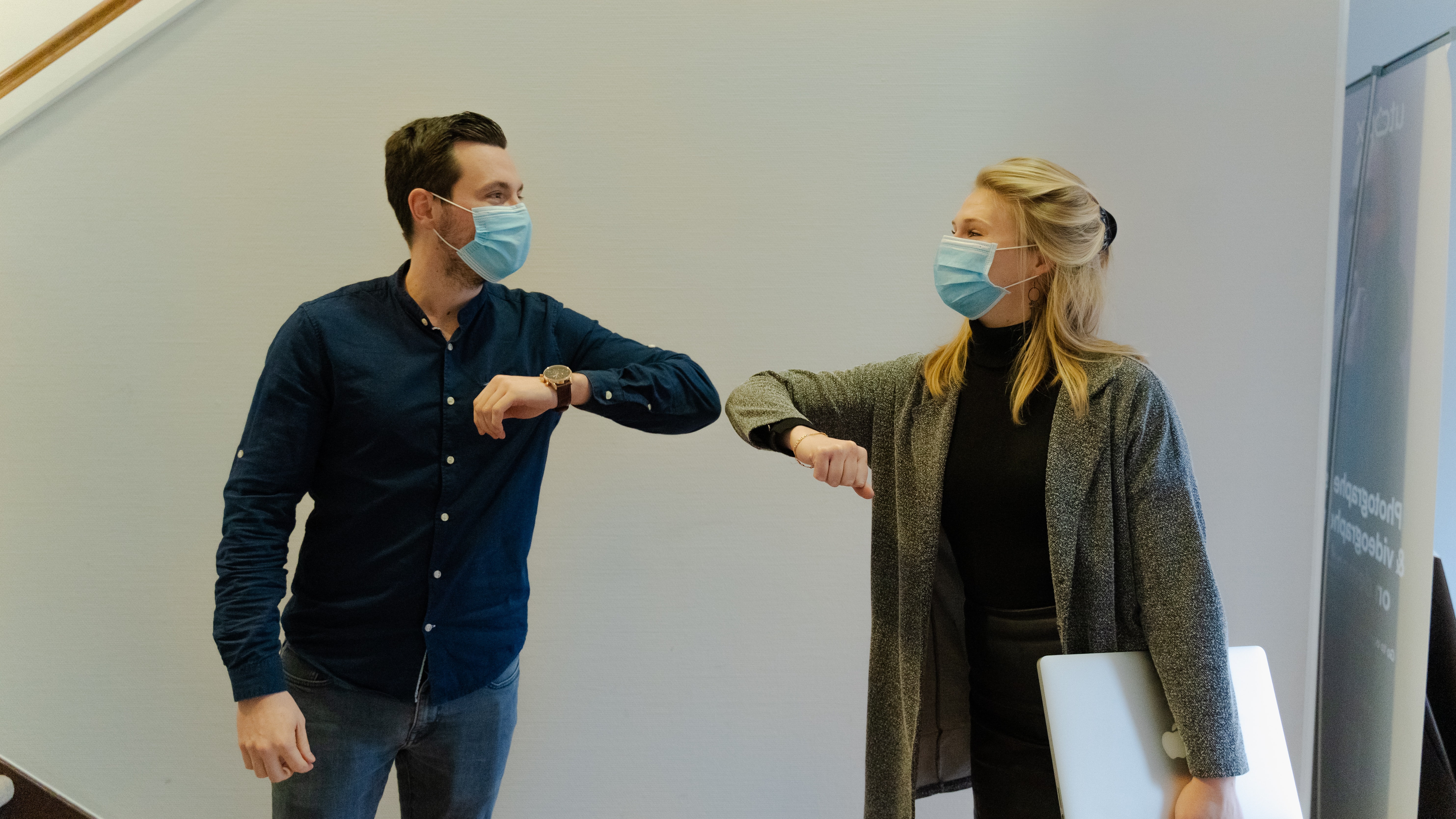
by Dave Wakeman Well, we’re about to turn the page on 2020. And while I’m hopeful that 2021 will be much less disruptive, I did want to share a few lessons I hope we take with us into the new year: Mental health deserves our attention: This year, I’ve heard more discussion than ever before about the need to monitor mental wellbeing and encourage people to put their mental health first. I get that the modern economy seems designed to wring every productive second out of us. So it takes a conscious effort to turn off and tune out. Only then can you recover and be able to push forward and work on new projects. Recharging doesn’t have to be a complex thing. One of the most powerful forms of rejuvenation I’ve heard from many people this year is mindfulness. Processes have power: We’ve seen a vaccine for the coronavirus come together faster than any effort like it before. What got us there? Science and processes. Both are help fueling innovation, progress and effectiveness. I don’t have to tell you in the project management community about the power of processes, but we should all be hopeful that the world at large understands how important processes are now. True leadership matters more than ever: We’ve see how bad leaders can cause a great deal of damage, especially when they aren’t forthcoming with information, lead with lies and disinformation, or just give up. But this year has also shown us how important good leadership is to teams, countries or any organization. Now more than ever we need leaders to help pull us together and we need to step up as project professionals when this doesn’t happen. What leadership lessons learned will you be taking into 2021? Happy holidays. Stay safe!
|



