


Welcome to The Project Economy


|
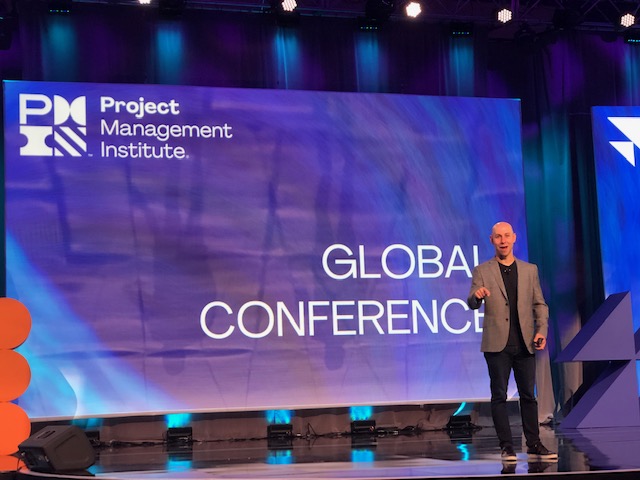
by Cyndee Miller Pretty much every pundit out there has a theory about the future of work—and how things will actually get done. For a while, it was all about the gig economy. Now perhaps I’m horribly biased, but I’m way more intrigued by The Project Economy: execs structuring their organizations around a portfolio of projects designed to deliver the most value to their stakeholders. It’s happening—and you, my friends, are in a prime position. Project managers are in the vanguard of The Project Economy, said Bob Safian, former editor of Fast Company, at the start of day two of Global Conference. “Projectization is moving through the economy,” he said. “It’s happening—I hear it talked about in the halls of power in companies around the world.” The future of work will be defined by tasks, not titles, Mr. Safian said. Technology is making existing structures within organizations feel archaic. And younger workers are looking at their careers as a sequence of tasks—a.k.a., projects—too. People will work on a project, deliver value and then move on, said Tech Mahindra’s Vikram Nair during Sunday afternoon’s Fireside Chat with PMI president and CEO Sunil Prashara. With that comes a new set of “it” skills. Forget soft skills—or at least stop calling them that. Stanford University’s Behnam Tabrizi is out to rebrand them as power skills—since they’re what will give people power in the future. It’s about communication, empathy and what he called understanding yourself, or “being clear about what your role is in the world” and “showing up in the most authentic way possible,” he said. It’s also about embracing diversity: You need to have people on your team who don't look like you, said Frederic Astier of Accenture. The Project Economy is going to require a different mindset—no matter your age or title on the org chart. “We must all possess a willingness and ability to adapt to the constant changes that are coming our way,” Mr. Safian said. Chaos will rule. “The old rules of business don’t apply anymore,” Mr. Safian said. “We have to recognize that there are no new rules. There’s no real consensus about what’s going to succeed today.” It’s a little scary, but also wildly exciting. So, are you ready? |
1.jpg)
Embraer Reaches New Heights: Lessons From a Record-Setting Jetsetter
Categories:
PMI Global Conference 2019
Categories: PMI Global Conference 2019
|
by Cyndee Miller It’s one thing to deal with disruption. But it’s a whole other to disrupt yourself—and put your self-proclaimed cash cow on the line. With its new E190-E2 line, Brazilian aviation giant Embraer didn’t just design, develop and deliver a family of next-gen commercial jets. The company did it faster than any other competitor had with similar aircraft. And Embraer leaders readily admit it couldn’t have gotten there—or won the 2019 PMI Project of the Year Award—without some serious project management. In accepting the award, Luís Carlos Affonso recognized the role of PMI and A Guide to the Project Management Body of Knowledge (PMBOK® Guide) in providing some structure to the company’s project management journey. “We would not be here if not for PMI,” said Mr. Affonso, the company’s senior vice president of strategy and innovation. Fernando Antonio Oliveira, the company’s program director, noted that like a certain organization we all know, Embraer is celebrating its 50th anniversary. While it’s certainly a major milestone, he encouraged project leaders to keep looking forward: “Don’t think about the project results,” he said at the awards gale. “Think about how you’re shaping the future.” Of course, we can’t talk about game-changers without mentioning the other Project of the Year finalists: Oil and Natural Gas Corp. Ltd. and L&T Hydrocarbon Engineering rose above super-short timelines and months of monsoons to futureproof the country’s largest offshore natural gas field. Société de transport de Montréal reimaginined one of the largest public transit rail systems in North America—making room for even more passengers. Want to learn more? PM Network will take a deeper dive into all the project action over the next few months. Plus, you can check out video case studies on PMI’s YouTube channel. |

The Hunt for the Disagreeable Giver
|
By Cyndee Miller “Don’t bring me problems. Bring me solutions.” This seriously ranks as one of the world’s worst management dictates. And finally—to my eternal appreciation—someone is calling out all those folks who have uttered the phrase. “If people only bring up problems when they have solutions you’re never going to hear about problems,” said organizational psychologist Adam Grant in the opening keynote at PMI Global Conference. Squashing any mention of issues creates a culture where people doubt themselves. And in that kind of environment, bold ideas are left to die—or they’re taken elsewhere. So how do you build a culture where the next great idea is pushed forward instead of put down? A lot of it comes down to who you hire, according to Mr. Grant. You’ve got to seek out the givers and avoid the takers. “Givers are trying to figure out, ‘What can I do for you?’” Takers, on the other hand, are the ones who steal all your ideas and take credit for all the work. “If you let even one taker onto a team, paranoia will start to spread and the givers will stop caring,” he warns. “The negative impact of a taker on a project or team is usually triple the positive impact of a giver.” Think the Lannisters on Game of Thrones. But how do you suss out the takers? I mean, it’s not as if they self-identify in the interview process. Mr. Grant’s advice? Ask the right questions. Think about the behavior you’re most worried about on projects—team members taking credit from others, for example—and ask candidates how often they think that happens. If a person’s answer is something to the effect of “deep down I think people are fundamentally selfish,” that typically means deep down they’re fundamentally selfish. But don’t confuse being agreeable with being a giver. Agreeable takers are usually the people who avoid conflict. They may be nice to your face, and then stab you in the back. In theory, agreeable givers may seem like the best allies. But in reality, they’re often too afraid to rock the boat when an idea strives to push the status quo. In reality, it’s the disagreeable givers who make the best champions of new ideas. They may seem gruff and tough. But they’re the ones who will play devil’s advocate, who will challenge and poke holes in your brilliant ideas—all because they have your best interest at heart. Think Sherlock. And once you get them on board, they’ll run through walls to make it happen. “Disagreeable givers can’t wait to fight for a new idea and they’ll be more credible advocates,” Mr. Grant says. Have you found your disagreeable giver? |
Why Employees Leave Culture
Categories:
Portfolio Management,
Best Practices,
Leadership,
Program Management,
New Practitioners,
PMO
Categories: Portfolio Management, Best Practices, Leadership, Program Management, New Practitioners, PMO
|
Most people leave organizational cultures, not managers. Organizational culture is defined as the collective behaviors, thoughts, norms and language of the people in the organization that signifies the "way of working." It represents the overall support system and resources of the organization. For example, if employees regularly start meetings late, then the culture of the organization may be to begin meetings late ("it's just the way things are"). Newcomers quickly learn this unwritten norm, and adapt to the late meetings, further propelling the status quo. It's important to understand that people leave organizational cultures because portfolios and programs can represent significant change to the organization—requiring new ways of working, behaviors and new operating agreements defined to support the change. However, if the organization is resistant to change—and the traditional ways of working remain—how do you change the culture? First, let us understand why people leave the organizational culture and what we can do to model the right behaviors as leaders: 1. Misaligned Vision and Leadership A common complaint is that there is "no perspective of where the organization is headed and not being able to see how my role fits into the bigger picture." Leaders, starting at the top, must role model the behaviors they expect. Rather than simply talk about the vision or the strategy, they must roll up their sleeves to translate the vision very specifically and tangibly into everyone's work. This is typically done through the strategic portfolio—employees identify with a stack ranking of strategic initiatives that communicate the most essential programs and projects of the organization. Each executive sponsor must then clearly translate the vision into day-to-day actions that the program or project is implementing. The strategic portfolio represents the "better state" of the targeted culture— what are the behaviors, ways of working, thinking and norms that need to be in the future. This is codified typically through team charters, operating agreements, and ground rules so that everyone on a team follows the same rules and ways of working. 2. Compromised Values, Beliefs and Increased Toxicity When employees feel they are being coerced into doing things that don't align with their values, they will find other places to use their talents. Behaviors that result during large scale change may be burnout, rumors, and change fatigue. Mediocrity may have been accepted as good enough, resulting in high performers, leaving the organization due to lack of challenge and opportunities. However, for those that remain, it may be difficult to absorb change since they never had to. As a portfolio or program leader, you don't need permission, budget or authority to start acting in ways that model high performance. Recognize and reward the right behaviors and call out the wrong behaviors. Growth needs to be the focus—desire is a powerful emotion—more than the fear/doubt that is often the first reaction when encountering change. The first emotion is Fear/Doubt. Left unmanaged, this can spiral into water cooler conversations, negativity and constant churn. However, having a growth mindset means that there are opportunities created from changing and learning new skills that can propel that organization to embrace new ways of working. 3. Organizational Structures and Processes that Create Stagnation Not having structured processes that support high performance creates an environment that people leave. No one wants to stand out when something new is introduced—it's almost like a virus where the antibodies (the current organizational culture) start attacking it. There needs to be a core group of high performers that embrace and spread the targeted organizational culture across the organization. High performers can't stand waste—wasted time in meetings, wasted use of resources, and wasted opportunities. Is the strategic portfolio management or program management office reporting to the executive leadership team level, or is it buried somewhere within the organization under a functional organization? Growing organizations embrace change as a constant and adopt a growth mindset. A growth mindset means that the organization is continually learning and sees change as an opportunity to learn new skills and gain new experiences. Rather than sit back and accept the status quo, we seek out how to design and build the change rather than be just the recipient of the change. Thoughts and mindset ultimately translate into behavior. Motivation and attitude are skills that are just as important as the technical portfolio or program management skills and can be developed over time. How are you developing your growth mindset? |
1.jpg) by Jen Skrabak, PfMP, PMP
by Jen Skrabak, PfMP, PMP3 Project Management Lessons From a 70.3 Ironman
| By Conrado Morlan
I’ve been running for eight-plus years—ever since my son suggested I do a half marathon in San Antonio, Texas, USA. So when a friend suggested I try a triathlon, I was ready for it. At that point, three years ago, I had 10 full marathons and 15 half marathons under my belt. The triathlon includes three disciplines in a single event: swimming, cycling and running. It was the athletic challenge I needed, similar to the professional challenge I encountered when I moved across industries to keep leading and managing projects. To get ready for the triathlon, I had to go back to the pool and start swimming after a long time away. I borrowed a road bike from a friend to start the formal training. We worked out on our own on weekdays and as a team on weekends. That first experience transformed me into a triathlete enthusiast, which led me eventually to the Ironman 70.3. The "70.3" refers to the total distance in miles covered in the race, consisting of a 1.2-mile swim, a 56-mile bike ride, and a 13.1-mile run. The short distance triathlons helped prepare me for the Ironman 70.3. And as I’ve come to realize, learnings I’ve made along the way also apply to project management. These are my three main findings: 1. Expertise and Experimentation Mastering all three disciplines in a triathlon can be difficult. My background is in running, but I was new to swimming and cycling. My coach gave good tips and workouts that helped me manage my bicycle on hills, navigate sharp turns and use all of my leg muscles to have a better stroke. For swimming, I followed my instinct and experimented with the breaststroke. I soon felt confident in the pool and gradually in open waters. My experiment worked out, as I finished my swim in the Ironman 70.3 about 20 minutes ahead of the cut-off time. As a project management practitioner, you may have mastered an industry-standard methodology and need to catch up with the new trends. In the triathlon, you may not transfer skills from swimming to cycling or running, but in project management, you can. Communication, time management, and people management are required regardless of the methodology or best practice that will be used in the project. This gives you room to experiment. At project checkpoints, you can inspect, adapt and make the required changes to improve your project and be successful. 2. Transition Is Key The transition is where the triathlete moves from one discipline to another, changing equipment. The area should be prepared in advance, with the gear set up in a way that helps the athlete have a smooth and fast transition. The time spent there may define the winner of the competition. I would compare the transition area with the risk registry. The more prepared the project manager is, the less impact there will be to the project. The “gear” in your risk register will include the most impacting risk(s), the risk owner and the actions required to mitigate the risk if it arises. It’s a working registry, so the project manager should keep adding risks during the project as required. 3. Anybody Can Help You A triathlon is not a team event, but that does not restrict the triathlete from getting support from others. Before the competition, the athlete may have followed a training plan supported by a coach, they might have been mentored by fellow triathletes and, last but not least, they likely benefited from family support. It’s common for some triathletes to have a race sherpa on the competition day. The athlete and sherpa will discuss beforehand what tasks each will take on during the race. In short, a race sherpa will lend a hand whenever necessary and cheer for the athlete during the competition.
As a project manager, you have your project team, stakeholders and sponsor(s), but that does not restrict you from getting help from people outside the project. You may have an internal or external mentor, somebody in your organization who can be influential and help you address issues. I used to have a list of people in the organization I contacted in advance. I let them know about the project and asked them if I could ask for support if needed. That simple action helped me on several occasions when I faced a challenge. If you are an athlete and a project manager, what lessons have you learned from practicing your favorite sport? Please share your thoughts below. |
.jpg)


