The Hunt for the Disagreeable Giver
From the Voices on Project Management Blog
by Cameron McGaughy,
Lynda Bourne, Kevin Korterud, Peter Tarhanidis, Conrado Morlan, Jen Skrabak, Mario Trentim, Christian Bisson, Yasmina Khelifi, Sree Rao, Soma Bhattacharya, Emily Luijbregts, David Wakeman, Ramiro Rodrigues, Wanda Curlee, Lenka Pincot, cyndee miller, Jorge Martin Valdes Garciatorres, Marat Oyvetsky

Voices on Project Management offers insights, tips, advice and personal stories from project managers in different regions and industries. The goal is to get you thinking, and spark a discussion. So, if you read something that you agree with--or even disagree with--leave a comment.
View Posts By:
Cameron McGaughy
Lynda Bourne
Kevin Korterud
Peter Tarhanidis
Conrado Morlan
Jen Skrabak
Mario Trentim
Christian Bisson
Yasmina Khelifi
Sree Rao
Soma Bhattacharya
Emily Luijbregts
David Wakeman
Ramiro Rodrigues
Wanda Curlee
Lenka Pincot
cyndee miller
Jorge Martin Valdes Garciatorres
Marat Oyvetsky
Past Contributors:
Rex Holmlin
Vivek Prakash
Dan Goldfischer
Linda Agyapong
Jim De Piante
Siti Hajar Abdul Hamid
Bernadine Douglas
Michael Hatfield
Deanna Landers
Kelley Hunsberger
Taralyn Frasqueri-Molina
Alfonso Bucero Torres
Marian Haus
Shobhna Raghupathy
Peter Taylor
Joanna Newman
Saira Karim
Jess Tayel
Lung-Hung Chou
Rebecca Braglio
Roberto Toledo
Geoff Mattie
Recent Posts
Project 2030: Skills We Need to Cultivate Now
The Technical Program Manager: How to Stay Relevant in 2025
5 Things Your Operational Plan Should Do
5 New Project Guardrails for Adaptive Leaders
The Leader's Voice: Respect It, Protect It, and Use It Properly!
Categories
2020,
Adult Development,
Agile,
Agile,
Agile,
agile,
Agile management,
Agile management,
Agile;Community;Talent management,
Artificial Intelligence,
Backlog,
Basics,
Benefits Realization,
Best Practices,
BIM,
business acumen,
Business Analysis,
Business Analysis,
Business Case,
Business Intelligence,
Business Transformation,
Calculating Project Value,
Canvas,
Career Development,
Career Development,
Career Help,
Career Help,
Career Help,
Career Help,
Careers,
Careers,
Careers,
Careers,
Categories: Career Help,
Change Management,
Cloud Computing,
Collaboration,
Collaboration,
Collaboration,
Collaboration,
Collaboration,
Communication,
Communication,
Communication,
Communication,
Communications Management,
Complexity,
Conflict,
Conflict Management,
Consulting,
Continuous Learning,
Continuous Learning,
Continuous Learning,
Continuous Learning,
Continuous Learning,
Cost Management,
COVID-19,
Crises,
Crisis Management,
critical success factors,
Cultural Awareness,
Culture,
Decision Making,
Design Thinking,
Digital Project Management,
Digital Transformation,
digital transformation,
Digitalisation,
Disruption,
Diversity,
Diversity,
Documentation,
Earned Value Management,
Education,
EEWH,
Enterprise Risk Management,
Escalation management,
Estimating,
Ethics,
execution,
Expectations Management,
Facilitation,
feasibility studies,
Future,
Future of Project Management,
Generational PM,
Governance,
Government,
green building,
Growth,
Horizontal Development,
Human Aspects of PM,
Human Aspects of PM,
Human Aspects of PM,
Human Aspects of PM,
Human Aspects of PM,
Human Resources,
Inclusion,
Information Technology,
Innovation,
Intelligent Building,
International,
International Development,
Internet of Things (IOT),
Internet of Things (IoT),
IOT,
Knowledge,
Leadership,
Leadership,
Leadership,
Leadership,
Leadership,
lean construction,
LEED,
Lessons Learned,
Lessons learned;Retrospective,
Managing for Stakeholders,
managing stakeholders as clients,
Mentoring,
Mentoring,
Mentoring,
Mentoring,
Mentoring,
Mentorship,
Mentorship,
Methodology,
Metrics,
Micromanagement,
Microsoft Project PPM,
Motivation,
Negotiation,
Neuroscience,
neuroscience,
New Practitioners,
Nontraditional Project Management,
OKR,
Online Learning,
opportunity,
Organizational Culture,
Organizational Project Management,
Pandemic,
People management,
Planing,
planning,
PM & the Economy,
PM History,
PM Think About It,
PMBOK Guide,
PMI,
PMI EMEA 2018,
PMI EMEA Congress 2017,
PMI EMEA Congress 2019,
PMI Global Conference 2017,
PMI Global Conference 2018,
PMI Global Conference 2019,
PMI Global Congress 2010 - North America,
PMI Global Congress 2011 - EMEA,
PMI Global Congress 2011 - North America,
PMI Global Congress 2012 - EMEA,
PMI Global Congress 2012 - North America,
PMI Global Congress 2013 - EMEA,
PMI Global Congress 2013 - North America,
PMI Global Congress 2014 - EMEA,
PMI Global Congress 2014 - North America,
PMI GLobal Congress EMEA 2018,
PMI PMO Symposium 2012,
PMI PMO Symposium 2013,
PMI PMO Symposium 2015,
PMI PMO Symposium 2016,
PMI PMO Symposium 2017,
PMI PMO Symposium 2018,
PMI Pulse of the Profession,
PMO,
PMO,
pmo,
PMO Project Management Office,
portfolio,
Portfolio Management,
Portfolio Management,
portfolio management,
presentations,
Priorities,
Probability,
Problem Structuring Methods,
Process,
Procurement Management,
profess,
Program Management,
project,
Project Delivery,
Project Dependencies,
Project Failure,
project failure,
Project Leadership,
Project Management,
project management,
project management office,
Project Planning,
project planning,
Project Requirements,
Project Success,
Ransomware,
Reflections on the PM Life,
Remote,
Remote Work,
Requirements Management,
Research Conference 2010,
Researching the Value of Project Management,
Resiliency,
Risk Management,
Risk Management,
Risk management,
risk management,
ROI,
Roundtable,
Salary Survey,
Schedule Management,
Scheduling,
Scope Management,
Scrum,
search,
SelfLeadership,
SelfLeadership,
SelfLeadership,
SelfLeadership,
SelfLeadership,
Servant Leadership,
Sharing Knowledge,
Sharing Knowledge,
Sharing Knowledge,
Sharing Knowledge,
Sharing Knowledge,
Social Responsibility,
Sponsorship,
Stakeholder Management,
Stakeholder Management,
stakeholder management,
Strategy,
Strategy,
swot,
Talent Management,
Talent Management,
Talent Management,
Talent Management,
Talent Management,
Talent Management Leadership SelfLeadership Collaboration Communication,
Taskforce,
Teams,
Teams in Agile,
Teams in Agile,
teamwork,
Tech,
Technical Debt,
Technology,
TED Talks,
The Project Economy,
Timeline,
Tools,
tools,
Transformation,
transformation,
Transition,
Trust,
Value,
Vertical Development,
Volunteering,
Volunteering #Leadership #SelfLeadership,
Volunteering Sharing Knowledge Leadership SelfLeadership Collaboration Trust,
VUCA,
Women in PM,
Women in Project Management
Date
By Cyndee Miller
“Don’t bring me problems. Bring me solutions.”
This seriously ranks as one of the world’s worst management dictates. And finally—to my eternal appreciation—someone is calling out all those folks who have uttered the phrase.
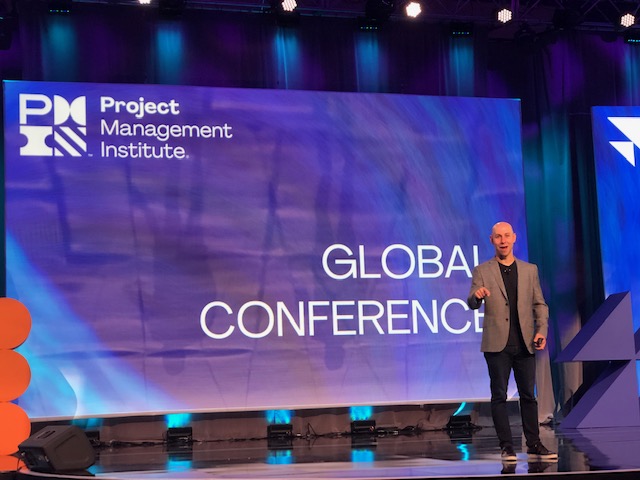
“If people only bring up problems when they have solutions you’re never going to hear about problems,” said organizational psychologist Adam Grant in the opening keynote at PMI Global Conference.
Squashing any mention of issues creates a culture where people doubt themselves. And in that kind of environment, bold ideas are left to die—or they’re taken elsewhere.
So how do you build a culture where the next great idea is pushed forward instead of put down?
A lot of it comes down to who you hire, according to Mr. Grant. You’ve got to seek out the givers and avoid the takers. “Givers are trying to figure out, ‘What can I do for you?’”
Takers, on the other hand, are the ones who steal all your ideas and take credit for all the work. “If you let even one taker onto a team, paranoia will start to spread and the givers will stop caring,” he warns. “The negative impact of a taker on a project or team is usually triple the positive impact of a giver.”
Think the Lannisters on Game of Thrones.
But how do you suss out the takers? I mean, it’s not as if they self-identify in the interview process.
Mr. Grant’s advice? Ask the right questions. Think about the behavior you’re most worried about on projects—team members taking credit from others, for example—and ask candidates how often they think that happens. If a person’s answer is something to the effect of “deep down I think people are fundamentally selfish,” that typically means deep down they’re fundamentally selfish.
But don’t confuse being agreeable with being a giver. Agreeable takers are usually the people who avoid conflict. They may be nice to your face, and then stab you in the back.
In theory, agreeable givers may seem like the best allies. But in reality, they’re often too afraid to rock the boat when an idea strives to push the status quo. In reality, it’s the disagreeable givers who make the best champions of new ideas. They may seem gruff and tough. But they’re the ones who will play devil’s advocate, who will challenge and poke holes in your brilliant ideas—all because they have your best interest at heart.
Think Sherlock.
And once you get them on board, they’ll run through walls to make it happen.
“Disagreeable givers can’t wait to fight for a new idea and they’ll be more credible advocates,” Mr. Grant says.
Have you found your disagreeable giver?
Posted
by
cyndee miller
on: October 05, 2019 09:52 PM |
Permalink
Comments (5)
Please login or join to subscribe to this item
Thanks for the support for what I felt was one of the stronger points in Adam's keynote presentation yesterday, Cyndee!
I found much alignment between his model of givers-takers/agreeable-disagreeable and Kim Scott's Radical Candor model.
Just as it is hard to create a culture which appreciates and recognizes the value of disagreeable givers, it is challenging to create one which safely cultivates radical candor.
Kiron
Wow powerful notes love it, thank you Cyndee!

Rami Kaibni
 Community Champion
Senior Projects Manager | Field & Marten Associates
New Westminster, British Columbia, Canada
Great notes Cyndee, thank you for sharing this.
The agreeable giver starts from within because I believe it is a mindset where you believe that finding a solution is better than sitting and complaining about the problem. One should encourage a culture of coming with Solutions and when people have enough confidence it will become the norm and at that point everyone will be an agreeable giver. I am not sure if I was able to properly reflect what I meant but we are definitely on the same page.
A great post Cyndee, thank you...… but who is Professor Moriarty within that team...

Priya Patra
Delivery Director| Capgemini India Technology Services Ltd
Mumbai, India
Great article Cyndee, I am awed by how you can bring out all the key points of any session so well :)
Coming to the article, how can we bring out that disagreeable givers in our teams once they are hired?
Please Login/Register to leave a comment.
|
"Two roads diverged in a wood, and I... took the one less traveled by, and that has made all the difference."
- Robert Frost
|




