Introducing the Ask the Expert Webinar Series!


| The Ask the Expert Webinar Series is an extension of the Ask the Expert Program offered at PMI® Global Conference. Each year, experts from the ProjectManagement.com community offer one-on-one sessions to conference attendees, acting as mentors, coaches, and sounding boards for Project Managers at varying stages of their careers and across industries. Gain access to these leading project management and industry experts through the Ask the Expert Webinar Series – ask your most pressing Project Management questions, seek career advice, and gain insights into industry trends. Please join the webinar prepared to pose questions to the experts! This quarter, the Ask the Expert Webinar Series will focus on the Healthcare industry with the first webinar launching on 16 March 2020. Our Experts are: Lori Wilson and David Davis. Register here!
Lori Wilson, PMP and ITIL certified, is currently a Project Manager for LifePoint Health managing hospital IT projects for their national hospitals. Having worked in Healthcare for over 30 years, she currently works on quality, productivity and financial software implementations in 18 North American hospitals. Additionally, Lori shares a monthly blog on projectmanagement.com, has been a guest speaker at previous INW PMI Chapter meetings and a presenter at PMO Symposium 2019. She recently co-authored an article and presented a webinar on the topic of workplace bullying. Ask Lori Wilson about: healthcare, leadership, talent management, career development, IT project management Dave Davis, PMP, PgMP, PMI-PBA, PMI-ACP, Certified Disciplined Agilist, is a Senior Program Manager for Ohio Healthcare, transforming the ITPMO to an IT Strategic Partner. He is managing Merger & Acquisition projects with a heavy emphasis on both network technology migration and Organizational Change Management. Outside of “standard work”, he is chairman of the Judy Hug Christmas Event and an active member of other service organizations including: Mobile Meals, ALS Walk, S.A.V.E., and Nightingale's Harvest. Ask Dave Davis about: ACP certification, strategic program management, PMO transformation, benefits realization, business analysis
|

January Community News You Can Use
Categories:
community
Categories: community
|
2020 is here, and at PMI, we have hit the ground running! It’s certainly an exciting time in the world of project management – learn more about the Project Economy or explore one of PMI’s featured topics, such as Agile. Throughout the year, PMI’s online community offers a great way to stay up-to-date on the latest project management trends, get your most pressing questions answered, and network with your peers. Here’s a summary of what’s currently happening around the community in your January Community News You Can Use: PMXPO 2020: Attend ProjectManagement.com's first virtual event of 2020...and the new decade! Whether you’re a seasoned PM or new to the field, PMXPO provides an excellent opportunity to learn, network, earn PDUs, and broaden your perspective on project management. Learn more, and register here! New Discussion Forum: Certification Central is now available under Discussions! Are you actively pursuing a PMP, PMI-ACP, CAPM or any other PMI certification? If so, here's where you can ask questions about achieving your development goals! Alternately, if you already have earned one or more PMI certifications, why not help fellow practitioners who are in the process of attaining theirs? Community Ambassadors Program: The Community Ambassadors Program was recently announced on ProjectManagement.com. The first group of Ambassadors, Emily Luijbregts and Andrew Craig, started in the newly created Ambassadors role in January. They are happy to help – so please reach out to them with any community and project management questions! To learn more about the program and get to know the Ambassadors, go here! 2020 PMI Academic Awards: The annual PMI Academic Awards recognize and honor outstanding members of the profession who contribute in exemplary ways to research, teaching, and literature in project management and related professions. You can nominate your colleagues now for the 2020 Awards! Learn more here! Standards Exposure Draft: Review and provide feedback to the exposure draft of The Standard for Project Management. The exposure draft will be available for public review and comment online from 8 a.m. EST, 15 January 2020 to 5 p.m. EST, 14 February 2020. Anyone interested in project management is welcome to participate here. How to Prevent and Stop Workplace Bullying: Join Lori Wilson, as she discusses workplace bullying and its ramifications for individuals and organizations. Explore practical tips and suggestions for preventing and stopping workplace bully in Lori’s webinar on-demand. If you have any questions, please feel free to reach out to a member of the Community Engagement team – we’re happy to help you. As always, stay tuned to the Critical Path for your community news! |

Planning is Thinking ... But Don't Think About it Too Much
Categories:
standards
Categories: standards
| By Giampaolo Marucci, PMBOK® Guide-Seventh Edition Development Team member Planning is a common activity in everything we do. We could say that we plan because we think, or we think so we plan. Planning is thinking on what we have to do in the future (near or far) to get to an objective or to achieve a goal. One of the core activities and functions in project delivery is planning, which is a Performance Domain in the new PMBOK® Guide. (See earlier blog post by Cynthia Dionisio on what are Performance Domains.) In project management, planning produces a common understanding of why we need to get to some objective and what to do next to get it. Common understanding is achieved by sharing of the information with all the stakeholders especially the delivery team. Planning activities can have output artifacts like “plans”—but not necessarily. Plans can be:
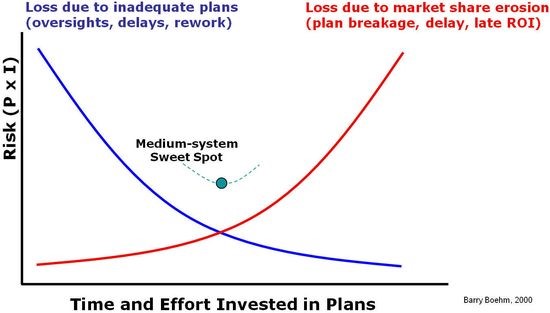
We can also “plan to plan” like in Rolling Wave Planning. In any case we need to pay attention to the balance of effort we spend in planning with the threat of market erosion because of delays in having spent too much time in planning.
Planning is closely related to the project delivery approach and tailored for the project to realize the product, service, or result with benefits for the community of people who will use the end result. Planning activities are always in parallel with control activities. A plan is effective only if it is frequently/continuously verified by control actions to understand whether or not the plan remains aligned with the expected benefits the project is expected to realize. At the start of a project we select a project delivery approach and we tailor it for the needs of the project based also on:
Then we need to apply an appropriate planning strategy/approach. If requirements are estimated to be nonvolatile, base technologies are well known, and the number of people is not many, then a full, advance predictive planning strategy could be applied. The adaptation of the “Plan,” artifacts, and re-planning activities during the project occur on the basis of the change control process defined for the project. On the other hand, requirements can be volatile and base technology not well known, so we might use a project delivery life cycle with frequent feedback from stakeholders. For this kind of project, we need frequent adaptation of plans during development and many re-planning actions. Also, projects that are closely aligned with “operations” functions, like continuous delivery of value, can apply Lean Kanban practices commonly used in IT or R&D projects. These types of projects need planning activities that adapt the plans continuously on the basis of feedback from experimentation. Adaptation here is so frequent that we could talk also about reactivity. But reacting to an event requires a short and prompt re-planning action immediately after the trigger event is recognized. Objects to plan inside a project include cost allocation, time scheduling, physical resources, delivery, and many others. The way in which the planning takes place varies depending on the life cycle approach taken, but planning remains a key activity throughout the project. Planning could be led by a project manager, a Product Owner, or the whole project team. Self-organized and cross-functional delivery teams might plan from a backlog of prioritized items. Planning, and generally speaking project management, is the application of knowledge, and it is important for the entire team to share in the planning regardless of who leads or the form the planning takes. In any kind of project, planning activities are always required. Planning is a fundamental skill inside any project and has enormous impact on the delivery of intended outcomes. That’s why I consider it to be a performance domain for all projects. Finally, planning is a passion, a knowledge we need to love if we want to apply it well, and a skill we need to improve continuously...Think about it.
|
New Discussion Forum - Certification Central!
|
As many of you know, the PMP® Exam is changing 1 July 2020. Why is the PMP exam changing?Every 3 - 5 years, we conduct research to understand how the profession has progressed, the impact of emerging trends, and how the responsibilities of project managers have changed. The last research was conducted in 2015 and resulted in the current PMP® Exam Content Outline Subject Matter Experts from leading organizations from around the world have worked with us to define the PMP of the future. We will continue to share information here to keep you informed – whether you are thinking about earning the PMP or preparing to take the exam soon. We know all of you post in Project Management Central asking for best practices in taking the current PMP exam. In order to better streamline the focus of this important topic, we decided to dedicate its own Discussion Forum - Certification Central. We hope this helps with your questions and concerns and receive helpful tips and feedback from your wonderful community members who go the extra mile in providing commentary! Best of luck to all of you! |

Nominate Your Colleagues for a 2020 PMI Academic Award
|
The annual PMI Academic Awards recognize and honor outstanding members of the profession who contribute in exemplary ways to research, teaching, and literature in project management and related professions. You can nominate your colleagues now for the 2020 Awards! The call for nominations is open now through 1 March 2020. You can nominate your colleagues for the following awards: PMI Research Achievement Award The PMI Research Achievement Award recognizes and honors an individual or group of individuals whose work has significantly advanced the concepts, knowledge, and practices of project management through a published body of academic research. PMI Linn Stuckenbruck Teaching Excellence Award The PMI Linn Stuckenbruck Teaching Excellence Award recognizes and honors an individual faculty member for excellence in teaching project management, and/or for their strong commitment to improving and enhancing project management curricula in higher education. PMI David I. Cleland Project Management Literature Award The PMI David I. Cleland Project Management Literature Award recognizes the author(s) of a published book that significantly advances project management knowledge, concepts, and practice. For more information and submission guidelines for the 2020 PMI Academic Awards, visit https://www.pmi.org/about/awards/research-academic or email [email protected]. The PMI Scholar Practitioner Award will not be offered in 2020. You can nominate colleagues for this award during the 2021 Awards cycle beginning in January 2021. |