


Leadership...The Impact


|
Today there are more than 35 AKUT units and more than 1,600 volunteers all over Turkey and to date more than 2,200 people have either been rescued or moved to safe environments by AKUT. In 1999, the organization became a member of United Nations' Search and Rescue Advisory Group (INSARAG). AKUT was officially recognized in 2011 as a "mid-sized search and rescue team" by INSARAG. With the inspiration of AKUT, today there are several Search and Rescue teams in Turkey created by volunteers, military, private, and professionals which were all founded by following AKUT’s lead. Nasuh created a big impact on society with his leadership of AKUT. He is a social entrepreneur and a leader in the citizen sector. AKUT is an innovative and much referenced organization among NGOs in Turkey with a powerful governance model and unique vision. Some personal lessons I learned from AKUT are:
Nasuh still inspires others with his books, public speeches and sharing. His book, Climbing to Your Everest, tells us that a key leadership aspect is to build a vision of the Everest you need or must climb, and to keep the goal in the forefront of your mind.
References Wikipedia
|
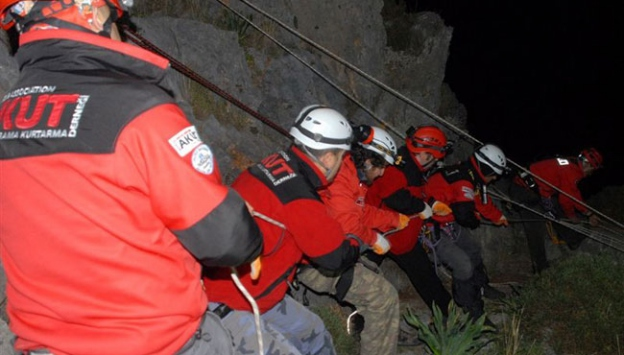 On August 17, 1999, a
 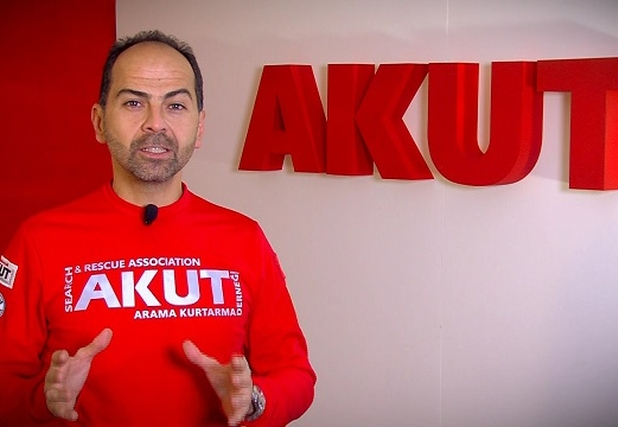 By that time, we knew Nasuh Mahruki as a mountain climber, who climbed the summit of Mount Everest and was the first ever Turkish Person to climb the Seven Summits. In interviews, he revealed that the story behind founding of AKUT was triggered due to another tragedy. In November, 1994, Nasuh and around 100 of the most competent climbers in the country were searching for two missing young climbers in Bolkar Mountains in Turkey. After 14 days of challenging searching, unfortunately, they could not find any of the boys - dead or alive. The body of one was found 8 months later by a villager and the second boy was still missing. Upon this upsetting event, Nasuh and a number of his, pioneering mountaineers friends thought about how search and rescue activities could be conducted in an effective and efficient manner. In 1996 they formed the AKUT Search and Rescue Association, a volunteer-based search and rescue team. The members received earthquake and flood training within the next year. It became the one and only Non-Government Organization that was organized on search and rescue, before the big Marmara Earthquake hit Golcuk in August, 1999.
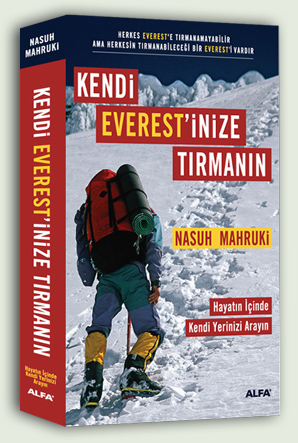 I will translate and share some quotes from this book to convey the messages to you.
Know Thyself, Learn, and Grow through Mistakes and Practices
|
This is my first blog post in this forum and I am very excited to be part of this community with my fellow classmates from Project Management Institute Leadership Institute Master Class (LIMC) 2015 class. I would like to share with everyone in PM community some of my perspectives, thoughts, and experiences in my ongoing leadership journey. I believe becoming a better leader begins with you and thus you need to Know Thyself. What are you doing to develop your leadership skills? There’s a famous quote from Vince Lombardi that says: “Leaders aren’t born, they are made. And they are made just like anything else, through hard work. And that’s the price we’ll have to pay to achieve that goal, or any goal.” - Vince Lombardi You need to work on yourself to become a better leader. Learn from past leaders and from their experiences. What kind of leader do you want to be? An admired leader, perhaps? Well, it doesn’t happen overnight.
Know Thyself: I believe that if you want to become a better leader, you need to, at some point, conduct an assessment of yourself on who you are, how you are viewed by others around you, and where and how you want to walk your leadership journey. Whether this is done personally or through programs your work/community organization offers, you need to conduct a reality check on yourself to understand your baseline and where you are in leadership journey so that you can continue to lead with strengths while working on areas for improvements to become a better leader. Have you spent time assessing yourself to find out what you are doing well and what areas you can improve on to become a more effective leader?
Leadership Philosophy: With that said, I believe building your leadership skills and style with the Servant Leadership philosophy as the base foundation to your leadership style(s) will provide a more meaningful and rewarding experience not only to you as a leader but also to those you lead in your organization.
Learn: I really like the quote from Harold Geneen that says “Leadership cannot really be taught. It can only be learned.” What I got out of this quote is that you have to practice it, experience it, and learn from it. Simply hearing about it from someone or reading about it isn’t enough. If you want to know more about being a good leader and developing your leadership skills, there’s a lot of information on the internet as well as books, articles, and seminars for you to read and hear about and gain knowledge on them. But just because you read and know about them does not make you a better leader. You have to practice it, learn from your own experiences, fine tune what works best for you, embed it into the fabric of who you are as a person and become that better person/leader. You can’t pretend to be a good leader. You have to be genuine about what you say & what you do; otherwise, people will see right through you.
Make Mistakes and Learn from It: There are many quotes and comments from famous people about making mistakes. One of my favorite on making mistakes is by Albert Einstein and it says “Anyone who has never made a mistake has never tried anything new.” Fear of making mistakes should NOT prevent us from trying something that we want to do. Making mistakes, actually, isn’t a bad thing because you learn a lot from them. Everyone makes mistakes. The difference between those who benefit from making a mistake and those who do not are:
As a leader, when we make a mistake, we must first own it, have a positive view of it and learn from it. This will help us become wiser and build our wisdom. So we should not be discouraged by the mistakes we make. Hopefully, you are not making mistakes all the time in every turn you take. If so, you will need to reassess yourself and consider looking into “Know Thyself” and make necessary adjustments.
Practice: Practice your leadership skills. To improve on it, you must practice it. One of the best places that you can hone your leadership skills and also serve the project management community, at the same time, is by joining your local PMI Chapter and serving as a volunteer. You will have an opportunity not only to meet new people and network, you will also have exposure to opportunities that allow you to lead and practice your leadership skills, in addition to all the fun and rewarding experiences volunteering will bring to you. The last thing I would like to mention is that a few weeks ago, I went to see a movie “The Martian” starring Matt Damon. There were many funny and great quotes from the movie; however, the one that was most memorable to me was the message toward the end of the movie when Matt Damon talked about solving problems one after another and not giving up and if you solve enough problems, you get to go home and not die in Mars. Do your homework to succeed and solve problems. Don't be discouraged. Don’t give up even if you fail. Keep trying. At least you are not on Mars so you won’t die. :) Since you are on Earth, you will build wisdom from mistakes you make. Experiences will empower you and make you a better leader/person.
On my next blog, I am going to talk about building trust and being trustworthy and why I think it is so very important in everything I do as I walk my leadership journey. |

SERVE, but don't forget to LEAD
| “A man can’t ride your back unless it’s bent.” (Martin Luther King Jr.). Once again, using a powerful and profound image, Dr. King summarized the right “posture” of a Servant-Leader: ready to “carry” the followers, to help them “reach” their “destinations” (their life goals). However, the quote has a very interesting approach, not so easy to spot: ONLY your back should be bent JUST ENOUGH to allow the journey. There should be nothing demeaning or humiliating in this gesture or in this posture for the Servant-Leader and it shouldn’t be considered as such by the people around him or her. This is one of the challenges of becoming a Servant-Leader and, moreover, of implementing the Servant-Leadership model in different organizations. Due to its characteristics (listen and understand, show empathy, be aware, lend a helping hand etc), Servant-Leadership is seen as a “softer” approach than any other traditional leadership approach. Competitive times - like the ones we experience nowadays - bring strong prejudices such as a leader must be tough, maybe even aggressive (if needed), ready to impose and direct people (for their “own good”) to the right path. There is no time to “listen” and “understand” completely. Leaders should be (and this is one of the most common prejudices that I encountered) concentrating on actions and less on feelings. The Servant-Leadership approach is contradicting this trend - taking care of the feelings and then getting to actions. This is why - as I saw on several occasions - Servant-Leadership is seen as a good and interesting thing, but not fit (in terms of “power”) for the cloudy world we live in. And this is, actually….correct. Servant-Leadership is promoting authority, not power. It is based on the skill of getting people to willingly perform because of the leader’s personal influence. Moreover, James Hunter (in “The Servant”) describes the Servant-Leader more as a “pit bull”, who “hugs hard and spanks hard”. When “it’s time to appreciate, honor and value team”, the Servant-Leader is the “first in line”. But, when the team has to perform, true Servant-Leaders “demand excellence and have little tolerance for mediocrity”.
|
The Base Layer
| Over my lifetime, I have had the opportunity to learn a lot about Leadership. I have learned what works and what doesn't. I have been introduced to many types of leadership. I have seen people who think they are great leaders, but are far from it, and I have seen those that are great leaders, but may not realize it yet. As an aside, the latter of those is always awesome to witness! Wouldn't it be nice if there was a definitive description of what leadership is and what it takes to be one? What would the penultimate characteristics be? Would it be trustworthiness? Humility? Someone who communicates well? Or would it be something else? As we are all connected to Project Management in one way or another, we are handed the keys to lead. I believe we wouldn't have wanted the keys if we didn't have someone in our lives that has been able to create that thirst and ability to want to lead. Not necessarily the tools to immediately be a great leader because that's something that needs work and practice, but that yearning to be a leader to other people and watch them achieve more than they ever could imagine. I have looked up to and learned from many people . In my case, I was very lucky to have a wonderful base layer to work with. My parents both exuded the crucial characteristics that it takes to lead. They instilled in my sister and me an internal drive to be the best we can be in our leadership roles. As I continue in in my career and with my family, I can only hope that my wife and I raise our children with the same drive my parents gifted to me. I have learned the base I was given many years ago is firmly ingrained in my being. As I graduated with my PMI LIMC Class of 2015 colleagues, I anticipate that the lessons and opportunities I have had over the past year will stay with me through all of the new leadership roles I may have. I know I have added another successful layer, but will always have that base layer to build on. What is your base layer? Is it strong and sturdy to handle adversity? How will you ensure it is? I hope this new blog is a start. |
Global Community and the Growth Mindset
| I believe we are all leaders in our lives, as everything is relative in the universe. Leaders take initiatives and require no title. My experience has been that the servant leadership philosophy is integral and works well with different leadership styles. In my search, I realized it is critical for us to be connected to a trusting, supporting community in order to grow and continue to explore. To be heard, and more importantly, to actively listen are keys to leading effectively as everyone has values to contribute. Servant leadership focuses on the big picture, work collaboratively and act in the benefit of others. If all the people we serve become better persons as a result, then we are leaders. Life is a collection of special moments that shape our experiences. By virtue of action or inaction, the truth is that leadership is part of the problem/puzzle or success. I long for the nexus effect and have high hope that if we try, we will create synergies that connect multiple groups to the center of the matter for meaningful and memorable experiences in life. I am very grateful to be part of this global project management community. I am an active volunteer with PMI because I believe in the project management impact for the world. Project/Program/Portfolio Leadership and Management are core competencies that have a positive influence on the business results and society. Servant Leadership is a lifelong journey that will take us on incredible adventures. In the spirit of sharing, I invite you to explore the links below in case you have not come across these excellent resources. Please join us in the servant leadership journey! Namaste. Focus on Servant Leadership http://www.slideshare.net/trisetyawati/servant-leadership-1759355 Lead Humbly – The Path of Servant Leadership, by Lindy Ryan http://www.slideshare.net/thumbelindy/lead-humbly-the-path-of-servant-leadership-28089696
|



