
Now, we are free


|
The word “servant” triggers (in many situations) goose-bumps on individuals aspiring to be leaders. We are wired to perceive it as a “status-reducing” label, as a way to mark the limits for a second-class role (or, even worse, an individual). Associating it with strong, powerful noun - like leadership or leader - doesn’t make it better. In fact, in this case - servant leadership or servant leader - the term “servant” (officially, a noun) is perceived more like an adjective, diminishing the force of its more famous associate. I always look at people’s faces when this topic is brought to the table. I actually started a little experiment. When asked about what I am most passionate about and what my favourite speaking topic is, I answer first with “I am really into [or] I really like to speak about leadership…”. My conversational partner’s face lights up (“Oh, another one…” - he might be thinking) and he asks - ready to share and engage in a small debate - “What kind of leadership?”. As soon as the “infamous” association - servant leadership - leaves my mouth, the just-created magic disappears. I can see disorientation and confusion in my interlocutor’s eyes. The comfortable smile is replaced by a suspicious scowl and, most probably, questions start popping into his or her mind - “What the hell is this? You are either a servant, or a leader. Are you mocking me?” The reduction-effect of “servant” upon “leadership” - which I described earlier - is almost instantaneously present. Everybody loves Leadership and are willing to talk about this “amazing, sensible and always up-to date” topic. We need leaders and leadership. They are vital for our success, for our well-being, for our society. But...Servant Leadership? Servant Leaders? It seems to degrade the powerful noun.... leadership - as we were wired to perceive it. We put our leaders on a really high pedestal. Even if they don’t want to be there, we elevate them. In many situations, this is the only way we can see (as in “perceive”) them as leaders. We need to see them at any moment, to have them in front, (literally) leading the way. Our leaders have to pull us and help us achieve a strong pace to the target. Otherwise, they are not the leaders we expected, the leaders who can take us there no matter what. How can we trust a leader who is actually behind us, gently pushing, not pulling and, most of all, serving us? The way I see it, this sorry situation is triggered by two main factors:
As I recall, coming back to my little experiment, no conversation about Servant Leadership ends up in a dull, boring way. The majority of my interlocutors smile politely and either change the subject or excuse themselves, leave or engage in another conversation. I get it - we might not be ready for this. Re-wiring our brains can be hard and takes a long time. However, I have seen individuals (it’s true, just a small percent) who were stirred and intrigued by the whole idea. Something sparked behind their eyes - maybe just enough to kick-off an internal revolution. This kind of “inception” is the one I am counting on. This is the one bringing more selflessness and less selfishness, more trust, more community and less individuality, more authority and so on and so forth.
|

Leadership...The Impact
|
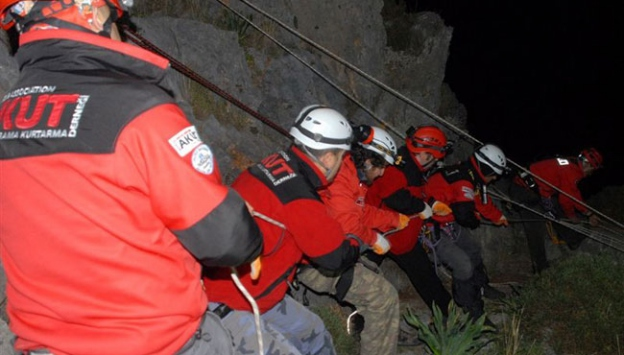
Today there are more than 35 AKUT units and more than 1,600 volunteers all over Turkey and to date more than 2,200 people have either been rescued or moved to safe environments by AKUT. In 1999, the organization became a member of United Nations' Search and Rescue Advisory Group (INSARAG). AKUT was officially recognized in 2011 as a "mid-sized search and rescue team" by INSARAG. With the inspiration of AKUT, today there are several Search and Rescue teams in Turkey created by volunteers, military, private, and professionals which were all founded by following AKUT’s lead. Nasuh created a big impact on society with his leadership of AKUT. He is a social entrepreneur and a leader in the citizen sector. AKUT is an innovative and much referenced organization among NGOs in Turkey with a powerful governance model and unique vision. Some personal lessons I learned from AKUT are:
Nasuh still inspires others with his books, public speeches and sharing. His book, Climbing to Your Everest, tells us that a key leadership aspect is to build a vision of the Everest you need or must climb, and to keep the goal in the forefront of your mind.
References Wikipedia
|
 On August 17, 1999, a
 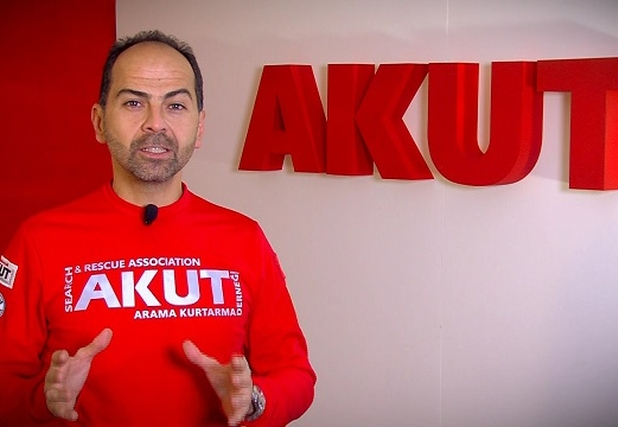 By that time, we knew Nasuh Mahruki as a mountain climber, who climbed the summit of Mount Everest and was the first ever Turkish Person to climb the Seven Summits. In interviews, he revealed that the story behind founding of AKUT was triggered due to another tragedy. In November, 1994, Nasuh and around 100 of the most competent climbers in the country were searching for two missing young climbers in Bolkar Mountains in Turkey. After 14 days of challenging searching, unfortunately, they could not find any of the boys - dead or alive. The body of one was found 8 months later by a villager and the second boy was still missing. Upon this upsetting event, Nasuh and a number of his, pioneering mountaineers friends thought about how search and rescue activities could be conducted in an effective and efficient manner. In 1996 they formed the AKUT Search and Rescue Association, a volunteer-based search and rescue team. The members received earthquake and flood training within the next year. It became the one and only Non-Government Organization that was organized on search and rescue, before the big Marmara Earthquake hit Golcuk in August, 1999.
 I will translate and share some quotes from this book to convey the messages to you.

