




Guessing is not a strategy: How to build decision velocity with AI and real-time data
June 10, 2026 | Live Webinar

Navigating from a BA to Senior BA Role
How the Big 4 Impact our Personal and Professional Lives
The Impact of AI on the BA Role
Effective Communication is Essential for Project Success
Organizational Culture within The Walt Disney Company
Artificial Intelligence, business analysis, communication, Leadership, mentorship, organization, project management


|
I once heard a Toronto entrepreneur for the Rogers Communication company give a speech about choice in the marketplace. He said customers make choices on what they can buy, but those choices are provided by the organizations selling those products. In other words, "a customer's choice" is pre-selected for him/her by those who own the means of production. Nonetheless it is still a choice, all be it limited. This selection of choice is no less apparent than with Apple, Google, Facebook, and Amazon. The big 4 are so prevalent in our lives that it's hard to imagine life without being influenced by 1 or all of these 4 companies. Probably no different than households being influenced by the industrial revolution or the introduction of automobiles into the marketplace many decades ago. Technology has become more of a need than a want. Wants are always greater than needs. But converting a want into a need is far more profitable. It creates a form of dependence on a product, which is exactly what has occurred with Apple, Google, Facebook, and Amazon. Take travel 25 years ago, for instance. Flights were booked via travel agents, and often group travel deals were popular. Maybe even travellers cheques were used. Calling on a land line to book hotels was the norm. All this planning took days, weeks or months. Now, to book a flight one need only to do a Google search for an available hotel or flight, pay online using a credit card or bank transfer, save the receipt or flight bar code on the phone (to be scanned during pre-boarding), and wait to eventually board a flight. All these steps can be done within minutes of each other. The time between completing a transaction and enjoying one's purchase is negligible. Compared to 25 years ago and today, transactions are so much faster and efficient. But, what is the price we pay for this efficiency? Big brother is ever more prevalent than before. George Orwell's book 1984 is perhaps a past reminder of how much further we have come into the world of technology. The big 4 play a huge part in that role, whether it be someone filming a crime in action and posting it on Facebook; CCTV cameras catching suspected criminals, and having it posted on YouTube; or DNA in databases being used to discover missing persons or long lost relatives which a quick Google search on a MacBook might be able to find. Perhaps at a closer look Apple, Google, Facebook, and Amazon may appear to be working more as an oligopoly, rather than allowing the invisible hand of laissez-faire economics to take it's natural course. Makes one think whether innovation is contrived and limiting, rather than allowing creativity to bolster. Of course, it looks like we Westerners are overwhelmed with the big 4. But, it's nothing compared to how China has embraced technology. Having recently lived in China for a while, Alibaba has far surpassed Amazon in every way shape and form. Physical money is virtually obsolete in China's arena of hyper competition. Even the person selling food along the street uses a bar code to have customers pay via WeChat or AliPay apps. One phone number or one email address connects your bank account, to your WeChat app, and pays for everything with a quick phone swipe across a bar code. When and if the West will ever catch up to China electronically is yet to be seen. It's just another testament to the power of influence that the big 4, and some even bigger tech giants have over the everyday lives of everyday people. John Bates in his book Thingalytics, details how connected devices today far surpass the number of humans on earth. We have seen the Internet of Things change from 500 million connected devices in 2003, to over 50 billion connected devices in 2020. This growth, which the big 4 are a monumental part of, have made not so much a Leviathan of Things, but more so a Perspective of Things, which has undoubtedly changed our everyday lives forever. |
|
On a project, especially an IT project, the Project Manager (PM), the Business Analyst (BA) and the stakeholders each complement one another. The relationship between these roles is a critical one on the engagement of projects. Each role really needs to spell out to one another what they need and want within the project. Strong communication between these parties and finding a nice balance between people, process and tools, is vital for project success. Some of us may not think of the end users as stakeholders. The end users are probably one of the most essential stakeholders in the entire project. How do the Project Manager and Business Analyst engage stakeholders? The Commitment Curve If we look at a commitment curve. On that curve we start from how do you get the stakeholders on board. Whatever you rollout, take a good look at the communication plan, how will you compose it. It should include how you communicate with the sponsor as well as the end users. A Communication Plan is used to agree on how to share ideas and expectations, and how to stay informed. How big the communication plan is depends on the size of the project and what team members and stakeholders are involved, and to what degree you will communicate with stakeholders. Is it a minor, medium or major roll out? Will people be trained, do they need to be trained. If so, by how much? Is a presentation format adequate for training, or do you need more advanced hands-on trainings? Communicating with Executives And, communication with executives is very different from communication with other stakeholders. The Communication Plan, Stakeholder Engagement Plan, the Sustainment Plan (for when the project ends) are all critical forms of documentation that spell out the path on how the PM and BA get buy-in from stakeholders. Stakeholder Engagement Plan Take the stakeholder engagement plan for instance. Within change management trying to get stakeholder buy-in during a project, it's essential that you know how to engage stakeholders throughout each step of the commitment curve. You need to engage those stakeholders in ways that are specific to their needs. You want to use the right engagement activities at the right time to gradually build that commitment to change. How do you assess your stakeholders along that commitment curve? You will need to assess where your stakeholders currently sit on that level of commitment, and where it is you want them to be the end of the initiative, and how you can involve them in adopting that required change. Level of Unawareness The BA needs to move that stakeholder from a level of unawareness to one of being aware of the vision, mandate, objectives, and set the foundational key messages in place for the project. Level of Understanding Then you want to move to a level of understanding with your stakeholders, a level which avoids negative perceptions. Here you need visible leadership commitment, and to engage stakeholders through targeted communications (whether it be email, or face-to-face, for example). Level of Acceptance Then move to a level of acceptance where you build buy-in for the change by providing the right information and support; and engage stakeholders by getting people involved as early as possible in the project. Stakeholders are more likely to adopt the decisions and plans, they've had the opportunity to influence. By getting stakeholders involved early, they can feel their contributions will be highly valued. Level of Commitment Then you move to a level of project commitment where you bring the project benefits to life for stakeholders, sustaining the future state and embedding change as the 'new' way of operating. The BA and PM need to know a) the Who? Who is your target audiences or who are your target stakeholders? b) the What? What key messages (communications) or activities (engagements) do you impart to the stakeholders? c) the When? When do you communicate? Knowing the timing before, during or after the change, with specific dates for that communication to take place in important. d) the How? Figure out how the message will be delivered within the delivery channel. e) by Whom? Who is the best person to communicate or engage the stakeholder group? Note that face-to-face channels are the most effective form for engagement. Sustainment Planning In the case of sustainment planning the BA and PM need to consider people, process and tools. a) For People you need to determine an 'owner' in the business who will sustain the change, champion and model the behaviors that are needed. For example, you need to know how to integrate the changes into the onboarding process. b) Create an ongoing Process to reinforce the change, and update other processes (if needed) and measure the outcomes (the metrics). For example, establish audits of the success metrics. c) For Tools and technology ensure there is a plan in place to manage and maintain new technology or tool requirements. Conclusion Effective communication and engagement is an essential component in managing the change along the commitment curve within a project. So, the PM and BA need to move those stakeholders from a state of unawareness, to being aware, to understanding, to acceptance, to commitment, in order to implement that change, to bring that project to fruition. How do you convey the right message, from the right communicator, to the right audience, through the right channel, at the right time. As a BA, in your planning, consider when you need to communicate with each stakeholder. Include the PM in these plans so both of you can work cohesively with stakeholders to deliver a project on time and on budget. |
|
Some fear the role of the Project Manager may be eliminated as the use of Artificial Intelligence (AI) becomes more prevalent in the workplace. Others see the evolution of AI as creating new opportunities, allowing the Project Manager to transform their role to focus on more critical and crucial responsibilities. Is "AI" just a new buzzword of the week? To some it may be so. Or when you hear "AI" do you envision the Terminator or iRobot. Or do you think of half human half machine like RoboCop, or Bionic Man? These overly intelligent machines are as mythical as the cyclops or leprechauns. Hollywood movies have certainly added to the myth of the super machine thinking and acting like a human, replete with human emotions; conscious, forgiving, understanding, and filled with empathy. Well, that's the world of make believe. The real world is far from this scenario, and probably will not exist within our lifetime. AI in the business world is something more tame, and less threatening. It refers more to robotic functions such as operations, data collection, tracking and reporting; those repetitive tasks which hold far less value, but which need to be accomplished within business. In complex projects AI tasks save time and improve data accuracy, thus allowing PMs better interpretation of the data. Automating workflows, predicting risks, eliminating human bias, preventing cost overruns, or digging deeper into big data for real-time insights, these are all tasks which allow the PM to spend more time on the human side of a project: the business, stakeholders and customers. AI allows the PM to provide more succinct strategic advice to the business, to be a more substantial leader providing value outcomes, rather than simply being a manager. AI can more effectively guide PMs on where to focus their efforts, thereby more accurately increasing the potential for project success. AI is not a threat to project management jobs, but a way to spend less time managing and more time doing those tasks that add true value to a business. Project Manager's soft skills like communication, critical thinking, emotional intelligence, leadership and understanding the needs of stakeholders, are more valuable and more marketable than ever, and very much in demand in the world of AI; skills currently void within any robotic AI machine. Since the core of the project management profession is not easily transferrable to a machine, PMs should not be fearful of AI inadvertently hijacking their jobs. PM jobs differ widely in complexity, and encompass unforeseeable or taxing challenges which can not easily be tackled by AI. This is AI's limitation. It is relegated to recognizing patterns within data and making conclusions or forecasts based on those patterns. Therefore, AI is optimal for repetitive, predictive or computational tasks. In other words, AI is more like a tool to enhance the project management field, rather than to displace it. Imagination and adaptability is far more fluid within a Project Manager than within AI machines. If anything, the adoption of AI in projects will encourage the PM to embrace techniques which will sharpen our soft skills, making us even more marketable. The introduction of automation during the industrial revolution in the 18th and 19th centuries gave way to faster manufacturing processes. This was enough to frighten many trades people during that period, who felt their jobs would be lost to machines. The automobile modified transportation, making the use of horses rather obsolete. The introduction of email forever changed the demand for posting letters in the mail. Each one of these transitions involved some form of mechanization, which altered the demands for certain jobs. Rightfully so, AI is yet another stage in this move toward more encompassed automation within the workforce. Like in the past, each time there was a dramatic shift in mechanization, new jobs were created, and many current jobs were enhanced, making them even more in demand. But, throughout this change there was always someone needed to plan, manage, monitor and control the work, and make crucial decisions on the job. The role of the Project Manager will continue to evolve, and will undoubtedly play a pertinent and pivotal role in the world of AI, just as it has done throughout the history of automation. |
|
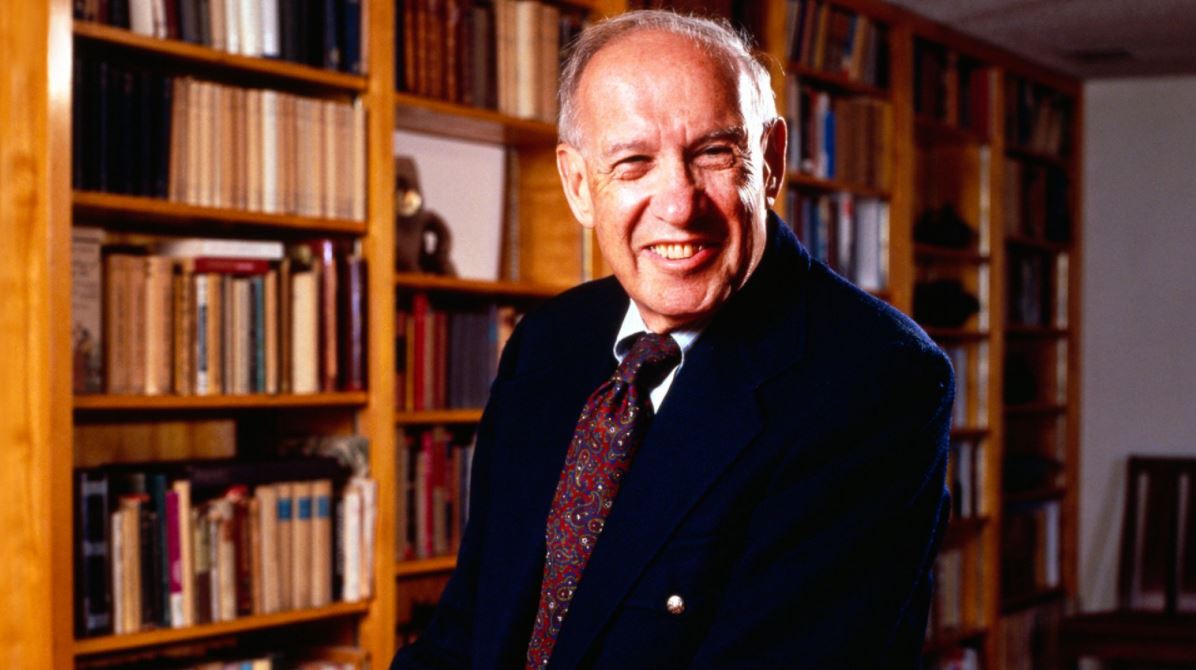
Peter Drucker was a well known Austrian-American management consultant. His ideas are highly regarded in the project management field. He wrote many books and articles, but one in particular that comes to mind is "Managing Oneself". Still a very popular article, it neatly and meticulously spells out a few practical tips on how to build a life of excellence. First, one must ask a few questions: 1) What are my strengths? At first glance these questions might sound trivial. But with a closer look one can see how these questions help drive ambition, and motivate one to maintain a positive trajectory to elevate oneself to the peak of any profession. In essence it helps one become a chief executive officer of their own career. As the old saying goes, if you don't manage your career, someone else might manage it for you, and that may not always be pleasant. The above 5 questions help each one of us develop a significant understanding of ourselves, how we can work best with others, and make a significant contribution to increase our value within the workforce. What are my strengths? How do I work? What are my values? Where do I belong? What can I contribute? In short, it's this understanding of one's strengths and self-knowledge that enables us to accomplish rewarding and valuable levels of excellence within the project management field, by analyzing ourselves, and asking some of the questions listed above. |
|
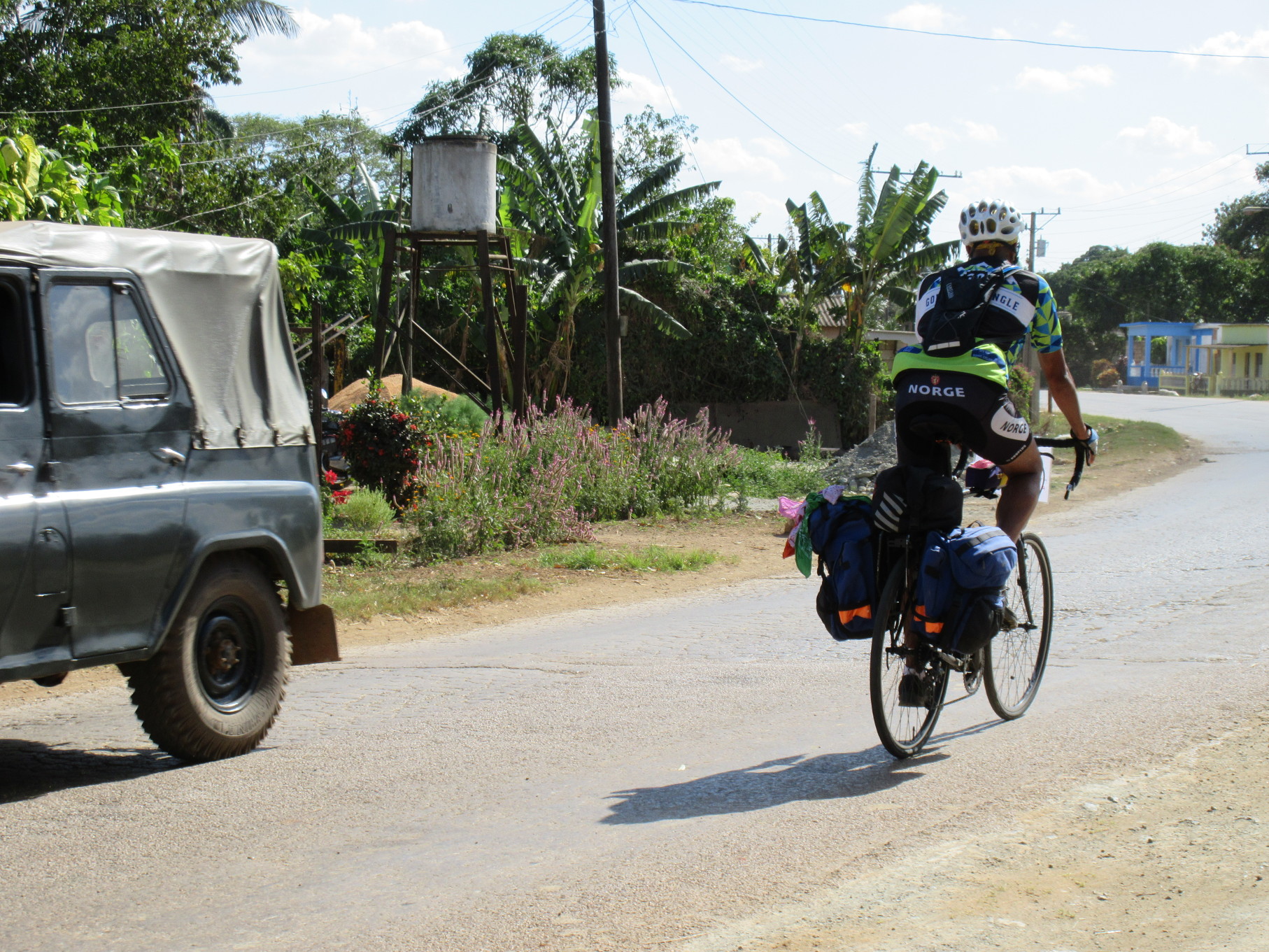
Even on a vacation, you still think in terms of project management: initiating the trip, planning a road map, planning for assumptions and risks, planning resources and expenses (you need to budget), executing your plan, always monitoring and controlling circumstances, and eventually rounding up everything to a close, and heading back home. Sometimes you just feel being Agile would be so much better. In March 2018, it didn't take long to decide to cycle Cuba over nine days, from the south eastern coastal city of Santiago de Cuba, to Havana in the north. If I had any reservations, they were swiftly squashed by Sylvie, my cycling partner, whose intoxicating enthusiasm for the bike ride was ten-fold more than mine. We were riveted with anticipation, as we carefully planned our daily routes, our expenses, and whether to rent or bring our bikes: every minute detail was diligently reviewed and carefully recorded into our daily planning guide. In added preparation we purchased our plane tickets six weeks prior to the event: we were intrepid keeners, ensconced in thoughts of Cuba cycling nirvana! On this trip, we wanted to see the real Cuba, we wanted to see the real people, the real country. What better way to do so than by bicycle! Thus, we were destined to cover Cuba on four pedals and two cranks! We ventured through many cities and towns, both large and small. Our daily routes allowed for unparalleled views of the countryside, which lie in stark contrast from Cuba's teeming resorts. The undulating hills were a good start to our journey. For the most part, the roads were smooth and surrounded by lush vegetation. Though, we did have our fair share of pot-holed or roughly paved roads with few shoulders. Only a few times were the local roads a continuous blanket of semi-asphalt, sand, dirt and debris. I don't think we saw roads with wide shoulders 'till we arrived within close proximity of Havana. Along the ride, it was fascinating to see horses, cows and oxen used to till farms. Horse buggies, bicycles, bicycle taxis, stage coaches, mopeds, and trekking are main modes of transportation in Cuba, particularly in the southern part of the country, which is a bit less developed than the north. The further you are from a city the fewer cars you see. Most automobiles are either classic American 1950s cars or 1970 Russian Ladas, with some modern vehicles here and there. In some cases, the way of life in Cuba conjures up images of early 20th century Canadian pioneer farmers and homesteaders, which is certainly unique to us in today’s world. For instance, it was interesting to see oxen pulling carts of hay on country roads. It makes one rethink the necessity for time-efficient travel. The casas (a type of AirBnB) which we stayed in were impeccable, and either very modern and chique, or old colonial homes with antique furniture, very large rooms and ultra-high ceilings. Some casas had courtyards adorned with flowers. One of our casas was something similar to a typical Spanish style villa. Of all the towns we visited, Caibarien was probably one of the most impoverished. One could easily surmise this from the many dilapidated homes in that town. From scenes like this it may appear at first glance that Cubans are economically destitute. But, their brilliant wealth instead, is tied up in strong cohesive social connections among friends and family, an affinity in helping strangers, and a richness in uniform kindness. And, not to mention free education and free health care available to all its citizens. Characteristics and institutions like these could make even the most doubtful visitor curious to know more. If anyone has a dream to re-live the nostalgic period of the 1950s just for one moment, Cuba is the place to be: it seems to have been stuck in a time warp since 1959 (the year their revolution ended). There is a fascination with all things old school, I mean really old school, at least with cars, some music, architecture, furniture and the like. The former colonial buildings seem to echo history from the deep recesses of time, certainly well worth seeing. When dining at two restaurants, one in Havana and one in the town of Bayamo, we were entertained by musicians singing popular songs from the 1950s and 60s. In the spirit of the culture from that time-period, there is a more tempered paced lifestyle throughout Cuba, which is infectious and enduring. As we moved from town to town, we marvelled at the peace and tranquility around us, taking in the splendid sceneries minute by minute! On our ninth day, triumphant in our glory, we eagerly arrived in Havana. We rested for a day, then got a ride to the airport in a classic red 1950s car, which had been refurbished into a taxi. It was a memorable send off to our last day in Cuba! During our bicycle ride we were intent on immersing ourselves in Cuba's surroundings with agility: taking occasional breaks along our route, sampling local cuisine, and mixing and mingling with locals. Managing and adapting to that swift current of daily change in a new environment was iterative in many ways. We truly relished the ride. Within nine days of distance cycling, we traversed the country on 4 pedals and 2 cranks! In doing so, it afforded us a cyclical movement through time, history and culture. What an irreplaceable and magnificent adventure! In a sense, taking a vacation like this can be a small precursor to planning for how to survive in the project economy. |
|
"You do not really understand something unless you can explain it to your grandmother." - Albert Einstein |