Project Management: What's in Store?

Michael R. Wood is a Business Process Improvement & IT Strategist Independent Consultant. He is creator of the business process-improvement methodology called HELIX and founder of The Natural Intelligence Group, a strategy, process improvement and technology consulting company. He is also a CPA, has served as an Adjunct Professor in Pepperdine's Management MBA program, an Associate Professor at California Lutheran University, and on the boards of numerous professional organizations. Mr. Wood is a sought after presenter of HELIX workshops and seminars in both the U.S. and Europe.


 Career Development
Communications Management
Diversity
Estimating
Knowledge Management
Lessons Learned
Organizational Culture
Quality
Strategy
Testing/Test Management
Career Development
Communications Management
Diversity
Estimating
Knowledge Management
Lessons Learned
Organizational Culture
Quality
Strategy
Testing/Test Management
In the beginning (in this case, the 1950s), project management was confined to the realm of engineering--and this industry gave birth to the era of modern project management. These were amazing times as project management tools grew beyond Gantt charts and workplans. New scheduling tools burst upon the scene like the “Critical Path Method” (CPM) and Program “Evaluation and Review Technique” (PERT). Formal project management (PM) was not just for engineers anymore. PM tools and techniques found their way into all industries where things were being built like government, construction, manufacturing, aeronautics and more. The major innovators in this realm included organizations like Booze Allen, DuPont, Lockheed Martin, Remington Rand and the United States Navy. By the mid-1960s, the PM’s tool kit included planning, scheduling and cost-estimating tools. Project Management became a recognized profession as evidenced by the formation of the International Project Management Association (IPMA) in 1967 and the Project Management Institute (PMI) in 1969.
Fast forward to 2012, and the world of PM is filled with a multitude of frameworks and approaches including (1):
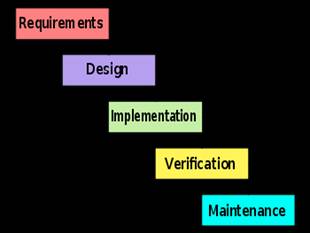
Waterfall (traditional phased approach) (3)
Agile (iterative & heuristic) (1)
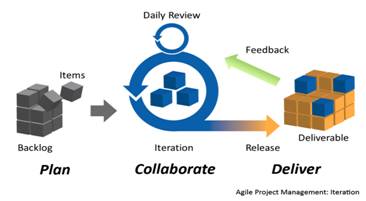
Scrum (a structured / time-boxed form of Agile)(4)

Lean (6)
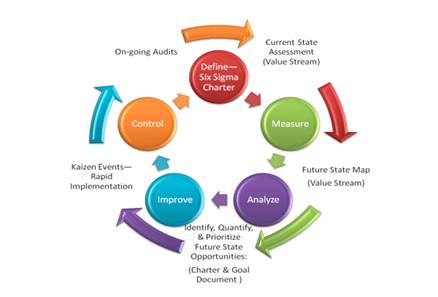
Event…
Please log in or sign up below to read the rest of the article.
|
"The power of accurate observation is often called cynicism by those who don't have it." - George Bernard Shaw |


