


Situation: You’re rethinking your overall PM strategy
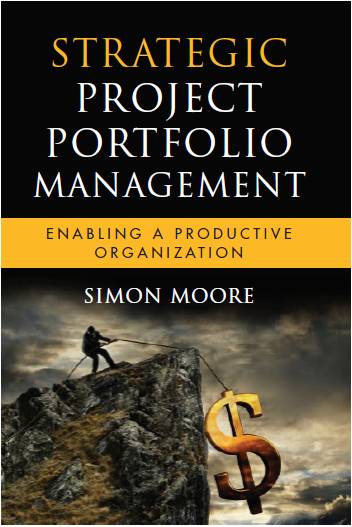 Do you ever have trouble with:
- Aligning projects and processes with business strategy to create compelling competitive advantage?
- Understanding new collaborative platforms and innovative work management software?
- Assessing project portfolio management competence within your organization?
- Looking beyond project portfolio management to a holistic work management system?
Q. To a lot of folks alignment is an exercise in wording goals to make them sound strategic. What specific techniques do you use to find the right metrics to define each projects success? Can you describe the most important one in detail?
The single most important technique to enable project success is whether a meaningful postmortem is conducted and acted upon. If you’re failing to do that, it doesn’t matter what your goals are, or how strategically aligned your portfolio is, without the capacity to improve and refine over time any system will inevitably become obsolete. Postmortems can help an organization converge on appropriate strategic goals too. For example, as you mention a project manager can artfully word goals in a business case to make them appear strategic, but a robust postmortem process acts as a safeguard to expose that:
“If there is no feedback loop, then there is little incentive for estimates to be as accurate they can be, since no process is making sure they that are.”
Q. Is achieving competitive advantage usually more about success metrics for individual projects or having the right mix of projects? Why is that?
Competitive advantage is about the right mix of projects. For example, if your organization wants to drive competitive advantage through superior customer service, then the project mix must reflect customer-centric investments. The reason many organizations can’t get to sustainable competitive advantage is because they don’t have a sufficiently broad and imaginative list of projects in the first place. This is a point I emphasize in the book:
“Putting in an effective process for capturing ideas provides an opportunity for organizations to leverage a resource they already have, already pay for, but fail to capture the full benefit of—namely, employee creativity.”
Once an organization has a long list of potential projects, and a good sense of their strategic goals, then selecting the right projects enables competitive advantage.
Having the right metrics matter too, but metrics at the project level alone will only drive robust execution, which is necessary but not sufficient for competitive advantage.
Q. There are a lot of PPM competency assessments out there. What makes the one in your book particularly effective? Give us the single most important question you could ask someone to judge their individual competence.
With competency assessments it is relatively easy to ask the right questions. As you mention there are many frameworks out there, and I do add to that list, but the challenge is less about the right framework, and more about finding the right people to ask and generating excitement and energy for change, one case study I conducted with a financial services company emphasizes this:
“Bringing project managers together and exposing them to the latest research and ideas in project management can quickly spark innovation and a lead to a lot of “Wouldn’t it be cool if . . . ?” conversations among project managers, especially in organizations with smart, entrepreneurial employees. From that point, it is possible to start to discuss tools and processes for realizing these ambitions.”
Q. A holistic work management system is the holy Grail for most companies. Beyond the system level stuff, how do you make granular tracking work without micromanaging?
Today we’re far from having the all the information we need to micro-manage. So much data isn’t tracked, this is discussed in the book’s final chapter:
“All projects are work, but not all work is a project. This means that portfolio management systems are hampered because they cannot see all work within the organization.”
Even where the system is in place, non-compliance can be a deal-breaker, no one wants to fill in a timesheet, especially when they are trying to get out the door on a Friday. The resulting stale or misleading information can make even the most sophisticated system worthless.
We need to integrate work tracking into tools people like to use, such as personal information management systems to make the process less painful. That way we can broaden the scope of what is tracked, make the data more accurate and get closer to full picture of what the organization is doing, beyond the limited notion of projects. Work management is about lowering the barriers to collecting information and surfacing only what’s useful, once we’ve done that we can discuss the right way to leverage that information and avoid micro management.
Posted on: August 22, 2009 09:27 AM |
Permalink





