Scrum at School
From the Scrumptious Blog
by Sante Delle-Vergini, PhD

Scrum is the most popular framework used within an agile environment to convert complex problems into valuable products and services. In this blog, we will examine all things Scrum to shed light on this wonderful organizational tool that is sweeping the globe. There will be engaging articles, interviews with experts and Q&A's. Are you ready to take the red pill? Then please join me on a fascinating journey down the rabbit hole, and into the world of Scrum.
Recent Posts
The Agile Engine
Scrum at School
Why SAFe may not be safe
Scrum on Mars
Scrum vs Kanban
Categories
Agile,
Agile Certified Practitioner,
Agile Release Train,
Agile Transformation,
Burndown Chart,
Burnup Chart,
business transformation,
Chief Project Officer,
Development Team,
Distributed Teams,
Earned Value Management,
Flexible Workforce,
Information Radiators,
Leadership,
Lessons Learned,
Mars,
middle management,
New Ways of Working,
PMI-ACP,
Product Owner,
Product Roadmap,
Release Train Engineer,
Remote Teams,
resisting change,
RTE,
SAFe,
Scope Creep,
Scrum,
Scrum Certification,
Scrum in Academia,
Scrum in School,
Scrum Master,
Scrum Team,
Scrum Training,
Scrumian,
Stakeholder Management,
Story Map,
War Room
Date
Have you walked around some of our classrooms lately? They are a far cry from when I was attending school several decades ago. Back then the classroom resembled something out of Pink Floyd's The Wall: rows of wooden desks, teachers preaching and writing from morning until afternoon, students sitting at attention and only speaking if they raised their hand and the teacher granted them permission. It was expected that children had empty minds just waiting to be filled by teachers who held the keys to all knowledge. Imagine if that was our workplace today? It used to be that way in school and at work.
Over time, the education sector changed significantly. Pedagogies became more constructivist with approaches such as project-based learning leading the way. Teachers became facilitators rather than directors, and the child had their own voice and agency in their educational journey. Physical environments also changed. The walls came down and large open-plan learning environments sprang up like a tropical forest among the mud plains. One-way instructional education transitioned into a collaborative educational experience involving the child's home, school and wider community.
The black chalkboard with barking teachers at the front of the classroom became a thing of the past. Instead, children were immersed in an engaging and vibrant learning experience. Rote learning gave way to experiential learning. Students joined the teacher in a partnership, standing alongside them at the modern blackboard.
This is what the classroom used to look like:

And this is what it looks like in many classrooms today:
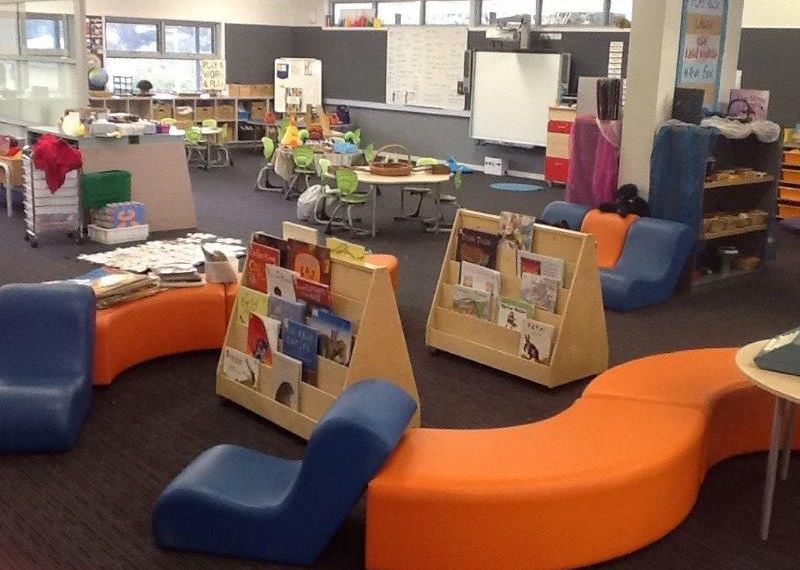
A slight difference!
When I visited my child's school last year, I noticed the whiteboards were not covered by endless rows or words. They were covered instead by columns, colored sticky notes, and bright messages and pictures. It was a Scrum Board detailing the most recent research project of the class. These were not KPMG consultants, but 6-year-old children designing, planning and executing their own projects using Scrum to assist in collaboration and workflow.
Scrum is just one of those easy to understand approaches that can assist children to learn, and adults to work. Kids are leading the way because as we all know, resistance to cultural change is the biggest obstacle to successful Agile projects. Kids minds are more flexible, open and dynamic than most adults could ever hope to be. Why is that? Mostly it's by choice. We can learn something from the new educational practices in our schools, which involve elements of Scrum at many schools.
The next time you find resistance in the workplace, or even find yourself swimming against the tide, consult your child on the best approach to handle your Agile project at work, or watch how they learn in the classroom. They might be able to teach you something.
Thank you for your interest in the Scrumptious blog. If you have any ideas for Scrum topics, please message me here. Until next time, remember, projects can be Scrumptious!

Posted on: August 31, 2019 04:40 PM |
Permalink
Comments (19)
Please login or join to subscribe to this item

Rami Kaibni
 Community Champion
Senior Projects Manager | Field & Marten Associates
New Westminster, British Columbia, Canada
Interesting Perspective Scrumian Sante but without the old good days we would never be here. The foundation for the old classroom will always be there hidden beneath the new classroom.
This is true mate. At the core of teaching instruction are human beings, and they sometimes find it hard to release control and knowledge, just like in the corporate world.
Very interesting., thanks for sharing
Fully agree. I teach PM and Ágile at postgraduate courses, and this kind of methods improve the understanding and students satisfaction. The use of legos, games, allowing teams self-organization, the freedom to define how to get and present their results, the use of cell-phones in class as a tool to research, graphical presentation of results; promote very good participation and integration.
That's great Jorge, keep it up.
Thanks Eduin.

Kimberly Chavez
Platform Program Manager, Integration| Brightspeed
Overland Park, Ks, United States
Education should constantly evolve. That it's doing so in such an efficient and constructive manner makes me smile.
intersting article, yes indeed the classroom no more like before

Vincent Guerard
Coach - Trainer - Speaker - Advisor| Freelance
Mont-Royal, Quebec, Canada
The classroom did change since I was there. Look more interesting, and at other levels they have intership.
Would have loved it!
Yes, we missed out on the good stuff when we were younger. Oh well, at least our kids or grandkids will get a better deal :-)

Shivshanker Shenoy
Founder| Simplified Education Systems (PMExamSmartNotes.com)
Bangalore, Karnataka, India
Thank you Sante. Scrum in education is yet to penetrate to its fullest potential in majority of countries. Appreciate more pointer on this topic!
That's true Shivshanker. It starts with the teacher acting as a servant leader, where the child can gradually increase their autonomy and make decisions about their own education. Unfortunately, some countries and cultures are yet to make the shift from rote learning and static teaching environments where children are seen as empty vessels ready to be filled with knowledge if and when the teacher permits it.

Alexandre Costa
Scrum Master| Integer Consulting - Pictet technologies
Loures, Portugal
Until today never saw in daughter's school, but I hope to see one day, probably is better that most bad approaches for a lot of teachers. Interesting article.
Thanks Alexandre. Let's hope your daughter's school system makes these kinds of changes that will benefit your daughter.
Great article, nice blog!
In my country we still have the old classrooms with a black chalkboard and a directing teacher in the front. But your comparison seems to me to be the best way to introduce Scrum in an environment in which it is new. Allow me to pick it. Thanks.
Please Login/Register to leave a comment.
|
"Man is a game-playing animal, and a computer is another way to play games."
- Scott Adams
|





