The Agile Engine
From the Scrumptious Blog
by Sante Delle-Vergini, PhD

Scrum is the most popular framework used within an agile environment to convert complex problems into valuable products and services. In this blog, we will examine all things Scrum to shed light on this wonderful organizational tool that is sweeping the globe. There will be engaging articles, interviews with experts and Q&A's. Are you ready to take the red pill? Then please join me on a fascinating journey down the rabbit hole, and into the world of Scrum.
Recent Posts
The Agile Engine
Scrum at School
Why SAFe may not be safe
Scrum on Mars
Scrum vs Kanban
Categories
Agile,
Agile Certified Practitioner,
Agile Release Train,
Agile Transformation,
Burndown Chart,
Burnup Chart,
business transformation,
Chief Project Officer,
Development Team,
Distributed Teams,
Earned Value Management,
Flexible Workforce,
Information Radiators,
Leadership,
Lessons Learned,
Mars,
middle management,
New Ways of Working,
PMI-ACP,
Product Owner,
Product Roadmap,
Release Train Engineer,
Remote Teams,
resisting change,
RTE,
SAFe,
Scope Creep,
Scrum,
Scrum Certification,
Scrum in Academia,
Scrum in School,
Scrum Master,
Scrum Team,
Scrum Training,
Scrumian,
Stakeholder Management,
Story Map,
War Room
Date
In his 2006 book Innovation: The five disciplines for creating what customers want, Curtis Carlson said that “innovation is the primary driver of prosperity”. Many Agile enthusiasts who have read his book agree, and take it one step further, asserting that Agile is the “world’s best innovation engine” (Denning, 2015).
This may very well be true. Certainly, for Agile practitioners, Agile and its various approaches (i.e. Scrum, Kanban, DSDM) offer a creative and innovative way to solve project problems in an efficient way. It’s the reason why there are literally thousands of blogs dedicated to these Agile methods alone, including this one. So, with so many successes, why change anything at all? If it ain’t broke, don’t fix it, right? But I would argue that this complacency is actually part of the danger.
In our project world, every successful Agile delivery is a celebration of the framework we know so well. Every year the surveys boast growing numbers of successful projects under Agile and Scrum, and our old waterfall friend loses yet another trophy to its Agile counterpart.
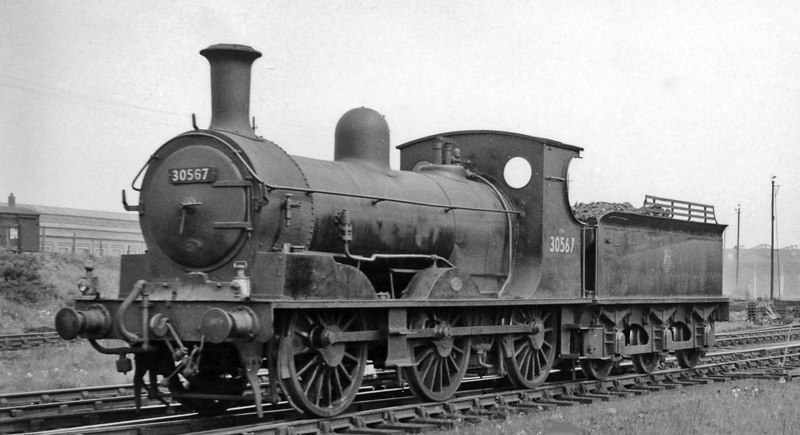
But who is driving the Agile engine? People like you and me are driving it. No matter how squeaky clean and efficient the Agile engine is, if there is a problem with the driver, then you won’t get from Point A to Point B, and even if you do, you may arrive at a place you weren’t expecting.
Agile exists as a framework and approach shared by like-minded people with a common purpose. If we rely too much on the engine to steer itself, we will lose the innovation within ourselves, and instead, become slaves to an Agile prescription mandated by certifying bodies and self-proclaimed experts.
We have talked a little about the Agile engine and the driver. But no one has mentioned the fuel. That is a very different story for another time!
* * *
Sources:
Denning, (2015). Agile: The World’s Most Popular Innovation Engine. Leadership Strategy. Forbes Magazine.
Thank you for your interest in the Scrumptious blog. If you have any ideas for Scrum topics, please message me here. Until next time, remember, projects can be Scrumptious!

Posted on: November 30, 2019 07:09 PM |
Permalink
Comments (25)
Page: 1 2 next>
Please login or join to subscribe to this item

Rami Kaibni
 Community Champion
Senior Projects Manager | Field & Marten Associates
New Westminster, British Columbia, Canada
Sante
You touch on a very important point: The operator of the train is vital for the success of the journey.
RK

Luis Branco
CEO| Business Insight, Consultores de Gestão, Ldª
Carcavelos, Lisboa, Portugal
Dear Sante
Interesting your approach
Thanks for sharing
What has led organizations to adopt agile approaches?
What are the reasons for the enthusiasm of people working on agile approaches?
Is there a "perfect match" between organizations and people?

Drew Craig
Sr. Agile & Product Coach| Vanguard
Philadelphia, Pa, United States
Agile approaches and practices afford organizations, teams, and individuals opportunity to work, execute, and deliver in such a way that brings about collaboration, inclusivity, feedback, and adaptation.
That said it is the responsibility of those organizations, teams, and individuals to put in the effort, to challenge their way of thinking to progress and have success in their new way of working.
And have fun of course!
Thanks for giving us this interesting approach...

Ashleigh Kennett-Smith
ICT Project Manager| Australian Red Cross Lifeblood
Adelaide, South Australia, Australia
A thought provoking article Sante. It take Agile as a mindset, but in fact I'd say successful project delivery always relies on having the right mindset (what and why are we doing this?). From that you should be able to get to a suitable "how are we doing this".
I think we (including me) too often start with a "how are we going to do this?" rather than than "what is the real goal here?". The choice of approach (Agile, Hybrid, Waterfall) shouldn't be a consideration, although the organisation and teams must be able to support the approach.
I'd love to know what you think the fuel is ("organisational" needs or goals?).
Luis, I would say it's those organizations that want to try a new way or working, or are pressured by their clients or the successes of their competitors.
@Andrew, totally agree with that.
@Ashleigh, yes I find myself doing the same things sometimes. We often get too far ahead of ourselves and then find out that we are sometimes going backwards. Ah, the fuel. That might have to be for the next blog post. What are your thoughts?
Luis Branco
CEO| Business Insight, Consultores de Gestão, Ldª
Carcavelos, Lisboa, Portugal
Thanks for your comment
What about the reasons for the enthusiasm of people working on agile approaches?
Good analogy, Sante, and if we continue the analogy of the train on the railroad, I'd suggest that psychological safety is the rails guiding the train to higher levels of performance and innovation/creativity.
Ashleigh Kennett-Smith
ICT Project Manager| Australian Red Cross Lifeblood
Adelaide, South Australia, Australia
Hi Sante, re fuel I need to define some terms and even then I'm not sure this is quite right :)
Engine: Agile framework/process
Timetable: Where to go (goals/deliverables/output) and by when
Drivers: People/project team
Fuel (inputs to progress the engine): $$, right skill sets, equipment and materials (core fuel components), empowerment (octane level?), trust and appreciation (additional power boosting additives?)
@Kiron, that's a good analogy too; so important for the change in mindset.
@Ashleigh, that's pretty good. I would say that is right on the mark. When it comes to agile frameworks and the engine, I was thinking of more intangible "inputs" for fuel. But both work.
Interesting, I like the usage of "Agile Engine" in this blog. Thank you for sharing.

Marcus Udokang
Project Manager| Aivaz Consulting
Calgary, Alberta, Canada
Sante, I like your practical explanation, using the train as an analogy, or metaphor.

Kwiyuh Michael Wepngong
Community Champion
Financial Management Specialist | US Peace Corps
Yaounde, Centre, Cameroon
I just love this phrase "No matter how squeaky clean and efficient the Agile engine is, if there is a problem with the driver, then you won’t get from Point A to Point B, and even if you do, you may arrive at a place you weren’t expecting..."
Merci
Page:
1 2 next>
Please Login/Register to leave a comment.




