Why Agile Is a Humane Way to Work
From the Voices on Project Management Blog
by Cameron McGaughy,
Lynda Bourne, Kevin Korterud, Conrado Morlan, Peter Tarhanidis, Mario Trentim, Jen Skrabak, David Wakeman, Wanda Curlee, Christian Bisson, Ramiro Rodrigues, Soma Bhattacharya, Emily Luijbregts, Sree Rao, Yasmina Khelifi, Marat Oyvetsky, Lenka Pincot, Jorge Martin Valdes Garciatorres, cyndee miller

Voices on Project Management offers insights, tips, advice and personal stories from project managers in different regions and industries. The goal is to get you thinking, and spark a discussion. So, if you read something that you agree with--or even disagree with--leave a comment.
View Posts By:
Cameron McGaughy
Lynda Bourne
Kevin Korterud
Conrado Morlan
Peter Tarhanidis
Mario Trentim
Jen Skrabak
David Wakeman
Wanda Curlee
Christian Bisson
Ramiro Rodrigues
Soma Bhattacharya
Emily Luijbregts
Sree Rao
Yasmina Khelifi
Marat Oyvetsky
Lenka Pincot
Jorge Martin Valdes Garciatorres
cyndee miller
Past Contributors:
Rex Holmlin
Vivek Prakash
Dan Goldfischer
Linda Agyapong
Jim De Piante
Siti Hajar Abdul Hamid
Bernadine Douglas
Michael Hatfield
Deanna Landers
Kelley Hunsberger
Taralyn Frasqueri-Molina
Alfonso Bucero Torres
Marian Haus
Shobhna Raghupathy
Peter Taylor
Joanna Newman
Saira Karim
Jess Tayel
Lung-Hung Chou
Rebecca Braglio
Roberto Toledo
Geoff Mattie
Recent Posts
Project 2030: Skills We Need to Cultivate Now
The Technical Program Manager: How to Stay Relevant in 2025
5 Things Your Operational Plan Should Do
5 New Project Guardrails for Adaptive Leaders
The Leader's Voice: Respect It, Protect It, and Use It Properly!
Categories
2020,
Adult Development,
Agile,
Agile,
Agile,
agile,
Agile management,
Agile management,
Agile;Community;Talent management,
Artificial Intelligence,
Backlog,
Basics,
Benefits Realization,
Best Practices,
BIM,
business acumen,
Business Analysis,
Business Analysis,
Business Case,
Business Intelligence,
Business Transformation,
Calculating Project Value,
Canvas,
Career Development,
Career Development,
Career Help,
Career Help,
Career Help,
Career Help,
Careers,
Careers,
Careers,
Careers,
Categories: Career Help,
Change Management,
Cloud Computing,
Collaboration,
Collaboration,
Collaboration,
Collaboration,
Collaboration,
Communication,
Communication,
Communication,
Communication,
Communications Management,
Complexity,
Conflict,
Conflict Management,
Consulting,
Continuous Learning,
Continuous Learning,
Continuous Learning,
Continuous Learning,
Continuous Learning,
Cost Management,
COVID-19,
Crises,
Crisis Management,
critical success factors,
Cultural Awareness,
Culture,
Decision Making,
Design Thinking,
Digital Project Management,
Digital Transformation,
digital transformation,
Digitalisation,
Disruption,
Diversity,
Diversity,
Documentation,
Earned Value Management,
Education,
EEWH,
Enterprise Risk Management,
Escalation management,
Estimating,
Ethics,
execution,
Expectations Management,
Facilitation,
feasibility studies,
Future,
Future of Project Management,
Generational PM,
Governance,
Government,
green building,
Growth,
Horizontal Development,
Human Aspects of PM,
Human Aspects of PM,
Human Aspects of PM,
Human Aspects of PM,
Human Aspects of PM,
Human Resources,
Inclusion,
Information Technology,
Innovation,
Intelligent Building,
International,
International Development,
Internet of Things (IOT),
Internet of Things (IoT),
IOT,
Knowledge,
Leadership,
Leadership,
Leadership,
Leadership,
Leadership,
lean construction,
LEED,
Lessons Learned,
Lessons learned;Retrospective,
Managing for Stakeholders,
managing stakeholders as clients,
Mentoring,
Mentoring,
Mentoring,
Mentoring,
Mentoring,
Mentorship,
Mentorship,
Methodology,
Metrics,
Micromanagement,
Microsoft Project PPM,
Motivation,
Negotiation,
Neuroscience,
neuroscience,
New Practitioners,
Nontraditional Project Management,
OKR,
Online Learning,
opportunity,
Organizational Culture,
Organizational Project Management,
Pandemic,
People management,
Planing,
planning,
PM & the Economy,
PM History,
PM Think About It,
PMBOK Guide,
PMI,
PMI EMEA 2018,
PMI EMEA Congress 2017,
PMI EMEA Congress 2019,
PMI Global Conference 2017,
PMI Global Conference 2018,
PMI Global Conference 2019,
PMI Global Congress 2010 - North America,
PMI Global Congress 2011 - EMEA,
PMI Global Congress 2011 - North America,
PMI Global Congress 2012 - EMEA,
PMI Global Congress 2012 - North America,
PMI Global Congress 2013 - EMEA,
PMI Global Congress 2013 - North America,
PMI Global Congress 2014 - EMEA,
PMI Global Congress 2014 - North America,
PMI GLobal Congress EMEA 2018,
PMI PMO Symposium 2012,
PMI PMO Symposium 2013,
PMI PMO Symposium 2015,
PMI PMO Symposium 2016,
PMI PMO Symposium 2017,
PMI PMO Symposium 2018,
PMI Pulse of the Profession,
PMO,
PMO,
pmo,
PMO Project Management Office,
portfolio,
Portfolio Management,
Portfolio Management,
portfolio management,
presentations,
Priorities,
Probability,
Problem Structuring Methods,
Process,
Procurement Management,
profess,
Program Management,
project,
Project Delivery,
Project Dependencies,
Project Failure,
project failure,
Project Leadership,
Project Management,
project management,
project management office,
Project Planning,
project planning,
Project Requirements,
Project Success,
Ransomware,
Reflections on the PM Life,
Remote,
Remote Work,
Requirements Management,
Research Conference 2010,
Researching the Value of Project Management,
Resiliency,
Risk Management,
Risk Management,
Risk management,
risk management,
ROI,
Roundtable,
Salary Survey,
Schedule Management,
Scheduling,
Scope Management,
Scrum,
search,
SelfLeadership,
SelfLeadership,
SelfLeadership,
SelfLeadership,
SelfLeadership,
Servant Leadership,
Sharing Knowledge,
Sharing Knowledge,
Sharing Knowledge,
Sharing Knowledge,
Sharing Knowledge,
Social Responsibility,
Sponsorship,
Stakeholder Management,
Stakeholder Management,
stakeholder management,
Strategy,
Strategy,
swot,
Talent Management,
Talent Management,
Talent Management,
Talent Management,
Talent Management,
Talent Management Leadership SelfLeadership Collaboration Communication,
Taskforce,
Teams,
Teams in Agile,
Teams in Agile,
teamwork,
Tech,
Technical Debt,
Technology,
TED Talks,
The Project Economy,
Timeline,
Tools,
tools,
Transformation,
transformation,
Transition,
Trust,
Value,
Vertical Development,
Volunteering,
Volunteering #Leadership #SelfLeadership,
Volunteering Sharing Knowledge Leadership SelfLeadership Collaboration Trust,
VUCA,
Women in PM,
Women in Project Management
Date
Years ago, when I first heard of agile making waves, I was curious enough to pay for a class out of my own pocket to learn more.
By the end of the two-day session, I knew I wanted to be associated with agile. It wasn’t just its merits that convinced me—it was the basic philosophy of trusting another being, of being open to communication and most of all, respecting another’s opinion. It seemed humane.
In the mad rush of work, all of the above are often sidelined. There’s no time for niceties, no time to respect another opinion; there’s only the ambition to prove another wrong.
It’s miserable.
Agile teaches us to be open, trustworthy and make mistakes. Failure isn’t the end of the road; risk-taking and experimentation are supported and bonhomie is encouraged.
My Experiments With Agile
As I started working as an agile coach, I brought in the humane side of work. I helped my teams to stop finger-pointing and instead, really talk during standups. I tried to liven up the mood by asking team members about the last book they read or movie they watched, and I learned the name of the scrum master’s kid. This helped the team get to know each other as humans.
I planned games and drew on whiteboards so team members could match the hobby with the individual who practiced it. It was hilarious. Interest grew, not in agile but in knowing each other and building better relationships with team members.
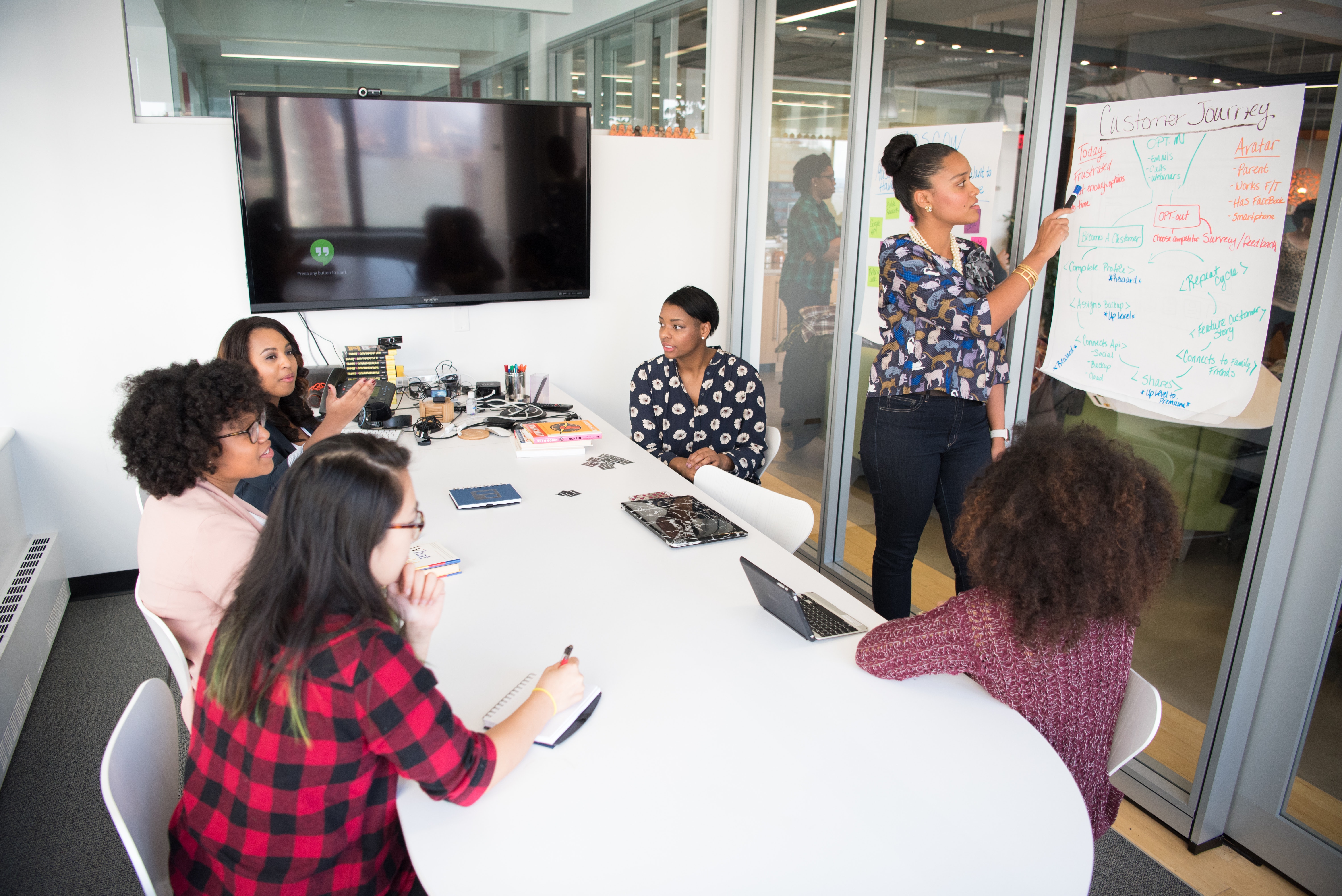 We celebrated birthdays, we talked about failure, trust and anything that would bring out even the introverts and encourage them to join discussions. Everyone’s opinion mattered. The right complexity point during estimations didn’t matter, as long as everyone was talking and participating.
And our work wasn’t virtual anymore. I would move a story card to completion, draw to celebrate the completion of a goal and use the white board to keep the team motivated with quotes, scribbles and doodles. It got everyone involved.
Managers soon joined the sessions, sometimes just listening when they were uncomfortable. It allowed team members to be vocal and to think for themselves. Everyone was involved—not because that’s how it should be done, but because it takes time to build that vibe and tribe.
Why Agile Works
Agile isn’t for measuring KPIs or bringing in ROI. But those results happen, because the team comes together and enjoys working with each other.
Agile has been written about over and over again, from why it works to why it’s a failing fad. People rarely see the fact that agile has made many organizations humane again. The best way to understand agile is to think about working in a secure, comfortable environment with people you trust.
In 2013, Rosabeth Moss Kanter published an article in the Harvard Business Review about how the happiest people seek out the most complex problems. It just makes sense to keep individuals and the team happy at work.
It can be intimidating to turn around a team struggling with bad quality, low productivity and minimum engagement. But the best fix has always been to get team members to feel engaged, and that their views are heard and their opinion respected. It’s always about people. Once you get that right, the rest is easier.
I have always had a positive experience with agile. When everybody comes together and believes in it, I have seen change happen. However, the most rewarding experience for me has always been that associates in an organization become humane again. They care about their colleagues, they speak face to face and they handle difficult discussions better.
What about you? If your organization has embraced agile, what results have you seen?
Posted
by
Soma Bhattacharya
on: January 14, 2020 11:05 PM |
Permalink
Comments (11)
Please login or join to subscribe to this item

Narayan Swarup
Project Manager (MSP®,PMP®,CSM®,ITIL 4 ®)| [email protected]
Utter Pradesh, Utter Pradesh, India
Thanks for sharing nice.
Agile practice is an adoptive development methodology that values human communication and feedback, adapting to change, and producing working results.

Khai Ng.
IT PMO | IT Project Manager| TTGROUP
Hanoi, Viet Nam
Thank you for sharing! I agree it is a "humane way to work", Agile environment stimulates people working together in a cohesive manner.

Luis Branco
CEO| Business Insight, Consultores de Gestão, Ldª
Carcavelos, Lisboa, Portugal
Dear Soma
Interesting is your reflection on the theme: "Why Agile is a Humane Way to Work"
Thanks for sharing
I am convinced that the proximity between people, fun, mutual help and happiness at work is more related to the organizational culture than just the agile

Alexandre Costa
Scrum Master| Integer Consulting - Pictet technologies
Loures, Portugal
Are persons, relations and principles that have the major influence in a human way to work. The approaches influence depend on the people that work there, so I do not see a clear relation between your conclusion.

Drew Craig
Sr. Agile & Product Coach| Vanguard
Philadelphia, Pa, United States
I agree with how this way of working affords opportunity to teams to have more focus on the human element. Just so important when you consider the importance of working as a team and thinking collectively over individually.

Lenka Pincot
Chief of Staff to the CEO| Project Management Institute
Paris, France
Great view Soma, I like the idea of demonstrating how being human impacts engagement. Thanks for sharing your experience!
Very interesting., thanks for sharing
Having observed the same team working together using Agile principles and also within traditional structures, I agree with Soma's association of agile and humane work environments. Working agilely, the team was engaged and empowered, and they were across all the project issues, regardless of who was leading particular pieces of work.
Thanks for explaining your insight so well.
Fantastic share thank you Soma!
Agree, the 'soft skills' make a deep impact on interactions in teams; shukriya.
Please Login/Register to leave a comment.
|
I have made good judgements in the past. I have made good judgements in the future.
- Dan
|






