Three more team building lessons from gardening
From the Easy in theory, difficult in practice Blog
by Kiron Bondale

My musings on project management, project portfolio management and change management.
I'm a firm believer that a pragmatic approach to organizational change that addresses process & technology, but primarily, people will maximize chances for success.
This blog contains articles which I've previously written and published as well as new content.
Recent Posts
Leading Through Crisis Means Leading Through Context
"It's the end. But the moment has been prepared for." - retirement lessons from the Doctor
Just because they are non-critical, doesn't mean they are not risky!
Just because they are non-critical, doesn't mean they are not risky!
How will YOU avoid these AI-related cognitive biases?
Categories
Agile,
Artificial Intelligence,
Career Development,
Change Management,
Communications Management,
Decision Making,
Governance,
Hiring,
Kanban,
Lessons Learned,
Personal Development,
PMO,
Portfolio Management,
Project Management,
Resource Management,
Risk Management,
Risk Management,
Schedule Management,
Scheduling,
Tools
Date
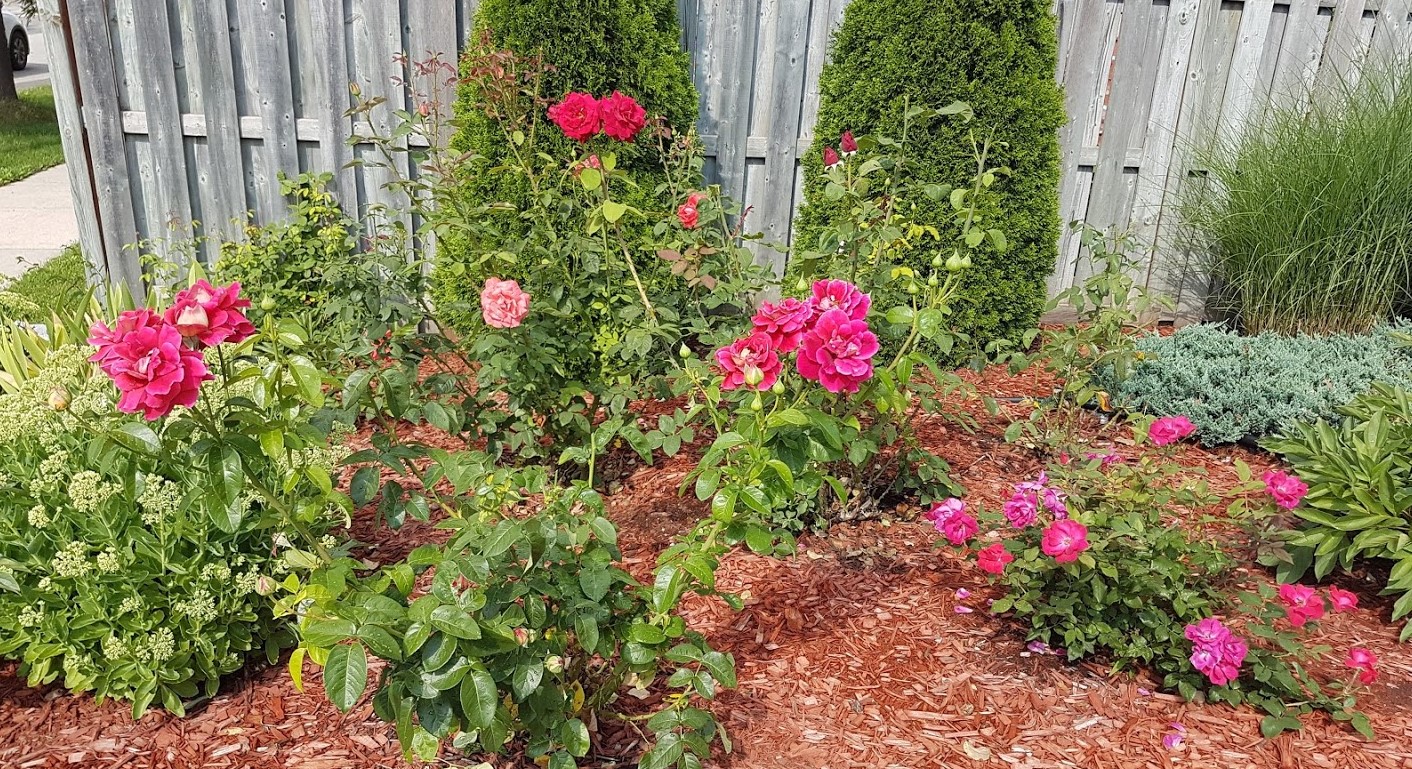 A few years back, I wrote an article in which I provided some gardening tips to developing good teams. I'm spending more time tending my garden these days so I decided to share a few more lessons for those wishing to cultivate a team building "green thumb".
Fertilization should be regular, but situational
Grass lawns need to be fertilized at regular intervals but the composition of the fertilizer (the proportions of nitrogen, phosphorus and potassium) varies by season and by the needs of the grass. Whereas you might use a 20-5-10 mix in the early Spring to give the dormant grass a boost of nitrogen to rebuild and to get ready for the heat of summer, a 13-25-12 mix is better in the late Fall to stimulate root growth in preparation for the following year.
When considering the professional development needs of team members, we need to regularly give them the time and resources for professional development, but the specific tactics used to develop should be dictated by their development objectives. Just like the three ingredients which go into fertilizer, there are three components for learning - formal training, relationship-based, and experiential. Depending on the development objective, the specific percentages of each should be varied.
Don't delay deadheading
Deadheading, the task of trimming faded flowers from plant stalks, is not just about maintaining the aesthetics of the garden, but is also about avoiding energy wastage by the plant. Gardeners don't relish this task but it is critical to developing stronger plants and getting more bloom cycles from your garden.
We may not look forward to the unpleasant task of removing someone from our team, but prolonged procrastination or wanting to be perceived as a "nice person" will hurt your overall team when there is a toxic, inefficient or ineffective team member who is clearly not improving in spite of support and coaching. Your best performers will be demotivated and may even leave and you will be sending the message that mediocrity is tolerated to the remainder.
Be thoughtful when adding a new plant into an established garden
When I have to replace one of the existing plants in my garden with a different variety, I always take the time to consider the impacts of the new arrival on the other plants in the garden. I learned this lesson the hard way. A few years back I replaced a large but unhealthy tree in my backyard with a small fruit tree. There were a few smaller stunted flowering shrubs under the old tree. When it was removed and the new tree was planted, the shrubs took this opportunity to spread like wildfire, risking the health of the fruit tree. I ended up having to transplant a number of those shrubs to a different spot in the yard to ensure the new tree remained healthy.
Even if you have a long-standing team with well defined ways of working, never underestimate the impacts on the team when a new team member is added. Involve the team in the selection of the new team member and make sure you build in sufficient ramp up time to help the newcomer understand and adapt to the culture and behaviors of the team.
Healthy, beautiful gardens do not develop by accident and the same can be said of good teams. As Rudyard Kipling wrote in "The Glory of the Garden": Gardens are not made by singing ‘Oh, how beautiful,’ and sitting in the shade.
Posted on: May 31, 2020 07:00 AM |
Permalink
Comments (5)
Please login or join to subscribe to this item

Alexandre Costa
Scrum Master| Integer Consulting - Pictet technologies
Loures, Portugal
Nice analogy @kiron, very funny and entertaining post that awakens the curiosity to read it until the end.
Lately, emotional intelligence has been so emphasized in hiring new elements that it has been forgotten that it is even more difficult to measure than cognitive intelligence, occasionally giving rise to the hiring of people who control their emotions well, understand other people's emotions well, but they are experts in the art of manipulation, as in all gardens we must be able to balance between the two components.
While cognitive intelligence does not have black zones, whether the subject has knowledge or not about the area and sooner or later will be detected. Emotional intelligence has nuances, presents dangers, has a dark side (if I was a Jedi i named the dark side of the force).
The world story is full of examples of emotional intelligence misused that attract crowds, so sometimes the apparently most friendly, communicative and emphatic member of or team could be most toxic member on the team as a weed in the garden.
I think that the experts should write more about the dark side of the emotional intelligence based on the last studies I read it.
Alexandre Costa
Thanks Alexandre - I never thought about that Dark Side analogy but it is very apt. Competency with emotional intelligence is like the force - it can be abused, and strong emotions such as anger (or fear as Master Yoda would say) can be catalysts for sending one on the path to this Dark Side.
Hi Kiron ((When I have to replace one of the existing plants in my garden with a different variety, I always take the time to consider the impacts of the new arrival on the other plants in the garden.)) LOL you just remind me with Tuckman's ladder let the new plant storming then norming good imagination you have I am just worried we had a harsh winter which shall lead to short summer for plantation to produce deliverable vegetables
Thanks Riyadh - yes, this last winter and the cold spring were not encouraging for crop production, but at least there will be fewer parasites as a result of it.
Thanks for sharing., very interesting.
Please Login/Register to leave a comment.
|
"A doctor can bury his mistakes but an architect can only advise his client to plant vines."
- Frank Lloyd Wright
|




