What Is the Future of Project Management?
From the Voices on Project Management Blog
by Cameron McGaughy,
Lynda Bourne, Kevin Korterud, Peter Tarhanidis, Conrado Morlan, Jen Skrabak, Mario Trentim, Christian Bisson, Yasmina Khelifi, Sree Rao, Soma Bhattacharya, Emily Luijbregts, David Wakeman, Ramiro Rodrigues, Wanda Curlee, Lenka Pincot, cyndee miller, Jorge Martin Valdes Garciatorres, Marat Oyvetsky

Voices on Project Management offers insights, tips, advice and personal stories from project managers in different regions and industries. The goal is to get you thinking, and spark a discussion. So, if you read something that you agree with--or even disagree with--leave a comment.
View Posts By:
Cameron McGaughy
Lynda Bourne
Kevin Korterud
Peter Tarhanidis
Conrado Morlan
Jen Skrabak
Mario Trentim
Christian Bisson
Yasmina Khelifi
Sree Rao
Soma Bhattacharya
Emily Luijbregts
David Wakeman
Ramiro Rodrigues
Wanda Curlee
Lenka Pincot
cyndee miller
Jorge Martin Valdes Garciatorres
Marat Oyvetsky
Past Contributors:
Rex Holmlin
Vivek Prakash
Dan Goldfischer
Linda Agyapong
Jim De Piante
Siti Hajar Abdul Hamid
Bernadine Douglas
Michael Hatfield
Deanna Landers
Kelley Hunsberger
Taralyn Frasqueri-Molina
Alfonso Bucero Torres
Marian Haus
Shobhna Raghupathy
Peter Taylor
Joanna Newman
Saira Karim
Jess Tayel
Lung-Hung Chou
Rebecca Braglio
Roberto Toledo
Geoff Mattie
Recent Posts
Project 2030: Skills We Need to Cultivate Now
The Technical Program Manager: How to Stay Relevant in 2025
5 Things Your Operational Plan Should Do
5 New Project Guardrails for Adaptive Leaders
The Leader's Voice: Respect It, Protect It, and Use It Properly!
Categories
2020,
Adult Development,
Agile,
Agile,
Agile,
agile,
Agile management,
Agile management,
Agile;Community;Talent management,
Artificial Intelligence,
Backlog,
Basics,
Benefits Realization,
Best Practices,
BIM,
business acumen,
Business Analysis,
Business Analysis,
Business Case,
Business Intelligence,
Business Transformation,
Calculating Project Value,
Canvas,
Career Development,
Career Development,
Career Help,
Career Help,
Career Help,
Career Help,
Careers,
Careers,
Careers,
Careers,
Categories: Career Help,
Change Management,
Cloud Computing,
Collaboration,
Collaboration,
Collaboration,
Collaboration,
Collaboration,
Communication,
Communication,
Communication,
Communication,
Communications Management,
Complexity,
Conflict,
Conflict Management,
Consulting,
Continuous Learning,
Continuous Learning,
Continuous Learning,
Continuous Learning,
Continuous Learning,
Cost Management,
COVID-19,
Crises,
Crisis Management,
critical success factors,
Cultural Awareness,
Culture,
Decision Making,
Design Thinking,
Digital Project Management,
Digital Transformation,
digital transformation,
Digitalisation,
Disruption,
Diversity,
Diversity,
Documentation,
Earned Value Management,
Education,
EEWH,
Enterprise Risk Management,
Escalation management,
Estimating,
Ethics,
execution,
Expectations Management,
Facilitation,
feasibility studies,
Future,
Future of Project Management,
Generational PM,
Governance,
Government,
green building,
Growth,
Horizontal Development,
Human Aspects of PM,
Human Aspects of PM,
Human Aspects of PM,
Human Aspects of PM,
Human Aspects of PM,
Human Resources,
Inclusion,
Information Technology,
Innovation,
Intelligent Building,
International,
International Development,
Internet of Things (IOT),
Internet of Things (IoT),
IOT,
Knowledge,
Leadership,
Leadership,
Leadership,
Leadership,
Leadership,
lean construction,
LEED,
Lessons Learned,
Lessons learned;Retrospective,
Managing for Stakeholders,
managing stakeholders as clients,
Mentoring,
Mentoring,
Mentoring,
Mentoring,
Mentoring,
Mentorship,
Mentorship,
Methodology,
Metrics,
Micromanagement,
Microsoft Project PPM,
Motivation,
Negotiation,
Neuroscience,
neuroscience,
New Practitioners,
Nontraditional Project Management,
OKR,
Online Learning,
opportunity,
Organizational Culture,
Organizational Project Management,
Pandemic,
People management,
Planing,
planning,
PM & the Economy,
PM History,
PM Think About It,
PMBOK Guide,
PMI,
PMI EMEA 2018,
PMI EMEA Congress 2017,
PMI EMEA Congress 2019,
PMI Global Conference 2017,
PMI Global Conference 2018,
PMI Global Conference 2019,
PMI Global Congress 2010 - North America,
PMI Global Congress 2011 - EMEA,
PMI Global Congress 2011 - North America,
PMI Global Congress 2012 - EMEA,
PMI Global Congress 2012 - North America,
PMI Global Congress 2013 - EMEA,
PMI Global Congress 2013 - North America,
PMI Global Congress 2014 - EMEA,
PMI Global Congress 2014 - North America,
PMI GLobal Congress EMEA 2018,
PMI PMO Symposium 2012,
PMI PMO Symposium 2013,
PMI PMO Symposium 2015,
PMI PMO Symposium 2016,
PMI PMO Symposium 2017,
PMI PMO Symposium 2018,
PMI Pulse of the Profession,
PMO,
PMO,
pmo,
PMO Project Management Office,
portfolio,
Portfolio Management,
Portfolio Management,
portfolio management,
presentations,
Priorities,
Probability,
Problem Structuring Methods,
Process,
Procurement Management,
profess,
Program Management,
project,
Project Delivery,
Project Dependencies,
Project Failure,
project failure,
Project Leadership,
Project Management,
project management,
project management office,
Project Planning,
project planning,
Project Requirements,
Project Success,
Ransomware,
Reflections on the PM Life,
Remote,
Remote Work,
Requirements Management,
Research Conference 2010,
Researching the Value of Project Management,
Resiliency,
Risk Management,
Risk Management,
Risk management,
risk management,
ROI,
Roundtable,
Salary Survey,
Schedule Management,
Scheduling,
Scope Management,
Scrum,
search,
SelfLeadership,
SelfLeadership,
SelfLeadership,
SelfLeadership,
SelfLeadership,
Servant Leadership,
Sharing Knowledge,
Sharing Knowledge,
Sharing Knowledge,
Sharing Knowledge,
Sharing Knowledge,
Social Responsibility,
Sponsorship,
Stakeholder Management,
Stakeholder Management,
stakeholder management,
Strategy,
Strategy,
swot,
Talent Management,
Talent Management,
Talent Management,
Talent Management,
Talent Management,
Talent Management Leadership SelfLeadership Collaboration Communication,
Taskforce,
Teams,
Teams in Agile,
Teams in Agile,
teamwork,
Tech,
Technical Debt,
Technology,
TED Talks,
The Project Economy,
Timeline,
Tools,
tools,
Transformation,
transformation,
Transition,
Trust,
Value,
Vertical Development,
Volunteering,
Volunteering #Leadership #SelfLeadership,
Volunteering Sharing Knowledge Leadership SelfLeadership Collaboration Trust,
VUCA,
Women in PM,
Women in Project Management
Date

By Mario Trentim
Various organizations and individuals have made great contributions to advance the project management profession over the past few decades. And as standards and methodologies continue to evolve, new tools and techniques are used to plan and manage all kinds of initiatives.
However, myriad approaches can take a toll on productivity and collaboration, since it’s hard to maintain consistency and a common language across frameworks.
Is project management evolving too fast?
The Project Management Revolution
“One size fits all” does not apply to project management. It’s common sense. So why was project management standardized in the past? Taking into consideration that project management initially was applied to large technical projects in their early stages, a command and control approach was the norm. Planning and management were centralized. The management style favored hierarchy and disincentivized creativity. A waterfall approach made sense, as the context of project management existed outside of the uncertainty and volatility that many projects face today.
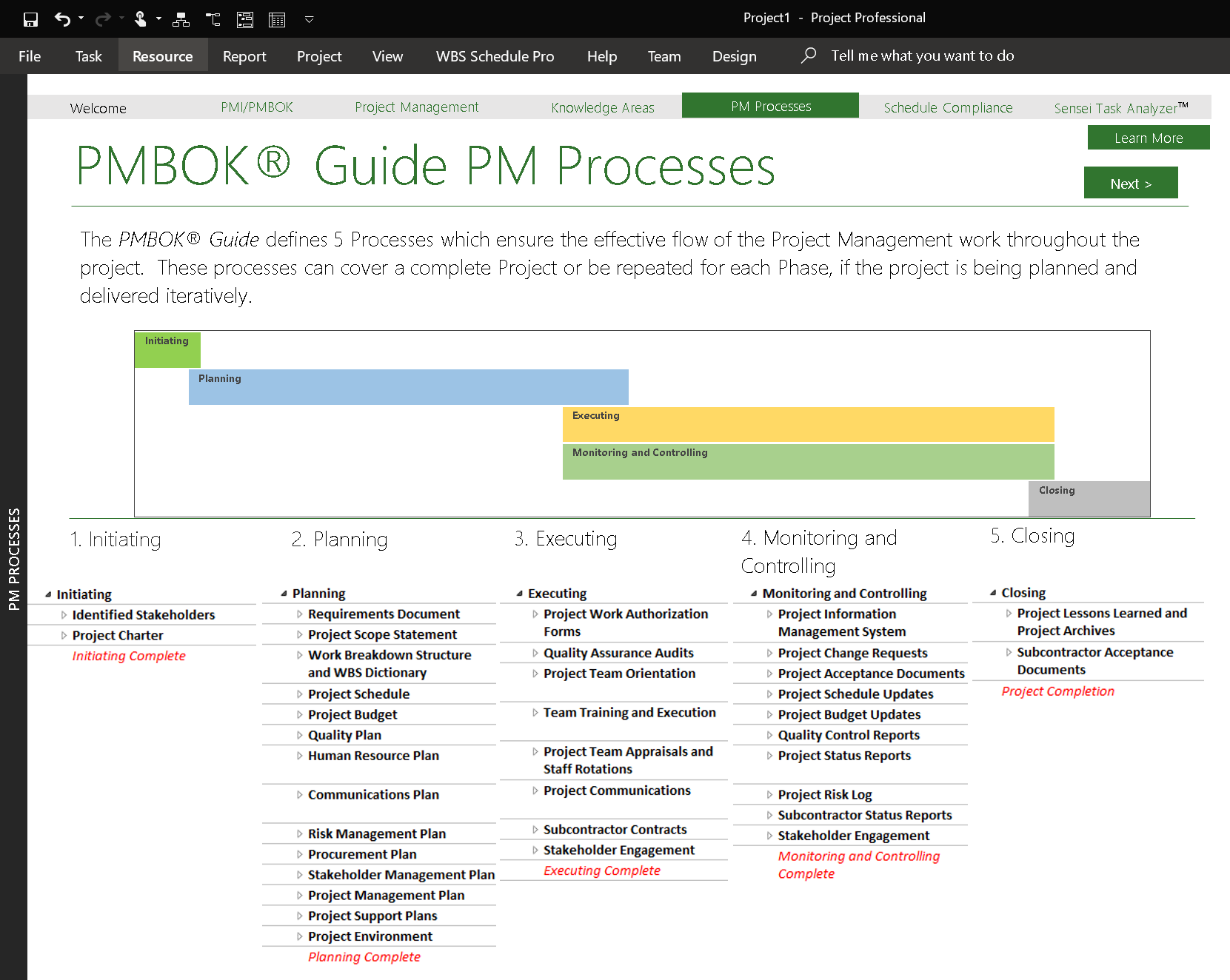
Figure 1: “Traditional” projects based on past versions of the PMBOK® Guide (Microsoft Project template)
Things shifted as enterprise environmental factors changed. Agile approaches were developed to allow for shorter execution cycles and more frequent feedback. Individuals and teams started voicing their opinions, discussing best practices with a lean mentality to improve their work and results.
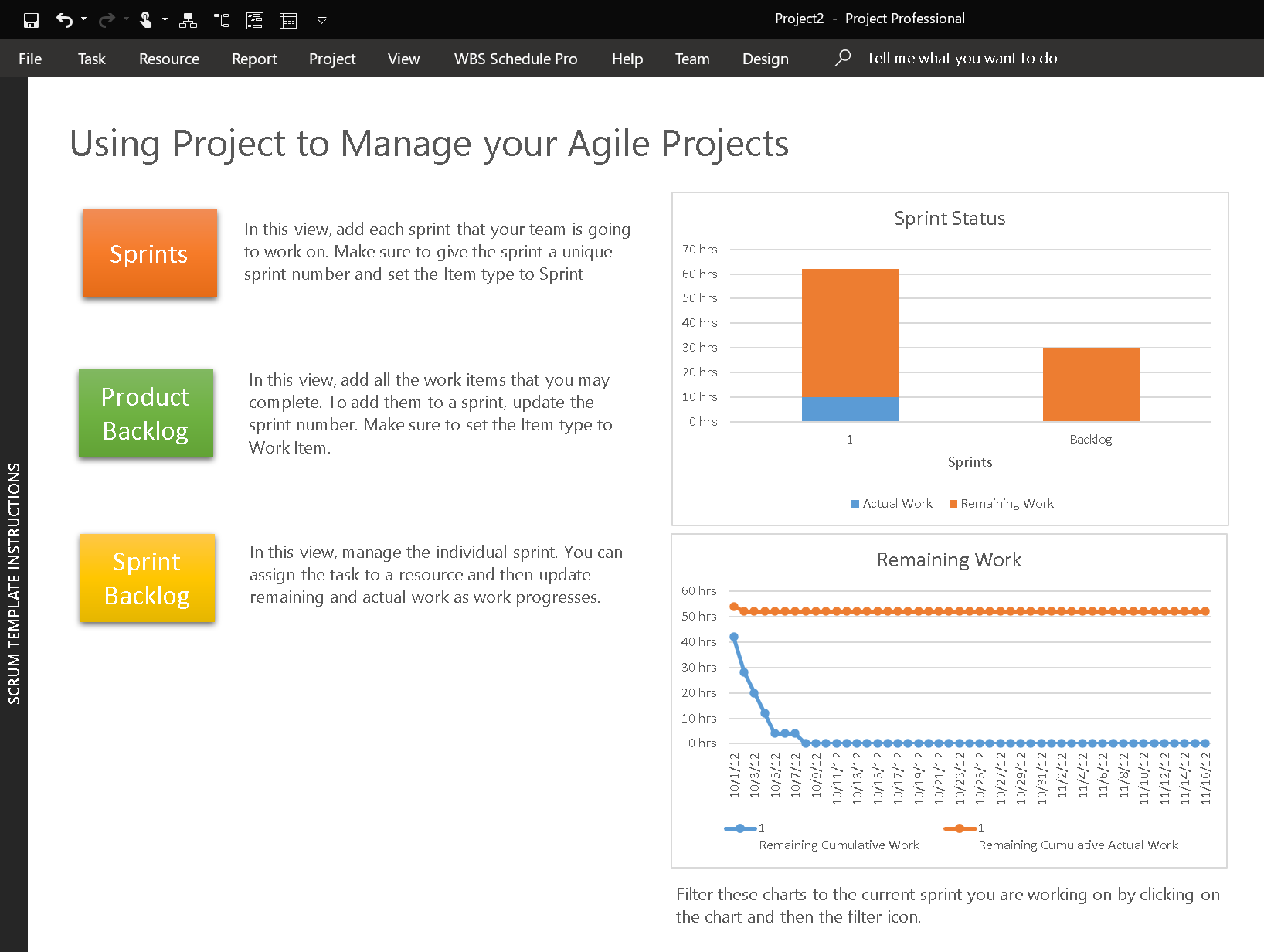
Figure 2: Agile projects (Microsoft Project template)
The project management revolution spread like wildfire. Project management is currently used in education, marketing projects, event planning, human resources initiatives, infrastructure megaprojects, and much more. It is part of daily operations in various industries, private companies, nonprofits, and the governmental sector.
As a result, a variety of approaches and methodologies were created to keep projects on target. Consequently, it has become increasingly difficult to define project management today.
Embracing Modern Project Management
Digital transformation and technology are catalyzing changes in organizational structures and enabling new capabilities by empowering individuals and teams.
To keep pace with the changes, modern project management evolved into a broad and general principle-based approach.
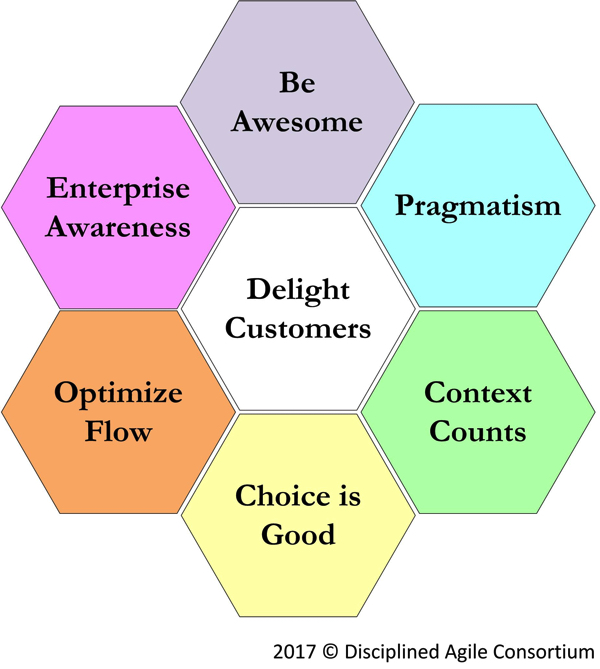
Figure 3: Disciplined Agile Principles
Principle-based approaches enable individuals and teams to choose what is best for their project according to its characteristics. From the perspective of processes, tools, and techniques, modern project management embraces hybrid combinations, which are powered by modern tools.
Modern project management must be supported by contemporary collaboration tools, intuitive and flexible task management, virtual workspaces, and more.
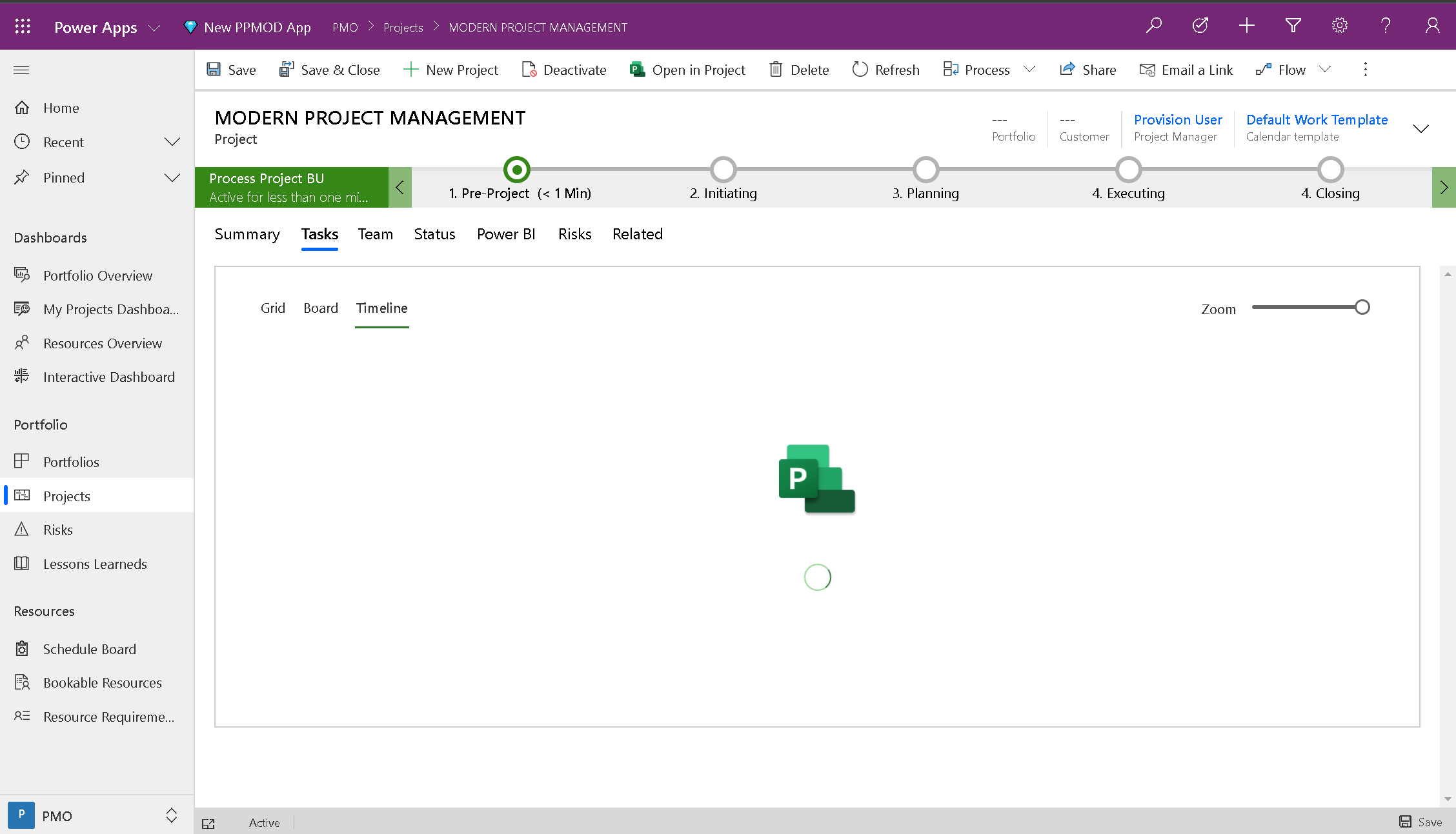
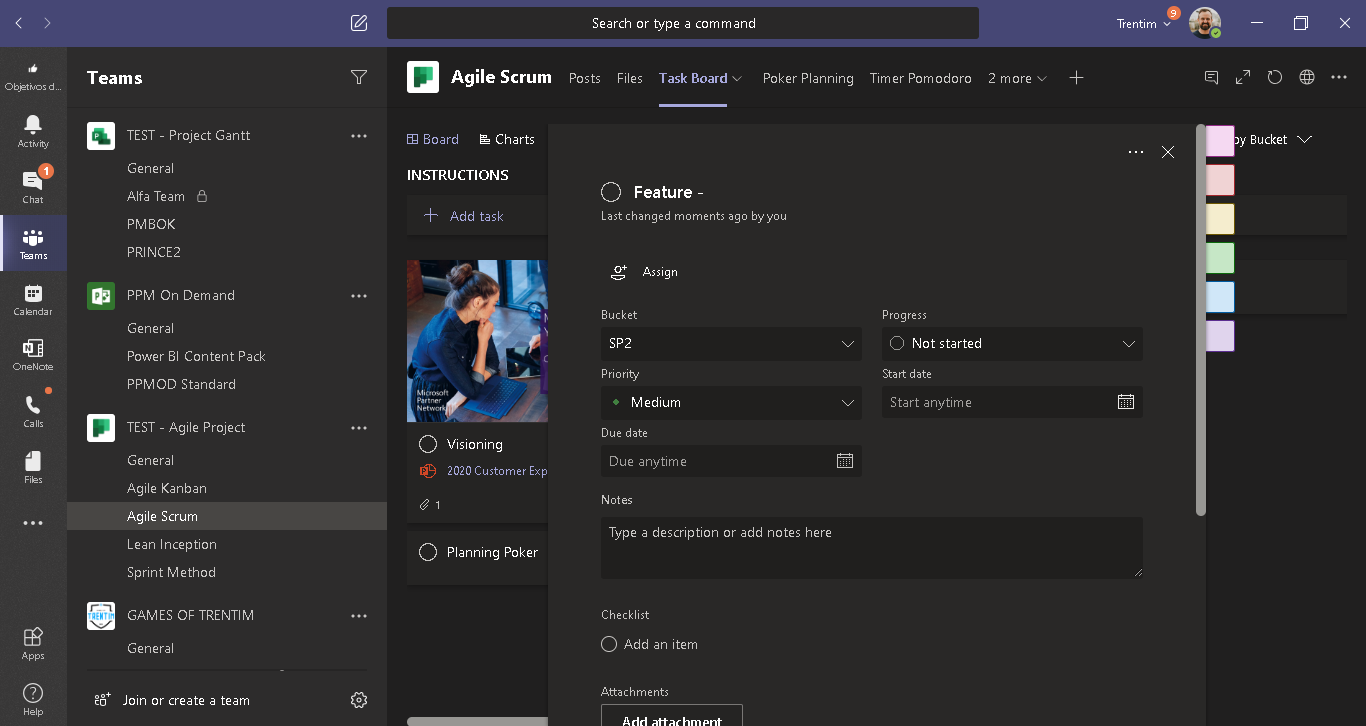
Figure 4: Collaboration hub and intuitive task management
Spurred by the global pandemic, organizations have recently taken remote work to another level. And individuals and teams must become more tech-savvy than ever to keep up.
How do you see project management evolving in the near future and how do you keep up with its changes?
Posted
by
Mario Trentim
on: July 06, 2020 12:55 PM |
Permalink
Comments (12)
Please login or join to subscribe to this item
All concepts are requested to be applied to keep the projects. Otherwise, the knowledge will pass through your fingers like water. To the future, the experience that happened now must stay like water on the dam.

inambao lifanu
Project Manager - Facilities Planning| Dept. of Developmental Services, Facilities Planning & Support
Antelope, Ca, United States
PM seem to be going more toward a "solutions driver" that is revolutionizing the reality of business. There is a lot of potential yet there is alot of uncertainty as to where it could end up...with new technologies, climate change, the current pandemic, plus a new generation of younger people with a whole different perspective of life. Its interesting what the future is going to be!!
Thanks for sharing
project management standardized provide a orientation of project management and a general method, but it didn't limit any creation or revolution which is useful to individual project.

Brandy Dukes
MultiCare Health System
Auburn, Wa, United States
In my organization, PMs are being leaned on heavily to not only drive the project forward, but they are also being relied on to develop strategies, and even be decision makers.
Good article, thank you for sharing.
For me the future of PM is the to become the dream maker, an active and leader for the transformation of organizations.
Regarding the future of project management, there's nothing to fear. There have always been projects to be managed and there will always be projects. For any who believes in the existence of an Almighty Creator, it is clear that He is the author of project management. My careful analysis of the Genesis' account about the creation of the planet earth and the creatures in it tells me that there was an initiation of that gigantic project, that it was uniquely planned with the the elements of activity listing, sequencing, WBS arrangements and scope management flawlessly done before execution began. I've no doubts at all that God worked in quality assurance, in fact, total quality management, in ensuring that what He created met his preset quality standard. Hence, upon the completion of the great project of creating the earth, God himself declared all he had created "very good." In other words, He carried out scope validation and quality control, and nothing was missing. The more I explore the marvels and wonders of creation, the more I see the science of project management and the more I grow in my appreciation for the project management profession. It is a profession that predated most of the mainstream profession. Therefore, all of us in the project management profession should just continue to adapt to the changing needs of projects. There is no new project that will not require the input of the talent triangle. Interestingly, we have a professional organization that keeps growing in dynamism and that will never allow anyone or any other institution to displace its unrivalled position in project management!
Good article. Thanks for sharing!
WONKI HONG
PMO Coordinator| Veolia
Seodaemun-Gu, Seoul, South Korea
Very good article. Thank you.
The PMBOK structure is a poor fit for many settings. Adapting it is essential, but this also produces known results. The adaptation is an improvement for engagement and learning, but not necessarily for delivery. This gap needs to be evaluated carefully before approving a project, including context, sustainability/ops requirements, and culture.
Please Login/Register to leave a comment.
|
I lie every second of the day. My whole life has been a sham.
- George Costanza
|




