Think top-down and bottom-up for agile transformations
From the Easy in theory, difficult in practice Blog
by Kiron Bondale

My musings on project management, project portfolio management and change management.
I'm a firm believer that a pragmatic approach to organizational change that addresses process & technology, but primarily, people will maximize chances for success.
This blog contains articles which I've previously written and published as well as new content.
Recent Posts
Leading Through Crisis Means Leading Through Context
"It's the end. But the moment has been prepared for." - retirement lessons from the Doctor
Just because they are non-critical, doesn't mean they are not risky!
Just because they are non-critical, doesn't mean they are not risky!
How will YOU avoid these AI-related cognitive biases?
Categories
Agile,
Artificial Intelligence,
Career Development,
Change Management,
Communications Management,
Decision Making,
Governance,
Hiring,
Kanban,
Lessons Learned,
Personal Development,
PMO,
Portfolio Management,
Project Management,
Resource Management,
Risk Management,
Risk Management,
Schedule Management,
Scheduling,
Tools
Date
 A question which I'm asked regularly during my classes is what the best place is to start an agile transformation within a company? Given a choice, I'd prefer to use the cop-out (but correct) answer "It depends", but otherwise I usually respond that you'd want to do both a top-down and bottom-up approach simultaneously.
A common approach for major organizational changes is to start at the top with executive leadership, creating a coalition of commitment and support towards a shared vision for the future. This is critical with agile transformations for a number of reasons:
- Delivery teams don't work in isolation and hence buy-in to change how things are done will be needed from all supporting areas including human resources, finance and procurement.
- There will be the need for funding investments such as training, coaching, tooling and potentially even staffing new positions.
- Without changing existing portfolio intake practices and performance measures (e.g. shifting from a focus from maximizing utilization to maximizing value), it will be hard to achieve the full benefits of the transformation.
- To shift the established behaviors of middle management towards an agile mindset, the executive team needs to model the desired target behaviors first. Not only will the executives need to be coached to get there, they must also agree to hold each other visibly accountable to this new way of working.
- There needs to be a unifying vision for the transformation as well as a roadmap for how to get there. The executive team must be fully engaged in the creation of these key deliverables.
But there will also be the need to have engagement at the delivery team level. If individual team members are comfortable with how things are working and have no sense of urgency about the need for change, then their support will be superficial. Their buy-in is needed to:
- Develop the details of the new ways of working and inspect and adapt those over time.
- Feel comfortable designing and conducting experiments and having the occasional setback with those.
- Be willing to take on new roles and responsibilities.
- Be open to providing stakeholders with a greater level of transparency into their work and work flow than they have been used to.
- Collaborate openly with contributors from other functional areas whom they previously might have just cooperated with.
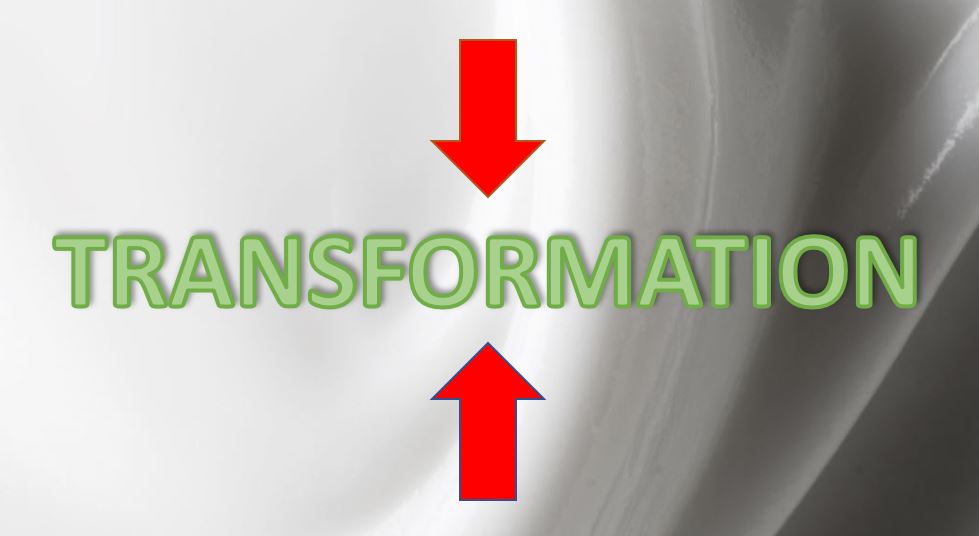
While these outcomes are needed, a key benefit of taking this top-down & bottom-up approach is that it will create a "sandwich effect" squeezing those middle managers who are unwilling to change how they work. Without that outcome, it is unlikely that an agile transformation will succeed.
Posted on: October 18, 2020 07:00 AM |
Permalink
Comments (7)
Please login or join to subscribe to this item

Marcus Udokang
Project Manager| Aivaz Consulting
Calgary, Alberta, Canada
Thanks for the article, Kiron. I never thought of doing both a top-down and bottom-up approach simultaneously. You made me ponder this for a while.

Luis Branco
CEO| Business Insight, Consultores de Gestão, Ldª
Carcavelos, Lisboa, Portugal
Dear Kiron
This reflection is interesting.
Thanks for sharing
Give me 3 arguments to convince top management to undertake this "revolution" in the company and, of course, to invest (put money) in this transformation
Thanks Marcus!
Thanks Luis - here's the three:
1. Do you want to lose your jobs because a more agile competitor is "eating your lunch"?
2. What are you doing to prevent the loss of the best and the brightest talent in your company to your more nimble competitors?
3. How do you know that you are delighting your customers?
Kiron
Thanks for sharing., very interesting.

Eduard Hernandez
 Community Champion
Corporate Project Manager - Tech Transfer| Neuraxpharm
Barcelona, Cataluña, Spain
Thanks for sharing this blog, Kiron. How would you actually do a quick check whether an organization is ready to take on the agile transformation?
For instance, the need for creativity and speed to market could be two variables that trigger it, but surely are more. Are you aware or could you recommend resources that lists environmental and organizational factors to check in order to obtain a sort of "agile ready" score?
Eduard -
The main qualifiers would be if there is really a whole hearted commitment from the senior leadership team to change their behaviors and potentially how their teams are structured and measured. If that willingness is not there, the transformation is doomed from the start.
Beyond that, I'd suggest you'd look at the pace of change in their industry, the competition for talent, and the relative complexity of the projects and products/services they produce.
Kiron

Soha Karjawally
Software development manager / Program Manager| Phoenix - USA
Montréal, Quebec, Canada
Thanks, Kiron. Interesting subject.
I think what you called the "Sandwich effect" is really what I saw in some cases. Yet some middle management won't support/stay as the wind of change is stronger... Still, it has some advantages regenerating somehow the blood of some teams.
Please Login/Register to leave a comment.
|
"A narcissist is someone better looking than you are. "
- Gore Vidal
|




