
Voices on Project Management offers insights, tips, advice and personal stories from project managers in different regions and industries. The goal is to get you thinking, and spark a discussion. So, if you read something that you agree with--or even disagree with--leave a comment.
View Posts By:
Cameron McGaughy
Lynda Bourne
Kevin Korterud
Conrado Morlan
Peter Tarhanidis
Mario Trentim
Jen Skrabak
David Wakeman
Wanda Curlee
Christian Bisson
Ramiro Rodrigues
Soma Bhattacharya
Emily Luijbregts
Sree Rao
Yasmina Khelifi
Marat Oyvetsky
Lenka Pincot
Jorge Martin Valdes Garciatorres
cyndee miller
Past Contributors:
Rex Holmlin
Vivek Prakash
Dan Goldfischer
Linda Agyapong
Jim De Piante
Siti Hajar Abdul Hamid
Bernadine Douglas
Michael Hatfield
Deanna Landers
Kelley Hunsberger
Taralyn Frasqueri-Molina
Alfonso Bucero Torres
Marian Haus
Shobhna Raghupathy
Peter Taylor
Joanna Newman
Saira Karim
Jess Tayel
Lung-Hung Chou
Rebecca Braglio
Roberto Toledo
Geoff Mattie
Recent Posts
Project 2030: Skills We Need to Cultivate Now
The Technical Program Manager: How to Stay Relevant in 2025
5 Things Your Operational Plan Should Do
5 New Project Guardrails for Adaptive Leaders
The Leader's Voice: Respect It, Protect It, and Use It Properly!
Categories
2020,
Adult Development,
Agile,
Agile,
Agile,
agile,
Agile management,
Agile management,
Agile;Community;Talent management,
Artificial Intelligence,
Backlog,
Basics,
Benefits Realization,
Best Practices,
BIM,
business acumen,
Business Analysis,
Business Analysis,
Business Case,
Business Intelligence,
Business Transformation,
Calculating Project Value,
Canvas,
Career Development,
Career Development,
Career Help,
Career Help,
Career Help,
Career Help,
Careers,
Careers,
Careers,
Careers,
Categories: Career Help,
Change Management,
Cloud Computing,
Collaboration,
Collaboration,
Collaboration,
Collaboration,
Collaboration,
Communication,
Communication,
Communication,
Communication,
Communications Management,
Complexity,
Conflict,
Conflict Management,
Consulting,
Continuous Learning,
Continuous Learning,
Continuous Learning,
Continuous Learning,
Continuous Learning,
Cost Management,
COVID-19,
Crises,
Crisis Management,
critical success factors,
Cultural Awareness,
Culture,
Decision Making,
Design Thinking,
Digital Project Management,
Digital Transformation,
digital transformation,
Digitalisation,
Disruption,
Diversity,
Diversity,
Documentation,
Earned Value Management,
Education,
EEWH,
Enterprise Risk Management,
Escalation management,
Estimating,
Ethics,
execution,
Expectations Management,
Facilitation,
feasibility studies,
Future,
Future of Project Management,
Generational PM,
Governance,
Government,
green building,
Growth,
Horizontal Development,
Human Aspects of PM,
Human Aspects of PM,
Human Aspects of PM,
Human Aspects of PM,
Human Aspects of PM,
Human Resources,
Inclusion,
Information Technology,
Innovation,
Intelligent Building,
International,
International Development,
Internet of Things (IOT),
Internet of Things (IoT),
IOT,
Knowledge,
Leadership,
Leadership,
Leadership,
Leadership,
Leadership,
lean construction,
LEED,
Lessons Learned,
Lessons learned;Retrospective,
Managing for Stakeholders,
managing stakeholders as clients,
Mentoring,
Mentoring,
Mentoring,
Mentoring,
Mentoring,
Mentorship,
Mentorship,
Methodology,
Metrics,
Micromanagement,
Microsoft Project PPM,
Motivation,
Negotiation,
Neuroscience,
neuroscience,
New Practitioners,
Nontraditional Project Management,
OKR,
Online Learning,
opportunity,
Organizational Culture,
Organizational Project Management,
Pandemic,
People management,
Planing,
planning,
PM & the Economy,
PM History,
PM Think About It,
PMBOK Guide,
PMI,
PMI EMEA 2018,
PMI EMEA Congress 2017,
PMI EMEA Congress 2019,
PMI Global Conference 2017,
PMI Global Conference 2018,
PMI Global Conference 2019,
PMI Global Congress 2010 - North America,
PMI Global Congress 2011 - EMEA,
PMI Global Congress 2011 - North America,
PMI Global Congress 2012 - EMEA,
PMI Global Congress 2012 - North America,
PMI Global Congress 2013 - EMEA,
PMI Global Congress 2013 - North America,
PMI Global Congress 2014 - EMEA,
PMI Global Congress 2014 - North America,
PMI GLobal Congress EMEA 2018,
PMI PMO Symposium 2012,
PMI PMO Symposium 2013,
PMI PMO Symposium 2015,
PMI PMO Symposium 2016,
PMI PMO Symposium 2017,
PMI PMO Symposium 2018,
PMI Pulse of the Profession,
PMO,
PMO,
pmo,
PMO Project Management Office,
portfolio,
Portfolio Management,
Portfolio Management,
portfolio management,
presentations,
Priorities,
Probability,
Problem Structuring Methods,
Process,
Procurement Management,
profess,
Program Management,
project,
Project Delivery,
Project Dependencies,
Project Failure,
project failure,
Project Leadership,
Project Management,
project management,
project management office,
Project Planning,
project planning,
Project Requirements,
Project Success,
Ransomware,
Reflections on the PM Life,
Remote,
Remote Work,
Requirements Management,
Research Conference 2010,
Researching the Value of Project Management,
Resiliency,
Risk Management,
Risk Management,
Risk management,
risk management,
ROI,
Roundtable,
Salary Survey,
Schedule Management,
Scheduling,
Scope Management,
Scrum,
search,
SelfLeadership,
SelfLeadership,
SelfLeadership,
SelfLeadership,
SelfLeadership,
Servant Leadership,
Sharing Knowledge,
Sharing Knowledge,
Sharing Knowledge,
Sharing Knowledge,
Sharing Knowledge,
Social Responsibility,
Sponsorship,
Stakeholder Management,
Stakeholder Management,
stakeholder management,
Strategy,
Strategy,
swot,
Talent Management,
Talent Management,
Talent Management,
Talent Management,
Talent Management,
Talent Management Leadership SelfLeadership Collaboration Communication,
Taskforce,
Teams,
Teams in Agile,
Teams in Agile,
teamwork,
Tech,
Technical Debt,
Technology,
TED Talks,
The Project Economy,
Timeline,
Tools,
tools,
Transformation,
transformation,
Transition,
Trust,
Value,
Vertical Development,
Volunteering,
Volunteering #Leadership #SelfLeadership,
Volunteering Sharing Knowledge Leadership SelfLeadership Collaboration Trust,
VUCA,
Women in PM,
Women in Project Management
Date
By Soma Bhattacharya
Never fear challenging the norm.
A standup seems like the norm for any agile team, part of the identity associated with being agile. As many of us all now work remotely, it seems that the right way to start the day is by attending the standup and getting the status items, questioning team members—and dealing with interruptions from multiple stakeholders.
Whether you like it or not, there’s no one rule for getting the standup done. It’s about connecting with the team and being there for each other without ruthless questioning.
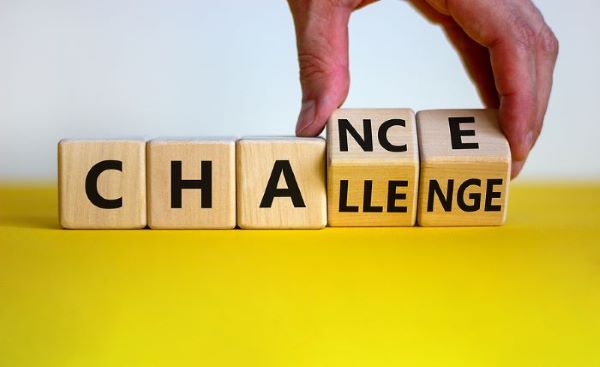
So, if you are not answering the standard three questions (What have you completed? What will you do next? What is getting in your way?), what else can you do? Here are what I call the three acts:
- Socialization: Working alone from home for more than a year under pressure and deadlines hasn’t been all cozy, so take the time to just catch up with each other. Listen and get to know each other. Simple games like this one can help you still feel like part of a team and that you aren’t working in silos: The scrum master as the facilitator can ask the team to write down “one act that makes you feel proud,” written anonymously on (virtual) sticky notes and tacked to the team board. During the standup, ask team members to identify who wrote which sticky note. It’s fun, and you get to know each other—especially any members that have joined most recently and never met the team face to face. It gives them a better idea of who everyone is, and knowing something personal will always make you work better around them. No one forgets a good story.
- Intrigue: Look at the burndown chart, as this will allow conversations to start naturally on how things are working out for the team. This ensures there is no finger pointing and brings the group together. Decisions are made by the team based on the data and the general team trend. I find it far more effective than just the three questions. Another tip that always helps: Look at the buffer usage as a health check for the teams. Start with a 10% buffer in sprint estimation. Look at the burndown, and if you see the buffer is being completely utilized, find ways to uncover why and where the estimation went wrong, or if more tasks are being added later. Increase the buffer and continue to keep on checking on the team trend; you will either fix the leak or find the root cause.
- The wrap: Support and positivity should always be the closing thoughts. Even if the team is behind schedule, team members should find ways to work together and use the learnings for better estimations and strategies next time. This is a marathon, not a sprint. Your behavior, bonding and team experiences matter in keeping the team together during these trying times.
Changing the norms to ensure things are working for you—and keeping it that way—is agile. No one shoe fits all, so find what your team needs and try it out!
Posted
by
Soma Bhattacharya
on: July 20, 2021 03:52 PM |
Permalink


 Community Champion


