Less is more
From the Easy in theory, difficult in practice Blog
by Kiron Bondale

My musings on project management, project portfolio management and change management.
I'm a firm believer that a pragmatic approach to organizational change that addresses process & technology, but primarily, people will maximize chances for success.
This blog contains articles which I've previously written and published as well as new content.
Recent Posts
Leading Through Crisis Means Leading Through Context
"It's the end. But the moment has been prepared for." - retirement lessons from the Doctor
Just because they are non-critical, doesn't mean they are not risky!
Just because they are non-critical, doesn't mean they are not risky!
How will YOU avoid these AI-related cognitive biases?
Categories
Agile,
Artificial Intelligence,
Career Development,
Change Management,
Communications Management,
Decision Making,
Governance,
Hiring,
Kanban,
Lessons Learned,
Personal Development,
PMO,
Portfolio Management,
Project Management,
Resource Management,
Risk Management,
Risk Management,
Schedule Management,
Scheduling,
Tools
Date
 I'm just wrapping up Adam Grant's book, Think Again.
I'd first heard Adam speak at the in-person (yes, there was such a thing at one time!) PMI Global Congress conference in 2019 and appreciated both his ideas as well as how he delivered them. His latest book focuses on the skill of rethinking which is a cornerstone of a growth-oriented, adaptive mindset.
Adam provides lots of good insights supported by engaging examples, but one in particular stuck with me.
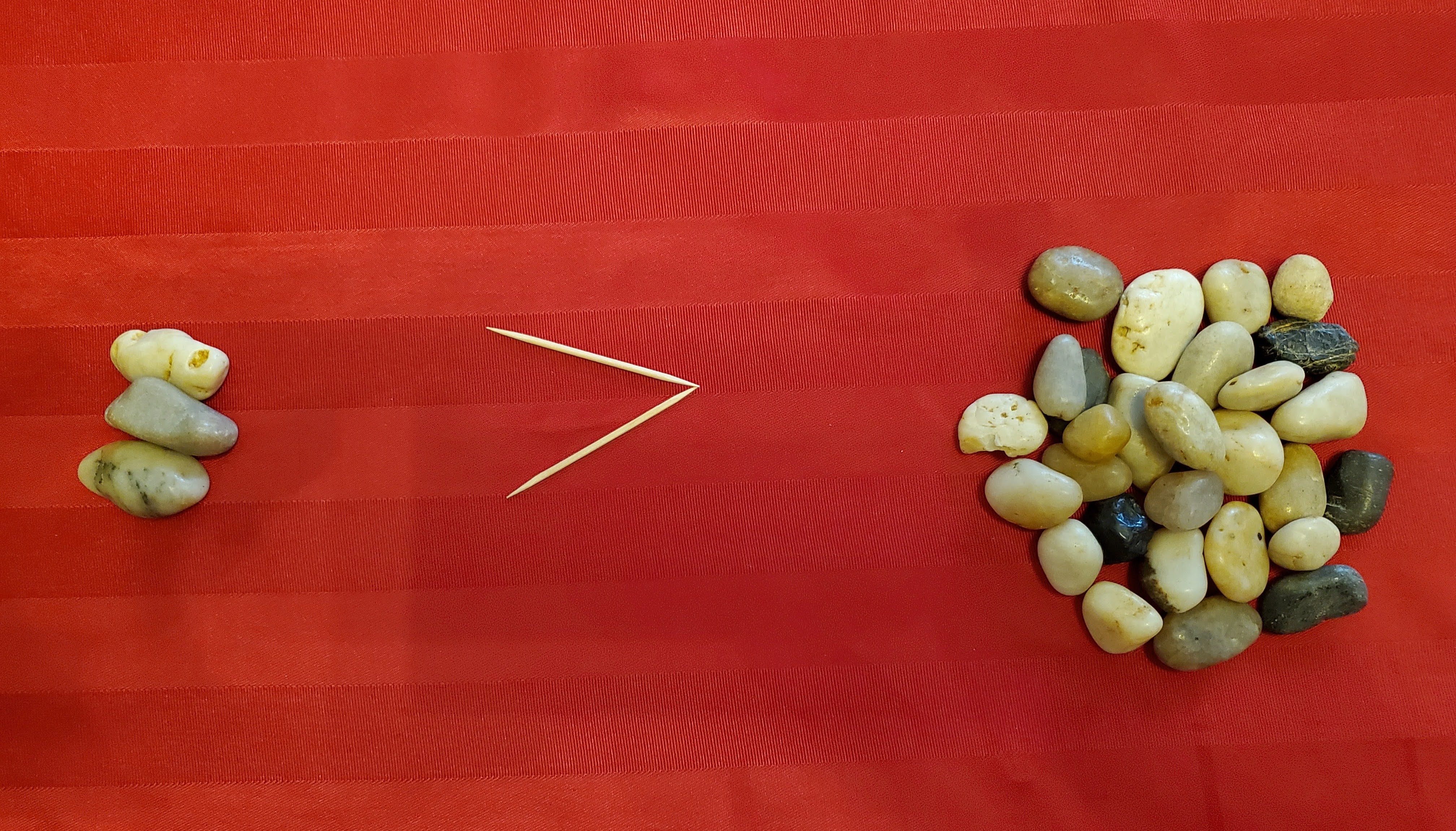
In his chapter titled "Dances with Foes" regarding the science (sorry, Donald Trump, not the art) of the deal, he covers factors which differentiate average negotiators from skilled ones. While I was already familiar with the benefits of establishing common ground, asking a lot of open-ended, thought-provoking questions and avoiding the knee-jerk reaction of defending against all attacks, providing fewer reasons appeared to be more effective than providing more.
This forced me to do some rethinking of my own.
In past engagements, when trying to gain alignment from a challenging stakeholder, a common "go to" tactic for me was to prepare for the discussion by identifying as many supporting reasons as I could and then volley those at the stakeholder in a prioritized order hoping to sway them towards my way of thinking. This approach usually worked quite well for me in my youth during school debates or in negotiations with my friends which reinforced my belief in the validity of the approach.
However, in my professional career, while it occasionally succeeded, in most cases it didn't. In some cases, the stakeholder disengaged from our discussion and the quality of our relationship suffered as they felt overwhelmed or attacked by the approach. In other situations, it revealed weak areas in my platform which they could then focus on with their rebuttals. And once one reason falls, it can create a domino effect which knocks down the remaining ones.
So the next time you are preparing for a stakeholder negotiation, remind yourself that less is more.
Posted on: January 02, 2022 07:00 AM |
Permalink
Comments (8)
Please login or join to subscribe to this item

Luis Branco
CEO| Business Insight, Consultores de Gestão, Ldª
Carcavelos, Lisboa, Portugal
Dear Kiron
Very interesting theme that brought to our reflection and debate
Thank you for sharing and for your opinion.
In one way or another we are facing Stephen Covey's 3 habits of public victory.
1. Think win-win
2. Seek First to Understand, Then to Be Understood
3. Synergize
Sometimes it's hard to practice these 3 habits and just like the 7th Habit: Sharpen the Saw (continuously improve)
I take this opportunity to hope that in the year 2022 all your dreams and goals will be fulfilled
Thanks Luis - best wishes for a peaceful & prosperous 2022 to you too! Covey's 2nd habit is the hardest for most to adopt, especially when dealing with a very difficult stakeholder.
This post bring me back memories of my last conference. I was there too!
Adam key note was great.
Your article too :) thank you for sharing
Thanks Mayte! It was great meeting you at that conference as well as others from this community. Hopefully we can all meet again once PMI resumes global conferences in person.
Kiron

Khaled Ktecha
PM I| Darwish Engineering Emirates L.L.C
Dubai, Dubai, United Arab Emirates
Thanks for sharing this interesting article, and this is a similar Arabic proverb (the best speech is the less and leads)(أفضل الكلام ما قلّ ودلّ).
Thanks Khaled - the principle is certainly universal!

Kwiyuh Michael Wepngong
 Community Champion
Financial Management Specialist | US Peace Corps
Yaounde, Centre, Cameroon

Shanos Kunhahamu
Product Manager, Mobile Wallet| First Abu Dhabi Bank
Dubai, United Arab Emirates
Thank you Kiron for sharing your experience.
Please Login/Register to leave a comment.
|
"The golden rule is that there are no golden rules."
- George Bernard Shaw
|




