


Guessing is not a strategy: How to build decision velocity with AI and real-time data
June 10, 2026 | Live Webinar

Notes on Reporting Progress (ii)
User Acceptance Tests (documentation)
Documents Supplied for Post-HOTO
Notes on Documenting Acceptance Tests
Agile, Agile Communications, App design, Communications Management, Give-back | Outreach, information communication technology, New Year, PMIef, Project Management, Quality, Risk Management, Risk Management, System design, Volunteering


There are two scenarios which can get us caught unawares when a project task or activity is delayed. It is either ① we failed to manage and monitor the activity, or ② there isn’t one or an adequate risk response plan for that activity. Taking over an activity that is delayed is to firefight - the implications are on the project team, the organization.
If we failed to track progress of the activity, then it could be construed as negligence; perhaps due to incompetence or ignorance e.g. that there is no succession planning (known unknown) or no certified professionals doing the job (unknown known). If we don’t have a risk response plan preferably in writing or in our heads or have some clues, then we would have totally failed to implement risk management.
Granted that events can happen unexpectedly – we should nevertheless have been on top of things. To begin with - there should be some form of risk management plan as the project kicks off.
Here’s my summary - when a risk event occurs, broadly:
|
Implement the risk response plan |
|
|
Communicate |
|
|
Manage stakeholders |
|
Here are some principles to follow:
|
Seek resolution – time is the essence |
|
|
Move forward – trust your project team |
|
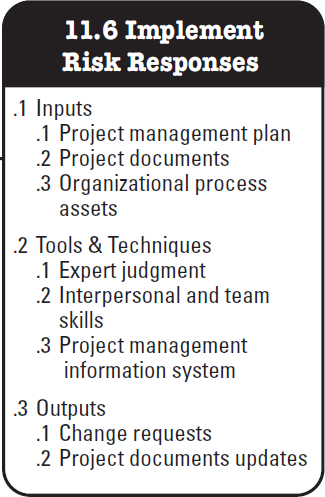
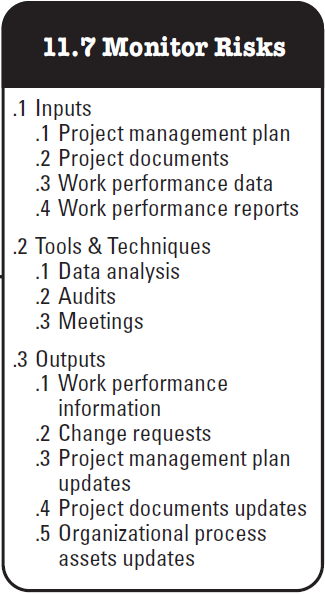
PMBOK® Guide – Sixth Edition (2017)
Past notes

Please Login/Register to leave a comment.
|
"If you want to please only the critics, don't play too loud, too soft, too fast or too slow." - Arturo Toscanini |