


Does Your PMO... Blow?


Situation: You are interested in PMO performance issues. At the end of 2008, ESI International conducted a study of 387 Program Managers, inquiring about the maturity and success of their PMOs. Only 8% of those surveyed described their PMOs as being successful. At the end of 2008, ESI International conducted a study of 387 Program Managers, inquiring about the maturity and success of their PMOs. Only 8% of those surveyed described their PMOs as being successful.Among the study’s findings: Of the 92 percent who do not believe their PMO is successful, the main reason was a lack of:
Thirty percent of the respondents said the existence of their PMO has been seriously questioned in recent years. Among the attributable reasons are:
We spoke again with J. LeRoy Ward, PMP, PgMP, and EVP of ESI International about the survey. “PMO executives are keenly aware of the obstacles to their success,” said Ward. “Closing gaps in skills, knowledge and tools are critical for enabling PMOs to meet these challenges and enhance organisational project performance.” We then asked him a few more questiosn to get down to specifics. Q. How does the survey define success? It seems as if large numbers of these PMOs achieved some measure of success, but perhaps didn’t meet the higher standard set here. The survey did not set out to “define success”, but to identify barriers to it. Success is something that needs to be defined by each organization and should be determined based on the strategic goals and objectives set out by the executive, executives, or governance committee who supported the founding of the PMO. We have found in our more than 26 years of helping organizations improve their project management performance that success most commonly includes: cost control/savings; improving time-to-market; a decrease in troubled projects; increase in client satisfaction (internal or external); and increased revenue and profit. Other measures of success are more internal to the practice of project management to include better teaming, improved documentation and consistent application of best-in-class methodologies. In the survey, we did ask respondents how they defined success from a very high level/broad perspective. They said: • 25% -- client satisfaction • 22% -- project success • 22% -- consistent methodology deployed • 8% -- number of people trained • 7% -- higher ROI Clearly, these measures reflect the varying roles that PMOs can play within an organization. One of the qualitative survey respondents, a senior PM from a UK-based retail operation, put it this way, “The PMO has to justify its existence and provide quantifiable benefits for its existence.” My one comment on these numbers is that I was surprised that only 7% defined success as proving a higher ROI. In fact, this should be right up there with client satisfaction. While deploying a methodology is an important function from a project manager’s point of view, it is largely lost in the most important issues facing business owners, the very owners who pay for projects. Q. One of your study’s findings was that “The PMO is seen as an extension of administrative support, rather than a professional body with value-add skills.” Was that sort of comment restricted to those that are very governance-oriented (rather than support-oriented)? What are the best ways to demonstrate (and perhaps document) value-add skills in these environments so they aren’t questioned later? Based on the way the survey was conducted, it is difficult to draw a conclusion as to whether or not the role of governance would affect the perception of the PMO as more administrative rather than a professional body with value-added skills. That said, a proper governance structure includes the involvement of senior leadership and provides a direct communications channel that should enable the PMO to consistently demonstrate its value as a professional body with value-added skills. In other words, my 33+ years of professional experience leads me to conclude that the opposite is true. If PMO has a well constructed governance structure, it is more likely to be perceived as a value-add function. The “best” way to demonstrate value-added benefits for PMOs varies by organization. However, framing that conversation in a way that focuses on improved project and business outcomes with an emphasis on financial benefits should speak effectively to executive management. From a financial perspective, this can include, but is certainly not limited to: cost containment due to improved project success; increased revenues driven through smart project selection; or reduced labor expenses brought about by improved project management efficiencies. The greater the degree a PMO can work with executive management in identifying, selecting and aligning projects to an organization’s strategy, the more likely executive management will view the PMO as an integral player in setting such strategy, thus increasing the value of the PMO to the organization. To be sure, the ability to successfully execute those projects to realize the intended benefits is where the “rubber meets the road” and where reputations are earned or destroyed. From an executive’s point of view, the ability to beat a competitor to market, to satisfy existing clients, to expand geographically, or to expand a product line to a new demographic, and to demonstrate that project management was the vehicle which helped them accomplish that, will strengthen the role of the PMO and cause it to be seen as integral to business success. Q. Another situation that arose when people questioned PMO value was “Budget cuts necessitating cost justification, a difficulty for the non-revenue producing PMO. “ What are the best ways for a PMO to demonstrate and document ROI? (the more specific the better) Let’s take the case of a PMO in a global drug development organization. Studies by the pharma industry have shown that it takes, on average, 11 years and USD802 million to produce a drug that one’s doctor can prescribe. Needless to say, that’s a long time and a lot of money (no matter what currency you’re using!). As a PMO director in this organization, I would first select a random sample of drug development projects that the organization has completed within the past 5-10 years. We would then be able to average the length of time and money it costs us to produce our drugs; then we could compare that to the global average mentioned above. We would then initiate a number of improvements through the PMO to the Global Drug Organization to help boost performance. For example, we might institute or change the way projects are selected (portfolio management); we might establish criteria to be used in each phase of the drug development life cycle such that, if certain metrics were not met, the project would be terminated. We might change the way we form teams for these projects option for the Integrated Product Development Team approach, in which a core team is assembled at the outset who plans the entire project from start to finish having as its representatives members from each functional group within the company who will work on the effort (e.g., research, toxicology, clinical, legal, marketing, IT, etc.) We may also embrace the “heavy weight” project manager concept on certain strategic projects a concept used in the pharma and global auto industries. Finally, we may provide relevant, targeted training to each project manager to ensure they have the requisite skills and tools to do the job. Based on these and other improvements, we would then begin to gather project metrics that will enable us to benchmark these forward projects against our own experience, as well as the global data. To the extent we have shortened our time frame, reduced our costs, and produced “blockbuster” drugs, which is defined as any drug that earns more than USD1 billion/year, we can draw a correlation between our improvement efforts and our project management initiatives. The key issues most organizations have in demonstrating ROI is that they fail to establish this critical baseline. Project managers can often work with the same intensity as the fervently religious in that their “belief” in project management, far outweighs any evidence they can bring forth to prove their case. Belief, faith and hope work well in religious circles; rarely do these emotions ever convince a group of executives regarding the value of project management. [Editorial note: Electronic copies of the report are available upon request. Contact J. Scott Punk, APR] |
Posted on: March 30, 2009 04:17 PM
| Permalink |
Comments (6)
What I Learned (about KM and social media) in Military School
Situation: You are thinking about introducing social media into a challenging environment. We recently spoke with Dennis Cornell, Chief, Project Management Office, Office of the Secretary of Defense, Defense Information School. Dennis, along with his colleague and resident social media expert, Army Staff Sergeant Joshua Salmons, answered a few questions about how social media is being used in their secure military environment. We recently spoke with Dennis Cornell, Chief, Project Management Office, Office of the Secretary of Defense, Defense Information School. Dennis, along with his colleague and resident social media expert, Army Staff Sergeant Joshua Salmons, answered a few questions about how social media is being used in their secure military environment. Q. Your role, being responsible for strategic planning and maintenance at the Defense Information School really puts you on the hot seat for learning about and appropriately implementing anything new that changes how you deal with "information" in general. Do you have a process for deciding what to experiment with and what you eventually have people use as a matter of policy? Dealing with changes in technology and making decisions on what to use and when to implement is one of the bigger challenges within a military environment, especially here at the school where we are so technology dependent. When my job was mainly focused on the IT world, it was critical to be an internet research junkie. Up to 20% of any given day dealt with researching technology whether it was a new application, a new hardware set, or a new policy governing a particular technology. Life on the DoD’s NIPRnet is filled with restrictions and policies that make it difficult to find that 90% solution that meets the school’s requirements for communication and information sharing. Adding to the difficulty of implementing a common platform is that most people use a lot of different tools outside of the workplace. Being on the so called “hot seat” means having to filter a lot of ideas of those that see a tool for its “cool factor” and focusing on the tools that meet the needs of the organization as a whole. Then it becomes a matter of examining the new, fancy tool to see if it holds any benefit for internal operations, if it needs to be included in the “here’s what’s out there” list, or if it’s yet another product. We do have an internal development network that allows us to test new applications that are either recommended by leadership or through our planning team. We use the DINFOS staff to provide feedback during our test and evaluation approach before any decision to implement into the live environment is made. The difficulty is with applications that we cannot host internally. External policies of the DoD play a huge role in whether or not those applications can be leveraged as a resource for information sharing. Many of the current social media tools are on the “blocked” list within the DoD community. The challenge then becomes a matter of having an exception granted and proving to the decision makers at the DoD level that the tool not only is vital to mission success, but that it poses no threat to the DoD network. Q. What does a power Social Network user look like at the DOD? Is it the "Coolness" of the apps that attracts them or is the functionality? I’m going to call on the school’s Social Media guru, Army Staff Sergeant Joshua Salmons to give you the “cool” answer for this. From Joshua Salmons: “I’m going to define the DoD power social network user as someone who has a healthy knowledge of social media and IT, who knows how SM can augment the public affairs mission and which precautions should always be exercised when speaking to the public. Basically, the power user is a social media advocate and is well versed in explaining the value of these new applications. These individuals have endured constant conflict with nay-saying bureaucrats and doubters and are very sharp on the monetary-, labor- and process-saving benefits to social media applications. People who are drawn to apps just because they look cool aren’t power users. A big part of leveraging social media apps in the workplace is user adoption. Functionality alone does not ensure widespread use amongst the masses. Applications should have a certain coolness or sexiness to them—meaning function should meld with form and interface to exude gestalt. When Xerox engineers first developed the mouse and graphic user interface, company execs dismissed the “cool” new technologies. They said computers were for professionals, there was no need for anything to make them more accessible. Steve Jobs bought the idea for the mouse and GUI and, today, Apple products are still very artistic in their design in addition to their functionality. In turn, they attract an extremely ardent following.” Q. Do you use any of the older (what we used to call groupware) collaboration apps within the DOD? What do you see as potential replacements for them and why? I’ve been a Sharepoint user since 2001. I first introduced it into the school as a means of sharing documents and collaborating in a single-source environment. With the latest version of Sharepoint, some of the more common social media tools have been implemented. This has allowed us to grow a wiki-like applications which we’ve named the DINFOPEDIA. This tool has allowed us to more readily share information internally. One of things that the school has had to overcome with collaborative tools is the old school mentality of knowledge is power, and if it’s my knowledge then I also have job security. There are numerous portal products on the market and new ones being developed all the time. While I don’t foresee implementing or find a replacement for our current platform, if there is a tool that provides the greater than 90% solution and is cost effective, I’m sure it will be something that I recommend for test and evaluation. Q. Are any leading edge applications used to collaborate between agencies at the DOD? Are there any used for collaboration with outside organizations, suppliers or vendors that work particularly well? Platforms like Intelink are becoming places where dozens of agencies can contribute toward projects at various levels of classification. The biggest advocate for collaborative communication in the early part of the decade was the Army with its push to have all service members use the common platform Army Knowledge Online. The DoD piggy-backed on what the Army did and followed AKO with their version called the Defense Knowledge Online (DKO). Both provide email service, file sharing, and discussion groups. They are very expansive portal systems which, in my opinion, have grown to the level of actually being overwhelming. Q. What Web 2.0 or social networking application do you see the biggest potential for within the DOD? If I had to pick one, I’d say wikis. Given the transitory nature of the military, the opportunity to store and transmit tacit knowledge is amazing. Policies, field manuals, regulations, personal tips from vets can all be collected, organized and given out where it’s needed. The monetary savings on printed material would be worth it alone. The benefit of current, up-to-date TTPs, regs or even phone rosters—all secured as appropriate, of course, is great! |
Posted on: March 30, 2009 12:47 PM
| Permalink |
Comments (3)
PMBOK Now - Agile Later?
Situation: You are curious about what's happening in Agile these days.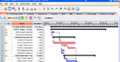 Agile approaches can be confusing to the uninitiated, but they are absolutely gaining in popularity. Agile tools are also becoming more commonplace and Projity is one that seems to help bridge the PMBOK and Agile worlds a bit. Recently we talked with Jeff McKenna, co-creator of Scrum and VP at Serena Software. He gave us some insights on what is happening now int he world of Agile. Agile approaches can be confusing to the uninitiated, but they are absolutely gaining in popularity. Agile tools are also becoming more commonplace and Projity is one that seems to help bridge the PMBOK and Agile worlds a bit. Recently we talked with Jeff McKenna, co-creator of Scrum and VP at Serena Software. He gave us some insights on what is happening now int he world of Agile.Q. We've been hearing a lot about SCRUM and Lean lately on Gantthead. Are you still seeing increased usage of Agile processes in the IT space? In other disciplines? We are seeing a rather continuous uptake of agile processes in all areas of software development. IT has been a bit slow to take up Agile but that rate is increasing. Q. Which flavor of Agile is most popular right now and why? Are the flavors industry-specific? I think of Agile flavors applying more to the levels of the organization than specific industries. When first adopting Agile, folks have historically leaned toward Extreme Programming (XP). Executing agile well requires good engineering practices and XP has a strong focus on engineering practices. As those practices improve then we see Scrum being used more. Since Scrum is focused on work management and team dynamics. Even later in adoption we see Lean being used to guide the business in a more agile manner. I should also say that this view is a bit generalized. This is my recommendation for adoption and what I see working. Using Scrum without strong supporting engineering practices is possible and is difficult. It is my view that industries adopt new technology at rates more local to the industry rather than the 'whole'. We are seeing that with Agile. Some industries are very far along, others are just getting started. Q. In general, where do you think the Agile movement is headed over the next 5 years? More and more acceptance and integration into mainstream. Perhaps in 5 years, we will just accept that this is how good software is developed. I am hopeful. Agile is how I have seen good software being developed for over 45 years. Now we have a way to talk about it. Q. What is driving the change you've just described? When executed well, Agile works: Teams are more satisfied, planning is easier, time to market is faster, business knows what is going on, design emerges. I could go on. Q. The latest version of the PMBOK is said to address the merging of Agile methods and the PMBOK approach. What are your thoughts on that? This is another sign of widespread adoption. It is always difficult for new methods to be accepted. The PMI folks have fought Agile for a long time and are either noticing that it works or desire to use an 'embrace and extinguish' strategy. I prefer to believe the former. Agile as implemented often has some weaknesses. PMBOK has some things to say that are useful regarding those weaknesses. On the other hand, Agile really is different in important ways and if the important aspects of Agile are lost, then the gains are lost as well. Q. When approaching projects from an Agile perspective, what are the most important skills for a PM to have? The most difficult aspect of the PM job is to learn to consider work in what we term vertical slices. What is the least that can be done that still provides business value? Doing this well is a skill that needs to be learned. Once learned and when working with agile development teams there are wonderful opportunities to reduce time to market, delight customers and have satisfied development teams. Q. How does Projity, as part of the Serena offering, address the issues above more effectively? Projity is used to manage more classically developed projects in a more agile way by reducing the ceremony associated with the work. Q. What are the “must have” software tool attributes when dealing with Agile projects today? The key question is: Does the tool support your environment? Number of teams, number of projects, your terminology, and your worker distribution. As an agilista, I am always looking for the least complicated and intrusive tool to use to accomplish my work. |
Posted on: March 24, 2009 10:05 PM
| Permalink |
Comments (6)
7 Principles For Inspiring Employees
Situation: Your team needs a little inspiration right now. Terry Barber is the Chief Inspirator for Grizzard Communication Group. He primarily serves the non-profit healthcare segment as well as colleges and universities in the subject area of philanthropic branding. His new book is entitled, The Inspiration Factor. In times like these we all could use a little lift - which is why I wanted to share some pointers pointers from Terry's book. Hopefully they will give you some food for thought. Terry Barber is the Chief Inspirator for Grizzard Communication Group. He primarily serves the non-profit healthcare segment as well as colleges and universities in the subject area of philanthropic branding. His new book is entitled, The Inspiration Factor. In times like these we all could use a little lift - which is why I wanted to share some pointers pointers from Terry's book. Hopefully they will give you some food for thought.1. Authenticity - get out of the image management business for yourself and your company. Share with the people in your organization where you are weak. Verbally express just how much you need them. Let them know that you know your limitations. Invite them to partner with you to get through these difficult times. 2. Connect with Other's Dreams - use these difficult times to uncover the latent dreams and ambitions of your key talent. Tell them you are more committed than ever to helping them get to where they want to go. Be creative in aligning their tasks for today with their dreams for tomorrow. 3. See in Others the Abilities They Don't See in Themselves - take time to be observant. Quit the craziness long enough to notice the talent in those around you. This even works if you are trying to manage up. This principle works best by breaking it down into three steps, notice, name, and nurture. After you have noticed a talent or strength in a person, let them know you noticed it and be specific about what you noticed. Don't just say "I noticed you are a hard worker." Rather, "I notice you care very deeply about making sure the details are in order or I notice you are very articulate on that subject." Look for ways to bring that talent out by providing opportunities and training to support that particular talent. 4. Speak and live with credibility - I also refer to this principle as leading with moral authority. It does not mean much for you to say "let's keep looking for the opportunity ahead" while living in fear and operating with a scarsity mentality. 5. Inspire With Great Stories - this is the principle of overhearing. This is not to be confused with the art of storytelling. The emphasis here is looking and telling stories that have a lesson. What can you learn from the story of a mountain climber? What can you glean from the story of one who has gone from rags to riches or better yet, from riches to rags? Pull your team together today and use story to inspire. 6. Help People to Live on Purpose - remind them that what happens at work is only a portion of their life. As important as that portion is, it is not all that there is to life. Help people write down a vision statement for their life first and then for their job. If work can be a conduit towards that vision for life, great! 7. Create a Culture of Inspiration - following the example of John Wooten, UCLA's iconic coach, become teachers committed to excellence and character development. Chasing numbers and making decisions by looking only at the "bottom line" causes us to be reactive and impulsive. |
Posted on: March 24, 2009 09:45 PM
| Permalink |
Comments (5)
Twitter at Humana?
Situation: You think social networking might work within your business.  I recently spoke with Chris Hall, a Project Manager and a key player in Humana's Social Media Chamber of Commerce - exploring new ways that the company's employees can interact productively with each other and the outside world. If you want to find out more about Chris, I hear he's absolutely Halllcious on Twitter. I recently spoke with Chris Hall, a Project Manager and a key player in Humana's Social Media Chamber of Commerce - exploring new ways that the company's employees can interact productively with each other and the outside world. If you want to find out more about Chris, I hear he's absolutely Halllcious on Twitter.Q. You’ve recently started a group within Humana, exploring the use of Social Networking tools in the workplace. Could you give us some specifics about the effort? (lines of business involved, how it started, how many people at what level, executive support, etc.) A. Definitely. The idea behind Humana’s Social Media Chamber of Commerce came about because we are trying to understand what social media means for our 26,000 person company. The prevailing thought right now is that no one organization will own "Social Media" for all of Humana. We really don’t want to create a bottleneck for any kind of communication approval process because social technologies online are real-time in nature. We’ve realized that our company is made up of individual departments with separate customers/demographics, individual social media needs, and budgets and we want to use the Chamber of Commerce as an extension of the Web 2.0 world that we all live in today. The Chamber is made up of Directors from around the company and the paradigm shift we’re trying to create is: the need to share and exchange best practices will replace the need to control. It’s a lofty ideal, but one worth striving for nonetheless. After sitting through the first two meetings, I think that we're on the right track. There has been a genuine exchange of ideas. Viewpoints are clarified and understood with the high points going out on Twitter. People actually smile. It’s great! Q. Regarding the use of Twitter as a tool to take and disseminate meeting notes, you talk about less being more. Could you expand on that? A. Sure thing. Over the past eight years I learned how to take very detailed meeting minutes. Some things definitely need to be flushed out in detail, but I feel that in most meetings, you really only have one to three big things that everyone needs to understand and focus on… Using a micro-blogging service, like Twitter or Yammer, to take down notes during a meeting really forces a person to get down to the gist of the message, and that serves as a filtration process. When everyone in the room is able to do this, and the information all rolls up into one place, then you can start to see keyword trends from the meeting. So the idea is that everyone is taking notes, in the form of 140 character thoughts, that everyone else can see and then at the end of the meeting everyone’s notes are pumped into something like Wordle and a word cloud is generated so that everyone can visualize the keywords that were mentioned the most in the meeting. I’m still experimenting with this concept, but I think it’s a cool new way to look at a boring topic like meeting notes. ? Q. What has the reaction to your group’s efforts been inside the organization? A. Bewildered enthusiasm. I work in Humana’s Innovation Center and we’re just kind of doing these things, and figuring it out as we go… which is exciting. There’s some element of “danger” associated with business and the social web that has an allure to it for most people. We just had a web and new media conference where everybody in the company who has a web presence got in a big room to talk about what they’d been doing, and our group is definitely on the cutting edge, mainly because we’re all on Twitter. What I think is really cool though is the fact that we have people outside of our company who have become fans of what we’re doing. We created the hashtag #hcoc, which stands for Humana’s Chamber of Commerce and serves as the public location of all the information we’re sharing from these meetings. The fact that people from outside our company walls are there encouraging us to keep moving forward with it is really awesome. Humana is just another evil health insurance company in a lot of people’s minds. We would like to change that perception and show that we want to be part of a solution to our country’s health crisis. Opening up and sharing seems to be a catalyst for that type of change. Q. What are the biggest challenges to starting a group like this? Who is opposed and why? A. I think that we’ve been very fortunate to have leaders in the company who accept the importance of social technologies, and challenge us to find ways to integrate them into our daily work lives. If you don’t have buy-in from the top in your organization, then you’re just spitting into the wind. The tough part at my level is figuring out what’s out there and then figuring out the so what about it. Understanding the how does this make my life or the consumer’s life easier, better faster, more motivated, and then moving forward with something that could easily blow up in my face is a constant challenge. Q. What sort of person typically wants to be involved in this group? What sort of person doesn’t? A. I would say that you have to like the internet in general, while being open to new experiences. It’s a definite mind-set, but that doesn’t mean that it’s exclusive. Anybody who wants to learn and share can be in… Q. Do you publicize the group within Humana? Are you trying to expand it in any way, or is it just a close knit group of like minded folks? A. We are in the process of developing requirements for a digital “Commons” area that everyone in the company will have access to learn and share. It’s looking like Microsoft SharePoint will more than likely be the tool of choice for our internal needs in that department. Q. What’s the most important thing you’ve learned so far? A. I think that the most important take-away so far, is that people care. It’s refreshing to be involved with a group of people who are all enthusiastic about the mountain that we have to climb together. That’s not hyperbole, either. It’s also exciting that some people from outside our company have chosen to come along for the ride. The momentum that we are building will help us through the challenges that we are up against. And let me tell you, we have a lot of challenges ahead… Access and transparency isn’t a “do it over a weekend” kind of challenge. We have a long road ahead. Q. What’s next after Twitter? How do you prioritize the tools you are exploring and why do you do it that way? A. We did the meeting tweeting sort of on a whim… We think that the results were interesting and that it was cool that other people are into it. Whether it remains our tool of preference is yet to be determined. We have internal access issues with Twitter (our firewall forces us to use our cell phones to tweet) so it may not be our final solution in the end. However, the concept of micro-blogging is catching on… I’m really interested in feeds. The thought of building the reporting into the work is something that I can get fired up about. I personally loathe having to make and manage a project plan and then make summary slides in PowerPoint. Its double work and totally unnecessary. I think that RSS is the answer but have to wrap my head around how everything fits together with our requirements. That being said, there isn’t really a prioritization process around finding the individual tools we can use. We’re looking holistically at the business of conducting business better using social technologies. It’s good times. ? |
Posted on: March 17, 2009 05:57 PM
| Permalink |
Comments (4)


