New From PMI - Read an Article, Take a Quiz!


| Situation: You’re looking for new and interesting ways to earn PDUs PMI has created a new type of learning module that helps you learn about very specific areas within Project Management, testing your understanding of the material with a short quiz at the end of the exercise. Here are some examples of topics addressed. 
PMI Publication Quizzes are based on PMI-published articles and papers available at the PMI.org Marketplace. Customers purchase the quiz together with one or two related articles and papers. Credential holders will read the article(s) and then complete a short quiz to earn PDUs. PMI volunteers work in conjunction with the PMI Professional Development Group to create the quizzes. Recently we spoke with Brian Weiss, Vice President of Product Management at PMI to get a better understanding of what these quizzes are and how you can best use them as a part of your continuing PM education efforts.
Q. Who came up with the idea to create this offering? What was the impetus behind it? This idea, like many of the ideas that become products or services at PMI®, was introduced by one of our staff members. We encourage our employees to be diligent about creating opportunities that support our members and credential holders. Because we have nearly 500,000 members and credential holders in more than 185 countries around the world, we are always looking for new and creative ways to reach out to these individuals and support their continuing education. The Publications Quizzes program was designed to provide a convenient and affordable way for credential holders to earn the last few remaining Professional Development Units (PDUs) that are needed to maintain their credential. Q. Can you tell us a bit about where this fits within the spectrum of options that PMPs have to maintain their certification? When and how are these quizzes best utilized? The Publication Quizzes program complements our other PDU-generating programs. They can be used to augment the total PDUs needed to attain a credential – for PMP®, a total of 60 PDUs is needed and for our other credentials (excluding CAPM), a total of 30 PDUs is needed. If, for example, a credential holder realizes he needs a few more credits to reach his target PDUs, the PMI® Publication Quizzes provide him with an opportunity to conveniently earn those remaining credits. We also recognize there are members and credential holders in regions of the world without an abundance of Registered Education Providers from which they can earn PDUs. The PMI® Publications Quizzes program offers these individuals an easily accessible way to earn some of their required PDUs. Q. Does the availability of this offering change how PDUs will be recognized for self study? In other words, a PMP has historically been able to just invest time reading articles and earn PDUs that way (versus reading, then taking a quiz as they do here). Will that option continue to exist? Yes, the option to earn PDUs by reading a book or article will continue to exist. For those activities, the PDUs are recorded as Category 2 – Self Directed Learning (2-SDL). In this category, a maximum of 15 PDUs that can be earned per cycle. PDUs earned from Publication Quizzes are recorded as Category 3. In this category, no more than one third of the total credential requirements may be earned per cycle through Publication Quizzes. For example, PMP® credential holders can earn a maximum of 20 PDUs from PMI Publication Quizzes, while other credential holders can earn a maximum of 10 PDUs. Q. Does PMI plan to do the same thing with other media (beyond articles), such as webinars or podasts? We are always seeking opportunities to provide the best tools to our members and credential holders, and this program was designed with the ability to expand content and platforms used for the quizzes. We can include webinars and podcasts, but can also look to books, such as those in the PMI® Bookstore and content found on the PMI® Virtual Communities’ web pages. Q. According to the web site, just about anyone can take the quizzes (PMI members, non-member credential holders and non-credential holders). How do you envision non-credential holders using the quizzes? The over-arching purpose of the program is to provide an educational opportunity for practitioners to increase their knowledge of project management. As with any sound educational program, a testing of what was learned serves to reinforce learning and build confidence for the learner. Non-credential holders or those interested in obtaining their credentials are also permitted to use the quizzes to test and increase their knowledge. Q. Tell us a little about what’s next for PMI in terms of new offerings. As mentioned earlier, we continue to expand our offerings and provide additional member value. One major area of focus has been on developing our virtual learning offerings – ranging from beginners to advanced practitioners. In that vein, we recently launched the Virtual Communities Project (VCP) initiative, which provides an opportunity for members, and the greater project management community, to network and exchange knowledge and ideas. PMI’s virtual communities have search capability across PMI.org and feature blogs, forums and wikis, which are updated on a regular basis, to create the ultimate project management collaborative community. We have received overwhelmingly positive feedback about this initiative and will continue to enrich and expand content within these communities. Through our global program SeminarsWorld®, we also provide an opportunity for our members to gain real-world experiences via live workshops. We will continue to add new programs in that arena, as well as create new courses for our eSeminarsWorld program. In the future, we will expand our offerings to include courses that feature simulation exercises and discussion threads, which offer yet another way to engage participants and increase learning and retention. #?-:nbsp; |
Better Resource Management = Better Forecasts?
| Situation: You’re looking to streamline resource management and schedule updates.
Q. Prior to Resource Workbench, what were the top three types of information users were asking for related to resources? What was most important to them? What pain were they feeling? While the priority varies from customer to customer, most of the organizations we work with struggle with three main issues around resources 1) What are my resources working on? For many customers, just getting the initial inventory of resource allocations to their projects and maintenance activities is the first step. This activity often highlights that in addition to having more projects in the portfolio than they thought they had, resources are also over-allocated to work on these projects. Once the picture of how resources are assigned across projects becomes clear, many of our customers realize that their project schedules are unrealistic (unless people really can work 120 hours a week). 2) Do I have the capacity to handle all of this planned work? As organizations go through periodic portfolio planning reviews and their annual planning process, the requests from their business users or customers invariably outpace the capacity of the organization. These customers need to compare high level forecasts for resource needs on upcoming projects to balance them against capacity of the organization. Usually, this just involves defining the types of resources needed (DBA, Developer, Analyst, etc), the timeframe, and the expected hours and/or FTEs. With this data for both projects and maintenance activities, customers can adjust the master schedule of their projects to align with their capacity, or they can augment specific roles in the organization to increase capacity before a gap is encountered. 3) How can I easily adjust forecasts? Many of our customers rely on team managers or a centralized resource management function to balance resource allocations against future work, both strategic projects and day-to-day maintenance activities. On a weekly or monthly basis, managers will adjust their forecasts (expected assignments) based on shifting business priorities or changes to project scope and/or schedules. These forecasts can then be compared to the actual hours and costs for the work to help in improved forecasting in future periods. In cases where the IT organization charges back work to the business, the accuracy of the forecasts is important for credibility – without chargebacks, the data is important to justify the headcount of IT.
While Innotas has always handled the first two cases well, it was a bit difficult for managers to quickly update forecasts. As with most PPM applications, the project or application was the central focus, which works great for project managers. For resource managers with resources working on multiple projects, this meant the manager was required to open up lots of projects, find the proper assignments, and adjust. This required lots of screens and lots of clicks. Our new Resource Workbench is designed for team or resource managers to give them a simple, single screen interface to see all of their resources and their assignments so that forecasts can be updated much like you would do when looking at a single spreadsheet. It also provides the resource managers with a simple way to find new work that needs to be assigned, whether it is coming in through a formal resource request or a more informal process. We expect this will make adjustments of forecasts for a typical resource manager at least 50% faster in Innotas. Our Bottom Up scheduling capability allows project managers who own their resources or know who will be working on the project to simply just assign those people to the project. Setup is straight-forward. Each resource has a role, and that role is used to build the summary at the project level for use with our Capacity and Demand screen. We provide a standard catalog of roles for IT organizations to start with, and of course they can configure that, or if they do not need the role information, they can simply use a single role across all resources. Configurable skills, competencies, years of experience, etc, are all supported as well for advanced searching and reporting, but it is not required. In the end, the level of setup required really depends on the complexity of the reporting that the customer wants to do.
Q. Beyond the tool, how does this information change the way that Project Managers interact with their Sponsors, Team, and Stakeholders? How does it affect the PPM view of things? The biggest change for project managers is that they will have more up to date data to report on when it comes to resource forecasts and comparisons against actuals because resource managers can realistically update the data more frequently. For many of our customers, this will also mean that the PM can “offload” the task of updating forecasts to the resource managers – many times, the project managers do the data entry. Q. What is the most interesting thing you’ve learned about managing resources during this process? At the surface, it appears that customers manage resources in many different ways, but once you drill into the details, the use cases are all very similar. The main differences I see in IT organizations come down to whether or not they utilize a centralized resource manager for shared services resources.
Q. What’s the next set of functionality you plan to implement related to resource management and why? Following on the heels of the resource workbench will be some interactive functionality for looking at different options for the portfolio against capacity. We will allow portfolio managers to compare a set of options (projects and maintenance activities) against their capacity to determine which mix provides the best value and will fit within capacity. |

How Do You Deal With Quality?
| Situation: You’re grappling with quality issues. Managing quality seems to be that hard to manage “blob” in the middle of the triple constraint. It’s difficult to get a handle on and often takes a back seat to better defined success measures. Joseph Phillips, PMP, Project+, is the Director of Education for Project Seminars. He has deep PM expertise, a lot of experience as a trainer and has contributed to over 35 books on technology, careers, and Project Management. Much of his work has focused on project quality, so we asked for his input on a few common challenges that PMs face every day. Q. Often quality is ill defined up front and is only defined later once it becomes a clear problem. During which project phase have you typically seen quality become an issue and what are the triggers that bring attention to quality problems? Quality can’t be achieved unless the project manager and project team know what’s expected of them. Quality is an esoteric value that must be defined in no uncertain terms in order for it to be realized. Planning for quality is where most projects fail when it comes to quality – they either don’t define quality in enough detail or set unreasonable, unachievable goals for quality. Quality becomes most noticeable when it’s missing; when deliverables aren’t acceptable, full or errors, or the project is hounded with corrective actions you can bet there’s quality problems brewing. Q. What is your favorite technique for defining quality measures? The best technique for defining quality centers on accurate requirements gathering. The project team, project manager, and the business analyst should work with the project team through interviews, focus groups, and iterations of requirements definition to specify what quality is to be within the project. Once the requirements have been defined the stakeholders should sign off on the requirements to confirm that the customers, management, the project manager, and the project team are all in agreement on what’s expected as a result of the project. Q. How do you set quality levels appropriately? (make them “just enough”) Are there any rules of thumb or techniques you can use here? Sometimes fast and good is better than slow and perfect. The purpose of the project deliverables should guide the expectations of quality. In my experience, stakeholders often confuse grade and quality. Low grade can be high quality – as long as the grade completely satisfies the purpose of the project. You can fly from New York to San Francisco in first class or coach; that’s grade. Quality is the fulfillment of the expectations, the requirements, and delivery on the promises of flying from New York to San Francisco. Q. What’s the relationship between quality measures, sponsors, and stakeholders? What matters most and why? It’s really about setting expectations, requirements, and cost-benefits realizations. The project sponsor, customers, or project champion may be closest to the vision of what’s expected as quality, for the project deliverable, and the cost they’re willing to pay to realize those deliverables. If the project manager and the project team don’t inherit the same vision or understand the quality expectations for the project deliverables then there’ll be a quality variance and issues, risks, and claims can sprout up in the project. Quality must be aligned with expectations, costs, and feasibility of accomplish the project goals in a reasonable time and for a reasonable cost. Q. How do you make quality measures real and important to the team? What’s a good way to get people focused on quality when they have a hundred other distractions? In my opinion, the project team is supposed to do their work accurately and correctly. I don’t like the idea that the project manager should bribe the project team to do their jobs. Project team members are given responsibilities and the project manager should expect them to do what’s right – and what’s right is to deliver their assignments with accuracy and to the prescribed level of quality. Having said that, I am a huge proponent of rewards and recognitions – when the project team does a good job they should be recognized for their contributions. If a project team generates a windfall or saves millions in costs for an organization I think it’s great that the project team should be rewarded. Q. What’s been your most difficult quality challenge and how did you resolve it? A few years back I took over a failing project. The stakeholders were fuming at the bloated costs, late schedule, and lack of deliverables. The project team was lacking the skills to create the planned deliverables, and the project scope was vague, sloppy, and conflicting. Communication was the first order of business in this mess. We elaborated and defined the project scope, sliced out non-value added deliverables to maintain costs, and defined exactly what was expected of the project – what the first project manager should have done. It wasn’t an easy, happy approach, but it’s what needed to be done – someone needed to take charge. Once we had a clearly-defined project scope quality became a non-issue as satisfying the project scope means satisfying project quality. While this project ultimately costs more due to training, the added contractors, and the reduced size of the project scope, I still count the project as a success. Q. What are the top three most important things to remember when managing quality on a project? First, the devil’s in the details; what means fast, good, or reliable to you won’t mean the same thing to the project customers. Exactness in the project requirements must be defined as part of the project planning. Second, the relationship of cost-benefits often shifts the perception of what’s needed and than in turn shapes the expected quality of the project. Finally, change in inevitable in most projects; when change happens, planned or unplanned changes, quality is affected because you’re not within the defined project scope. |
4 Key PPM Strategy Tips
Situation: You’re rethinking your overall PM strategy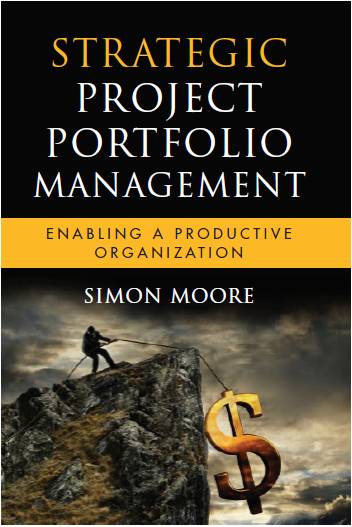 Do you ever have trouble with: Do you ever have trouble with:
Q. To a lot of folks alignment is an exercise in wording goals to make them sound strategic. What specific techniques do you use to find the right metrics to define each projects success? Can you describe the most important one in detail? The single most important technique to enable project success is whether a meaningful postmortem is conducted and acted upon. If you’re failing to do that, it doesn’t matter what your goals are, or how strategically aligned your portfolio is, without the capacity to improve and refine over time any system will inevitably become obsolete. Postmortems can help an organization converge on appropriate strategic goals too. For example, as you mention a project manager can artfully word goals in a business case to make them appear strategic, but a robust postmortem process acts as a safeguard to expose that: “If there is no feedback loop, then there is little incentive for estimates to be as accurate they can be, since no process is making sure they that are.”
Q. Is achieving competitive advantage usually more about success metrics for individual projects or having the right mix of projects? Why is that? Competitive advantage is about the right mix of projects. For example, if your organization wants to drive competitive advantage through superior customer service, then the project mix must reflect customer-centric investments. The reason many organizations can’t get to sustainable competitive advantage is because they don’t have a sufficiently broad and imaginative list of projects in the first place. This is a point I emphasize in the book: “Putting in an effective process for capturing ideas provides an opportunity for organizations to leverage a resource they already have, already pay for, but fail to capture the full benefit of—namely, employee creativity.” Once an organization has a long list of potential projects, and a good sense of their strategic goals, then selecting the right projects enables competitive advantage. Having the right metrics matter too, but metrics at the project level alone will only drive robust execution, which is necessary but not sufficient for competitive advantage. Q. There are a lot of PPM competency assessments out there. What makes the one in your book particularly effective? Give us the single most important question you could ask someone to judge their individual competence. With competency assessments it is relatively easy to ask the right questions. As you mention there are many frameworks out there, and I do add to that list, but the challenge is less about the right framework, and more about finding the right people to ask and generating excitement and energy for change, one case study I conducted with a financial services company emphasizes this: “Bringing project managers together and exposing them to the latest research and ideas in project management can quickly spark innovation and a lead to a lot of “Wouldn’t it be cool if . . . ?” conversations among project managers, especially in organizations with smart, entrepreneurial employees. From that point, it is possible to start to discuss tools and processes for realizing these ambitions.”
Q. A holistic work management system is the holy Grail for most companies. Beyond the system level stuff, how do you make granular tracking work without micromanaging? Today we’re far from having the all the information we need to micro-manage. So much data isn’t tracked, this is discussed in the book’s final chapter: “All projects are work, but not all work is a project. This means that portfolio management systems are hampered because they cannot see all work within the organization.”
Even where the system is in place, non-compliance can be a deal-breaker, no one wants to fill in a timesheet, especially when they are trying to get out the door on a Friday. The resulting stale or misleading information can make even the most sophisticated system worthless. We need to integrate work tracking into tools people like to use, such as personal information management systems to make the process less painful. That way we can broaden the scope of what is tracked, make the data more accurate and get closer to full picture of what the organization is doing, beyond the limited notion of projects. Work management is about lowering the barriers to collecting information and surfacing only what’s useful, once we’ve done that we can discuss the right way to leverage that information and avoid micro management. |
Is SaaS PPM Right for Your Large Business?
| Situation: You’re exploring Portfolio Management (PPM) software options. You’ve done your homework and come to the conclusion that there are essentially two options: on-premise PowerSteering Software provides SaaS PPM software for large enterprises, and their model has been gaining a lot of traction recently. We recently spoke with their CEO, Stephen Sharp, and asked him a few questions about the benefits and pitfalls of this approach. Here is what he had to say. Q. Most SaaS options appear to be designed for smaller companies or departments. PowerSteering is unusual in that its SaaS offering is targeted at larger organizations. How does PowerSteering tailor its software to the needs of global enterprises with diverse businesses, functions and workflow? The need for PPM flexibility is critical when you consider that the project lifecycle of a software development project may be quite different as compared to a new product launch which might require a strict stage-gate process. And to truly manage all work holistically, a PPM system must adapt to non-project work like routine IT help desk inquiries as well as the management of critical corporate assets like IT applications. When all is said and done, work is work! A popular misconception is that SaaS is limited to early-stage PPM deployments, departmental project management needs, or small to mid market companies because the software isn’t scalable or adaptable enough. While this may be true for some SaaS vendors, PowerSteering’s enterprise class, highly configurable software is used by global organizations with thousands of users who need the software to accommodate different businesses, workflow, roles, project methodologies, and reporting needs. And PowerSteering can also be configured to manage application portfolios and other non-project assets. PowerSteering is unique in offering the best of both worlds: enterprise-class software with comprehensive and fully configurable PPM capabilities, along with the benefits of SaaS, including lower total cost of ownership, faster deployment, and better user adoption. Q. We’ve seen a lot of organizations who have more than one enterprise class PPM product in place. Is that ever a challenge? How do you work with that sort of situation when it arises? It’s quite common for large companies to have a traditional IT PPM system that’s used for timesheets or cost management, but still need a more flexible SaaS option to address project and portfolio management needs outside of IT. As a result, we made sure that PowerSteering supports non-technical, business users and seamlessly integrates with in-house systems to provide our customers with a single view of their consolidated project and portfolio metrics. Q. You do a lot of work with companies who use PPM to manage project portfolios outside IT including Process Improvement, New Product Development and even Merger Integration which means you deal with more complexity and integration issues than most. How does PowerSteering adapt to these situations? We’re able to easily adapt our software to manage a variety of project portfolios that may use very different project prioritization models, project management methodologies, and cost/ benefit tracking metrics. For example, an IT customer like Clorox is focused on capturing demand, aligning it with business strategies and resourcing it efficiently. On the other hand, the Department of Defense is intent on consistent reporting of project financial benefits across the enterprise and the ability to successfully identify and replicate effective projects. Q. In your demo, you talk about enabling executives to make value judgments about projects and how strategic organizational efforts are being addressed. Can you give us an example of how this has worked at one of your clients? What specific metrics do you look at that others might not? A newly-appointed Corporate CIO of a diversified, global manufacturing conglomerate inherited a $500M IT budget, along with 29 divisional CIO’s who each had their own portfolios, priorities and budgets. The new CIO had no idea where or how effectively the IT budget was being spent. In just 3 weeks, he was able to create a project inventory across the global portfolio to assess the current status, projected ROI and budget of each active item. A week later he cancelled 20% of the active projects and re-deployed the resources to more important priorities. Each of the cancelled projects were either not aligned with the current strategy, targeted at systems to be retired, redundant with other projects, or so far off track that they needed to be The evaluation metrics included a priority score that measured multiple dimensions including the level of strategic fit, the probability of success, the financial value, the current status and the percent complete. Q. Do you see a point in the near future, where it’s all SaaS? Why or why not? Absolutely! On-premise installed software isn’t really sustainable in the long-term when you consider how many implementations still fail to meet ROI objectives, are expensive and time-consuming to deploy and maintain, and impede user adoption. We’re eager to offer companies a practical enterprise alternative to outdated, inefficient and costly installed software. #?-:nbsp; |