


7 Steps to a Successful Project


|
In this post, I outline the key elements of any successful project. By taking the time to understand these steps and put them into action, you can increase the chances of your project being successful:
1. Define the goal of your project The goal of a project is to achieve a specific objective within a specified period of time. A project charter is a document that outlines the project's goals, objectives and timeline. It is an important tool for project management, as it provides a shared understanding of the project's goals and objectives. The project charter also helps to identify and track milestones, risks and costs. Without a clear goal, a project can quickly become derailed. Therefore, it is essential to define the goal of your project before beginning any work. 2. Gather information and research what has been done before Before embarking on any project, it is essential to gather information and research what has been done before. This will help you identify stakeholders, collect requirements and identify potential risks. It is also important to understand the current state of the project in order to develop an effective plan for execution. Without this information, it would be difficult to identify the problems that need to be addressed and the potential solutions that could be implemented. By taking the time to research and gather information, you can ensure that your project is well-informed and has a higher chance of success. 3. Develop a plan and timeline for your project A project plan is a critical component of any project. It sets forth the tasks that need to be completed, the order in which they should be done, the budget for the project, and the timeline for completion. Without a project plan, it is all too easy for a project to get off track and end up being delayed or over budget. Creating a project plan can seem like a daunting task, but there are a few key steps that can make the process much easier:
Once all of these pieces are in place, you will have a much clearer picture of what needs to be done—and when it needs to be done. With a well-developed project plan, you increase the chances of your project being successful. 4. Create a budget and find funding as necessary Any worthwhile project will require some level of funding, and it is important to estimate the cost of the project as accurately as possible before beginning to look for sponsors. In addition to the cost of materials, it is also important to estimate the duration of the project and schedule it accordingly. Once the cost and duration have been estimated, it is easier to create a budget and begin looking for funding. Although it can be difficult to find sponsors, there are a number of resources available to help with the search. Project management software can also be helpful in keeping track of expenses and ensuring that the project stays on schedule and within budget. By taking the time to estimate costs and create a budget, it is easier to find the funding necessary to complete a project successfully. 5. Assemble a team of experts to help Any successful project depends on assembling the right team of experts. But what makes a team effective? One key principle is understanding the stages of team development, first identified by psychologist Bruce Tuckman. Tuckman proposed that teams go through four distinct stages:
Effective team leaders recognize these stages and know how to manage them effectively. They also possess other key qualities, such as servant leadership and strong communication skills. By assembling a team of experts with these qualities, you can set your project up for success. 6. Implement the plan and monitor progress along the way A key part of successful project management is monitoring progress and making adjustments as necessary to ensure that the project stays on track. There are many different tools and techniques that can be used for this purpose, but earned value management is one of the most popular and effective methods. Earned value management is a technique that uses three measures—planned value, earned value and actual cost—to track progress and identify variances. By comparing the earned value to the planned value, project managers can track whether the project is ahead or behind schedule. Similarly, by comparing earned value to actual cost, they can identify any cost overruns. Thus, earned value management provides a clear picture of where the project stands at any given point in time and makes it easy to identify areas that need attention. As such, it is an essential tool for any project manager who wants to monitor and control the progress of their project. PRINCE2 and A Guide to the Project Management Body of Knowledge (PMBOK® Guide) are two other popular progress monitoring tools. 7. Get the final acceptance, then celebrate and close the project successfully These are the three keys to ending your project on a high note and setting yourself up for success the next time around. Of course, the best way to avoid having an underperforming project in the first place is to learn proper project management techniques and adopt best practices from the outset. But even if you find yourself in a difficult situation, all is not lost. By following these tips, you can ensure that your next project is a resounding success. Thanks for reading! Let me know if you have any questions about how to implement these processes or would like help assembling a team of experts for your next project…and share your own tips in the comments below! |

Are You Too Humble as a Project Manager?
|
By Yasmina Khelifi, PMI-ACP, PMI-PBA, PMP Humility is defined as “the absence of any feelings of being better than others.” In some cultures or countries, the trait is admired. And yet in project management, it is crucial to talk about yourself and your achievements. How can humble PMs do this while still being authentic to themselves? Humility as a PM can translate in different ways: silence, waiting for others to ask you questions, or answering in monosyllables. This sometimes has the consequence of diminishing your value. The risks of excessive humility as a project manager “If you are constantly apologizing with ‘Well, I am not the expert,’ people will believe you and wonder why you wasted their time.” — Keith Ferrazzi & Tahl Raz, Never Eat Alone When I began to work as a PM, I didn’t speak about my achievements. It was not only that I was shy—it was about feeling awkward talking about my achievements. I didn’t have a user manual on how to feel comfortable highlighting my skills and strengths. I was convinced I didn’t accomplish anything special in my work. When I had job interviews, I entered the room insecure—and my common answer was, “That achievement was no big deal. It was just a small thing.” What holds you back from talking about yourself and your achievements as a project manager? Like me, you might believe two myths:
I often held back talking among colleagues at work. But talking or explaining things within a larger community was not a fear of mine; it’s sometimes easier to talk to a stranger or an anonymous crowd. I’ve begun to share more of myself on LinkedIn (surprisingly, colleagues have contacted me because they read my posts there!). How to talk about yourself and your projects The key is to find the right balance—and the proper angle that fits with your personality. Here are a few tips to follow:
Share in small doses as to not damage the final recipe: you as a project manager. It takes courage and practice, but your experiences can help others. Silence will not. How did you overcome your humility to talk about yourself and your projects? |

The Problem with Waterfall, Agile & ‘Other’
Categories:
Agile
Categories: Agile
| By Lynda Bourne
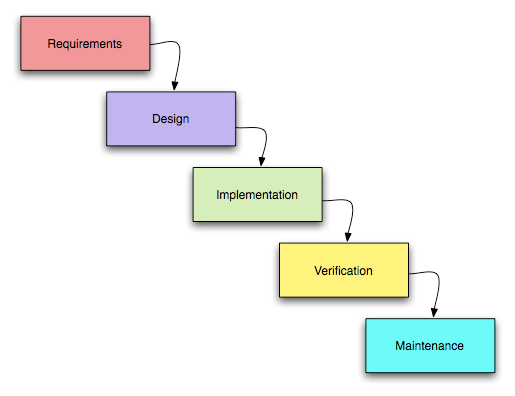
A couple of days ago, I received a survey from PMI asking about portfolio management. There’s nothing unusual about PMI undertaking a survey, but the types of project management approaches mentioned for the projects in the portfolio gave me cause for concern. The three choices offered were Agile, Waterfall and Other. My response was ”Other”—the portfolios I have direct experience with involve heavy engineering. Here is my perspective on the options offered by PMI: Agile: A well-defined flexible process, based on the Agile Manifesto, applicable to software development and a wide range of other “soft projects” such as business change. Waterfall: A five-stage software development methodology from the 1970s focused on designing a product (based on requirements) before starting development. The waterfall methodology is still used in some software development projects, but has never been applied to other types of projects.
Other: The vast majority of projects in the construction, engineering, oil & gas, defense, and aerospace industries based on the approaches described in A Guide to the Project Management Body of Knowledge (PMBOK® Guide)—Sixth Edition. These “other” projects generally have three phases:
The design of the product (ship, building, rocket, etc.) may be undertaken in full or in part during any one of the three phases. A minimum level of design is required to initiate procurement, but for simple buildings and civil engineering projects, it is not unusual for a complete design and specification to be provided by the client. The procurement phase may be a simple pricing exercise, or a complex and phased design process (sometimes even involving the production of working prototypes), with selection being based on the capabilities of the design produced by the successful tenderer. In many projects, a significant amount of detailed design is still required during the delivery phase, including shop drawings produced by subcontractors and suppliers. Similarly, the procurement arrangements vary widely. The client may choose to enter into some form of alliance or partnership with the preferred delivery agent based on shared risk and profits, or the client may choose a hard-dollar contract based on a fixed price to deliver a fixed scope, or some other setup. There are multiple forms of contract arrangement. The only certainties are that the typical project approaches used for the vast majority of “other” projects bear no resemblance to the waterfall approach, and this “other” classification includes more than two-thirds of the world’s projects by value. So, my questions are:
How should different types of project management be described? Your thoughts and ideas are welcome. |
What Coaching Soccer to Kids Taught Me About Leadership
|
by Dave Wakeman I don’t know soccer as well as a lot of folks because I didn’t grow up with the sport in rural Georgia during the 1980s, but that hasn’t stopped me from coaching a group of 12-year-olds. This means that I have had to fall back on my skills as a communicator, teacher and student to help these kids learn the game, grow their skills and have fun. What has been the most important thing? Leadership. Let me share some lessons. 1. Direction matters: When I first started working with the other coaches, I said, “We need a philosophy, a direction.” Thus, the “3 Ps” were born: passing, pressure and possession. Are these the right Ps? Is this the right direction? Does it work all the time? Maybe. Maybe. No. What the 3 Ps have highlighted for me is the importance of having a destination and a direction so that you can rally people around where you are heading. With the kids, we know that our core principles are those 3 Ps—and that we if we focus on them, we are likely to be successful in growing as a team. As PMs, the same thing plays out when we lay out the idea of “what success looks like” for our team and stakeholders. 2. Communication matters: Coach Jonah says that I am the “rah-rah” coach and the “motivator.” I don’t know if I buy that. I do know that because I can’t fall back on my soccer skills to demonstrate certain ideas or experience to teach about certain situations, I have to be more thoughtful in the way that I communicate with our team. What does this mean?
This may sound like a lot, but it is really the embodiment of our 3 Ps. You can use this idea as well by knowing the three or four things you need to get across for your project to be successful—and reinforce the message over and over. A lesson that I learned in my marketing training that applies everywhere is that it takes many more times hearing a message before it sticks with your audience. As the PM, you might get tired of the message or explaining things, but you are thinking about a certain aspect a lot more than most people—and you need to recognize that it might be only a small part of someone else’s life or job. 3. Leadership matters: Ultimately, the whole project comes down to the idea that leadership still matters. With our kids, it isn’t that they want me, Paul or Jonah to be great soccer coaches or players. They need us to be leaders. They look to us to provide direction, vision and instruction that will help them learn the game, improve and have fun. In your work, your team members aren’t always looking to you for technical direction. Often, they want you to be a bridge for them to success in the project, growth in their skills, and stronger performance as a team. It is a simple message, but sometimes you need a group of seventh graders to remind you. What do you think? |

Quiet Quitting—and How Agile Can Help Combat It
Categories:
Agile
Categories: Agile
| By Soma Bhattacharya The phrase “quiet quitting” is all over the internet as the trend has gained in popularity over the last few years of the pandemic. The one thing you need to confront the temptation: motivation. Motivation for today’s generation is something that’s in sync with purpose and autonomy. In one of his Instagram posts, Adam Grant—an organizational psychologist and best-selling author—says this about quiet quitting: “Doing (the) bare minimum is a common response to bull$#!* jobs, abusive bosses and low pay.”
While it may be true for some, for others it can be lack of alignment in seeing the purpose they serve within the organization. So, we might need to fix the flawed system and also highlight what’s in place. In any agile team, most of the ceremonies always carry an inherent meaning (at least that’s what I have always stressed). Release planning or “big room planning” is about communicating the purpose, the big picture and how each team or individual comes together to contribute. If done correctly, teams are happy to have the knowledge and prepare for it. It also allows team members to raise concerns and flex their mastery at what they are going to work for the next three months. It’s designed for social communication, bringing in multiple teams in one room or platform. Encouraging teams to participate and normalize conflicts is a healthy practice—as long as it’s moderated and everyone is looking at the end goal. Conflicts can foster higher creativity and better solutions within teams. That in turn that will also engage individuals and negate the “quitting mentality.” A small team brings in autonomy to a great extent and allows everyone to feel empowered, like they’re playing their part. The whole concept of limited size in scrum teams means better communication, stronger bonds and faster decision making. The bonhomie improves team harmony and creates its own culture, one that can only come together with openness and trust. A simple initiative like buddying up, mentoring or pair programming is a common practice. Giving everyone a way to relate and connect to the big picture and to a team can also result in better learning, and an enhanced social life at work—leading to a sense of belonging, which is essential for growth and individual engagement. Any team or organization that practices any of the above will tell you than when team participation is higher, so is the interest in coming back to the office—and that a better quality of work is a byproduct. Often in any agile teams, we forget why we chose agile. Building a culture of trust, openness and empowerment can benefit everyone. Choosing wisely to see what needs to be changed or adapted can allow for better vision and a stronger roadmap for the team—not just for the product, but for team building. Choosing the right team imbibes a great attitude. We must all be aware that with every generation, social change and work environments go through major shifts. So, what worked five years ago might not be the right environment post-pandemic. So, blaming the system or organizations for certain practices might not be the right choice. Understanding a team and what it wants out of work is equally important to confronting negativity. Maybe consider that change is a refreshing thing—not just for newcomers, but for management as well. |



