
Viewing Posts by Mario Trentim


What Is the Future of Project Management?


|
Various organizations and individuals have made great contributions to advance the project management profession over the past few decades. And as standards and methodologies continue to evolve, new tools and techniques are used to plan and manage all kinds of initiatives. However, myriad approaches can take a toll on productivity and collaboration, since it’s hard to maintain consistency and a common language across frameworks. Is project management evolving too fast?
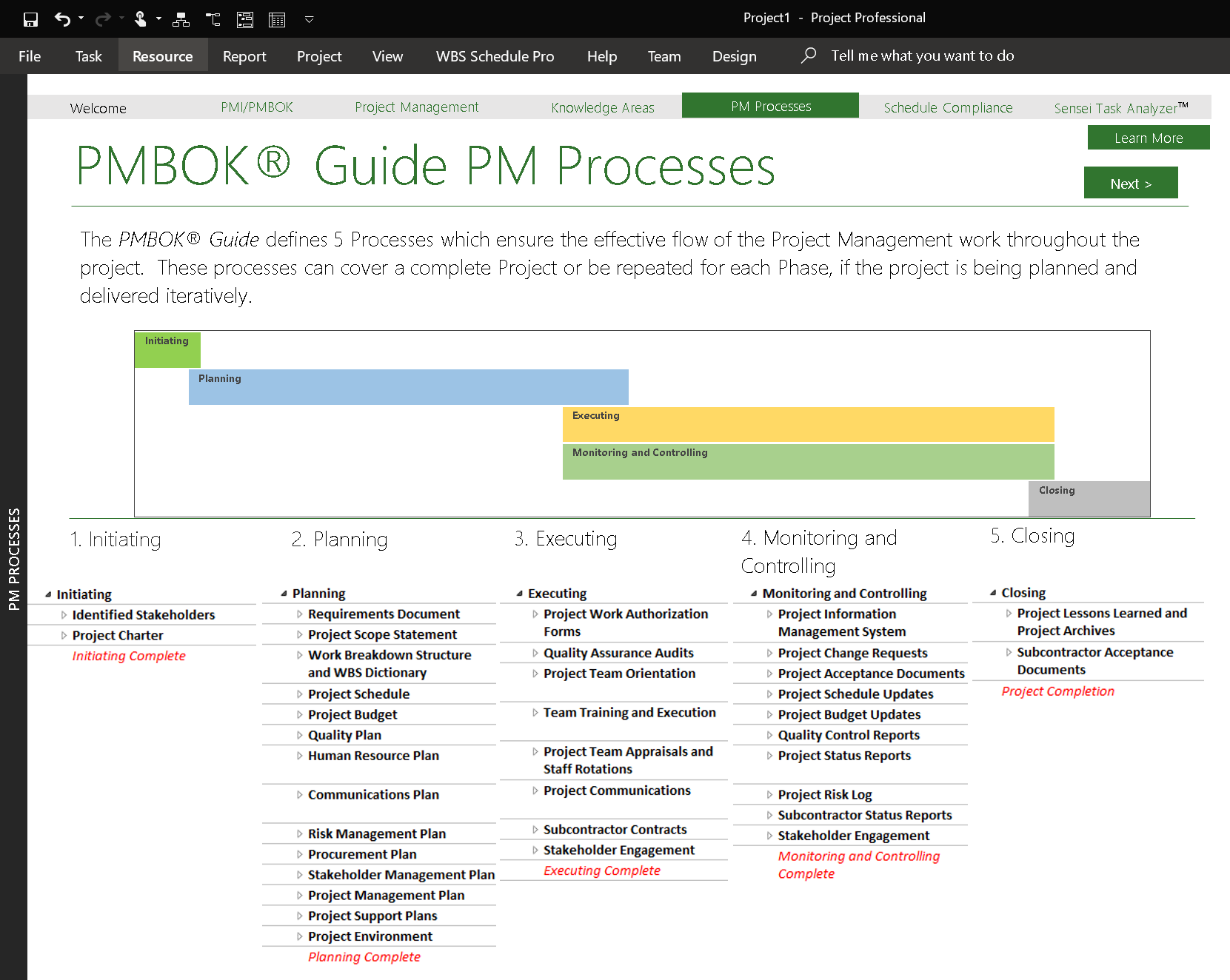
The Project Management Revolution “One size fits all” does not apply to project management. It’s common sense. So why was project management standardized in the past? Taking into consideration that project management initially was applied to large technical projects in their early stages, a command and control approach was the norm. Planning and management were centralized. The management style favored hierarchy and disincentivized creativity. A waterfall approach made sense, as the context of project management existed outside of the uncertainty and volatility that many projects face today.
Figure 1: “Traditional” projects based on past versions of the PMBOK® Guide (Microsoft Project template)
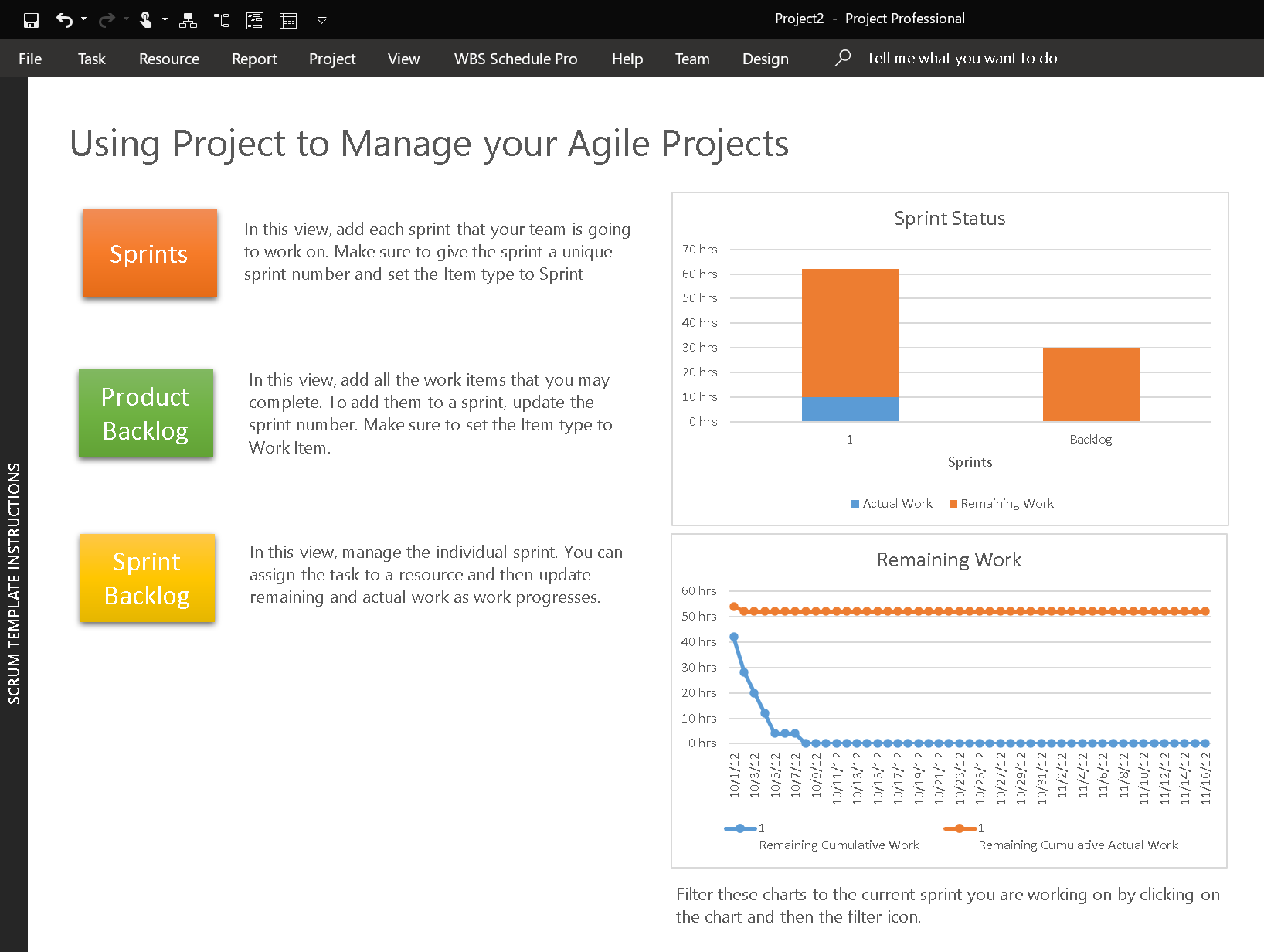
Things shifted as enterprise environmental factors changed. Agile approaches were developed to allow for shorter execution cycles and more frequent feedback. Individuals and teams started voicing their opinions, discussing best practices with a lean mentality to improve their work and results.
Figure 2: Agile projects (Microsoft Project template)
The project management revolution spread like wildfire. Project management is currently used in education, marketing projects, event planning, human resources initiatives, infrastructure megaprojects, and much more. It is part of daily operations in various industries, private companies, nonprofits, and the governmental sector. As a result, a variety of approaches and methodologies were created to keep projects on target. Consequently, it has become increasingly difficult to define project management today.
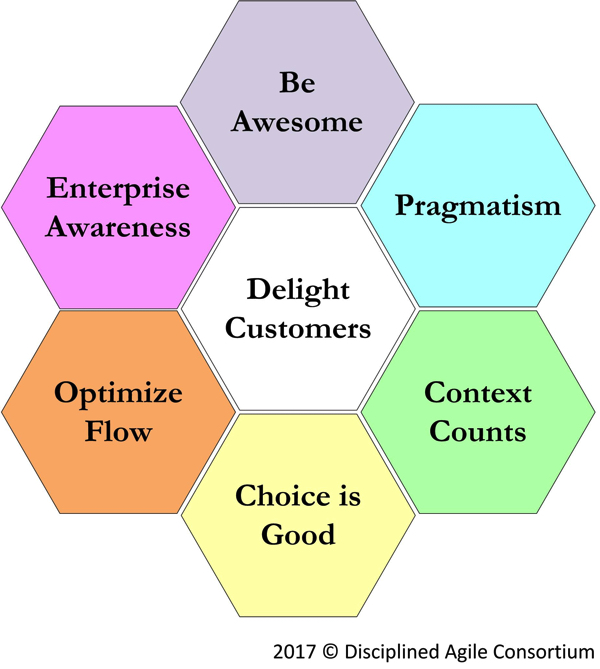
Embracing Modern Project Management Digital transformation and technology are catalyzing changes in organizational structures and enabling new capabilities by empowering individuals and teams. To keep pace with the changes, modern project management evolved into a broad and general principle-based approach.
Figure 3: Disciplined Agile Principles
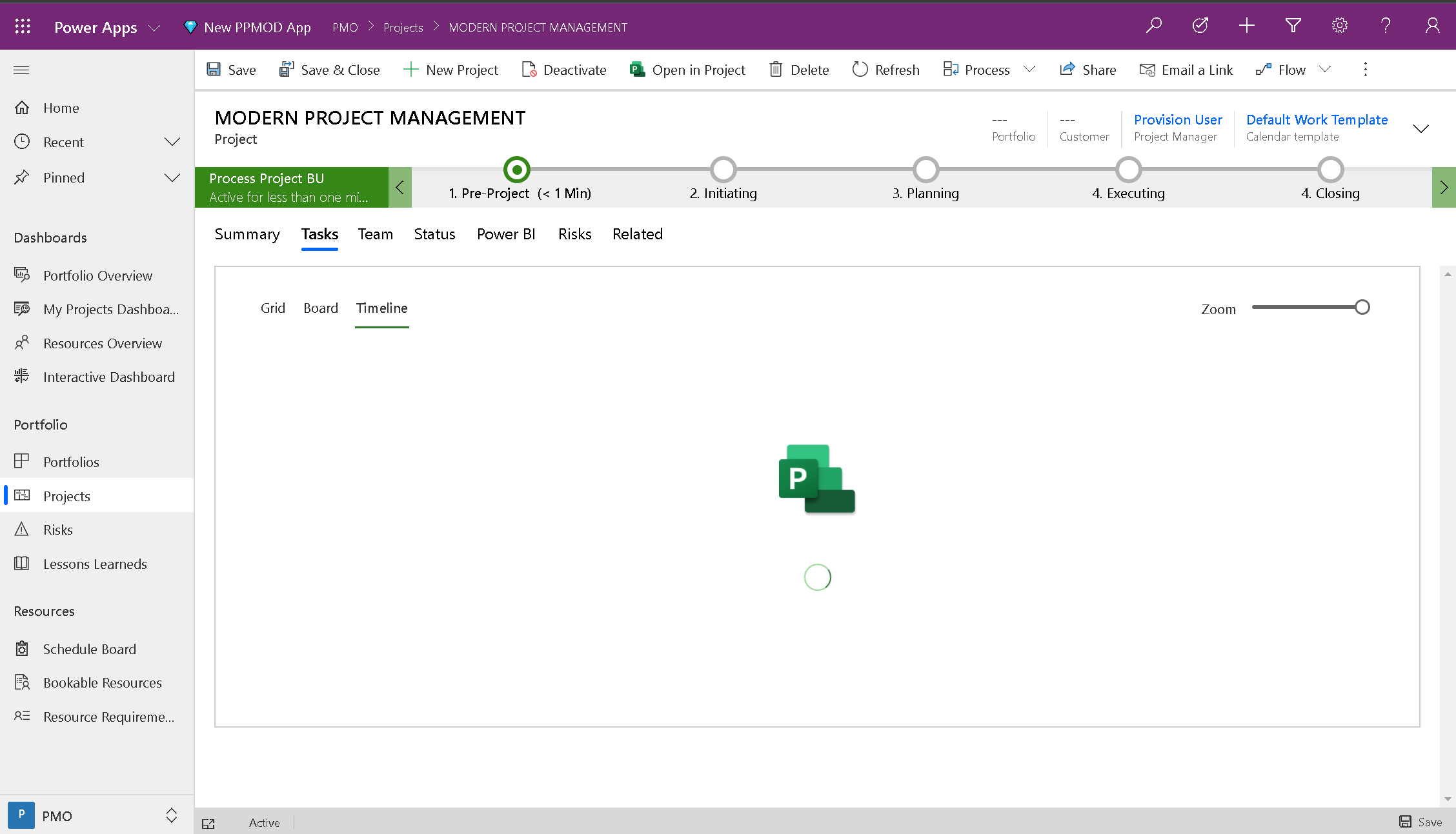
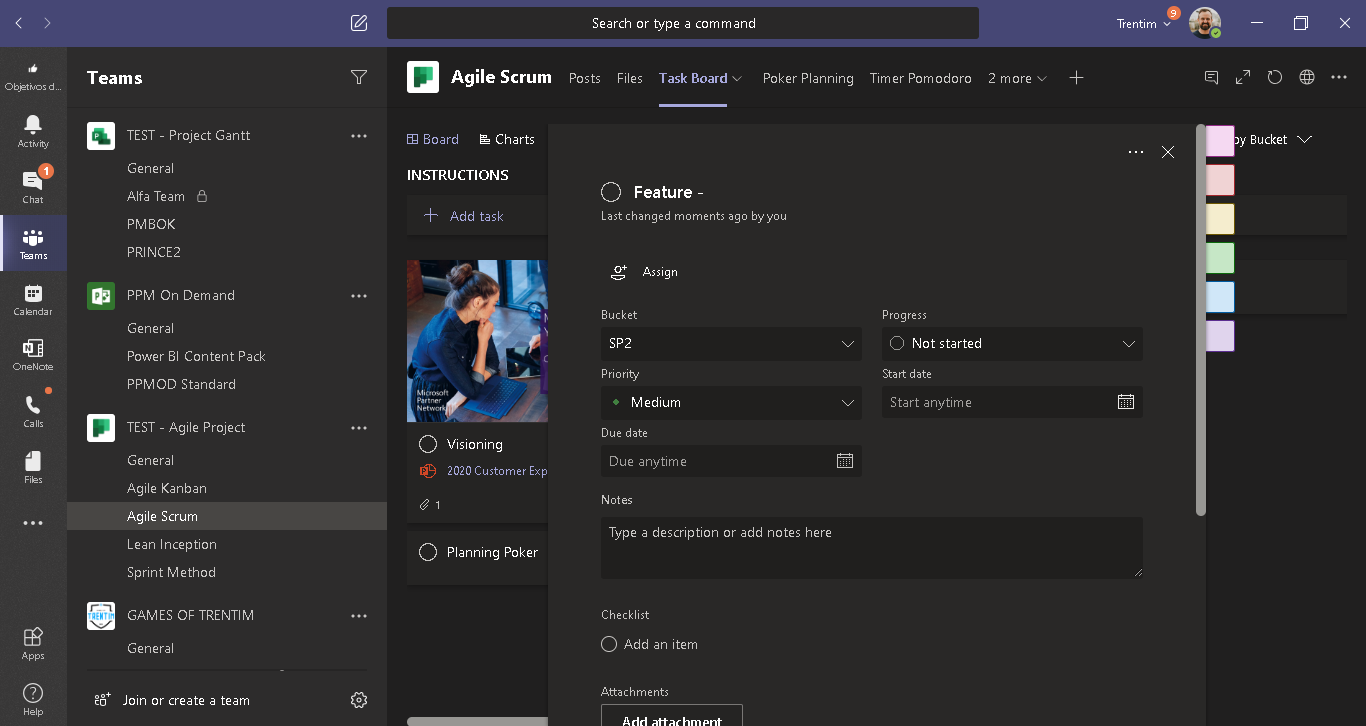
Principle-based approaches enable individuals and teams to choose what is best for their project according to its characteristics. From the perspective of processes, tools, and techniques, modern project management embraces hybrid combinations, which are powered by modern tools. Modern project management must be supported by contemporary collaboration tools, intuitive and flexible task management, virtual workspaces, and more.
Figure 4: Collaboration hub and intuitive task management Spurred by the global pandemic, organizations have recently taken remote work to another level. And individuals and teams must become more tech-savvy than ever to keep up.
How do you see project management evolving in the near future and how do you keep up with its changes?
|

Remote Work Burnout Is Real. Here’s How to Avoid It
|
These days, many of us have traded in-person meetings for videoconference calls and business casual for sweatpants. We’re spending much more time working in front of our computer screens and in an astonishing number of new meetings. The time spent on video chat apps has increased by 277 percent since March, according to research by RescueTime. As a long-time user of time-tracking software, I review my screen time weekly. Since the start of the pandemic, I’ve noticed a dramatic change in my activities. And it made me wonder about the remote work habits of my team members as a result of the new paradigm. So, I decided to investigate further from two perspectives: The Collateral Effect of Working From Home Employee Engagement: Although some people enjoyed flexible work options prior to the pandemic, most project teams were not fully remote. My team, for example, had a chance to meet and greet at the office every day, building our unique culture through real-world interactions. Shifting to remote work in the wake of the lockdown made people anxious. I believe that some of us felt a little disconnected. We lost our routines and rituals. Moreover, social and economic effects became a major concern for all of us. During the first week of lockdown, we assured our team that no one would be laid off during the next three months. Multiple strategic changes and an enormous effort from all of us helped the company not only serve our customers better but improve efficiency, increase capacity and strengthen our relationships. Despite the happy vibes described above, there was—and still remains—a lot of uncertainty. Another tipping point happened about 45 days into the lockdown. Confined to our homes, despite our new processes and best practices, we started to become disconnected again. We were struggling once again to find motivation and engagement. Productivity: From the productivity perspective, it appears as if we are getting more done. There are several reasons for that. For one, cutting commute time down to zero gave people much more productive time. Coordination and communication protocols were established around ground rules and organizational culture. Information technology helped a lot, improving productivity as manual and repetitive tasks were automated, processes were reviewed in search for operational excellence, dashboards and KPIs were made available to support decision-making and more. In summary, the global pandemic forced all of us to ask time and time again what adds value and what is wasteful in every aspect of our projects.
5 Best Practices for Remote Work As many of us adjust to the reality of our project teams working remotely well into the immediate future, there are some things we should all keep in mind to keep engagement and productivity up. Here are five ways to fight remote work fatigue and produce better results:
How do you avoid remote work burnout?
|

Digital Transformation in the Midst of Chaos
|
There have been a number of memes and social media jokes about how the COVID-19 crisis is “accelerating” the digital transformations of many organizations. But that’s a misunderstanding: The pandemic is in fact a major setback to digital transformation, as organizations venture into the uncharted waters of sustained virtual work and remote project management. What Is Digital Transformation Anyway? Digital transformation refers to the integration of technology into all areas of business operations, fundamentally changing how the organization operates and delivers value. It also describes the application of digital capabilities to processes, assets and products. Let’s take the sharing economy, for example. Uber, Airbnb and many other modern services are built on the idea of collaborative consumption. But did you know that bike-sharing was first introduced as a business model in the 1960s? At that time, it didn’t work well because there was no easy way to find the bicycles. Now that we have mobile phones, GPS locators and ubiquitous connectivity, business models that seemed unviable before are now possible. The pillars of digital transformation include:
As project teams across the globe settle into the reality that remote work is the new normal, focusing on these pillars becomes even more important. What Lies Ahead for Project Teams A few months from now, organizations may face unforeseen cybersecurity issues, sensitive information leaks and the uncontrolled spread of data across digital channels. In terms of cost, adopting consumer-grade or free preventive tools might seem reasonable now. But that’s because organizations are not taking into account the fact that these tools won’t be effective to take their competitive advantage to the next level. In fact, a myriad of tools without integration, uncategorized information, old business processes and tech-averse employees pose a huge challenge to collaboration and productivity. As teams continue to collaborate virtually, people will likely waste even more time trying to reach a solution, and they will plan multiple, unfocused daily meetings, as managers struggle to provide guidance and accurately measure the performance of employees working from home. But it doesn’t have to be this way. How to Avoid a Dark Project Fate Now that you know what digital transformation is and the setbacks imposed by the COVID-19 crisis, what can you do? 1. Review your digital transformation strategy and reprioritize all projects and initiatives. If you don’t have an official strategy, start working on it now before it is too late. 2. Your organization likely already put in place business continuity plans, contingency plans and crisis management measures. As a result, you probably launched projects to enable remote work. Considering there was not enough time to conduct proper analysis, now take a step back and reevaluate these choices. Do they still make sense? How can they be improved? 3. Begin by understanding different organizational needs, since digital transformation starts with people and processes. Next, develop a teamwork architecture that encompasses people, processes and tools. Finally, create a roadmap to implement integrated tools that accounts for the total cost of the life cycle, including support, maintenance, training and more. Final Thoughts Digital transformation is platform-dependent, relying on common data and integrated information flows and workflows. On top of that, security, compliance and general data protection must be observed at all times. There are no shortcuts. Digital transformation is a very serious strategic topic. Wrong assumptions might lead your organization into a dark future of low productivity, ineffective collaboration and potential issues and liabilities. How is your organization navigating the digital transformation shifts brought about by the COVID-19 crisis?
|
.jpg)
Introducing the Crisis PMO
|
Although we expect most organizations to have a crisis response plan in place, very few actually do. As the COVID-19 crisis continues to develop, organizations are trying to keep their heads above water as distractions and urgencies create barriers to effective decision-making. But this is not the world’s first crisis—and it won’t be the last. Is it too Late for a Crisis Response Plan? First things first: Every project professional needs a plan. As organizations realize they’re wasting time and resources with hasty solutions, project teams are realizing that they have to go back to the drawing board and set up a plan. A consistent and structured approach is needed to successfully deal with a crisis. What does your PMO have to do with all of this? A PMO is uniquely positioned to solve problems that the project managers cannot solve themselves. On top of that, some PMOs are responsible for portfolio management, and they also support decision-making and the strategic planning processes within an organization. In fact, because of the COVID-19 crisis, organizations kicked off a number of urgent projects all at the same time. These projects were created to enable remote work, fix supply chain disruptions and more. At the same time, many other projects were terminated or paused without careful analysis. Whatever phase your project is in due to the coronavirus pandemic, it is not too late for a crisis response plan. Now what? If you are a PMO manager and you don’t have a crisis response plan, you must create one now. It does not have to be perfect or extremely detailed. Follow the seven steps below: 7 Elements of a Crisis Response Plan
When you and your team are playing out the potential scenarios and alternative responses, re-think the organizational strategy for the long, mid and short terms. As you pay attention to strategic shifts and changes related to the organization’s objectives, try to uncover how this information impacts the current portfolios and projects. In order to truly be helpful during this crisis and stay relevant, your PMO needs a very clear chain of command, a war room (even if it is a virtual) and clear communication channels. Shorten the planning cycles and adopt a streamlined feedback process. Keep in mind that during a crisis, a different type of PMO is needed: a Crisis PMO. In a time of great uncertainty, you should drop all those heavy processes used during stable times and put in place a nimble and flexible crisis response plan. Let me know how your PMO and projects are doing during the COVID-19 crisis in the comments below.
|

How to Avoid Overloading Your Team During the COVID-19 Crisis
|
In a previous article, I discussed the COVID-19 crisis from a risk management point of view. As PMOs around the globe work through the pandemic, unexpected challenges continue to arise. Countries are implementing several restrictions, as extreme times call for extreme measures to contain the disease.
It is expected that many teams will be working remotely for at least four to eight weeks. In a push to stay connected while working remote, PMOs are relying on communication and collaboration tools. But is it enough?
Working from Home Is Different Now Although many organizations are accustomed to flexible and remote work, this marks the first time that we have seen virtual teams operating on a global scale. And we’re not talking about the traditional home offices we once knew. Project professionals are quarantined, which means they are working with their spouses and kids nearby—and sometimes even babysitters, nannies and home maintenance staff are part of that equation. Keep in mind that your team members are very concerned and stressed at this time. And while they may be out of the office, they are part of a completely different team at home, which comes with its own set of challenges and needs.
In a meeting with my team this week, I level set with them. I don’t expect my team to put in exactly eight hours each day. It is okay if their kids show up during conference calls and meetings, and they can set an unavailable status in case they need to take care of personal or family duties. Cultivating a great team spirit and reinforcing an environment of accountability strengthens team morale.
Operations and Projects Must Go On If we all stop working, companies may not survive. In fact, a number of companies have already shuttered their doors for good ahead of the pandemic’s peak. Everyone is forecasting difficult times ahead. And it is our duty as directors and managers to make rational decisions and to plan diligently for the future. That said, what happens to our projects?
From a portfolio management perspective, we are going through deep reevaluation due to major strategic changes. Projects were canceled or paused and investments were postponed. But we also have incoming and extremely urgent projects. Organizations implemented their business contingency plans, and many resulted in additional projects. It could be a project related to supply chain and vendors, IT systems to enable remote work or new product development, among other initiatives. As the crisis looms, these projects become even more urgent.
Be Realistic When Planning for New Projects As we plan for these urgent new projects, we must be very careful. We must take into consideration high risk and uncertainty and pay attention to the estimates.
Remember that people are not only working remotely (which is already a challenge for some organizations), people are quarantined. I advise you to develop a solid plan based on requirements and deliverables prioritization, understanding you might have to adjust planning to overcome bumps along the way.
Estimates and buffers are crucial. Something that takes two weeks to get done when we are collocated might take more time virtually. Therefore, during this period of quarantine, plan for more execution time.
Capacity Planning and Resource Utilization Are Crucial During this crisis, capacity planning and resource utilization are extremely important. Imagine your team as traffic on a highway: When traffic is high, a minor crash might severely impact traffic flow. Now imagine all the people are distracted and in a hurry at the same time. You might end up with multiple minor crashes that add up to total failure in delivering the urgent project you need right now to overcome the coronavirus crisis.
In order to be successful, PMOs and project managers are tracking resource utilization with more details during the pandemic. Here’s what you can do:
The aforementioned steps aren’t some big secret. They are more sensitive now. Unfortunately, some organizations are responding to the crisis with too many uncoordinated initiatives that will result in more harm than good. If we want to overcome the project impact of COVID-19, it is time to conduct:
To conclude, do not forget that your team members are quarantined. It’s not business as usual. That means lower productivity and some availability obstacles.
How is your PMO navigating the COVID-19 crisis? |



