
Viewing Posts by cyndee miller


International Women’s Day: A Time for Celebration—and Reflection


|
By Cyndee Miller This is normally the day where I’d write a post extolling all the amazing things that female project leaders are doing. And there’s certainly plenty to celebrate. Those women you see in the video above are leading the way in everything from space exploration and AI to healthcare and renewables. So let’s start with a simple note of recognition: Bravo! But I’d be remiss not to also acknowledge a fundamental reality: The pandemic has taken an enormous toll on working women. A UN report found that while the unpaid workloads for both men and women have increased, women are bearing more of the burden. And according to a recent study by McKinsey and LeanIn.Org, senior-level women in the U.S. are far more likely than their male counterparts to feel burned out, exhausted and under pressure to work more. Asked whether that aligned with her experience, Kat Megas, PMP, was blunt: “Yes, yes and yes,” she says on an upcoming episode of the Projectified® podcast. And while she says she’s been “very encouraged” by peers and the organizations she’s worked for, there’s still some work ahead, says Megas, a program manager at the National Institute of Standards and Technology in McLean, Virginia, USA. Megas outlines a situation that I think every single female leader—particularly those in male-dominated fields—has experienced at some point: Your idea is met by a sea of confused looks until a colleague says the same thing—and it’s lauded as a brilliant idea. She puts it down to different communication styles—that women try to bring people along and pose ideas “as a question and something to be thought through so that the whole team can come on board.” It’s a fair point and one that some teams are even looking to technology to solve. UK global creative agency AnalogFolk saw that women often choose wording that makes them sound passive. So the agency developed a tool called BigUp.AI that uses natural language processing and machine learning to analyze blocks of text and offer users more powerful wording. It’s impressive stuff—earning it a slot on the PMI Most Influential Projects social good top 10 list. But Megas rightly points out that she and other women shouldn’t have to do all the adjusting. “I don’t want to have to change who I am to fit into the mold. I like the way I approach things. I like the fact that I am a consensus builder. I like the fact that I think I have the right answer, but I will always be open to a broader discussion,” she says. “I would like to think that that would be a world where one day that would not be perceived as being indecisive or not being willing to take leadership or make the decision, and there would just be a recognition for different styles.” This is about respect. And the differences are felt even more deeply among Black women in the U.S. They were the least likely among all respondent groups to report feeling like a valued member of their team, that they were being treated with respect and that there's a climate of fair treatment among coworkers, according to a Gallup survey conducted late last year. At the same time, the COVID crisis has highlighted the emergence of a new female force in leadership, according to two speakers at the Brightline Strategy@Work conference last November. And they pointed to New Zealand Prime Minister Jacinda Ardern and German Chancellor Angela Merkel. “One of the characteristics and attributes of what we’ve been seeing from women taking on those leadership and authority positions is decisiveness. Jacinda Ardern in New Zealand—obviously, incredibly decisive with a lockdown very early,” said Kit Krugman, head of organization and culture design at Co:collective. “There is fierce resolve. There is decisiveness. There’s this determination coupled with the sense of relating to what others are going through—that empathy—that really seems to speak to people at this moment in time,” said Vince Molinaro, PhD, CEO and founder of Leadership Contract. “It’s exciting to see just great leadership—full stop. And the fact that it happens to be a lot of women in political roles or political leaders, running our countries, is no coincidence. It’s great to see that playing out, and there’s lots to learn from what they’re doing. It’s just great to see how they’re managing the complexity of our times.” How are you seeing women rising to these complex times? |
Race to the Red Planet—And Why Mars Matters
|
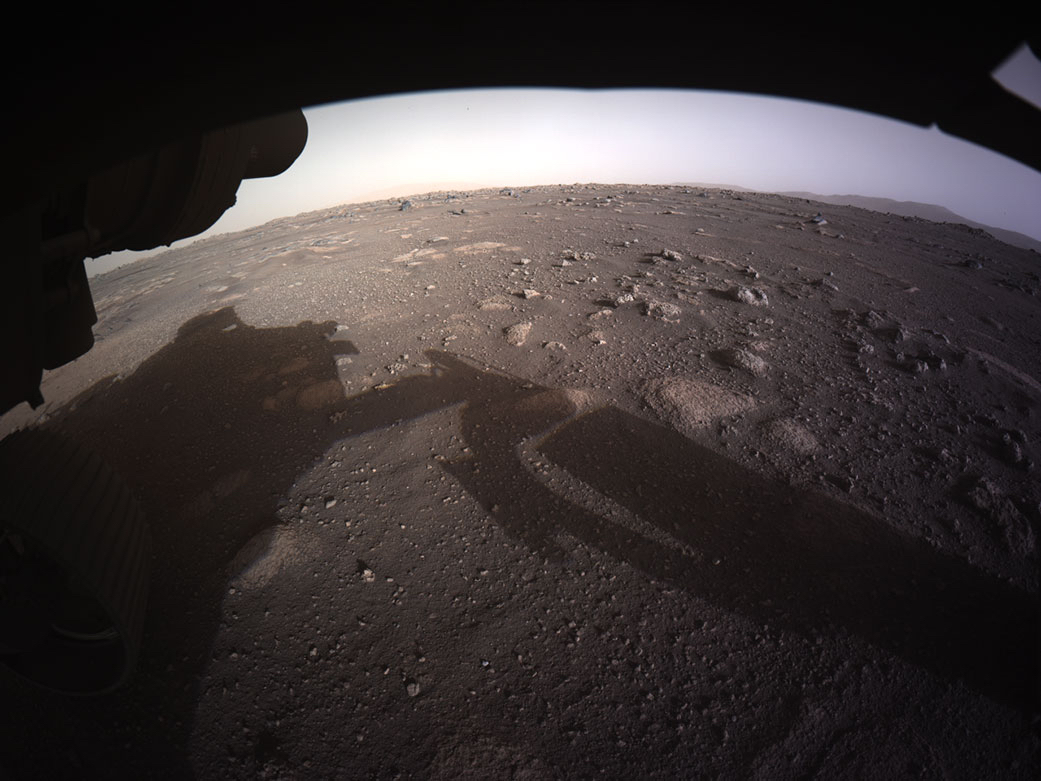
by Cyndee Miller Like most kids, I was obsessed with space. The thought of wandering the solar system blew my wee little mind. That sense of sheer wonderment hasn’t diminished—I’m a space geek for life. And there’s certainly been plenty to pique our interest. Look no further than PMI’s 2020 top 10 list for Most Influential Projects in space. And now there’s a new space race among the earthlings. Last July, Earth and Mars aligned at their closest points in two years—and space agencies around the world jumped at the chance to explore the Red Planet. Following successful launches last July, spacecrafts from China, the United Arab Emirates and the United States are all now officially checking out Earth’s closest neighbor. Another mission, ExoMars by the European Space Agency and Russia’s Roscosmos, aimed to join the action but ran into delays and must now wait for the next opportune planetary alignment in 2022. Following seven or so months of travel, the UAE’s first interplanetary spacecraft, Hope, and China’s Tianwen-1 were already exploring the Marian orbit by mid-February—and sending back amazing pictures of volcanoes and other features. And so it was that last Thursday I found myself cranking Bowie’s Life on Mars? and watching NASA’s Perseverance make its amazing touchdown. Entry, descent and landing is often dubbed the “seven minutes of terror” because of the precision required—and Perseverance was headed to “the most challenging Martian terrain ever targeted,” according to NASA. But the rover landed—and now even has its own Twitter feed. (Hobbies: Photography, collecting rocks, off-roading.) China’s space agency plans to place its lander and rover later this year. Some might question the wisdom of investing all these dollars, dirham, euros and yuan into such an esoteric pursuit, especially in the middle of a pandemic and one of the worst economic meltdowns of the past century. NASA alone estimates it spent roughly US$2.4 billion to build and launch Perseverance. It’s a fair question, although awfully short-sighted. And it also overlooks all the benefits space exploration can bring to life here on good old Earth. NASA estimates more than 1,600 innovations grew out of the Apollo space program—changing the trajectory on everything from mattresses to mobile phone cameras. (There’s a reason it came in at number 3 on PMI’s list of Most Influential Projects of the past 50 years.) And the Mars program is no slouch, either. Just one example: Autonomous navigation on the planet requires complex neural networks and deep learning algorithms—tech the space agency says can also be used here on Earth in cars, drones and toys. And it doesn’t stop there. Along with its trip to Mars, NASA is ready to embark on the first foray into extraterrestrial construction, joining forces with U.S. construction tech firm Icon, U.S. startup SEArch+ and Danish architecture hotshots Bjarke Ingels Group (BIG). The goal for Project Olympus is to develop a space-based construction system for creating small cities—complete with landing pads, habitats and roads—on the moon and eventually Mars. But all that pioneering of new frontiers “materially, technologically and environmentally” may also help advance construction on Earth, too, said Bjarke Ingels, BIG founder and creative director. “The answers to our challenges on Earth very well might be found on the moon.” At the same time, we have a slew of private companies— SpaceX, Blue Origin, Virgin Galactic—plotting out the business of space tourism. Now that coffeemaker Lavazza and the Italian Space Agency figured out how to make zero-gravity espresso, I’m good to go. Do I expect to be packing my bags for an interplanetary trip anytime soon? Nah. For right now, though, the Mars missions spark new ways of thinking—a much-needed dose of joy and astonishment to an exhausted humankind. And that’s some impressive ROI. What do you think of the Mars projects? Can they help teams here on Earth deliver more innovation? |
5 Must-Know Megatrends for Project Leaders
|
by Cyndee Miller Will 2021 truly be the year of epic charcuterie? Or maybe it’s the citizen care pod? Searching for The Next Big Thing has sent me down many an internet rabbit hole. And truth be told, the ROI is often not great. So in the spirit of uber efficiency, I present PMI’s latest report: Megatrends 2021. It has the scoop on the big trends, but it’s also specifically curated for project leaders so you can see how these tectonic shifts are actually playing out across projects. “We know the world changed significantly in 2020, but our research confirmed the long-term impact of how these trends are changing how the world does business,” said PMI President and CEO Sunil Prashara. “There is virtually no industry and no geography that is untouched by the five megatrends outlined in this report. From COVID-19 to the climate crisis to the mainstream use of AI, these forces are driving change across sectors, requiring leaders to embrace new ways of thinking and working. As changemakers in their organizations and communities, project leaders are in a unique position to tackle these challenges and embrace new possibilities.” Without further ado, here are the 5 big megatrends you should be watching: No doubt, this one’s pretty obvious. The health impact alone is staggering: More than 2.3 million people have died as of early February. But it’s also the way that the virus has exposed deep systemic inequalities in income, wealth, employment, healthcare access and digital access that's forcing companies to rethink and reinvent. Megatrend in action: Learning Passport “The world of education got knocked 30 years ahead overnight,” said Mac Glovinsky, program manager at UNICEF. With schools in more than 190 countries closed, he and his team worked with Microsoft, the University of Cambridge and Dubai Cares to quickly expand an existing digital platform that would meet the pandemic-fueled demands of stuck-at-home students in underprivileged areas. Again, this one shouldn’t be a big shocker, but the pandemic put it front and center—and made it abundantly clear that we’re running out of time. Perhaps the biggest existential threat humanity has ever faced, the climate crisis can be mitigated only with ambitious, innovative initiatives—and the project talent to make those plans reality. Megatrend in action: Stella McCartney The ecoluxe designer began testing out a new tool from Google Cloud that uses data analytics and machine learning to give brands a more comprehensive view of their supply chain. For sustainability-driven McCartney, the project is an opportunity to lead the notoriously wasteful fashion industry in better measuring the impacts of its raw material sourcing on air pollution, greenhouse gas emissions, land use and water scarcity. CIVIL, CIVIC AND EQUALITY MOVEMENTS I’m old enough to remember a time—and it wasn’t that long ago—when organizations taking a stand on social issues was considered bad business or strictly the province of more “progressive” companies. The massive global protests of 2020—the latest in a decade of large-scale protests covering a whole host of societal issues—changed all that. Silence is no longer an option—and change is a question of when, not if. Megatrend in action: Bandages for All As discussions over diversity and inclusion dominated, leaders of Johnson & Johnson’s Band-Aid brand released a new line of bandages representing non-white skin tones. It was actually a retread of a previous project—that happened to be in lock-step with consumer sentiment growing louder by the day. The century-old brand had previously released a range of bandages in multiple skin tones in 2005, but discontinued them three years later. Smaller companies had tried to fill the gap, but the new project is a powerful statement from a major consumer brand. SHIFTING GLOBALIZATION DYNAMICS Emerging markets have rocketed onto the global stage. But these up-and-comers need serious infrastructure and education investments to avoid being mired in middle-income status—and to help their large, young populations find decent work. That’s where project leaders can really make a difference. Megatrend in action: UN Office for Project Services To move the needle in emerging markets, the organization invests in a range of projects, from improving irrigation in drought-stricken countries to improving internet access. “Every project is different but they all follow the same logic: create sustainable opportunities in the community to generate revenue and reduce poverty,” said Farhad Abdollahyan, head of the org’s project management office. MAINSTREAM ARTIFICIAL INTELLIGENCE AI is now table stakes for many companies. Even my Yves Saint Laurent lipstick will soon use AI to deliver a bespoke hue just for moi. While that’s lovely, the seamless integration of algorithms into peoples’ daily lives means encoded opinions don’t get noticed, let alone questioned. To combat bias being built into AI, project leaders need to double down on building diverse teams and including different POVs and perspectives. Megatrend in action: BigUp.AI Leaders at UK global creative agency AnalogFolk saw how language could affect how people are perceived—and that women often choose wording that makes them sound passive. So the agency developed its BigUp.AI tool that uses natural language processing and machine learning to analyze blocks of text and offer users more powerful wording. The world is only beginning to ponder the post-pandemic reality, but there’s no doubt these five megatrends will dominate The Project Economy. And it’s up to project leaders and changemakers to be up on emerging developments so they can find business opportunities—and make the world a better place. How are you seeing these trends manifest on your projects? |
Lessons in Innovation From Retail’s Rock and Roll Rebels
|
by Cyndee Miller It takes a certain swagger to be in a rock and roll band—and to launch a retail project in the middle of a pandemic. And yet defying conventional wisdom, The Rolling Stones and Nick Cave launched their own retail fiefdoms, each one a fitting distillation of their respective brands. For the Stones, it’s an in-your-face boutique on London’s famed Carnaby Street. For Cave, it’s a new site hawking “things conceived, sourced, shaped and designed” by the man himself. Purists might cringe at the blatant commercialization, but that’s poppycock. Rock and roll is—and always has been—a business. Mick Jagger might be known as the lead singer of the Stones, but he himself was a student at the London School of Economics—and clearly knows a solid project opportunity when he sees it. Billed as the first permanent retail space by a musical act, RS No. 9 Carnaby Street is a collaboration between the band and Bravado, the merchandise and brand management arm of Universal Music Group, the Stones’ label for more than a decade. Make no mistake, these folks are no retail dilettantes. They picked a prime spot in the Carnaby Street district and worked with GH+A Design Studios to create a stop-shoppers-in-their-tracks boutique—starting with the massive 3D-printed statues of the Stones’ signature tongue-and-lips logo in the window. Inside, the studio brought in glass floors graffitied with Stones lyrics and five huge screens looping exclusive archival performance footage. The band even collaborated with the Pantone Color Institute to create a Stones Red hue featured all over the store and its line of goods. This clearly goes far beyond the merch stand at concerts or even the pop-up shops dedicated to musical acts ranging from Rihanna to The Clash. (Those projects come with their own issues as PM Network reported a few years back.) But launching a brick-and-mortar store right now is an audaciously bold move even for the self-proclaimed world’s greatest rock and roll band. With Euromonitor predicting global retail sales to dip by more 3.5 percent this year due to the pandemic and more shoppers flocking to ecommerce, the Rolling Stones did what all good project leaders do: They adapted. Along with the new shop, there’s a dedicated RS No. 9 Carnaby hub added to the band’s existing online shop, with an interactive 360-degree feature that lets shoppers move around the London boutique and score digital-only options. “We had to pivot our strategy a bit and there’s a much heavier online component,” former Bravado CEO Mat Vlasic told Rolling Stone magazine. The pandemic did delay construction and stalled the opening by a couple months. But make no mistake, unlike last year’s pop-up shop in the United States, the London outpost is built for the long haul and will follow the best practices of traditional retailers, with plenty of buffer in the schedule for new product design. Vlasic told the magazine that building out a longer timeframe allows the team “to be much more creative … and not be confined by ‘Oh you can’t do this because you don’t have the time.” Cave’s retail empire is a bit more modest and a whole lot more esoteric, but this project too was born of the COVID crisis. “I feel very free, free to do what I like—the music industry has been atomized, the rulebook has been torn up, few of us are working, but there can be an energy to disaster, a feverish need to respond to a crisis that is weirdly compelling.” Cave told Financial Times. Out of that came Cave Things, what he calls s “a mysterious, subversive, super-playful enterprise where anything can happen.” Launched in early August, the ecommerce site offers everything from erotic wallpaper to what’s being promoted as the first and best bunny bowl designed by a rock star. Cave already had an ecommerce site for him and his band The Bad Seeds. But it was pretty straightforward, whereas Cave Stuff goes “beyond merchandise but stops before art… the incidental residue of an over-stimulated mind,” as he describes it on the shop. And this indeed seems to be a project “that sits in a place entirely of its own.” So what do you think? These rockers have definitely turned up the volume on innovation—can traditional retailers pick up a few tips? |

It’s a Whole New Game—That Takes a Whole Lot of Resolve
|
by Cyndee Miller Resilience: the most in-demand, most talked-about and likely most used super skill of the year. The coronavirus has forced everyone to throw out the playbook and dig deep to forge ahead. My team and I picked up a few lessons learned along the way, but I was ready to hear from some real power players: Olympic Games executive director Christophe Dubi and Olympic champion gymnasts Laurie Hernandez and Nadia Comaneci. Confession: I’m old enough to remember cross-legged in front of the TV watching Comaneci as she scored the perfect 10.0 performance—the first in the history of the games. (Yes, I tried out the pigtails. And yes, there may have been a poster hanging on my bedroom wall for a bit. And yet, I couldn’t even nail a cartwheel.) Fast-forward several decades and here are few tips I picked up from the leaders at the latest PMI Virtual Experience Series: “Going the Distance: Forging Our Path Forward. It’s about progress, not perfection—even for Comaneci. “Having a good base is very important. Everyone wants to tumble and do those difficult skills, but if you jump from point A to Y, you won’t be able to progress in the right way and you’ll have holes you’ll have to cover.”
And those skills she applied in sports—planning, discipline, flexibility—help in life, too, Comaneci said. For the five-time Olympic gold medalist, preparation is just part of the process. “Gymnastics is not a sport you learn in a month, it takes you years to put all of it together,” she said. For Hernandez, it comes down to zooming in and zooming out to see the big picture. “It’s about making sure you’re focusing on the details, but also not letting that stop you from moving forward,” she said.
The 20-year-old gymnast knows all about refining details—and persevering. Hernandez competed as a member of the U.S. women’s gymnastics team at the 2016 Summer Olympics, scoring gold in the team event and silver on the balance beam. The rising star was set to make her comeback at the 2020 Tokyo Games—which then had to be rescheduled because of the global pandemic. It was a tough decision for Dubi and his team: “You’ve made so much effort and you’re so close, but you have to make that call.” The two biggest tasks: recognizing the disappointment and keeping athletes and stakeholders informed. “There was very little resistance to the decision, actually, because everyone understood the situation,” he said. “People were confined, they had friends with the virus, they were reading about shutdowns in the news. And we had overwhelming support from partner organizations.” So the project—number 7 on PMI’s 2020 list of Most Influential Projects—continued on, with Dubi keeping the team focused on the essential moving parts, while uniting them around a common goal. “If you can mobilize energies around the greater good, you can make sure everyone understands the role to be played,” he said. “It’s about what you can create with positive energy, when you can embrace the diverse energy. In the end it’s all hands on deck.” While the games have been bumped to 2021, Dubi is looking ahead to what they’ll bring to Tokyo in the future: “The very first question we ask is: What is the legacy plan? Every public investment that goes into it has to be meaningful, not just for the games themselves, but afterward.” The decision was a bold one—and part of being a leader is having the courage to stick the landing. “When you want to invent something no one has seen before, you get criticism,” said Olympic historian and graphic artist Markus Osterwalder. “When people get something they don’t know, they reject it at first. They need time to get used to it.”
It’s no doubt been a strange and ferociously challenging year, but leaders can’t be complacent. “The future of work is not five to 10 years out, it’s here now,” said Alison Bakken, of Thomson Reuters. “Leaders need to actually model the behavior they want to see and create an environment that’s trusting and open and where people can grow and develop.” X0PA AI founder Nina Alag Suri agreed that the new work-from-anywhere mentality is here to stay. And that will put the focus on power skills like self-discipline, time management and collaboration. If you missed out on the action or you want to check out some #ExperiencePMI moments again, you can find virtual experience content from the full series on demand, now through 31 January. What do you think? Are you ready to go for the gold in 2021? |




