Meet the Most Influential Projects, 2020 Edition
Categories:
Disruption,
Technology,
The Project Economy,
Innovation,
Leadership,
Artificial Intelligence
Categories: Disruption, Technology, The Project Economy, Innovation, Leadership, Artificial Intelligence


|
By Cyndee Miller A wee bit desperate for some positive news? Well, I’ve got just the thing: Most Influential Projects is back! No big shocker here that MIP 2020 is stacked with COVID-fueled innovations. With the coronavirus racing across the U.K., a team from the National Health Service transformed a London exhibit hall into a massive emergency medical facility—in just nine days. UNICEF, Microsoft, the University of Cambridge and Dubai Cares teamed up to transform a pilot project originally aimed at refugee children into a virtual learning platform for underprivileged students from Ukraine to Zimbabwe who’d been shut out of classrooms. Virgin Orbit shifted course to design and deliver emergency ventilators, while the organizers of Shanghai Fashion Week teamed up with Alibaba to produce history’s first purely digital fashion week. Then there’s the project that tops the list, epitomizing a major theme of 2020: progress over perfection. The COVID-19 Therapeutics Accelerator aims to identify, accelerate and scale seven of the most promising vaccine candidates by coordinating R&D efforts. Microsoft’s Bill Gates—a major financial backer of the initiative—acknowledged that the “few billion” U.S. dollars the project will waste will be more than worthwhile, considering the human lives it will save and the catastrophic effect the coronavirus has already had on the global economy. The latest slate of Most Influential Projects goes way beyond COVID control, however. The Kangaroo Island Recovery project helped save one of Australia’s most iconic ecosystems from raging wildfires. Toyota is giving us its take on a fully autonomous world with Woven City, and Enel Green Power is helping Chile turn away from fossil fuels and bolster its unofficial role as Latin America’s clean energy leader with the Campos del Sol mega solar farm project. And the excitement doesn’t stop there. This year’s adventures include 30 (!!) Top 10 lists broken out by sectors and geographic regions. (You can geek out over the data science list, gawk over the newly created wonders on the architecture list and smirk over Tiger King making the entertainment list.) For me, one of the most interesting choices was Nintendo’s Animal Crossing: New Horizons. For the record, I’ve never even played the game. What struck me was the backstory. Katsuya Eguchi has said his work on the original Animal Crossing was inspired by the heartache he felt after leaving family and friends to move from Chiba to Nintendo’s home city of Kyoto, Japan. Fast forward a couple decades and much of the world was experiencing that very same sense of isolation and loneliness. Then along came New Horizons, offering community and companionship—even during The Great Lockdown. The really weird part? The release date may have seemed like impeccable timing, but it was actually due in part to project delays. New Horizons was originally slated for a 2019 release, but when Nintendo execs realized hitting that target would require a grueling schedule for the team, they pushed the date back to March 2020. In a deliciously ironic plot twist, a decision to help employees maintain a healthy work-life balance ended up producing windfall profits. Your turn: Take a deep dive and let me know your MIP vote in the comments. |
2020 Project of the Year Winner: A Megaproject With Megaresults
|
by Cyndee Miller We’ve pretty much seen it all in 2020: accelerated transformations, momentous pivots and, well, spectacular flameouts. But even before COVID came along, plenty of project teams have stared down adversity and delivered. One prime example: the PMI Project of the Year winner. The Trans Anatolian Natural Gas Pipeline (TANAP) is on track to disrupt Europe’s natural gas sector. The US$6.5 billion pipeline stretches 1,835 kilometers (1,140 miles) across northern Turkey, traversing over mountains and under bodies of water, including 19 kilometers (12 miles) below the Dardanelles. Led by TANAP Dogalgaz Iletim A.S., the pipeline is the longest stretch of the Southern Gas Corridor, a game-changing program of over 250 energy projects across seven countries that will transmit natural gas from the Caspian region to Europe for the first time. A massive impact? Check. A massive investment? Check. But things didn’t go off without a hitch. As the team built out the pipeline, project leaders had to work around sensitive archeological sites—uncovering roughly 1,000 artifacts during the project. Whenever the team faced potential delays stemming from cultural or environmental concerns, work didn’t stop. Instead, the team leap-frogged down the line and returned to work on the previous site when conditions allowed. Project leaders also provided incentives for contractors to safely reach key milestones early. Their efforts worked: The team closed the project on time and US$5 billion under budget “to the highest quantity and safety, social and environmental standards,” says Mustafa Ayan, former project CTO and now COO of TANAP Natural Gas Transmission Co., Ankara, Turkey. And project leaders are also ensuring their lessons learned don’t just stay in their heads. Team members are pooling their experiential insights to create a book that will not only help TANAP sponsors and stakeholders, but will be shared with the industry. TANAP was in good company for this year’s Project of the Year award. Consider the other two finalists:
Check out a recap of the three projects in the PM Network digital exclusive. And then dig into full case studies in the December issue of PM Network. If you can’t wait until then, grab some popcorn and head to the 2020 Project of the Year playlist on PMI’s YouTube channel. |
Leadership, Done Right
Categories:
Leadership
Categories: Leadership
|
by Dave Wakeman I’ve spent most of this year musing on leadership—and how so much of what we’ve learned comes from watching the mistakes people have made. As we head into the end of the year, I want to revisit leadership, but through the lens of doing things the right way. Here are three tips on how to be the leader your teams, organizations and communities can look to for guidance as so many of us continue to work through the pandemic: 1. Be Consistent. One of the more apparent challenges spurred by the pandemic is how time has blended into itself. Our home life, work responsibilities, leisure activities and everything in between mix together in ways that can be unhealthy and unsustainable. Some of us can’t seem to finish things because we feel like we never have space to think or get away from a problem long enough to get a different perspective. Other people underperform because of the accumulations of stress that we’re all dealing with in ways both big and small. One of the few normal activities our son has been able to continue this year is soccer (or football, as the non-Yanks call it). It’s been a boost to my son’s mental health because he gets to hang out with people he’s familiar with and play his favorite sport. And the coaches have been real saviors for my son and his team, driving home the need to be consistent in their efforts, their focus and the way that they approach practice. For me, I find it helpful to be consistent in sitting down at my desk to write, setting my goals, and focusing on doing one or two things a day that I can control. 2. Communicate Constantly. I don’t have to tell anyone about information overload, with news about COVID and the thousands of pings and dings that distract us from our responsibilities each day. This means that many of us miss the information we need or want. As leaders, we need to spend some time making sure our message gets across and that we’re delivering it consistently, even if we’re repeating the same message. Back to my son: His elementary school has been all-virtual since March and it’s been a big adjustment. But the principal of the school has been very consistent about communicating with families about what’s going on and what the kids are dealing with. He’s been scheduling weekly virtual chats and sending out a minimum of two emails a week to keep parents informed about decisions around the learning environment and the possibility of bringing some kids back to campus. He doesn’t always have the chance to share new information with us, but we know he’s going to provide us information no matter what. 3. Be Flexible: I want to combine flexibility and empathy right now because I think they go hand-in-hand. Like I mentioned at the top, we’re overwhelmed by how our lives end up blending together in ways that aren’t always healthy. We’re dealing with uncertainty, more and different stressors, and, probably, more and different responsibilities in our lives. People aren’t going to perform the same way. All of us are navigating strong feelings or stress from different events and in unusual ways, and we need to recognize the best thing we can do right now is give people room to process what they’re dealing with and to move through it. In turn, leaders must also extend that same grace to themselves. Spend some time recognizing when you need a break and be willing to step back and take it. What are the biggest leadership lessons learned you’ve gained this year? Share in the comments below.
|

Mind Map Your Way to Trust on Virtual Teams
|
by Christian Bisson Building a solid team starts with a solid foundation. And one of the best ways to build cohesion is with a steam activity. It can take various formats. What matters is that team members understand the purpose, the importance of trust and the long-term benefits. Without getting into the details of all the team building activities available out there, allow me to share the latest I’ve did with one of my teams: digital mind maps. As we know, current circumstances have forced us to switch from typical physical sessions to more virtual interactions. Right now, I’m using a collaborative software, so for this activity, I’ve built the appropriate workspace and invited everyone on my team to work in it. If answers are absent or wrong, you can always jump in, but you need to get the team’s buy-in from the start. For this activity, I asked them to create a mind map. But before they began, I showed them one I had done. By doing so, I managed their expectations, provided guidance and built trust that I believed that they could do it. When each team member presented their mind map to the group, it served as an ice breaker and allowed team members to warm up to one another even though we weren’t together physically. Afterwards, I asked for feedback and learned that the team found the exercise fun and allowed people to connect. We also discovered that we’re all parents, all learning to deal with this new remote life together. What kind of activities do you use to build trust on your virtual team? |

Dare to Hope and Dream—Our Future Depends on It
|
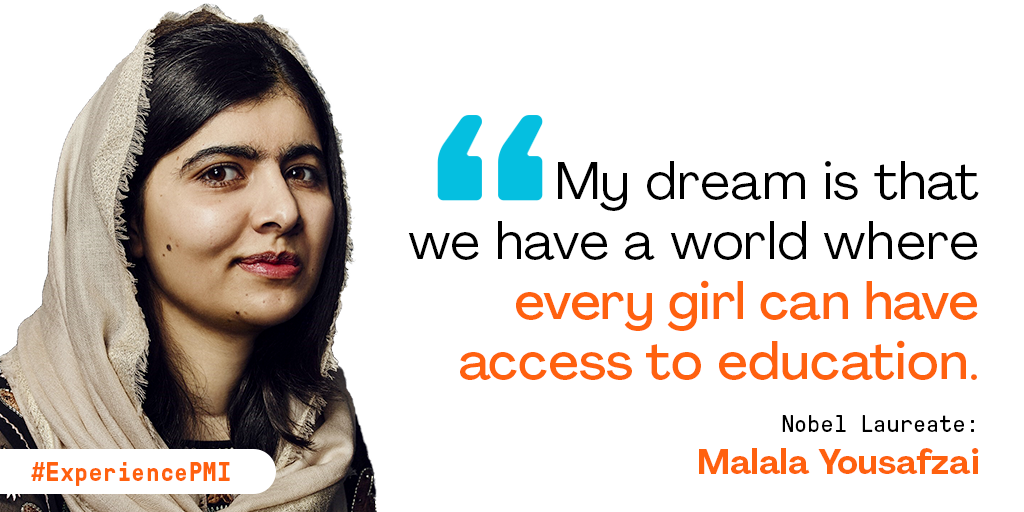
By Cyndee Miller Like many of you, this year has pushed me into some serious darkness at times—and it’s not like I’m a sunshine-unicorns-and-fluffy-kittens kind of person to begin with. So as I logged into the latest PMI Virtual Experience Series—at 6 a.m. nonetheless—I wasn’t exactly exuding optimism and hope, even with the promise of a day devoted to discussions around “A New World View: Our Global Impact.” But it was hard not to be moved by Malala Yousafzai. As a teen, she began advocating for girls’ education around the world, which made her a prime target in her homeland of Pakistan, and in 2012, she was shot in the head on the way home from school. Undeterred, she founded the Malala Fund from her new home in the U.K. The group’s first project, which sent 40 girls ages 5 to 12 back to school in Pakistan’s Swat Valley region, earned a slot on PMI’s list of the Most Influential Projects of the past 50 years. Now 23, she’s an icon—a global activist, a best-selling author, the subject of an award-winning documentary and a Nobel Laureate (the youngest ever, might I add). And even with all the problems facing the world, her message to project leaders was clear: Stay committed to your mission—you can make a difference and reimagine a new reality. “What favors the oppressors is when we give up on our activism,” she said. The pandemic is no doubt a crisis, but it also allows us to pinpoint flaws in the system—and take action. “I want us to reset the world that we are living in,” Yousafzai said. And how do we do that? “Work together with ambition and optimism.” She sees it already happening through next-gen activists, whether they’re working on the Black Lives Matter movement or climate change. “The voices of young people are echoing around the world,” she said. “We are inheriting this world, and we don’t want it the way it is. We want it to be cleaner, more peaceful and fairer for everyone.” What many emerging young people lack in experience, they make up for in energy, enthusiasm and an eagerness to learn. Their work and roles on teams is not to be discounted, she said: “It’s important for our elders to listen to us, to listen to the younger generation. The people on the ground doing the actual work need to be on the stage.”
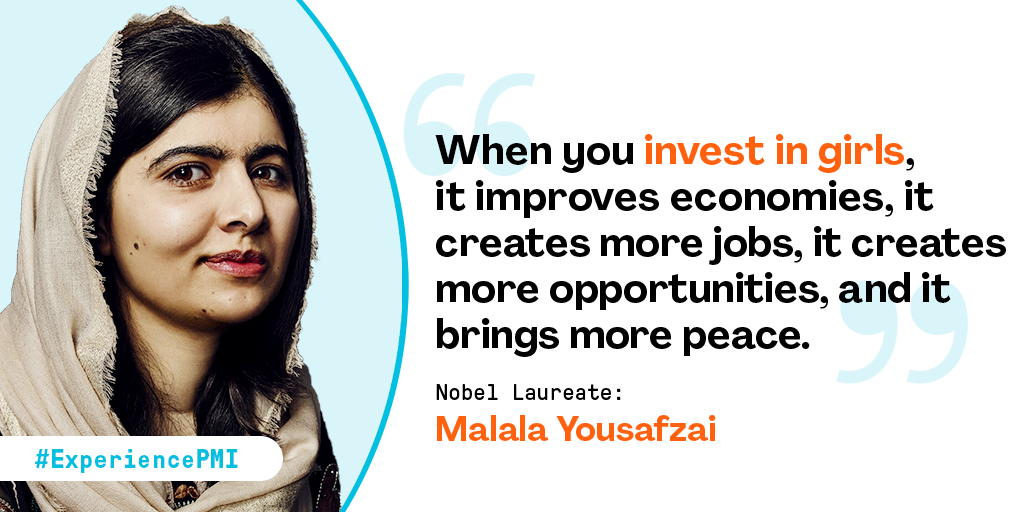
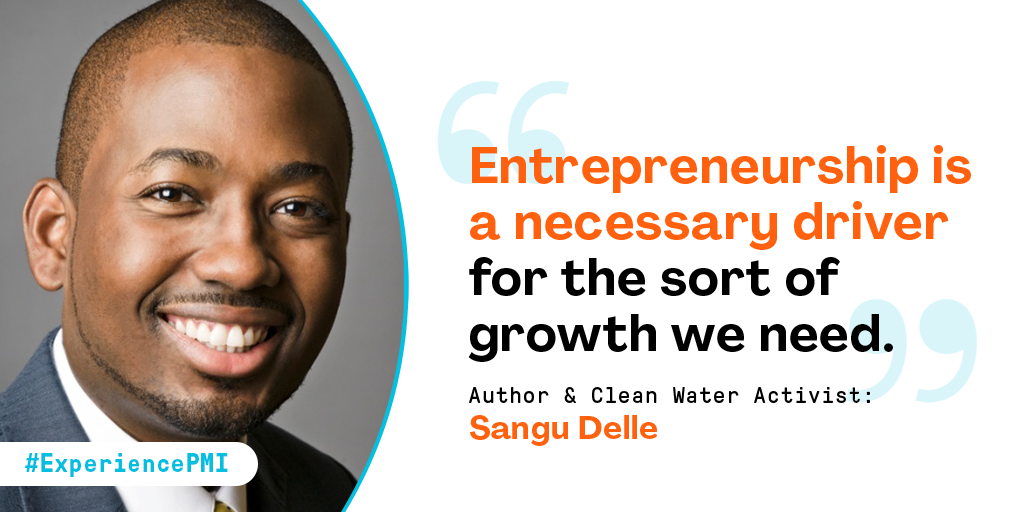
Throughout her quest to ensure access to free and safe education for girls, Yousafzai has realized the benefits extend far beyond the classroom. “We want more peace, we want to fight terrorism and reduce wars. We can’t solve these issues just by sending in weapons,” she said. “We have to invest in local communities and allow them to have opportunities.” From this vantage point, hope is a byproduct of opportunity. Without opportunity and access, little can be achieved. Author Sangu Delle sees a similar parallel while advocating for entrepreneurship in Africa. Creating a business-friendly environment and, in turn, opportunity on the world’s youngest continent—via infrastructure investment, sound policies and good governance—will reap exponential rewards, he said. “We need to empower entrepreneurs to go out there and create the businesses of the future that will create jobs."
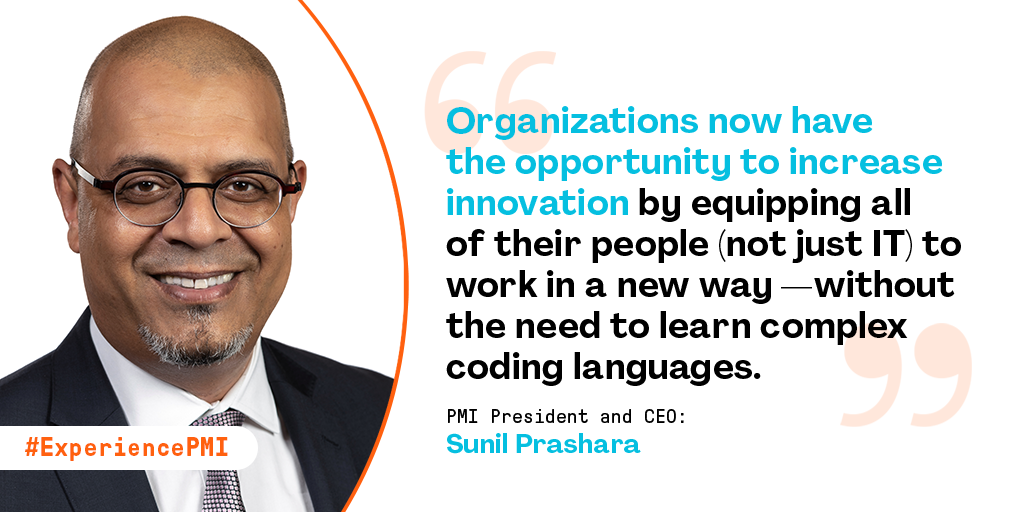
He also encouraged people to look beyond some of the stereotypes that surround Africa. “The Africa I know is one of extraordinary creativity, incredible innovation,” Delle said. “Yes, there are some struggles in certain places with poverty and with development and with infrastructure, but there are also lots of incredible opportunities going on.” Like Yousafzai and Delle, PMI President and CEO Sunil Prashara sees an opportunity for self-assessment and change in this time of uncertainty. If organizations can maintain control and transparency, they can increase innovation and productivity, he said. One prime way of making that happen: citizen development. By introducing non-IT professionals to low- or no-code development platforms, more people can turn innovative ideas into reality. And given the global shortage of coders and developers, “the citizen development movement is going to be a major gamechanger,” said Prashara.
Opportunity opens doors—but it doesn’t replace hard work and perseverance. And it doesn’t eliminate the possibility of failure. Part of moving forward involves shaking off inevitable professional stumbles and believing in yourself. Failure is a necessary part of activism, said Yousafzai, but true defeat lies in giving up. “Do not give up on your dream, as big as it is,” she said. “When your goals are big, the effort you put into it is also big. And the outcome is far bigger.” Keep moving forward and get ready for the next Experience PMI event, “A Deep Dive in Business Analysis: Drawing a Map to the Future,” slated for 12 November: http://ow.ly/kydf50B8Vik In the meantime, weigh in below on what people and projects are giving you hope—and helping you stay on mission. |