


The Power of Diverse Project Teams


|
By Yasmina Khelifi, PMP, PMI-ACP I first experienced the transformational impact of diversity during a six-month internship in Japan in 2000. The experience made me question every action and learned behavior I had previously made without a thought: how to greet people, how to make a request, how to thank others, how to celebrate, how to apologize and, more importantly, how to collaborate. It opened the door to a stunning new world. Since then, I’ve reveled in managing projects in an international environment. Diversity on project teams is an invaluable source of innovation and growth for individuals—as well as for projects. Personal Benefits of Diversity Throughout my career, I’ve been afforded the opportunity to work in diverse and inclusive environments. And I've learned so much as a result. First, these experiences taught me humility: By delivering projects in the Middle East and Africa (MEA), I’ve worked with people who speak multiple languages and learned how to collaborate with people from different cultures, ethnicities and backgrounds. These experiences also helped me question the status quo: For example, in my technical field in France, few of my colleagues are female, while most of my Chinese colleagues are female engineers. My sense of empathy was reinforced: Technical or political constraints can disrupt projects, but despite it all, the teams worked hard to meet their goals. These experiences also ignited my curiosity and encouraged me to broaden my views. I learned to ask open-ended (non-judgmental) questions and to fight against biases. Surprisingly, interacting with people in other cultural environments also pushed me to better understand my own culture and myself. This introspective journey forced me to step back and grow into a more dynamic, informed and empathetic project leader. Project Benefits of Diversity Diversity isn’t just about ethnic or cultural differences—it also means embracing people with varying ages, gender identities, professional backgrounds and levels of experience. For example, when I first began to work as a project manager, I had a team member close to retirement. His role was instrumental in the team: He calmly listened to our issues and acted like a mentor, sharing his experiences to help guide our decisions. Conversely, I wanted to improve a project status, but I did not know how. I talked to a younger colleague, and he offered to review it. I surprisingly discovered he was proficient in designing documents. A few years ago, I worked on a very diverse team, as far as background and experiences are concerned. They were not engineers; some had marketing backgrounds, others were not college graduates, one studied history and managed the supply chain. During our working sessions, we often strongly disagreed and faced various misunderstandings. But I cherish these projects, because we worked collaboratively to reach a compromise, despite our differences. It also fostered a feeling of belonging and true team collaboration. Diverse project teams force you to explore and adopt new ways of working. When I began to work in MEA, I discovered new digital communication tools that allowed me to forge a bond with my team and deliver project information to remote team members. Being inclusive brings fresh perspectives that enhance creativity and spark innovation. It also keeps your project team from falling into a rut of the same old ideas and solutions. Don’t Fall into the Diversity Trap Let’s be clear about the diversity business case. Hiring someone only for the sake of diversity is counterproductive. When I was hired as a SIM Delivery Manager for MEA, a new colleague assumed it was because I speak Arabic. Unbeknownst to them, I cannot speak Arabic. But I do understand project management. Reducing my experiences and knowledge to a cultural fit was demeaning and hurtful. Undoubtedly, knowing a language and a culture helps to build trusting relationships and offers a competitive edge in our global environment. But this cannot make up for a lack of project management skills. Inclusion must have a rational and objective basis:
The desire to boost public image or sway public opinion to appear open-minded and tolerant will not add value. Instead, work to embrace qualified individuals who bring something fresh to your team. How do you foster and celebrate diversity within your project team? |

Taking the Lead During Project Transformation
|
By Jorge Valdés Garciatorres, PMP "There is nothing so practical as a good theory." —Kurt Lewin Every project will lead, eventually, to a big or small transformation. However, the PMBOK® Guide doesn’t outline the processes needed to prepare an organization for the transformation that will come with the project. Organizational development, created by Kurt Lewin in the 1940s, is the discipline that covers dealing with organizational transformation. In my opinion, Lewin, a natural agile thinker, was ahead of his time. If you review his intervention approach known as “action research,” which is iterative and based in retrospectives to learn and improve, you’ll see why. Characteristics of a Successful TransformationOrganizations are open, complex and dynamic systems. Intervening within a company to transform it in any way is an adventure that should be addressed from a systemic view. It is no secret that the transformation journey can be painful and even traumatic for some. However, if organizations want to maintain relevance, it is crucial to build resilience into their DNA. With the right approach, change and transformation can become not only a reality, but an important development opportunity for employees and organizations. Here, based on my empirical experience, I will outline elements that must be present to enable transformation and the minimum systems that must be addressed to increase the probability of success. Transformational Elements In my experience, the transformation should have, at a minimum, the following five elements:
Subsystems to Address The change effort should be addressed in a balanced way with a systemic approach. To achieve this, I usually use the model outlined by Patrick Williams, which comprises four subsystems:
In my experience, using the above elements—plus acting small by using the low-complexity/high-impact approach—will put you in a better position to tackle the challenges of your transformation journey, with an agile approach. What about you? How are you managing the transformation that comes with your project? |
.jpg)
100 Days to Becoming a Better Project Manager
|
By Emily Luijbregts In his book Outliers: The Story of Success, Malcolm Gladwell explains that you need 10,000 hours to master any skill. That equates to several years of work and development. But even dedicating smaller amounts of time can lead to progress. If I told you that you could become a better project manager within 100 days, would you believe me? I’ve been spending a lot of time during the pandemic thinking about professional development and how we can become better project management professionals in every aspect of our careers. When I started on this journey myself, I decided to take a look at my leadership skills and determine how I could better manage my remote and virtual teams. I chose this path based on the projects that I managed this year and where I felt that I could add the most value to my projects, organization and, more importantly, my team. Your challenge—if you choose to accept it—is to sharpen your skill set as a project leader over the course of 100 days. In the next 100 days, I want you to consider taking the steps below and tracking where this journey can take you: 1. Determine three areas that need your attention. Where are your weaknesses? Where do you most need help? This can be a real challenge for some people to comprehend, as knowing your weaknesses is a sign of a deeper understanding of yourself as an individual. I have truly come to understand my weaknesses, not only in my professional life but through my private challenges, which enabled me to look at myself from a different perspective and analyze my achievements and shortcomings. When I’m mentoring an individual, we’ll spend quite a bit of time working on this topic—normally, it’ll be something that they didn’t think of initially. If you struggle with this task, I suggest talking to someone whom you trust and working on this together. I recommend choosing three areas of focus, but if you have two or four areas, that’s absolutely fine. This is your path and your journey. 2. Make a plan for what’s realistic to achieve in this time period. Let’s be honest, no one can devote 24 hours a day to perfecting a skill or personal development: It’s just not possible. Life gets in the way. And that’s absolutely fine. Determine what’s feasible to achieve in the next 100 days and set yourself some realistic SMART goals (specific, measurable, achievable, relevant and time-based). Also, analyze how you’re going to get there. What tools do you need to be able to develop? Is there a course of action you need to follow? What about guidance? This is the time to make sure that you’ve got the resources that you need to succeed. You can plot this plan however you feel is most appropriate. You can choose a Kanban Board, Gantt chart or even a list of to-dos. Keep it simple and tailor your methods to your needs. When I did this for myself, I created a sheet in my workbook that looked similar to the below:
3. Seek out support. Make your manager and colleagues aware of what you’re doing, and maybe they’ll join you. Make this a positive turn towards professional development and collaboration. I bet there are skills that you have that your colleagues need and vice versa. Challenge each other to become better professionals and raise the bar within your teams. My support network came in the form of my peers. I asked several respected project managers whom I trust if they could recommend courses or webinars that might be suitable or give me advice based on their experience. 4. Complete the action plan. Now, we get to the difficult part: You need to actually do the work and execute the plan that you’ve made. Watch some webinars, attend training courses and find a mentor. Along the way, I’d like to suggest that you adopt the agile principle of “inspect and adapt.” Analyze what you’re doing: Is it working? Do you need to change paths? At the end of the 100 days, you will emerge a stronger, more confident project manager. What 100-day challenge are you willing to take on to become a better project leader?
|

What Is the Future of Project Management?
|
Various organizations and individuals have made great contributions to advance the project management profession over the past few decades. And as standards and methodologies continue to evolve, new tools and techniques are used to plan and manage all kinds of initiatives. However, myriad approaches can take a toll on productivity and collaboration, since it’s hard to maintain consistency and a common language across frameworks. Is project management evolving too fast?
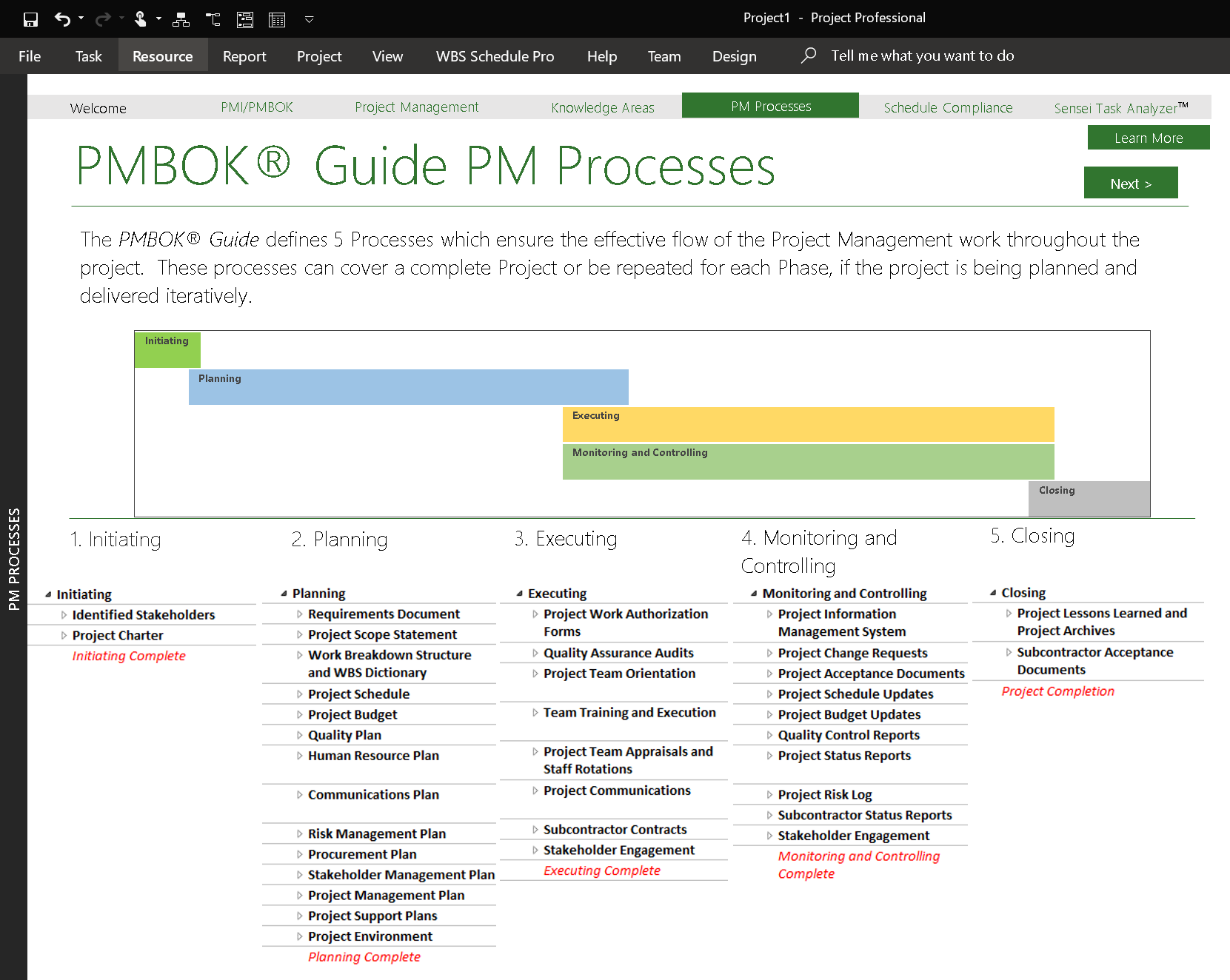
The Project Management Revolution “One size fits all” does not apply to project management. It’s common sense. So why was project management standardized in the past? Taking into consideration that project management initially was applied to large technical projects in their early stages, a command and control approach was the norm. Planning and management were centralized. The management style favored hierarchy and disincentivized creativity. A waterfall approach made sense, as the context of project management existed outside of the uncertainty and volatility that many projects face today.
Figure 1: “Traditional” projects based on past versions of the PMBOK® Guide (Microsoft Project template)
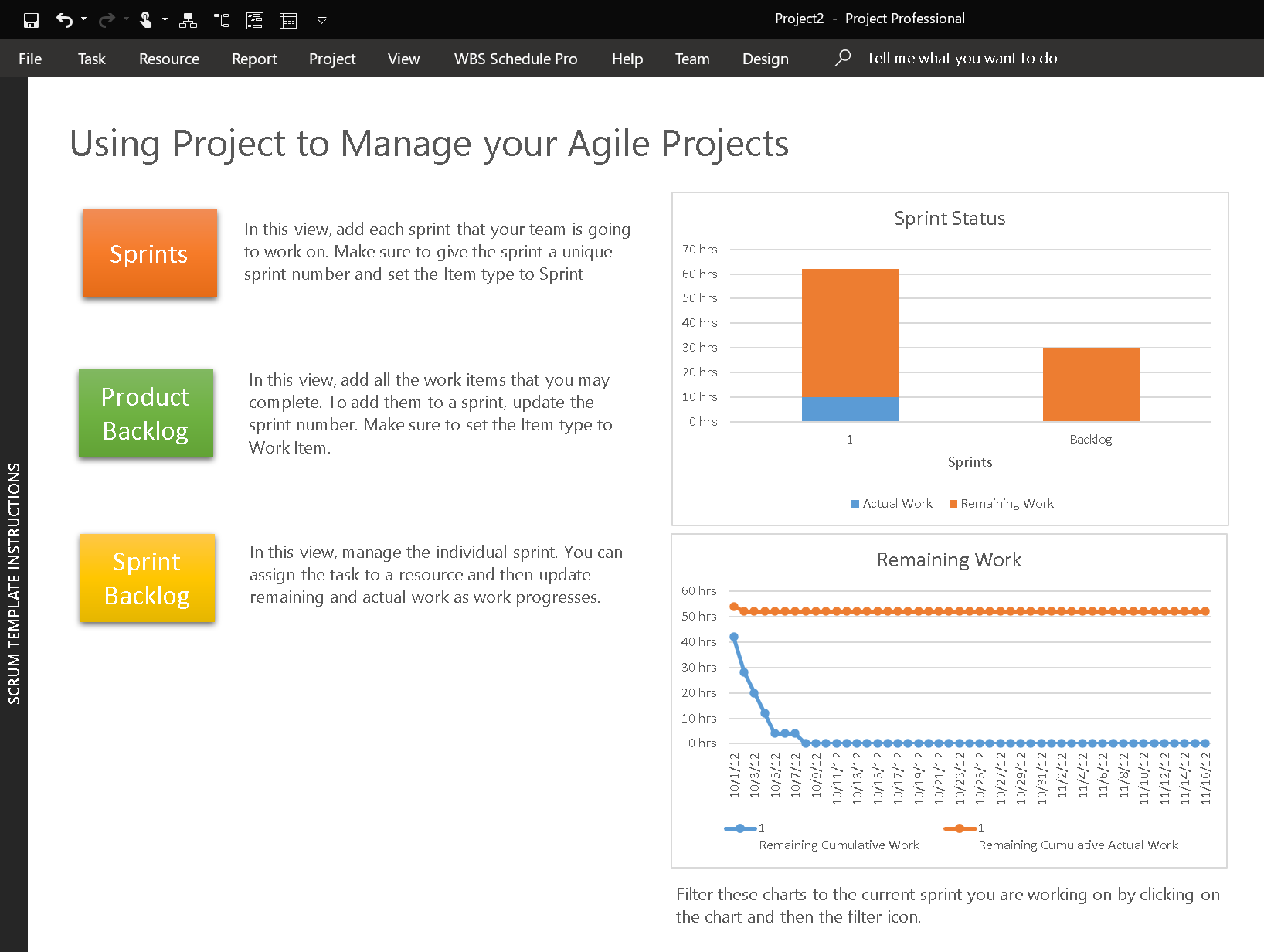
Things shifted as enterprise environmental factors changed. Agile approaches were developed to allow for shorter execution cycles and more frequent feedback. Individuals and teams started voicing their opinions, discussing best practices with a lean mentality to improve their work and results.
Figure 2: Agile projects (Microsoft Project template)
The project management revolution spread like wildfire. Project management is currently used in education, marketing projects, event planning, human resources initiatives, infrastructure megaprojects, and much more. It is part of daily operations in various industries, private companies, nonprofits, and the governmental sector. As a result, a variety of approaches and methodologies were created to keep projects on target. Consequently, it has become increasingly difficult to define project management today.
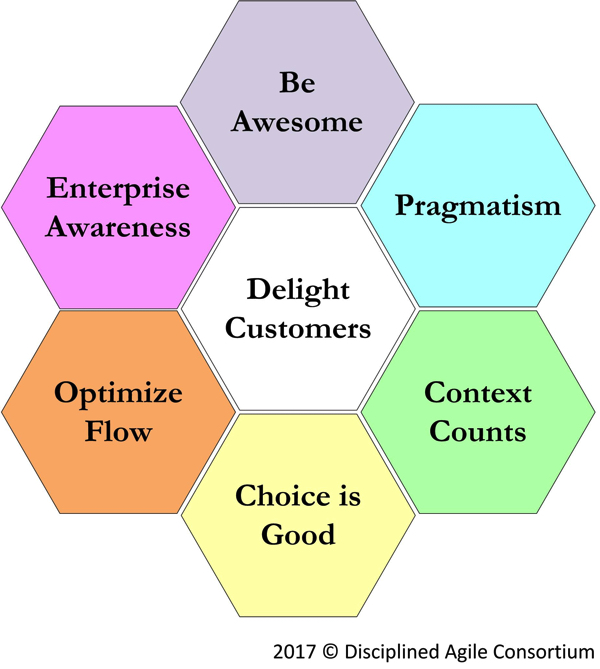
Embracing Modern Project Management Digital transformation and technology are catalyzing changes in organizational structures and enabling new capabilities by empowering individuals and teams. To keep pace with the changes, modern project management evolved into a broad and general principle-based approach.
Figure 3: Disciplined Agile Principles
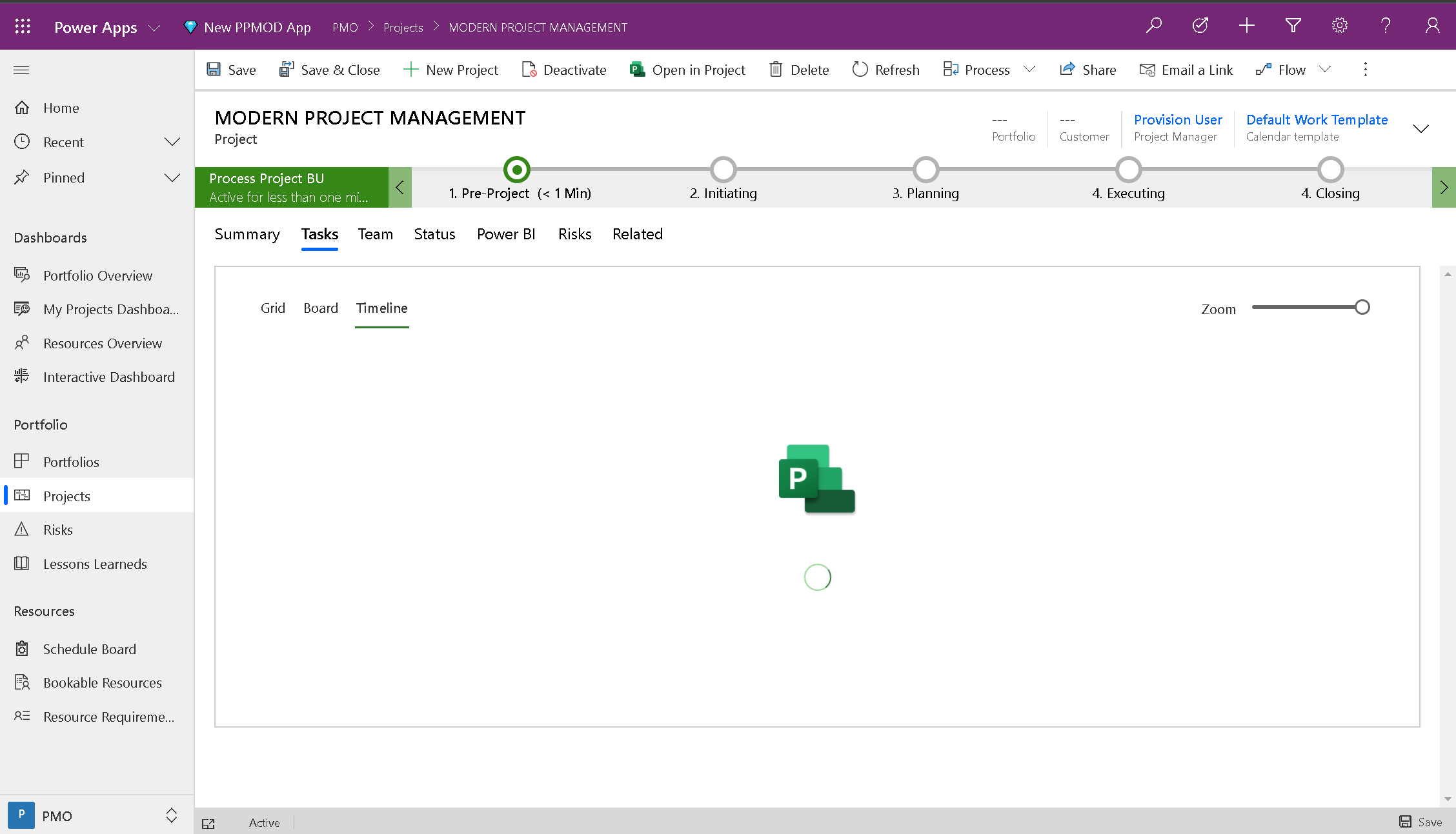
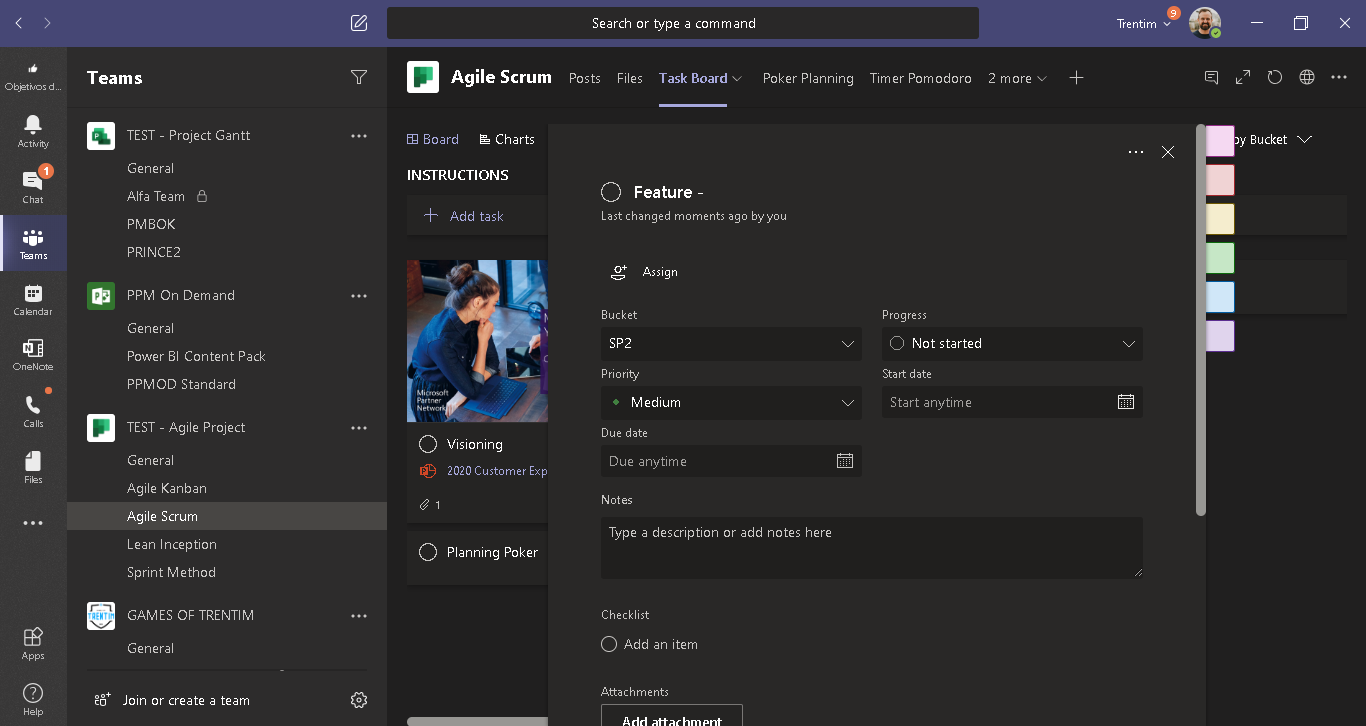
Principle-based approaches enable individuals and teams to choose what is best for their project according to its characteristics. From the perspective of processes, tools, and techniques, modern project management embraces hybrid combinations, which are powered by modern tools. Modern project management must be supported by contemporary collaboration tools, intuitive and flexible task management, virtual workspaces, and more.
Figure 4: Collaboration hub and intuitive task management Spurred by the global pandemic, organizations have recently taken remote work to another level. And individuals and teams must become more tech-savvy than ever to keep up.
How do you see project management evolving in the near future and how do you keep up with its changes?
|

The Perks of Communities of Practice During COVID-19
Categories:
Agile;Community;Talent management
Categories: Agile;Community;Talent management
|
By Lenka Pincot As COVID-19 lockdowns are lifted, companies are finding new strategies to handle traffic in their offices and ensure the well-being of their employees. Going forward, it’s expected that employees will use home offices more than before, physical office spaces may shrink, and traditional formats of team interactions may not return anytime soon. Even before the pandemic, many of us were already working on virtual teams and relying on online collaboration tools. But we took for granted that we could meet our colleagues face-to-face if we wanted to, and we expected regular all-team meetings at least a few times a year. When rethinking my old ways of working with larger and cross-functional teams, I came to the realization that it is more important than ever to encourage forming internal Communities of Practice that provide platforms for peer-to-peer sharing and professional development. What Are Communities of Practice? Communities of practice (COPs) are informal groups of practitioners with a shared profession or passion. The group’s identity is defined by its domain, members and practice. We don’t have to look far to name one of the best examples: PMI, the global community of practice for project management professionals. COPs may also be formed internally within companies. They are supposed to be created organically as a response to the needs of professionals. The COP concept is often part of agile frameworks as a recommended way to foster cross-team experience exchange. Imagine a COP for all scrum masters who are part of various different teams across the company. Regular meetings and interactive platforms help them learn and encourage networking. Scrum masters may discuss how their job differs or what challenges they face. They have their community to find a safe space, to discuss best practices or to propose new concepts to experiment with. If they don’t belong to the same organization unit, a COP may be the only way to gather. The Benefits of Creating COPs Reflecting on how the COVID-19 pandemic is impacting the way we work, I would recommend actively encouraging the formation of COPs within your organization, with these three main reasons in mind: 1. They allow teams to quickly respond to new needs. The reaction to circumstances driven by COVID-19 may put teams in different situations. Some teams may be using more digital collaboration tools because they were partly virtual, others may be forced to learn new skills. Creating platforms and encouraging experience-sharing for professionals across these teams through COPs may speed up the learning process. On top of that, the groups could be geared toward specific professions, increasing the likelihood of fast adoption of the concrete recommendations. Take me for instance: I’m a coach and transformation leader. I rely on non-verbal communication when conducting 1:1 sessions, and my favorite way to progress with my agenda is to facilitate workshops. But physical flipcharts and whiteboards are off the table now. Sharing my challenges with colleagues who happen to be in a similar situation, and at the same time are familiar with company resources, tools and options, would be more than welcome. 2. They foster inclusivity and a sense of belonging. Not everyone is set up for the same work conditions when moving to remote work. It could turn out that the regular team meeting time is not the best for everyone. Some people may concentrate better in the morning, while for others it may seem impossible. Requirements on the profession itself may change completely. COPs offer a safe space and enriching environment for members, because they operate in the same domain. Using community resources and reaching out to peer members is less stressful. COPs are inclusive and are there to provide support and a sense of belonging. We all know how good it feels when we can share our challenges and learn that we are not alone. 3. They enrich online trainings and virtual conferences. With the need to switch traditional events like conferences or learning sessions to an online setup, we’ve gained much more flexibility. We can schedule our learning at our own pace and choose the best timing. But we’ve also lost something: The possibility to raise a hand and ask a question on the spot, or to simply look around to confirm that the group is on the same page. Recently, I recommended that a group of colleagues go through online training. But the feedback was that the topic was difficult, and they were not sure if they could complete it individually and ensure they understood the points correctly. We discussed forming a COP, in which sharing learning points from the course and clarifying difficult passages would be a great start to building connections and supporting each other. As a next step, it would be natural to set up regular meetings and address how each member of the community is putting the new knowledge into practice within their teams, and further supporting the COP by setting up an online interactive platform for communication outside of the regular events. Have you been part of a community of practice? What has been your experience? |



