
Viewing Posts by Laura Schofield


January Community News You Can Use
Categories:
community
Categories: community


|
2020 is here, and at PMI, we have hit the ground running! It’s certainly an exciting time in the world of project management – learn more about the Project Economy or explore one of PMI’s featured topics, such as Agile. Throughout the year, PMI’s online community offers a great way to stay up-to-date on the latest project management trends, get your most pressing questions answered, and network with your peers. Here’s a summary of what’s currently happening around the community in your January Community News You Can Use: PMXPO 2020: Attend ProjectManagement.com's first virtual event of 2020...and the new decade! Whether you’re a seasoned PM or new to the field, PMXPO provides an excellent opportunity to learn, network, earn PDUs, and broaden your perspective on project management. Learn more, and register here! New Discussion Forum: Certification Central is now available under Discussions! Are you actively pursuing a PMP, PMI-ACP, CAPM or any other PMI certification? If so, here's where you can ask questions about achieving your development goals! Alternately, if you already have earned one or more PMI certifications, why not help fellow practitioners who are in the process of attaining theirs? Community Ambassadors Program: The Community Ambassadors Program was recently announced on ProjectManagement.com. The first group of Ambassadors, Emily Luijbregts and Andrew Craig, started in the newly created Ambassadors role in January. They are happy to help – so please reach out to them with any community and project management questions! To learn more about the program and get to know the Ambassadors, go here! 2020 PMI Academic Awards: The annual PMI Academic Awards recognize and honor outstanding members of the profession who contribute in exemplary ways to research, teaching, and literature in project management and related professions. You can nominate your colleagues now for the 2020 Awards! Learn more here! Standards Exposure Draft: Review and provide feedback to the exposure draft of The Standard for Project Management. The exposure draft will be available for public review and comment online from 8 a.m. EST, 15 January 2020 to 5 p.m. EST, 14 February 2020. Anyone interested in project management is welcome to participate here. How to Prevent and Stop Workplace Bullying: Join Lori Wilson, as she discusses workplace bullying and its ramifications for individuals and organizations. Explore practical tips and suggestions for preventing and stopping workplace bully in Lori’s webinar on-demand. If you have any questions, please feel free to reach out to a member of the Community Engagement team – we’re happy to help you. As always, stay tuned to the Critical Path for your community news! |

Planning is Thinking ... But Don't Think About it Too Much
Categories:
standards
Categories: standards
| By Giampaolo Marucci, PMBOK® Guide-Seventh Edition Development Team member Planning is a common activity in everything we do. We could say that we plan because we think, or we think so we plan. Planning is thinking on what we have to do in the future (near or far) to get to an objective or to achieve a goal. One of the core activities and functions in project delivery is planning, which is a Performance Domain in the new PMBOK® Guide. (See earlier blog post by Cynthia Dionisio on what are Performance Domains.) In project management, planning produces a common understanding of why we need to get to some objective and what to do next to get it. Common understanding is achieved by sharing of the information with all the stakeholders especially the delivery team. Planning activities can have output artifacts like “plans”—but not necessarily. Plans can be:
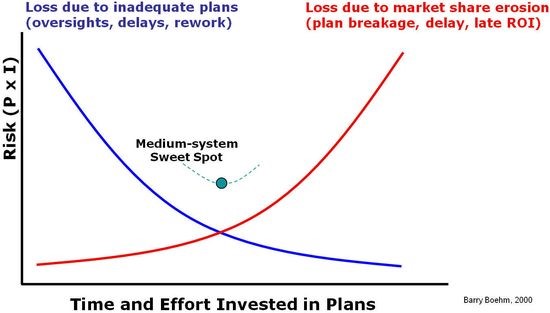
We can also “plan to plan” like in Rolling Wave Planning. In any case we need to pay attention to the balance of effort we spend in planning with the threat of market erosion because of delays in having spent too much time in planning.
Planning is closely related to the project delivery approach and tailored for the project to realize the product, service, or result with benefits for the community of people who will use the end result. Planning activities are always in parallel with control activities. A plan is effective only if it is frequently/continuously verified by control actions to understand whether or not the plan remains aligned with the expected benefits the project is expected to realize. At the start of a project we select a project delivery approach and we tailor it for the needs of the project based also on:
Then we need to apply an appropriate planning strategy/approach. If requirements are estimated to be nonvolatile, base technologies are well known, and the number of people is not many, then a full, advance predictive planning strategy could be applied. The adaptation of the “Plan,” artifacts, and re-planning activities during the project occur on the basis of the change control process defined for the project. On the other hand, requirements can be volatile and base technology not well known, so we might use a project delivery life cycle with frequent feedback from stakeholders. For this kind of project, we need frequent adaptation of plans during development and many re-planning actions. Also, projects that are closely aligned with “operations” functions, like continuous delivery of value, can apply Lean Kanban practices commonly used in IT or R&D projects. These types of projects need planning activities that adapt the plans continuously on the basis of feedback from experimentation. Adaptation here is so frequent that we could talk also about reactivity. But reacting to an event requires a short and prompt re-planning action immediately after the trigger event is recognized. Objects to plan inside a project include cost allocation, time scheduling, physical resources, delivery, and many others. The way in which the planning takes place varies depending on the life cycle approach taken, but planning remains a key activity throughout the project. Planning could be led by a project manager, a Product Owner, or the whole project team. Self-organized and cross-functional delivery teams might plan from a backlog of prioritized items. Planning, and generally speaking project management, is the application of knowledge, and it is important for the entire team to share in the planning regardless of who leads or the form the planning takes. In any kind of project, planning activities are always required. Planning is a fundamental skill inside any project and has enormous impact on the delivery of intended outcomes. That’s why I consider it to be a performance domain for all projects. Finally, planning is a passion, a knowledge we need to love if we want to apply it well, and a skill we need to improve continuously...Think about it.
|
Nominate Your Colleagues for a 2020 PMI Academic Award
|
The annual PMI Academic Awards recognize and honor outstanding members of the profession who contribute in exemplary ways to research, teaching, and literature in project management and related professions. You can nominate your colleagues now for the 2020 Awards! The call for nominations is open now through 1 March 2020. You can nominate your colleagues for the following awards: PMI Research Achievement Award The PMI Research Achievement Award recognizes and honors an individual or group of individuals whose work has significantly advanced the concepts, knowledge, and practices of project management through a published body of academic research. PMI Linn Stuckenbruck Teaching Excellence Award The PMI Linn Stuckenbruck Teaching Excellence Award recognizes and honors an individual faculty member for excellence in teaching project management, and/or for their strong commitment to improving and enhancing project management curricula in higher education. PMI David I. Cleland Project Management Literature Award The PMI David I. Cleland Project Management Literature Award recognizes the author(s) of a published book that significantly advances project management knowledge, concepts, and practice. For more information and submission guidelines for the 2020 PMI Academic Awards, visit https://www.pmi.org/about/awards/research-academic or email [email protected]. The PMI Scholar Practitioner Award will not be offered in 2020. You can nominate colleagues for this award during the 2021 Awards cycle beginning in January 2021. |

The Standard for Project Management is Open for Comment
Categories:
standards
Categories: standards
|
by: Cynthia Dionisio, Co-leader PMBOK® Guide–Seventh Edition Development Team Over the past few years we’ve seen the emergence of a broad range of approaches to project and product delivery with a stronger focus on outcomes rather than deliverables. These changes and more have created an opportunity to reconsider perspectives to help support the continued evolution of The Standard for Project Management.* As part of the evolution of project and product delivery we have realized that a process-based approach to the Standard is not as useful as a principle-based approach. Thus, you will see a different standard than you have in previous editions. Rather than presenting Process Groups with processes, inputs, and outputs, this edition focuses on the core principles associated with project delivery. In several workshops conducted around the world over the last year, the global project management community explored and identified underlying guiding principles for the practice of project delivery. A global community of over 70 practitioners used the results from these workshops and other sources to develop and/or provide feedback on drafts of the Standard as it evolved for this edition. Several development team members also posted to The Critical Path their reflections as the work progressed. The principle statements that emerged capture and summarize the generally accepted actions and behaviors of project management practice, as well as provide broad parameters within which project teams can operate and remain aligned with their intent. The Standard also takes a systems view of project management. The new Value Delivery System section changes the perspective from one of simply managing projects, programs, and portfolios to one focused on the value chain that links those and other business capabilities to advancing organizational strategy, value, and business objectives. Projects enable realization of benefits to drive outcomes that ultimately deliver value to organizations and their stakeholders. Help shape the next edition of The Standard for Project Management by providing feedback on the draft. The draft of the Standard will be available for comment 15 January – 14 February. Follow this link to contribute to this exciting update of the Standard. *The Standard for Project Management is part of, but not the whole of, A Guide to the Project Management Body of Knowledge (PMBOK® Guide). Only the Standard is being exposed for public comment in alignment with PMI’s standards development procedures. |

Meet the ProjectManagement.com Community Ambassadors!
| Today marks the launch of the ProjectManagement.com Community Ambassadors Program! This initiative will provide community members with additional support resources who facilitate and encourage constructive conversations as well as assist members in navigating the community. To learn more, read the initial program announcement here.
Emily Luijbregts and Andrew Craig will serve as ProjectManagement.com’s first Ambassadors! As active members of the community, Emily and Andrew have demonstrated great knowledge, professionalism, passion, and willingness to help fellow community members. Learn more about Emily & Andrew below - please connect with them and feel free to ask them for assistance in all things community and project management.
Emily has been working in Project Management for over 10 years. In this time, she has worked in a variety of project management methodologies, including waterfall, scrum, and agile, and she has been a strategic Project Manager, Coordinator, Facilitator, and Scrum Master. With a specialization in Communications, she ensures the team can remain on target and focused regardless of location and culture. She has worked extensively with colleagues on almost every continent and loves learning about other cultures and how we all communicate with each other. Emily greatly enjoys being a part of PMI’s online community, as her busy schedule makes it difficult to stay active in her local Chapter. Offering opportunities for connection and a sense of community, ProjectManagement.com provides Project Managers with access to a wealth of knowledge at their fingertips. Emily loves that global viewpoints are represented within the community, and there is a diversity of experience and opinions. As a Community Ambassador, Emily hopes to help other Project Managers to learn and develop by encouraging collaboration and discussion and making everyone feel comfortable participating – whether they are new to the community or experienced professionals.
Andrew Craig is a Consultant for North Highland Worldwide Consulting. As an Expert Practitioner in the Program and Project Management Office, he supports transformation initiatives and Community of Excellence development engagements. Andrew is a consummate professional and student of the profession with a passion for learning and bringing the best out of others. Andrew’s style has largely been centered around inclusivity and collaboration, understanding that project management moves at the speed of decisions and without getting people together to have conversations, progress will be limited or veer off into an unexpected direction. Andrew has been successful in leading organizations to collectively, and effectively, make decisions and drive solutions forward to success. ProjectManagement.com is a part of Andrew’s daily routine, as he starts his day browsing the site with a cup of coffee. Possessing the mindset that there is always something new to learn, Andrew enjoys interacting with fellow community members, sharing his thoughts, and gaining different insights. He loves that ProjectManagement.com exposes professionals to unique ideas and perspectives across a variety of industries and experience levels. As a Community Ambassador, Andrew seeks to encourage people to put themselves out there and become more engaged within the community. He is excited to continue learning about community members’ different ways of working and approaches to projects! |




