


Creating A Killer Checklist: Lessons from 'The Checklist Manifesto'


|
A checklist is an extremely useful tool for project management. In every stage of the project from start to finish, checklists are needed to ensure all required activities are performed. The project schedule itself is a checklist of sorts with a breakdown of tasks that have to be completed to deliver the final product. In Atul Gawande's book 'The Checklist Manifesto', the checklist is presented as a tool for overcoming failure, something that makes up for human errors when expertise alone is not enough in complex environments. The Good Checklist A good checklist should be precise, efficient and to the point, easy to use even in the most difficult situations and above all, practical. They should not try to spell out everything but provide reminders of only the most critical and important steps. They should turn the user's brain on, rather than off. A bad checklist on the other hand is vague and imprecise, too long, hard to use and impractical. They treat people using the tools as dumb and try to spell out every single step. Key Decisions The book points out a number of key decisions to make when creating a checklist from scratch. Define a clear point at which the checklist is supposed to be used. Decide whether you want a DO-CONFIRM checklist or a READ-DO checklist. With a DO-CONFIRM checklist the team members perform their tasks from memory and experience. Then they pause to run the checklist and confirm that everything was done. With a READ-DO checklist team members carry out the tasks as they check them off. When creating a checklist, you have to pick the type that makes the most sense for the situation. DO-CONFIRM checklists provide greater flexibility to the team while stopping them at certain points to confirm that critical steps have not been overlooked. As stated earlier, a good checklist must not be too long. A rule of thumb is to keep it to between 5 and 9 items, which is the limit of working memory. However, it depends on the context. You should keep the list short by focusing on the killer items, i.e. the steps that are most dangerous to skip and sometimes overlooked. Keep in mind that the checklist must not become a distraction, prompting the team to start short-cutting. The wording of the checklist is equally important. It should be simple, exact and use familiar language. Ideally it should fit one page, be free of clutter and unnecessary colors. Test and Refine Once the checklist is drafted it has to be tested. First drafts can fail. You need to study the failure, make changes and keep testing until the checklist works consistently. Even the simplest will require re-visiting and refining. The purpose of the checklist is to aid. If it does not achieve the purpose it needs rework. The Advantages The book cites many advantages of using checklists. They act as a defense against failure arising from flaws in memory, attention and thoroughness. By clearly setting out the minimum necessary steps in a process they help in memory recall, establish discipline and a higher standard of performance. Even the most experienced among us can benefit from a checklist. They can help experts remember how to manage a complex process or configure a complex system. Checklists make priorities clearer and help the team to function better. Most importantly, checklists get the mundane stuff out of the way. By removing the routines that your brain shouldn't have to occupy itself with, the checklist allows you to focus on the hard stuff. Checklists can be useful both in your professional as well as personal life. Even a simple mental checklist will help you to be better prepared. For example, making sure you have everything you need before you step out of the house every morning. Are you an advocate of checklists? In what situations do you use them? Share your feedback in the comments. |

4 Ways to Improve Project Management Skills
|
Project Managers have to develop a variety of skills to be successful. As business needs change quickly and projects become more complex, staying on time and on budget becomes increasingly challenging. One way to rise up to this challenge is to focus on improving your skills. Here are 4 ways project managers can develop themselves. Team Management Effectively managing the team is a must to ensure that the project is delivered on time, within budget and with the expected level of quality. Project managers have to lead their teams and guide them to deliver successful outcomes. Through its people analytics program, Google has identified 8 attributes that define top-performing managers. Cultivating these attributes will enable project managers to become better leaders and manage their teams.
Communication Nearly 90% of a project manager's time is known to be spent in communication, which means that Project Managers have to be excellent communicators. Research conducted by Quantified Communications has uncovered what visionary leaders do when they communicate. Project managers can use these simple techniques to hone their communication skills.
Whether you are talking to your team or your stakeholders, these techniques will help you to get your message across and become a better communicator. Goal Setting The way you articulate your goals has an impact on how well you achieve them. If the goal is articulated in a positive way, as doing more of a good thing than less of a bad thing people tend to accept them more willingly. For example "I will pay attention during the meeting" is better than "I will not check my e-mail during the meeting". Whether you are setting a personal goal or a project goal, think about the way it is articulated. A goal that focuses on something positive will help you and your team to have a better rate of success. Learning and Adapting As business needs and technologies change rapidly, project managers have to adapt. It's imperative to stay abreast of the trends in the industry and learn new skills which will help you to grow. The more open you are to leaning the more you will be able to compete and succeed. Creation of new platforms, tools and applications will continue to grow. The industries of the future will not be what they are now. In order to adapt we have to be able to take our skills and domain expertise and learn how to orient them towards the new industries. Making a commitment to lifelong leaning will improve your ability to adapt and succeed. How do you work on improving your skills? Share your thoughts in the comments. References:
|

Tips for Creating a Visual Project Dashboard
|
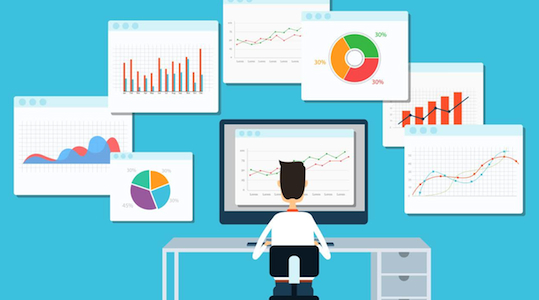
Dashboards are great way to provide project status updates to your stakeholders. Creating a dashboard with visual content will help you to attract the attention of the reader and get your message across. In the article '5 Tech Trends Every PM Should Know', Elizabeth Harrin discusses visual data presentation as one of the trends to watch. Her advice to Project Managers is to make dashboards and visual reporting part of stakeholder communications. Coming up with a good project dashboard takes time. You will run through several different versions before finally nailing down a template that will suit your audience but, this effort will payoff in the end. A few things to keep in mind,
Once you get all the project information up on a dashboard, status reporting becomes simple. Make a habit of updating the dashboard once a week and keeping the information available. Then, all you have to do is send the relevant sections of it to various stakeholders for status updates. Not everyone will need all the information. The dashboard will also come in handy for ad-hoc reporting. Following are some of the key pieces of content that can be included in your project dashboard. You can customize the final status report based on the audience. My suggestion is to create a comprehensive dashboard and select the sections that are relevant for different forums and stakeholders to create your status updates. The complete report can be used for status reviews with the project team.
The key point to note is to create visual representations (charts, timelines, etc.) for these topics. For some, like risks and issues, you may use a table format, but you can add some graphical elements to it. For example, incorporating emoticons with the RAG status. Here are some resources, that you can use for creating a project dashboard.
Project managers should decide the level of complexity they want to have in a dashboard and tailor it appropriately for the audience. Feedback from the stakeholders will also determine how the information is presented. Keep the report simple to make it more readable. Are you an advocate of project dashboards? Please share your views in the comments. |
Measuring the effectiveness of the communication plan
|
The communication plan is an important part of the overall project plan. It defines how the communication will occur during the project execution with everyone who has a stake in the project. Effective and efficient communication is key to a successful project. It can help to identify risks and issues, avoid duplication of work and build relationships. A good communication plan will always have the following elements.
By putting all of these elements together you can build a comprehensive plan. One last key component that project managers have to include in their communication plan is
How will you know that the plan is working? You need a way to measure the effectiveness of the communication. If the plan is not working and you are not meeting the communication objectives, it has to be re-designed to be more effective. Last month I opened a discussion on Project Management Central to find out what kind of tools and techniques project managers use to measure the effectiveness of communication plans. Based on the feedback, I compiled the following list of tools that can be used to evaluate the communication plan. 1. Meeting evaluation form: A survey that can be filled by the participants at the the end of the meeting. Keep in mind that this should be short enough for the participants to fill in quickly. This can also be done via e-mail immediately after the meeting. Here is simple template for a meeting evaluation form. 2. Verbal feedback: This is a good techniques for small audiences. Request for feedback at the end of the meeting and take notes. This feedback can be used to make the next meeting more productive. 3. Engagement profiles: In the article "Beyond Reporting--The Communication Strategy" Lynda Bourne describes the use of engagement profiles to measure the effectiveness of the communication plan. This technique involves assessing the gap between the current and target attitude of each stakeholder. Read the article for more details. This is a good technique that can be used for key stakeholders. 4. Open forums: Forums such as retrospective meetings are a good medium to get feedback about the overall communication plan from your team. Find out what went well and what didn't in terms of the communication and adjust the plan for the next sprint, iteration or phase. I believe a mix of these techniques can be used to measure the effectiveness of the communication plan based on the audience and the type of communication. Do you have tools in place to measure your communication plan? What techniques do you use? Please share your thoughts in the comments. |

Managing conflict as a project manager
|
As project managers we all have to deal with conflict as part of our role. Conflict situations arise throughout the life-cycle of a project. You will have conflicts with clients, stakeholders and team members as well as witness conflicts between them. Conflict management goes hand in hand with project management. How can project managers prepare or arm themselves to handle conflict? What are the skills that we have to develop? 1. Communication Communicating clearly and effectively is the key to resolving conflict. Communication is a big part of project management and in conflict situations it becomes even more vital. Continuing to improve your communications skills and learning to communicate clearly will increase your ability to handle conflicts. When you are in the middle of a conflict, non-verbal communication plays an essential part. Facial expression, tone of voice, posture etc. contribute to the exchange during a disagreement. Improving you non-verbal communication skills will also go a long way towards better conflict management. 2. Active listening Practice active listening when handling conflict situations by giving verbal and physical signs that you understand what the other person is saying. This is a very useful skill for conflict resolution because it will help the other person to trust you and open up. Then, you can get to the root cause of the real problem and understand the other person's point of view. 3. Negotiation Conflicts arise from disagreements and to resolve them you have to try to reach a compromise. This is where your negotiation skills will come in handy. Oftentimes project managers have to negotiate conflicts with timelines or resources with the team. These issues are usually resolved by negotiating with them and coming to an agreement where both parties may have to compromise. 4. Collaboration The ideal resolution for a conflict is a win / win outcome where you arrive at a solution that is agreeable to everyone. Rather than looking at a problem as us vs them, you can think of it as common issue and work together to resolve it. Collaborate with the other party to reach a win / win outcome. For a project manager the ability to collaborate with your team and your clients is crucial to the success of the project. 5. Stress management Learning to manage your own stress is the key to staying calm in conflict situations. If stress overwhelms you, you won't be able to communicate clearly and respond in a positive way. Project managers have to be in control over themselves and their emotions to be able to manage conflict situations. A manager who loses his temper, for example, runs the risk of alienating the team. 6. Emotional awareness Being emotionally aware helps you to understand yourself and others. In conflict situations it’s important to understand what is really troubling the other person as well as yourself. The ability to handle conflict depends on being connected to the emotions underpinning the situation. Developing these skills will help you to improve your ability to manage conflicts in a constructive way. How do you handle conflict situations? What other skills do you think will be beneficial? Please share your thoughts in the comments.
Update: There's an excellent webinar by Shawn Stratton on Effective Conflict Resolution. Shawn discusses the 5 dysfunctions of a team, 5 major causes of destructive conflict, how to facilitate healthy conflict and a simple and effective conflict resolution model. If you are interested in learning more about conflict resolution I definitely recommend this webinar. |



