


Are your team members "Givers" or "Takers"


|
In case you haven't read the book, Adam believes that people will default to one of three stances: takers, matchers or givers. Takers will always prioritize their own interests over others and when they give, it is usually with the intent of furthering those interests. Matchers believe in reciprocity so if you scratch their backs then they will scratch yours. Givers on the other hand believing in paying it forward as their focus is on others rather than themselves. As Adam writes, it is not a question of how generous one is or isn't but what one's attitudes and motives are. While his book focuses on the personal and professional behaviors of givers, takers or matchers, Adam doesn't specifically address the impacts on project work. Givers and matchers are both well suited for collaborative work where the emphasis is on the best possible outcome for the team as a whole. Takers, on the other hand, will collaborate with others but only if it helps them. "Taking one for the team" is not something a taker will easily do unless that is done as a strategic move to help themselves. A giver will usually be the first person to volunteer to help a fellow team member if they need a hand. The difference between them and a matcher is that the matcher will usually keep the favor in mind and will expect the assistance to be returned at some point. Takers might help but only if it doesn't put them at a disadvantage. If helping their colleague means their own work will be delayed which might reflect poorly on them, they won't volunteer. When it comes time to celebrate a milestone, takers will usually try to get as much of the glory as possible. Givers will be quick to appreciate others contributions and matchers will again look for a quid pro quo for recognition. Projects are frequently staffed with people who may not have previously worked directly with one another so we might not be in a position to know which category our team members falls into. But if we are leading a project, understanding this might help to reduce some of the risks related to team dynamics. |
 Having recently finished Adam Grant's latest book, Think Again, I decided to read his first book
 Could psychological safety increase organizational risk?
|
Given the broader awareness of the importance of psychological safety over the past decade, it is understandable that there are going to be some misconceptions about it such as:
Safety can't increase by itself. A broader view needs to be taken to understand what other changes are needed to fully benefit from it. We can draw a parallel to giving someone greater control over the work they do. Autonomy has many benefits, but unfettered autonomy might result in someone violating organizational policies, regulations or engaging in activities which improve their work but end up hurting other teams. Self-management only succeeds when there are guardrails in place to protect the individual and the system they work in. Similarly, encouraging radical candor and empathy-based social pressure can establish similar guardrails which could reduce the likelihood of realizing the misconceptions I listed above. And when it comes to taking risks, provide the team with a clear understanding of their organization's risk appetite and help them to define the limits for different types of risks. Provide examples of what is and isn't safe to do. Encourage team members to feel comfortable about challenging each other if they feel a proposed risk is too great. This guidance could then become part of the team's working agreements. "There ain't no such thing as a free lunch" |
 In a presentation I gave to the members of a PMI Chapter on the topic of psychological safety, one of the attendees asked a great question. If a team possesses a high level of psychological safety, does this increase the likelihood that one of its members might feel safe taking a risk which goes beyond the risk tolerance of the team, the line of business or the organization as a whole?
A first step to unleashing your team's "human magic"
|
But moving from the macro to the micro scale, could we apply this at a team level with our individual team members? One way is to start by asking questions which will help us understand where we currently are. Here are six examples to help you get started in your next one-on-one session.
As these are open-ended questions you will want to follow up after each is answered with other open ended questions (e.g. What else comes to mind?) if your team member provides a brief or closed response. The insights you'll gain through these conversations will help you to create a backlog of improvement experiments to help individuals within the team or the team as a whole. And by asking these or similar questions on a periodic basis, you'll be able to see whether the changes you introduce are having a positive effect. The HBR article's author felt that when environments exhibited the six listed factors it would help to unleash "human magic". But there's nothing magical about how to achieve this. Sustained effort and a commitment to continuous improvement on the part of all leaders are two of the necessary ingredients. |
 In a recent
 "Long-term consistency beats short-term intensity"
|
With gyms closed in Ontario due to the soaring cases of the COVID-19 Omicron variant, I haven't been witness to the usual annual phenomenon of fitness newcomers doing excessive work outs for the first couple of weeks of January only to stop by the end of the month once other higher priority activities surface. Personal development is another example. While one could sit down and blitz through a pile of books in one month, if no reading is done the rest of the year, it is not likely to be as effective as reading throughout the year. I love desserts but am also mindful of the health issues of excessive indulgence. I could quit all sweet foods for a week, but to make a meaningful improvement to my health, I'd be better served by reducing rather than fully eliminating by daily intake of such items on an ongoing basis. Which brings us to project delivery. Conducting an intensive risk identification, analysis and response implementation workshop early in the life of a project might seem helpful but if risks are not considered over the remaining life of the project, it is of no value. Instead, spending a modest amount of time regularly managing risks based on the context of the project would be much more effective. Spending a day brainstorming, scrubbing and documenting lessons (to be) learned at the end of a project or major phase sounds like an efficient use of stakeholders' time, but you'll miss out on many experiments which could have resulted in incremental improvements over the project's duration. Waiting till year end to do a formal performance review with a team member might align well with compensation policies but they would benefit more from informal ongoing coaching throughout the year. Consistency creates results! |
 Bruce Lee might have been referring to improvement in one's mastery of the martial arts when he uttered the title of this week's article, but when Daniel Pink referenced it in his
 Less is more
|
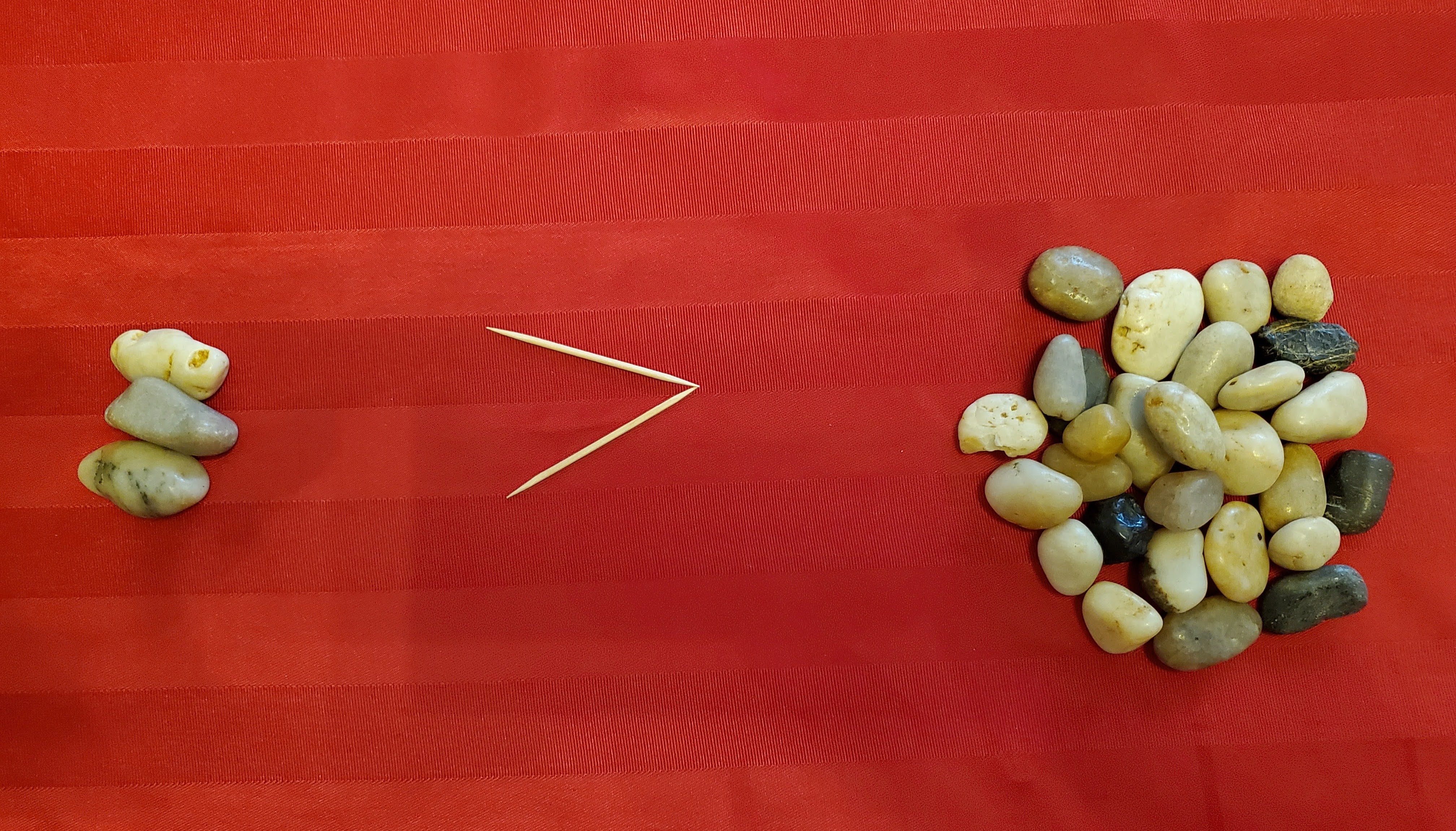
I'd first heard Adam speak at the in-person (yes, there was such a thing at one time!) PMI Global Congress conference in 2019 and appreciated both his ideas as well as how he delivered them. His latest book focuses on the skill of rethinking which is a cornerstone of a growth-oriented, adaptive mindset. Adam provides lots of good insights supported by engaging examples, but one in particular stuck with me. In his chapter titled "Dances with Foes" regarding the science (sorry, Donald Trump, not the art) of the deal, he covers factors which differentiate average negotiators from skilled ones. While I was already familiar with the benefits of establishing common ground, asking a lot of open-ended, thought-provoking questions and avoiding the knee-jerk reaction of defending against all attacks, providing fewer reasons appeared to be more effective than providing more. This forced me to do some rethinking of my own. In past engagements, when trying to gain alignment from a challenging stakeholder, a common "go to" tactic for me was to prepare for the discussion by identifying as many supporting reasons as I could and then volley those at the stakeholder in a prioritized order hoping to sway them towards my way of thinking. This approach usually worked quite well for me in my youth during school debates or in negotiations with my friends which reinforced my belief in the validity of the approach. However, in my professional career, while it occasionally succeeded, in most cases it didn't. In some cases, the stakeholder disengaged from our discussion and the quality of our relationship suffered as they felt overwhelmed or attacked by the approach. In other situations, it revealed weak areas in my platform which they could then focus on with their rebuttals. And once one reason falls, it can create a domino effect which knocks down the remaining ones. So the next time you are preparing for a stakeholder negotiation, remind yourself that less is more. |
 I'm just wrapping up Adam Grant's book,

