Responsibility – Taking Ownership Beyond Deliverables,


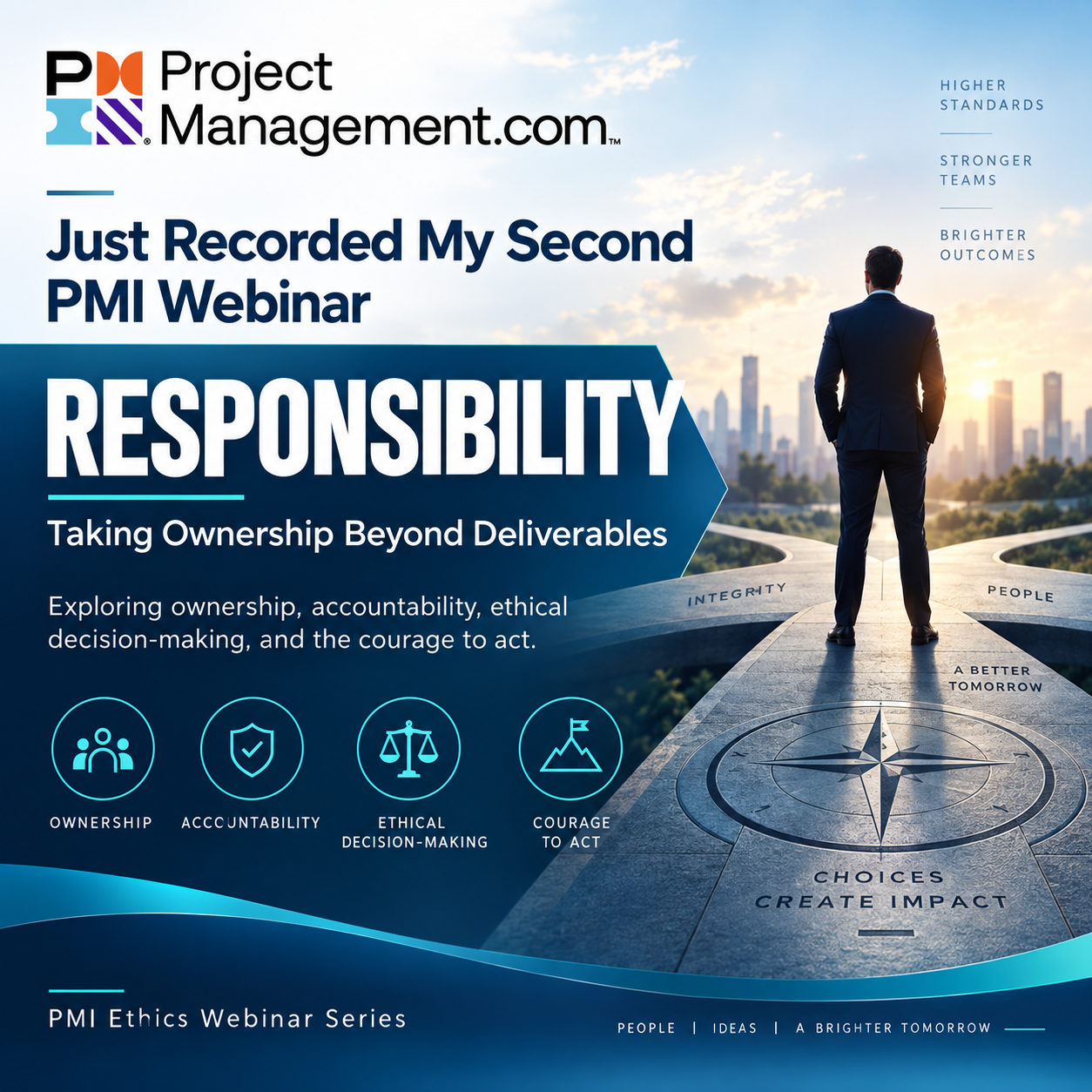 I have just finished recording my second webinar for PMI, this time focusing on one of the four core values of the PMI Code of Ethics and Professional Conduct: Responsibility. The session, “Responsibility – Taking Ownership Beyond Deliverables,” explores what responsibility really means in project leadership: owning our decisions, actions, inactions, and the consequences that follow. In projects, responsibility becomes most visible when pressure increases. Do we escalate a risk early? Do we communicate difficult information honestly? Do we recognize when a decision requires expertise beyond our own? Or do we simply push forward because delivery pressure demands it? One message from the webinar particularly resonates with me: Being responsible does not mean having all the answers. It means ensuring that the right decisions are made. Responsibility is where ownership and accountability come together: ownership drives action, while accountability builds trust. I really enjoyed recording this second session and continuing the conversation around ethical project leadership. What does responsibility mean to you when a project comes under pressure? #PMI #ProjectManagement #Responsibility #Ethics #Leadership #EthicalLeadership #Accountability #PMP |
The credential is not a decoration; it is a promise: What Do Three Letters Really Say?
 A small claim on a résumé can create a large breach of trust. “Could you verify your PMP® status before tomorrow’s interview?” The recruiter expected a quick “Of course.” Instead, there was a long pause. Then came the reply: “I completed the training, and I plan to take the exam next month. I thought it was close enough.” The names and details are changed, but the pattern comes from real ethics cases. A professional adds a credential to a résumé or social profile before earning it. In another version, an applicant pays a proxy to complete part of the certification process or creates a second account to bypass controls. The shortcut may look small. Its impact is not. A professional credential is not a hopeful statement. It is a factual claim that other people rely on. A hiring manager may use it to shortlist candidates. A client may use it to decide who is trusted with a complex project. Another applicant, who invested the time and effort to earn the credential, may lose a fair opportunity. The PMI Code of Ethics and Professional Conduct connects this issue to both responsibility and honesty. We accept work that matches our actual background, skills, and qualifications. We also avoid misleading statements and dishonest conduct intended for personal gain. When we attach “PMP®” to our name, we make a promise about something that has been earned and can be verified. Sometimes the defense is, “Everyone improves their résumé a little.” Yet project decisions are built on information. One false line can distort a recruitment process, weaken confidence in certification, and expose an employer or client to avoidable risk. If the claim helps us gain access, influence, or money, it is not harmless decoration. Leaders can make verification fair and routine. Check the credentials of every final candidate, not only those who “look suspicious.” A consistent process protects qualified professionals, reduces bias, and makes verification feel like normal governance rather than public humiliation. Keep the promise ·Use only credentials that have been formally awarded to you, and present their status accurately. ·Review your résumé, biography, email signature, and social profiles whenever your status changes. ·Never share identities, accounts, exam content, or application work with a proxy service. ·When you discover an error, correct it everywhere, promptly, and notify people who may have relied on it. In one real-world pattern, an inaccurate credential claim was compounded by hostility when a recruiter asked for proof. That second choice mattered. A calm correction and sincere apology do not erase the first error, but they show responsibility. Defensiveness, threats, or more falsehoods turn a repairable mistake into a deeper breach of trust. Before publishing any credential, ask three simple questions: Can I prove this today? Would an independent verifier understand the claim exactly as I intend? Am I creating an impression that I have not earned? A credential takes effort to gain. Its value survives only when all of us protect what it means. Over to you
|
AI Is No Longer Coming to Project Management — It Is Here
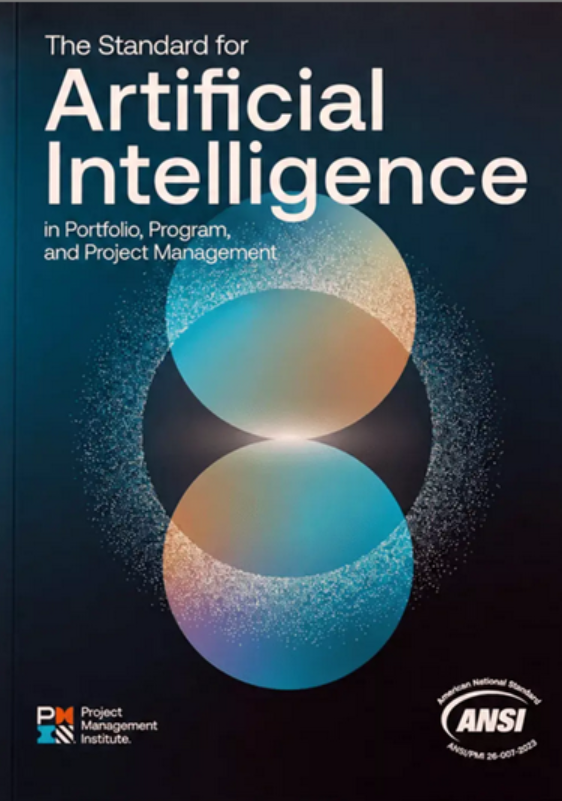 AI is no longer “coming” to project management. It is already reshaping how portfolios, programs and projects are planned, governed and delivered. That is why I am genuinely excited to share that the Project Management Institute has published The Standard for Artificial Intelligence in Portfolio, Program and Project Management. This is the first and only global AI Standard for Project Professionals, created to help organisations move from AI uncertainty and ad hoc experimentation to structured, responsible and accountable practice. What makes this publication especially important is its practical leadership focus. It does not treat AI merely as a toolset or a technology trend. It positions AI as a discipline that must be governed, aligned with strategy, embedded into value delivery and managed with clear accountability. The standard addresses the real questions many organisations are facing now: How do we use AI responsibly? How do we manage AI-specific risks? How do we keep humans in the loop? How do we ensure ethics, transparency, fairness, data quality and compliance while still enabling innovation? The publication provides guidance on responsible AI behaviours, governance, risk, ethics, human-in-the-loop decision-making, lifecycle considerations and real-world application across portfolio, program and project management. It also highlights that AI can support better decision-making, resource optimisation, predictive insights and automation, while reinforcing the need for human judgement, stakeholder engagement and professional responsibility. I am also personally proud to share that I was among the Contributors and Reviewers of this important publication — to my knowledge, the only one from Hungary. Seeing my name listed alongside many excellent global professionals is both an honour and a responsibility. For me, this is more than another PMI publication. It is a meaningful milestone for our profession. It sends a strong signal that AI in project management is becoming not just a technology topic, but a governance, leadership and value-delivery discipline. The next competitive advantage will not come from “using AI somehow.” It will come from using AI deliberately, ethically and professionally — with the right standards, the right governance and the right human leadership. You can find the publication here: https://www.pmi.org/standards/artificial-intelligence |
International Project Manager / Economist Specialised in International Project Management
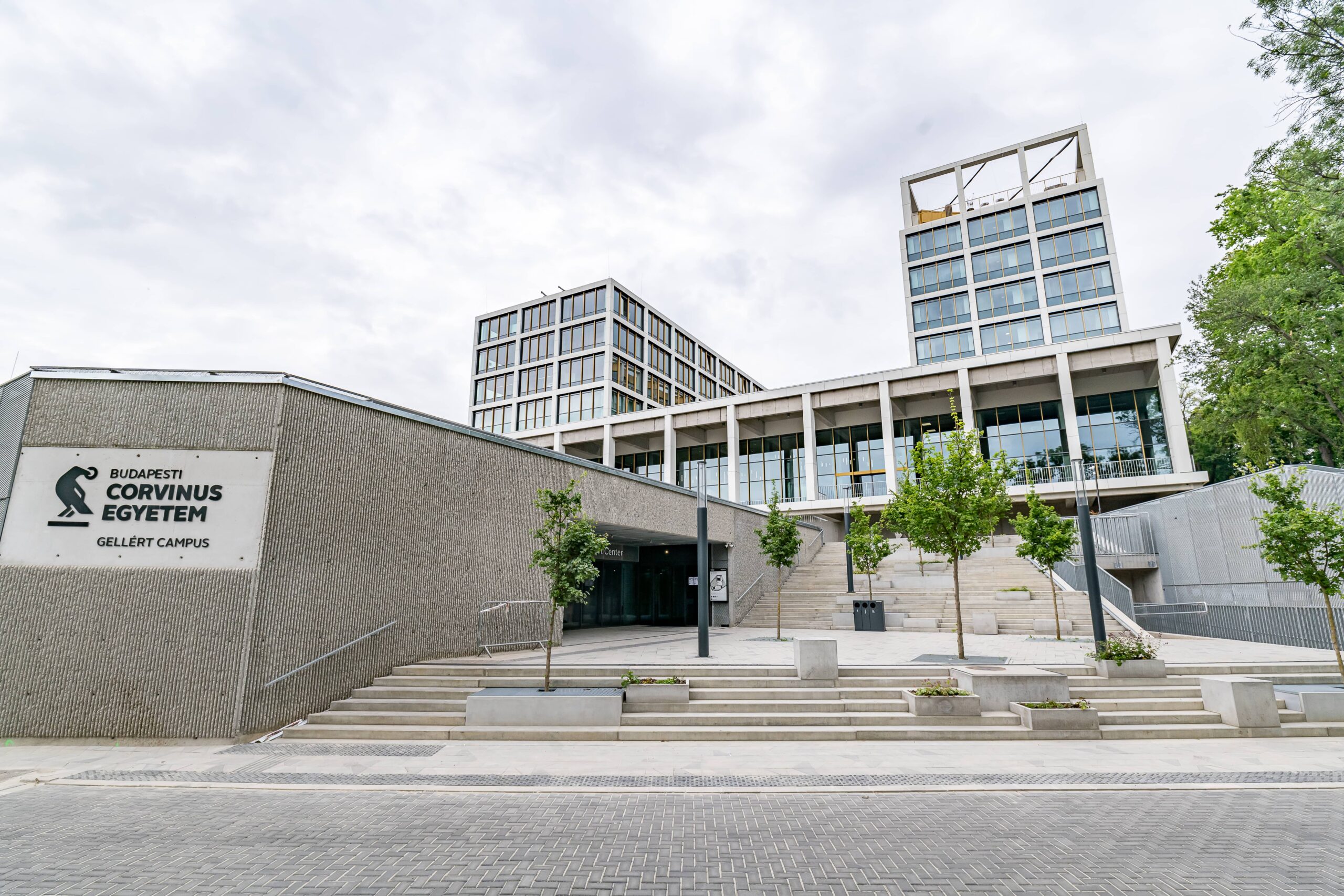 I am pleased to recommend to your attention the English-language postgraduate program in project management, delivered in collaboration between Corvinus University of Budapest and PMI Budapest, Hungarian Chapter. This program is designed for those who want to acquire solid theoretical knowledge combined with immediately applicable, practice-oriented project management skills — whether they are preparing for a project management career or looking to further develop their existing competencies. A key feature of the program is that it combines an academic approach with up-to-date industry practice. Participants learn from leading university lecturers and experienced practitioners how to independently manage medium-complexity projects in an international environment, both in person and virtually, using both traditional and agile methodologies. We are especially proud that this is the only English-language postgraduate project management program in Hungary that has achieved 100% student satisfaction. Key details of the program:
If you would like to advance as an international project manager or as a specialist in international project management, this program provides a strong professional foundation and a practical toolkit. More information: https://lnkd.in/d_aV5JQz #projectmanagement #PMI #PMIBudapest #Corvinus #leadership #agile #postgraduate #lifelonglearning |
The Power of Hello!
|
In today’s workplace, speed often takes priority over presence. We rush from meeting to meeting, move through hallways with our eyes on our phones, and ride elevators in silence with earbuds firmly in place. In the middle of all that motion, one simple habit is quietly disappearing: greeting one another. A simple “hello” may seem small, but in a professional environment, it carries real weight. When you enter an office, step into an elevator, or pass a colleague in the hallway, greet the people around you. Make eye contact. Offer a smile. Unplug your earbuds for a moment and acknowledge the human beings sharing the same space. This is not just about politeness. It is about professionalism, awareness, and respect. Workplaces are built on relationships. Before collaboration begins, before trust is established, before opportunities are offered, there is often a first impression. And first impressions are formed quickly. The person standing next to you in the elevator may be a future manager, a client, a senior leader, or the very person who will be interviewing you tomorrow. You may not know who they are today, but they will remember how you made them feel. Too often, people underestimate the value of everyday courtesy. They assume that competence speaks for itself. Of course, performance matters. Results matter. But how you show up matters too. A greeting signals confidence. It signals maturity. It shows that you are engaged, present, and capable of conducting yourself professionally. Saying hello is not a grand gesture. It is a small act with a disproportionate impact. It creates warmth in a cold moment. It turns strangers into acquaintances. It makes workplaces feel more human. And it communicates something essential: I see you, and I respect you. That matters. In an age of distractions, choosing to be present is a leadership habit. Removing your earbuds, lifting your eyes, and greeting others is a simple but powerful way to demonstrate emotional intelligence. It costs nothing, takes only a second, and can open doors you never expected. You can make a first impression only once. Why waste it in silence? So the next time you walk into the office or step into an elevator, pause for just a moment. Look up. Smile. Say hello. Because sometimes, the smallest word makes the biggest difference. |