Data Technical Debt: 2022 Data Quality Survey Results


| As a manager, the quality of the data available to you has a direct impact on your ability to make effective decisions. I ran an informal survey exploring the state of data quality within organizations from April 11 to May 22, 2022. The survey received 66 responses in total. This blog posting shares the key findings of that survey. Figure 1 explores the perceived importance of data within organizations. This year 95% of respondents indicated that data was considered to be an important asset within their organizations, which is consistent with previous studies that I have run in the past. However, only 54% indicated that they were measuring data quality, which tells me that in many organizations “data is an asset” is merely rhetoric. Figure 1. How important is data to your organization?
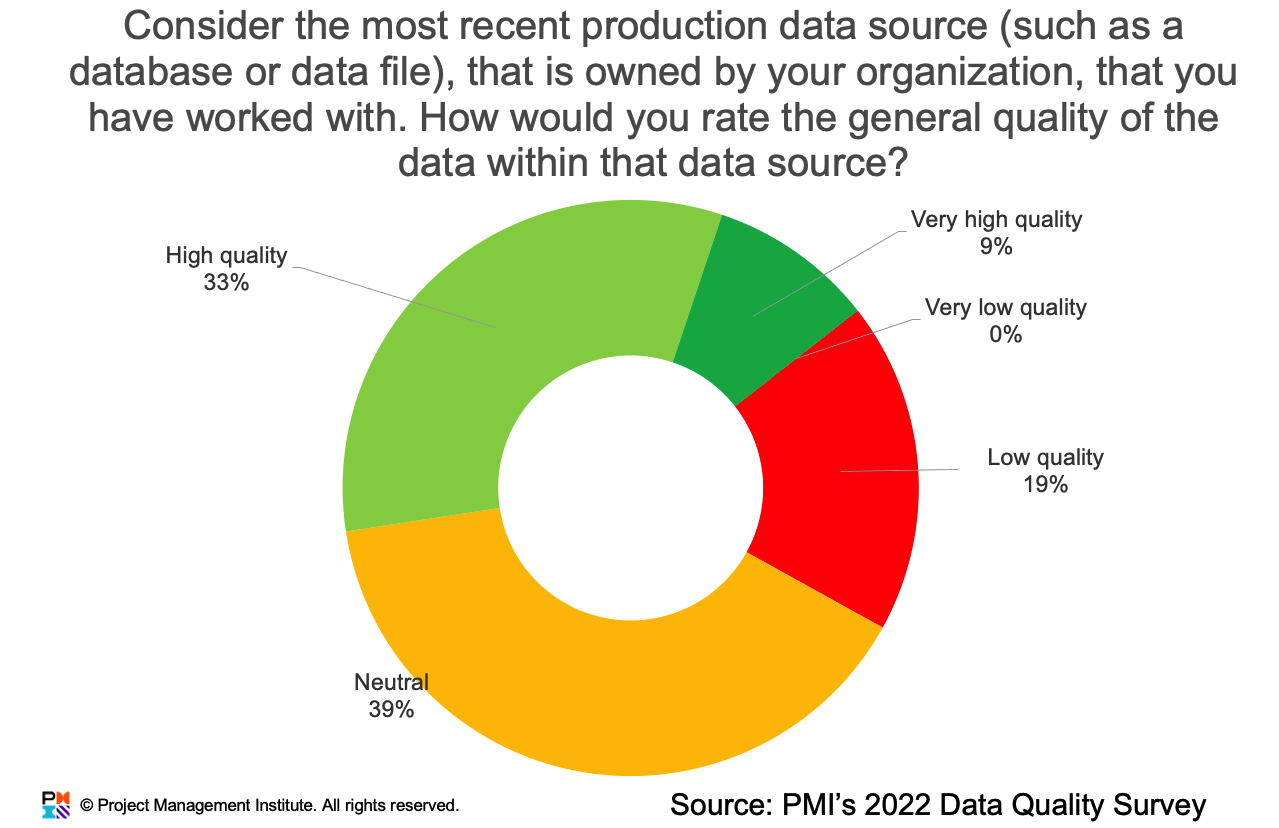
Data Technical DebtThe survey explored issues surrounding data technical debt (DTD), which is a measure of level of data quality (DQ) problems within a data source. Figure 2 summarizes the results of a question that explored the quality of the most recently accessed data source by the respondent. Only 42% of respondents indicated that the data quality was high or very high, and 19% indicated that the data quality was low. Clearly room for improvement. Figure 2. Quality of production data.
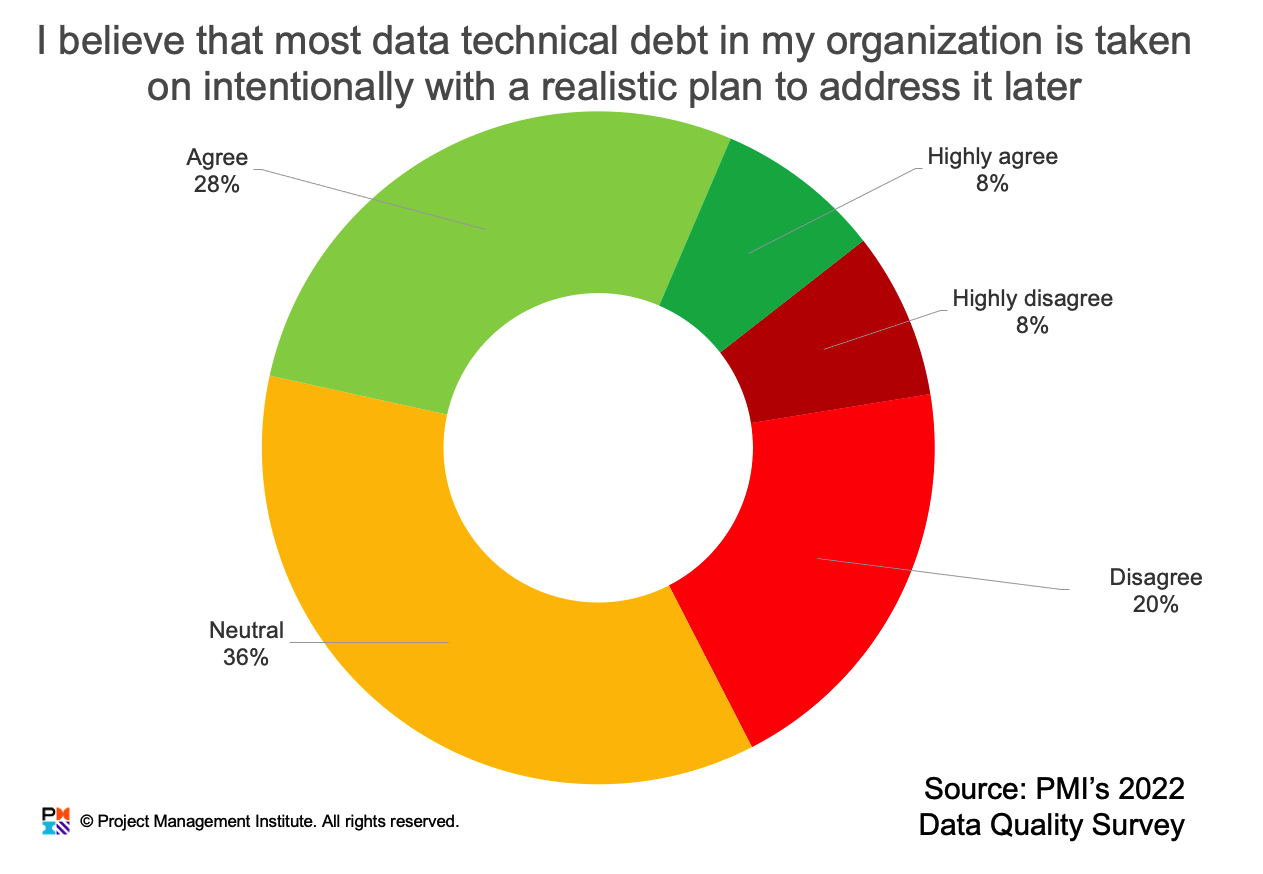
Figure 3 explores whether DTD is taken on intentionally, which is a management decision, with only 36% of respondents providing positive answers. Once again, this is an indication that there is significant room for improvement in many organizations. Figure 3. Is data technical debt taken on intentionally?
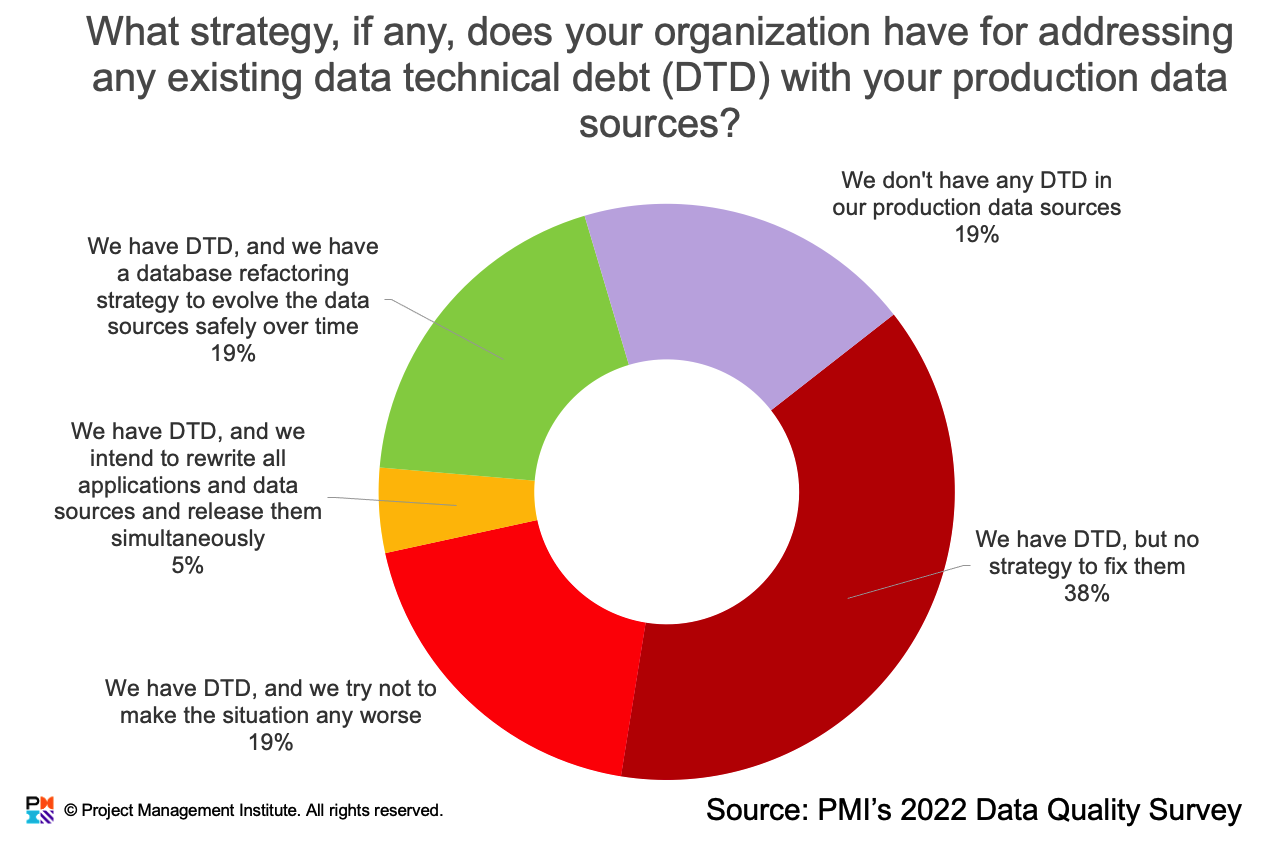
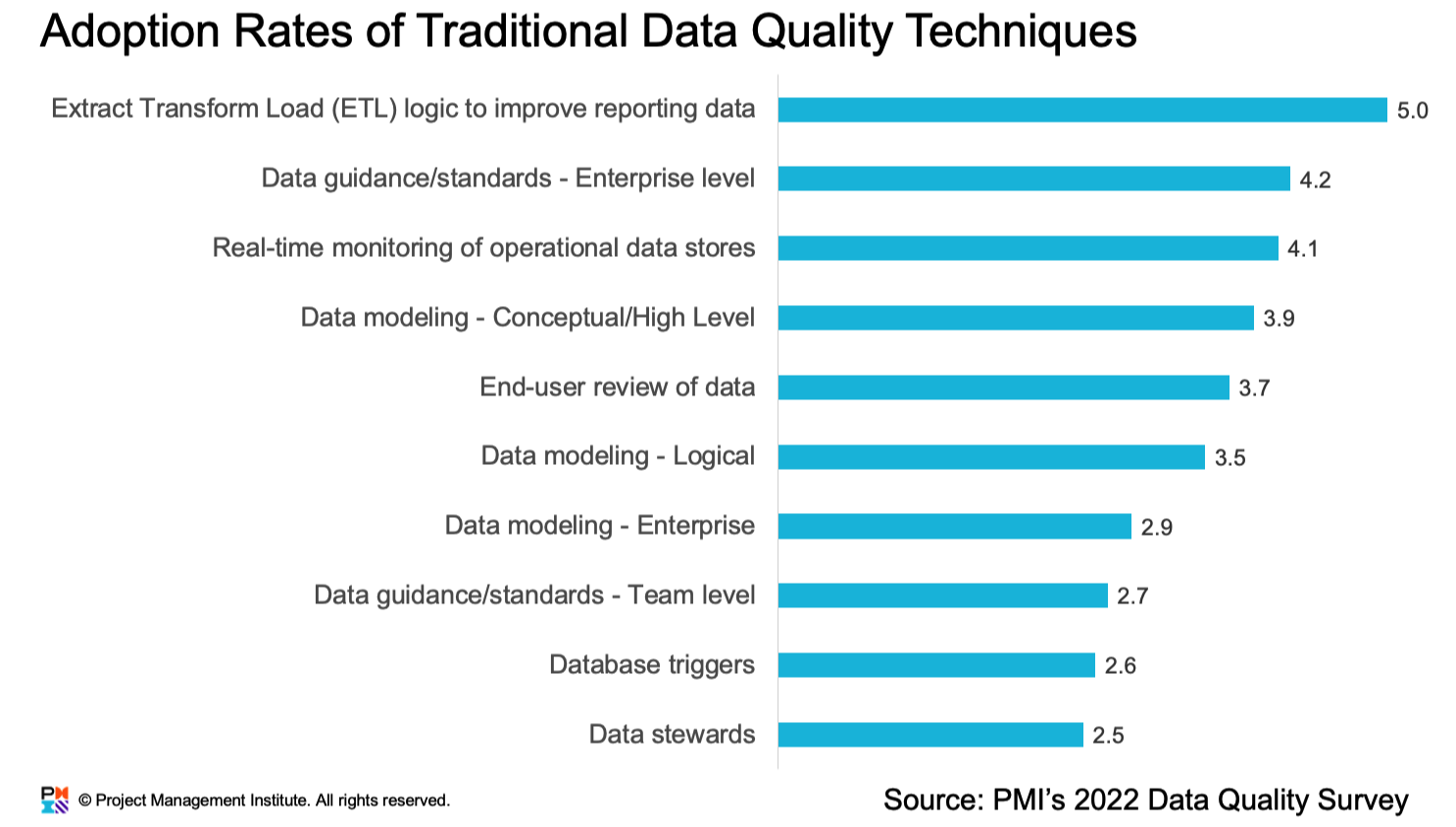
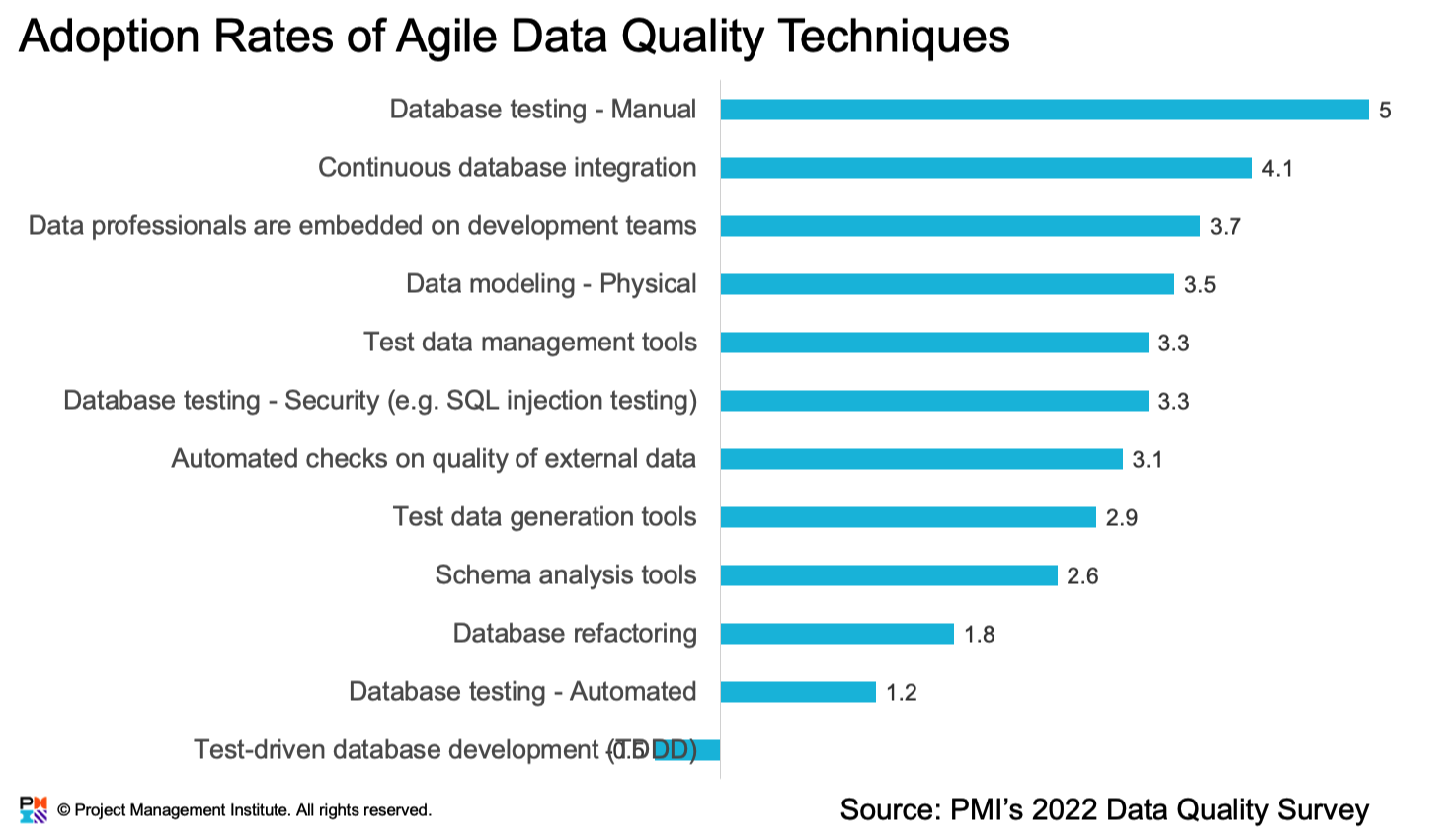
Addressing Data Technical DebtI also explored whether organizations were addressing DTD effectively. Figure 4 summarizes the result of the question that explored whether organizations had a DTD strategy in place. Figure 5 summarizes the results of a question about the adoption rate of traditional data quality strategies and Figure 6 the adoption rate of agile data quality strategies. In general agile quality strategies are more effective in practice than traditional strategies. Figure 4. Do you have a strategy to address data technical debt?
Figure 5. Adoption rate of traditional data quality techniques.
Figure 6. Adoption rates of agile data quality techniques.
|