Agile at 10: What We Believe


|
NOTE: This article was originally published in the spring of 2011 in Dr. Dobb's Journal. The magazine is unfortunately defunct now, and some of the material is now disappearing from the original site, including the original publication of this material. I was recently asked if I still had the original, so I have decided to repost this here. What follows is my original, submitted article before copy editing. So there may be differences compared with what was originally published. For this publication I have removed some links which are no longer valid (hey, it's been 10 years). What We Believe: A Non-Update to the Agile ManifestoThe Agile Manifesto had its beginnings in a meeting held in February 2001 at the Snowbird ski resort just outside of Salt Lake City. To celebrate the ten year anniversary of this event Alistair Cockburn, who organized the original meeting, invited a group of agile luminaries back to Snowbird to discuss the future direction of agile. The original 17 manifesto writers were invited, although not all were able to attend, and I was among the people who did participate. In this newsletter I discuss what we concluded, how the event was organized, and some of the challenges faced by the agile community.
What We BelieveFirst, let’s jump to what most people will perceive to be the end results. As a group, we agreed in the following four belief statements: 1. Demand technical excellence 2. Promote individual change and lead organizational change 3. Organize knowledge and improve education 4. Maximize value creation across the entire process Let’s dive down into what these belief statements imply. The first statement, demand technical excellence, is a reflection both of the general values of the working group and also our frustration with what we’re seeing in practice – or more accurately not seeing in practice. The Agile Manifesto exudes the philosophy that technical excellence is critical to your success in the software game, yet this requires both skill and discipline to pull off in practice. Many agile teams do in fact manage this feat, as various DDJ surveys have shown over the years agile teams produce higher levels of quality on average. However, the adoption rate of quality techniques such as test-driven development (TDD), refactoring across all architectural tiers, and following common development conventions aren’t as high as the agile rhetoric would lead us to believe. There is room for improvement, and our hope is that this first believe statement will motivate agilists to do so. The second belief statement is to promote individual change and lead organizational change. Once again, we’ve definitely come a long way as a community but we have further to go when it comes to improving our approach to software development. At the individual level I believe that we need to actively life-long learning, teach people to observe what works for them (and what doesn’t) in the situations that they find themselves in, and to then act on those observations. At the organizational level it is important to understand both the mechanics and the supporting human behavioral aspects of change processes and then invest the time and resources to effectively execute on them. One aspect of this is to focus on the organizational ecosystem as a whole and not just on IT – in fact, many agilists are instead still mired in the details of software development and unable to see the enterprise forest for the development trees. Organizing knowledge and improving education is the focus of the third belief statement. Several people in the group voiced their frustration around the lack of a coherent and consistent agile body of knowledge. In many ways this is a reflection of our times – the Internet makes it easy for people to publish articles, to post ideas in blogs, to tweet, to write wiki pages, and so on which in turn promotes a dispersed cacophony of voices. This cacophony can be debilitating when you want resources which support teaching agile concepts, particularly at the college and university level but also at the individual learning level. Heresy aside, perhaps an organization such as the Agile Alliance could start amalgamating some of this knowledge, and even go so far as to create an Agile Book of Knowledge (ABoK). Minimally, it’s clear that the agile community could do more to reach out to universities and colleges to help them understand and teach agile more effectively. Last, and certainly not least, is the fourth belief statement that we should strive to maximize value creation across the entire process. One of the fundamental messages of the Disciplined Agile Delivery (DAD) process framework is that we need to look beyond the software construction focus of the Agile Manifesto to address the full solution delivery effort. But this is clearly not the full picture either as there is much more to IT than solution delivery, and certainly much more to your organization that IT. Some of the greatest challenges that we face with agile adoption are the business issues surrounding IT, particularly when it concerns financial issues such as funding delivery projects, IT governance, and understanding and interacting effectively with business stakeholders to name a few. As the lean community implores, we need to optimize the whole, and agile software development is only one small part of your overall organizational ecosystem.
How it HappenedTo help bring a bit of transparency to this event, I’d like to briefly describe how it was organized. In early January 2011 Alistair Cockburn sent out invitations to a number of people whom he felt had added value within the agile movement over the years. Not everyone was able to attend for various reasons, and perhaps a few people who weren’t invited should have been, but from what I could tell he brought together a group who was representative of the overall community. I’d like to once again express my thanks to Alistair for taking the lead on this effort. Luckily Alistair decided to hire professional facilitators, Robert Moir and Janet Danforth, to organize the event and I truly believe that we couldn’t have succeeded without the two of them. A few weeks prior they called around to the confirmed attendees to discuss what they wanted to achieve when we got together. We first saw the results of this the night before when we gathered in the evening for drinks and discovered that index cards containing questions had been distributed around the tables. The goal of the cards was to stimulate conversation, not that we needed any help with that, and to communicate to everyone the range of issues to consider the following morning. The working session itself was held on Saturday February 12th, with an idea generation session in the morning from 8:30 to 12:30 and a focusing session held in the evening from 5 to 7:30. During the morning session we organized into seven subgroups, and we iteratively addressed seven topics – value; agile backlash/retrospective; technical/agile process; other communities and business/enterprise process; culture; education/training, and the future – which the index cards from the night before had been assigned to. Each subgroup started with one of the topics and with sticky notes identified issues pertaining to that category. Then the subgroups rotated to the next category to review the previous work and to add any new ideas that were missed previously. We proceeded iteratively until each subgroup had contributed to each topic category. Over the break several of us chose to go skiing, the weather was perfect and the mountain offered a range of challenging ski runs – if you downhill ski then I highly suggest Snowbird. In parallel many people decided to continue discussing the issues identified during the morning session. The facilitators also took the opportunity to organize our work and to prepare for getting the group back together that night. The goal of the evening session was to come to a consensus around a statement of our beliefs. To do this we re-categorized the issues that we identified in the morning into things that we can make good headway on, things we don’t know how to address, and things that we believe can’t be addressed. For example, better communicating the role of architecture in agile development is something we could make good headway on whereas the fact that many organizations rate their employees in part based on the degrees or certifications is something we’ll never be able to address as a community. The issues which we believed could be addressed were clustered by topic, the topics were prioritized, and after much discussion and wordsmithing the four belief statements were identified.
The Elephants in the RoomLate in the morning we recognized that there were several issues that we were avoiding in our discussions. This avoidance was due in part to the prevailing culture of the agile community, in part due to commercial interests of several people in the room, and in part because we were originally asked by Alistair to play nicely together. So we invested some time to identify these “elephants in the room” so that they could be discussed. I’ve listed these issues below, using the format of “elephantine issue – my thoughts on the subject” so that you can hopefully gain better perspective as to some of the issues holding back the agile community. These issues are:
The four belief statements are not meant to be an addendum to the Agile Manifesto. Several of us, myself included, felt that the manifesto should be updated to reflect what we’ve learned as a community these past ten years. An equal number within the group, however, felt that the manifesto shouldn’t be updated. It was clear that we wouldn’t reach any sort of consensus on this issue, let alone on what the changes should be, so we decided to leave well enough alone for now. Interestingly, many of the “elephants in the room” could begin to be addressed by improvements to the manifesto. Go figure.
>>HOT LINKSI discuss The Agile Manifesto in detail in my article The Agile Manifesto Examined. The Disciplined Agile Delivery (DAD) is a hybrid capturing strategies from Scrum, XP, Agile Modeling, lean software development, Kanban, and other agile/lean sources. See Agility at Scale for more on the topic. |

DoD and DoR: A Disciplined Viewpoint
|
As with many issues within the agile community, there is a bit of confusion around the pragmatic application of the Definition of Ready (DoR) and Definition of Done (DoD). In this blog I answer frequently asked questions (FAQs) around these two techniques. These questions are:
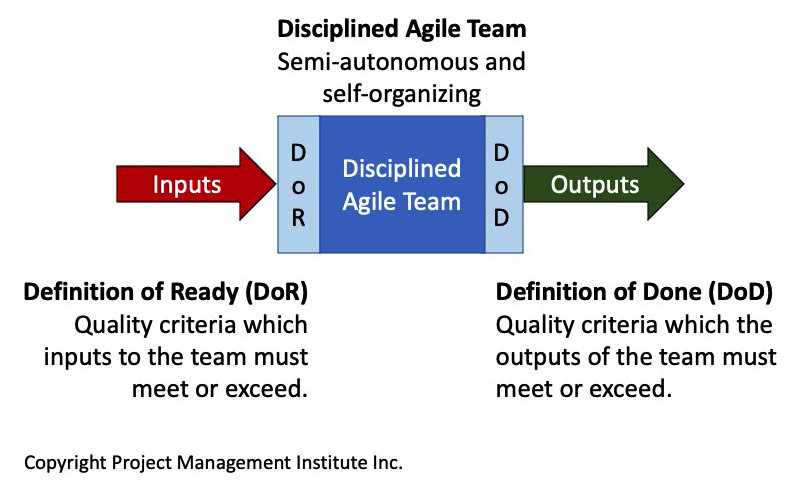
What are the Definition of Ready (DoR) and Definition of Done (DoD)?Figure 1 summarizes three key concepts that I will use throughout this blog:
Figure 1. Defining DoR and DoD.
Why do we want a Definition of Ready (DoR)?As you can see in Figure 1, your team's DoR helps to protect you from poor quality inputs. When your inputs are insufficient they put your work at risk, forcing you to either rework the inputs to get them up to the level that you need or to cut the quality of your own work. By reducing rework, or in some cases hand-backs from the customer to the supplier, you help to optimize the flow between the teams. For example, when you're making a salad, you very likely have a mental DoR for the quality of the ingredients. You want fresh lettuce, fresh toppings, a nice dressing, and so on. But what if the lettuce isn't sufficiently fresh? Perhaps you cut off some of the spoiled leaves, forcing you to do extra work to get it to the point where it's usable. Or perhaps the lettuce isn't quite as crisp as you would prefer, reducing the overall quality of what you produce and reducing your enjoyment of it.
Why do we want a Definition of Done (DoD)?As you can see in Figure 1, your team's DoD helps to protect your customers from shoddy work. It is effectively an agreement between you and your downstream customers that puts a lower limit on the quality of your outputs. Your DoD helps to ensure the quality of your outputs, which in turn improves the predictability of your team in that your outputs are consistent and it helps to optimize the flow between teams due to reduction in hand-backs. Once again, consider making a salad. If you produce a salad that is below your usual level of quality you will likely disappoint whomever you made it for. If the salad is for you perhaps you can live with that. If the salad is for your children perhaps you will have to endure their complaints, or even risk that they won't eat it at all. If the salad is for a customer in a restaurant, you risk them sending it back forcing you to redo your work or they may choose to never frequent your restaurant again. Can we define a standard DoR/DoD?Sort of. The challenge that we face is that our teams consume and produce a multitude of things, from tangible products to intangible concepts. And teams are unique, using those things in different ways. For example, salads are the only item in my cooking repertoire. I can make a wide variety of entrees, including spaghetti, grilled stakes, soup, and many more. I can even make a range of deserts and drinks (I was a bartender at one point during university). Clearly the DoD for a salad, for a T-bone steak, for an apple pie, and for a margarita will vary. There will also be similarities too, such make something delicious, make it look interesting, and don't poison people. The implication is that any DoD or DoR standard will need to focus either on commonalities between the things that you produce or consume or be a checklist of potential issues to consider when formulating your DoR/DoD.
Must a team have a DoR or a DoD? Both?In DA we believe that teams should choose their own way of working (WoW), including whether or not they want to adopt DoR and DoD as techniques. Because it's your choice, in the strictest sense of the question, the answer is no. DA isn't prescriptive that way, but as you learned above it's a very good idea to have a DoR and a DoD.
How do DoR and DoD relate to one another?The outputs of one team are the inputs to other teams. These "teams" may be external to your organization. For example, the lettuce that I used to make a salad came from a grocery store, which in turn came from a vegetable distributor, which came from a farm. The salad itself may be input into someone's overall meal. Figure 3 summarizes the relationship between DoD and DoR, where the upstream team is the supplier to the downstream team, their customer. There are three situations to consider:
Figure 2. Examining the relationship between DoD and DoR.
What must a DoD minimally cover?Sometimes your team produces outputs that are used by different teams in different ways, and each of those teams has their own DoR. The implication is that minimally your DoD is the union of your customer's DoRs for what you produce for them. What I mean by this is that your DoD must cover all of the criteria for all DoRs for downstream teams. Consider the example in Figure 3. The output of the upstream team is being used by three different downstream teams. The DoR for Downstream Team #1 has two criteria, A and B. Similarly, Team #2 has criteria B and E and Team #3 A C and D. The implication is that the DoD for the Upstream Team must minimally address the combination of the three downstream teams, in this case A, B, C, D, and E. Figure 3. Your DoD is the union of the DoRs of your customers.
Sometimes the minimum is only a start when it comes to quality. The minimum will hopefully satisfy your customers, but it might not delight them. The challenge is that if another supplier comes along with a better offering, perhaps in this case A' that extends A to provide higher quality, then you risk losing your existing customers to that new supplier because they've gone above and beyond your offer. Another strategy, described below, is to have multiple DoDs, one for each product version.
Do we need to negotiate our DoR and DoD?It depends. My gut reaction is to say yes, because that would be the smart thing to do. But you're not always in a situation where negotiation is possible. Consider the following scenarios.
What if we can't come to an agreement?It depends. This is an issue when:
What happens when our DoR or DoD breaks?Learn from the breakage. Your DoR/DoD breaks when it is no longer sufficient. Perhaps the upstream supplier changes what they produce without first negotiating with you. Perhaps the downstream customer evolves their criteria for what they require. Regardless, you should treat this situation as a learning opportunity which very often leads to improvement.
What happens when a team produces more than one thing, or more than one version of a thing?If they are different offerings, then you need a DoD for each one. For example, we should have a DoD for the salad that we produce. If we also produced chicken stir fry, then there would be a DoD for that too. There may be overlap in the DoDs, for example we may have criteria around not poisoning people with our cooking, but there would also be differences between them because salads and chicken stir fries are very different things. Similarly, if you have more than one version of something than you need a DoD for each version. Earlier we talked about how a DoD for a given output needed to encompass all the DoRs of downstream customers. Another option would be to refactor your output into different versions, one for each customers, so as to meet their exact needs. This increases your overhead, even if you have a clever configuration strategy you still need to manage the configurations, but has the advantage of being able to offer customized offerings to customers.
Figure 4. Versioning your DoD to meet specific customer needs.
Are DoR and DoD quality gates?Yes. To be more accurate, they are a form or type of quality gate, the implementation if which is determined by the needs of the situation that you face. Context counts.
Aren't quality gates non-agile?This question deserves a multi-part answer:
Once again, consider the DoD for the salad:
Context counts. The implementation of your DoD, and similarly your DoR, varies by the situation that you face.
How should we document the DoR/DoD?I always recommend an agile approach to documentation:
How should we implement the DoR/DoD check/inspection process?The way that you implement the quality gate check/inspection for DoR/DoD depends on your situation. You have several options available to you:
And of course I could have walked through a similar example for applying a DoR on the ingredients going into the salad.
Does DoR/DoD apply outside of software?Yes. DoR and DoD are fundamental concepts that apply to a wide range of products, both tangible and intangible, and services. Also, have I not belabored the salad example enough?
Aren't there similar concepts in the software world?Yes. In fact, this blog was originally motivated by a conversation that I had with Al Shalloway where I observed the relationship between supplier DoD and customer DoR was similar to that of superclasses and subclasses via the Liskov Substitution Principle (LSP). According to LSP a subclass should be more specialized than a superclass, similarly the customer DoR should be equal to or a subset of the supplier DoD. There is also the concept of design by contract where you define the interfaces of software components, the contracts so that others know how to interact with those components. The implication is that you don't need to know the implementation details of the component, you just need to know what it does and how to interface to it.
How does DoR/DoD relate to team working agreements?Your DoR/DoD definitions are an important part of your external working agreement. Remember that there are two aspects of your team working agreement - the internal working agreement between team members that defines the ground rules for how you will work together, and the external working agreement that defines how your team will collaborate with others. As per the previous question, this is effectively design by contract for teams.
Why is this so complicated?Your implementation of DoR/DoD only needs to be as complex as your situation warrants, as you saw in the examples above. The overall concept may seem complicated right now because I'm purposefully exploring all of the issues surrounding these two techniques. But as I discussed above, the way that you implement DoR and DoD is completely up to you. My advice is to keep this as simple as you possibly can.
Why is there a raging debate about DoR and DoD?There are several reasons why people are still debating these concepts after all these years:
What does Disciplined Agile (DA) advise?As always, look to the DA mindset for guidance:
Did I miss any questions? If so, I'd love to hear them. |



Book review: Navigating DevOps Through Waterfalls
|
I recently had the privilege of writing the foreword for "Navigating DevOps Through Waterfalls" by Brent A. Reed, Willy Schaub, Mathew Mathai, and Lauren Mix with illustrations by David Hughes-Coppins. Regardless of where you are on your DevOps adoption journey, even if you are far down the path and realize that you’re actually on a continuous improvement journey, this book has something for you. I learned a fair bit by reading this, and I’ve been doing this for years. Here is the text of my foreword: DevOps has become table stakes for modern organizations. DevOps must be baked right into your organizational way of working (WoW) if you are to thrive in the “new normal” of constant change. DevOps enables your teams to become semi-autonomous and self-organizing, more disciplined in their WoW, and in a better position to improve how they address the needs of their customers. This book provides proven strategies for how to make this happen. The authors present their DevOps adoption advice as a story. This is a tale of a fateful trip, a trip that started from a tropic isle, aboard a tiny ship. The mate was a mighty sailing man, the skipper was brave and sure, and five passengers set sail that day for a three-hour tour. A three-hour tour! But the weather started getting rough, the tiny ship was tossed. If not for the courage of the fearless crew, they would have been lost! Oh wait, that’s Gilligan’s Island, not this story. My bad. This book is a story that is based on the hard-won experiences of the four authors after helping various organizations for years in their DevOps adoptions. DevOps has effectively become table stakes for your organization’s IT processes, all the more so given how COVID-19 has upended societies around the globe. In the private sector the marketplace has become far more competitive, requiring companies to get better at sensing what their customers need and responding quick to fill those needs before someone else does. In the public sector the needs of their citizens have increased while the tax base has shrunk, implying that they need to do more with less. My advice is to take this book seriously – although it is presented as a work of fiction the lessons in it are very real and very important. Now that I think about it, many DevOps adoptions efforts turn out to be a lot like Gilligan’s Island. Many organizations mistakenly believe at first that they are embarking on a short effort to adopt DevOps, or worse yet to “install DevOps.” They hope that their journey will be straightforward and over with quickly, perhaps three to six months to Gilligan’s three hours. Then they quickly find themselves in trouble, stuck on a transformation trip that they don’t know how to navigate. Why do DevOps transformation efforts run into problems? It’s often because they don’t invest time to identify a compelling vision and instead head out into the transformation sea. A critical lesson that the authors convey in their tale is that you must define, and then communicate clearly and consistently, both the what and the why of your DevOps transformation. Your objectives and the results you how to achieve become a driving force for your organizational success, and a driver for what you measure. What gets measured will get improved, and you very likely have a lot of things that need to be improved to fulfill your goals. There are other similarities between ineffective DevOps transformations and Gilligan’s Island. Many episodes centered around some sort of unlikely strategy for the castaways to escape their predicament, but their plan would invariably fail due to mis-execution. Sometimes the professor’s attempts to cobble together the existing material available to him – bamboo, coconuts, and something that had recently washed ashore – would fail because they simply weren’t up to the task. Sometimes the castaways would have different personal goals and were working at odds to one another. And sometimes one of the castaways, usually Gilligan, would make a mistake and ruin the plan. Just like the castaways were thrown into a situation that they were ill-equipped to deal with, many DevOps transformations are similarly poorly thought through. When funding for new tooling isn’t available, and teams are forced to make do with what they have, this is the equivalent of the professor trying to cobble together a radio from coconuts and bamboo. When teams don’t know the what and the why of your strategy, they work at odds to one another and waste organizational resources. When people haven’t received training and coaching in new DevOps techniques and technologies they are apt to make mistakes that will undermine your organization’s efforts to escape from their existing WoW. But I digress. The entire predicament of having to escape from Gilligan’s Island could have been completely avoided had they only known what they were doing to begin with. First, they would have acted differently had they known they were going out into a storm. And let me be clear about this, DevOps transformations always get stormy. The advice described in this book shows you how to avoid common problems that other organizations have suffered from, and how to navigate through them. Second, if they had a better boat and a crew prepared for the situation that they faced then they very likely could have successfully weathered the storm. This book works through the equivalent of building a capable crew by describing the mindset and the skillset that they need to succeed. This includes business representatives that are actively involved in the effort and a supportive engineering process (or at least the beginnings of one). It also shows how to build a better boat by picking the right project(s) and developing a supporting DevOps infrastructure. Third, you need some outside help. Just like the castaways on Gilligan’s Island faced problems that they weren’t capable of overcoming on their own, so will you. The transformation journey described in this book is supported by experienced change agents who coach the organization along the way. Without such help you will quickly find your transformation efforts running aground on the shoals of organizational complexities you don’t know how to avoid on your own. Regardless of where you are on your DevOps adoption journey, even if you are far down the path and realize that you’re actually on a continuous improvement journey, this book has something for you. I learned a fair bit by reading this, and I’ve been doing this for years. |

Your Organization is Likely a Software Company, Whether You Know it or Not
|
Software is at the heart of every modern organization. Before COVID-19 you likely heard the phrase "software is eating the world" and certainly COVID-19 has accelerated the digital transformation efforts of organizations that were still in the process of coming around to this philosophy. But what does this really mean? I believe that there are several important implications to consider:
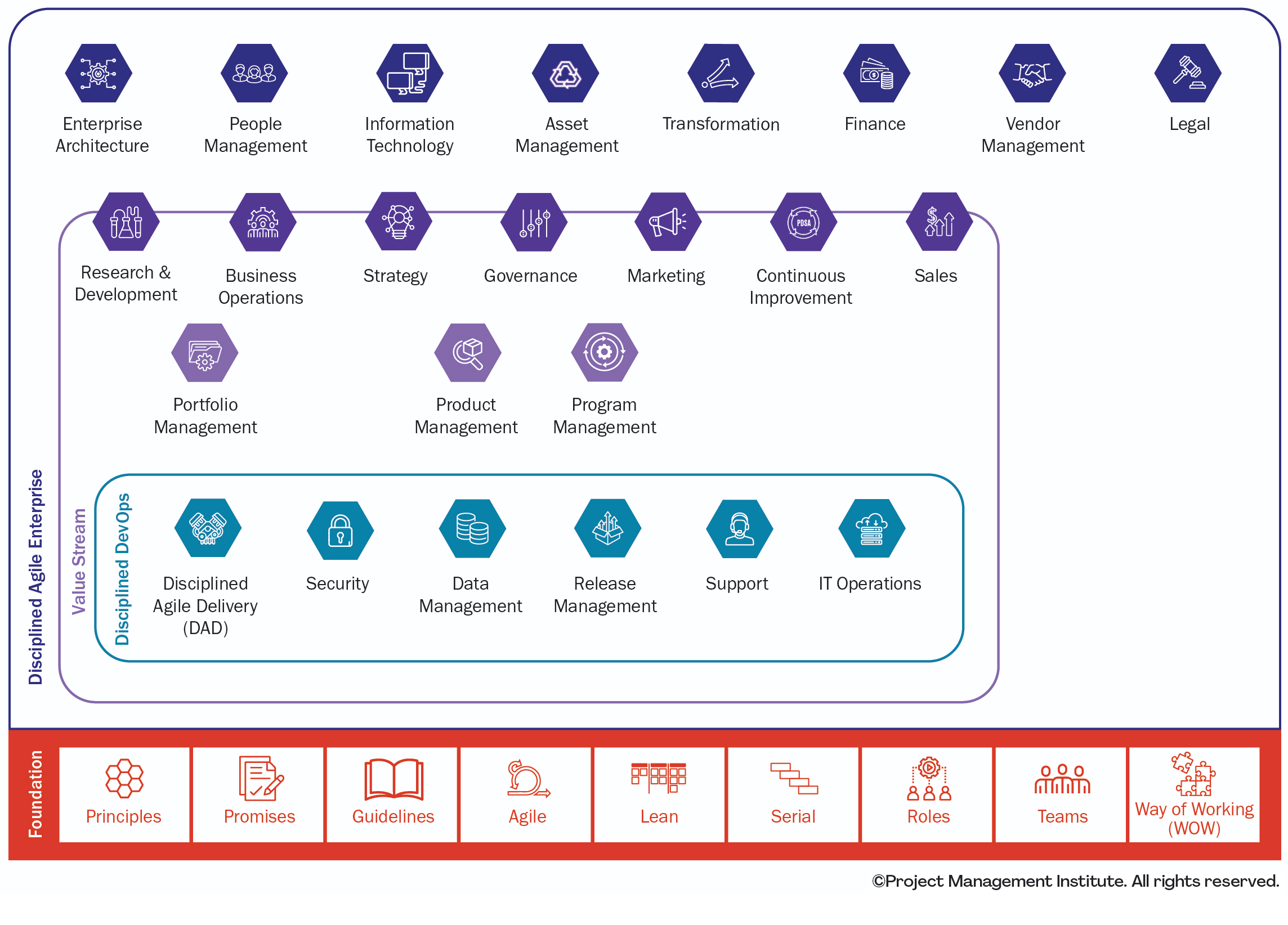
Figure 1. The Disciplined Agile tool kit.
This is why the Disciplined Agile (DA) tool kit is more sophisticated than the agile software development frameworks you may be familiar with. With DA we choose to address the actual challenge that you face, not just the IT part of the challenge. |

Choice is Good: Isn't Having Choices More Complex?
|
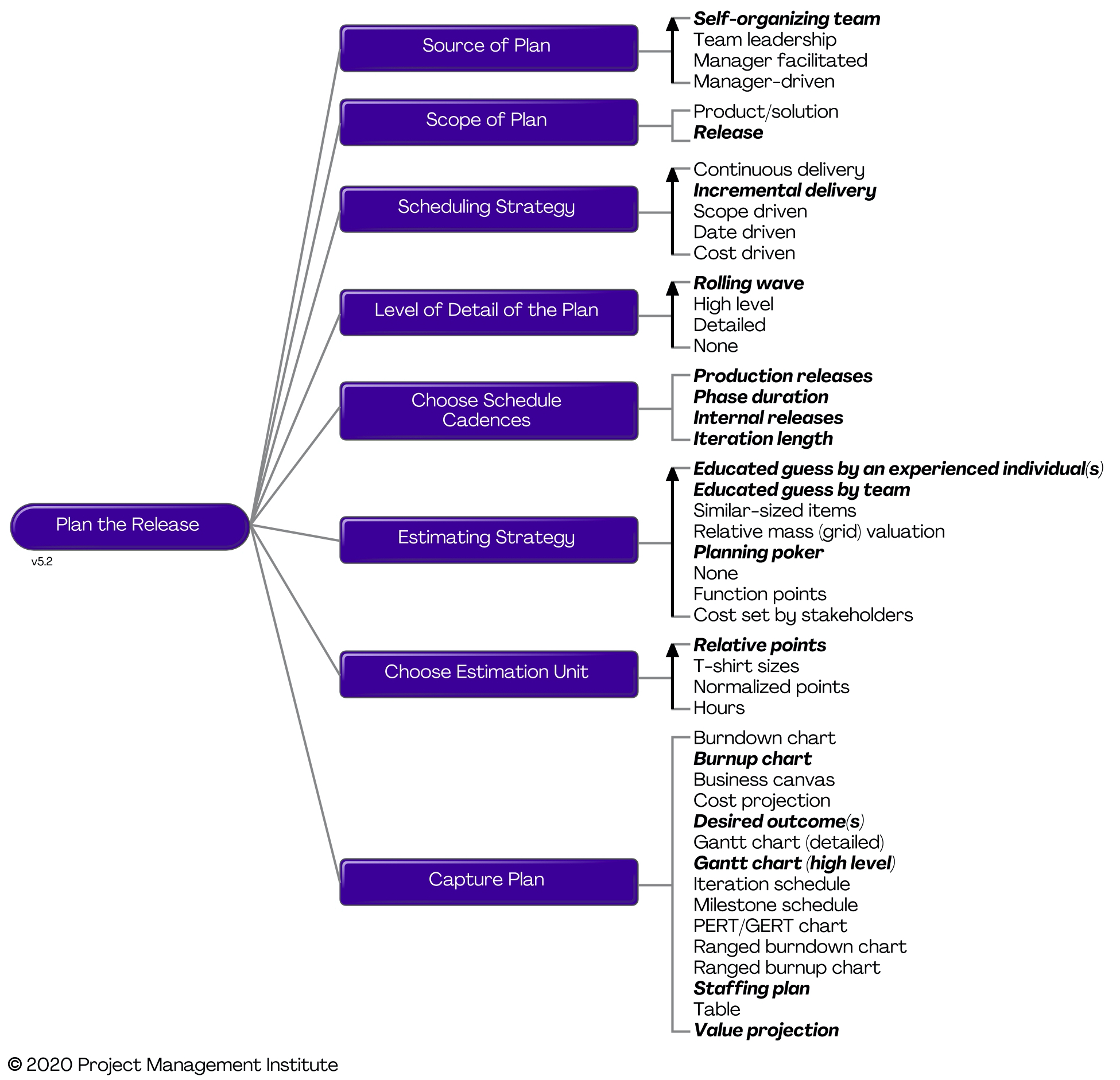
Image source: Getty Quick answer: On the surface yes, but in practice no. Detailed answer: Here are some observations that I suggest you consider: 1. Choices exist, like it or not. In about 99.9% of situations, there are multiple ways to do things. Consider ways that you can go about making coffee. You could add instant coffee crystals to hot water, you could percolate your coffee, you could do a pour over using a mug filter, you could use a french press, you could use a Keurig machine, or many other options. But I bet that you have one or two ways of making coffee in your household at most, likely to keep things simple. Fair enough. Now step back and observe how you've gotten to this point. At some point in the past you narrowed down the myriad of choices to the one(s) that work well for you given your situation. Perhaps you simply do what you were taught by your parents, perhaps a friend introduced you to a new technique which you then experimented with and eventually adopted, or perhaps you investigated your options and choose what made the most sense to you. My point is that options always exist, whether you're aware of them or not, and that in some manner you will make the best choice that you can. 2. Disciplined Agile (DA) makes the choices explicit. This can be confusing at first, particularly if you still believe in the idea of best practices that describe the one "right way" to perform an activity. But the "right way" depends on your situation. Once again, consider making coffee. Some people will tell you the best way is to use an expensive espresso machine that are used in cafes. Although I've had baristas make me incredible coffees with such machines it's not the best way for me because I don't have that level of skill (right now, maybe one day though). But I can make a pretty mean coffee with a French press, so that's my preferred approach. But the fact is that most days I use a simple one-cup coffee machine because that's easier. Different situations motivate me to follow different strategies, but I can only choose the current "right way" if I know what options I have available to me and the skills and tools to adopt those strategies. Because I find myself in different situations, some mornings I have a lot of time so a French press strategy is viable, some mornings the power is out so I have to use a percolator pot on my gas range, sometimes I use my one-cup machine, and maybe one day I'll learn to use the fancy machine that we have sitting in the closet right now. My point is that one approach isn't going to fit all situations, that to be effective you're going to want to choose the most appropriate strategy for your current context. Concepts such as the goal diagram below, which captures many of the planning options available to you, can be daunting at first. We get that. But as I said earlier, these options exist whether you like it or not, and if something straightforward such as making a cup of coffee requires you to make choices then certainly you will also need to choose wisely in your work setting. Figure 1. The Plan the Release process goal.
3. DA suggests potential starting points to potentially simplify your decision process. When you're new to making coffee, you don't want to be presented with twenty different options to do so. Instead you want to be shown one way of making coffee, likely a simple one at first that reflects your current level of skill. You need a starting point from which to get going. So we do that in DA. As you can see in Figure 1, some of the options are highlighted. That's an indication that those techniques are a good starting point for any team that is reasonably small and in a reasonably straightforward situation. These highlighted choices are based on what we've seen agile project teams do in practice over the years, once they've struggled through making a method like Scrum actually work for them. By starting with the highlighted options, rather than going through the harder work of figuring things out on their own, teams starting with DA are much further ahead of the game because DA covers the full range of challenges faced by agile teams. In my experience is a much simpler approach. But of course, if your team isn't in a relatively straightforward situation then you'll need to apply the tool kit to choose your own way of working (WoW). 4. Choosing a fit-for-purpose approach is simpler. I fully understand why people like defined frameworks - when you're new to something, such as learning how to work in a more agile manner, it's comforting to be told what to do. But what if the framework, or the highlighted strategies I described above, really isn't that good a fit for you? What if someone else in your organization decides to inflict their "best practices" on your team, such as your finance department insisting that you provide a detailed up-front estimate before they'll fund your project, which really doesn't mess well with an agile WoW? When you adopt a WoW, or have one forced on you, that isn't appropriate for your situation that's a lot of unnecessary work and frustration that you just don't need. It might be a simple decision for you to make, but it's not a simple way for you to execute. 5. What works today might not work tomorrow. Even when a framework is a good fit, or the highlighted DA options are, your situation will eventually change and there will no longer be a good fit. For example, I currently have room on my kitchen counter for a coffee maker. But what if we buy a new kitchen gadget that requires counter space, which we don't have any to spare. The coffee machine might need to go, which means I need to resort to my French press (granted, not such a hardship) or instant coffee (that's not going to happen). Changes in my context require changes to my morning coffee process. Similarly, your agile teams were forced to change their WoW in early 2020 when COVID-19 forced people to work from home. Many teams had to scramble to figure things out, DA teams could look over the options for coordinating between locations called out by the coordinate activities process goal. 6. You can do this, it really isn't that hard. It clearly takes a bit more skill and knowledge to choose your own way of working (WoW) compared with just following a defined framework. Luckily, you can easily gain these skills by earning PMI's Disciplined Agile Scrum Master (DASM) and Disciplined Agile Senior Scrum Master (DASSM) certifications. After a bit of learning you can easily apply these skills to improve your WoW for many years to come. You've got this.
|