Is Technical Debt A Management Problem? Survey Says...


|
From October 25 to November 28, 2021 I ran a survey exploring issues around technical debt which received 166 responses. Of the respondents, 28% were non-management, 37% were project managers, and 35% were senior managers. In the survey we used the following definition: Technical debt refers to the concept of an imperfect technical implication, typically the result of a trade-off made between the benefit of short-term delivery and long-term value by a software development project team. Some people like to think of technical debt as the work you must do tomorrow because you took a shortcut to deliver today. Like financial debt, technical debt is accrued over time, reduces your ability to act, and may need to be paid down in the future. Here are my thoughts based on the survey results:
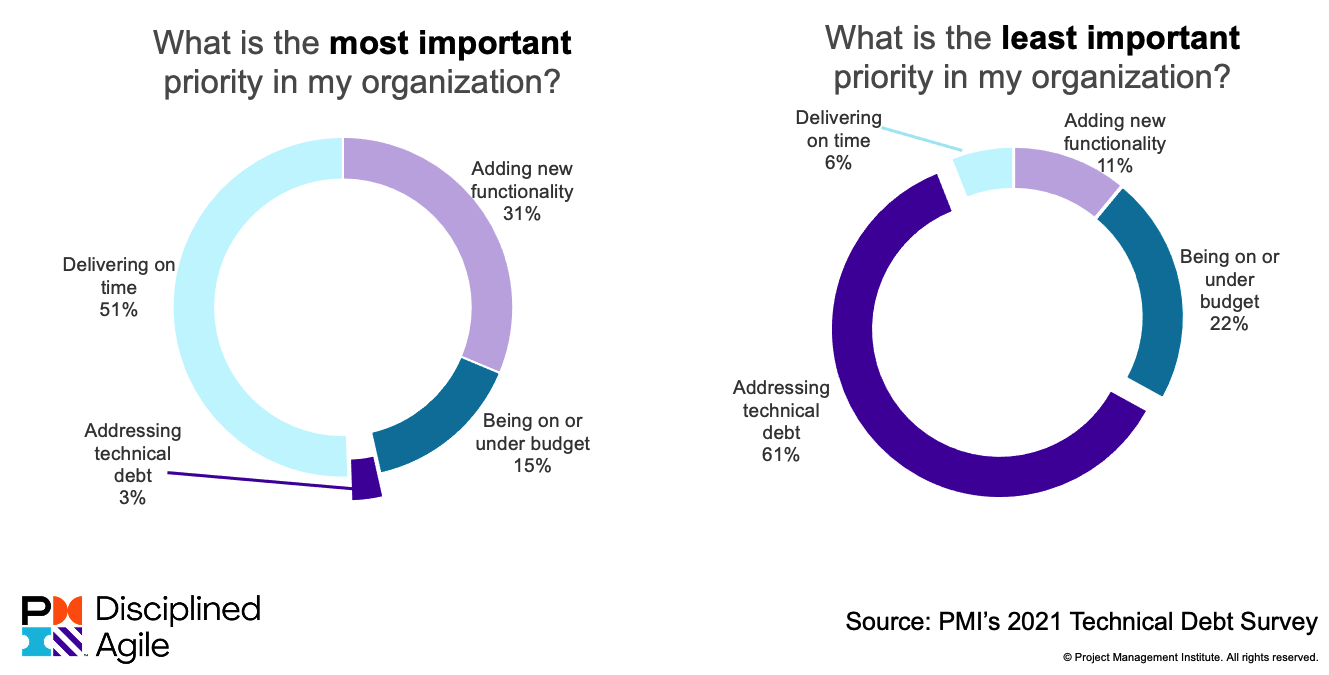
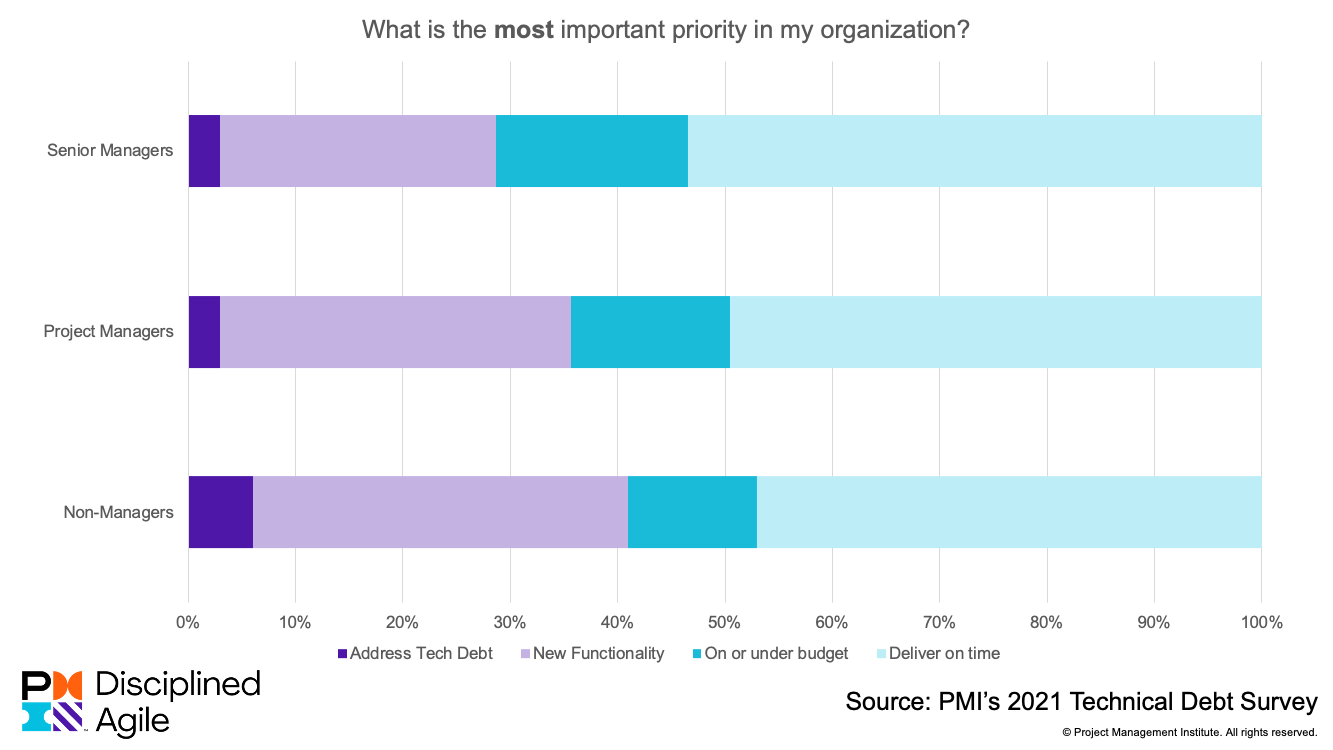
Addressing Technical Debt Isn't an Organizational PriorityThe survey included a question where people were asked to rank in order how they believed the importance of four issues are to their organization: Addressing technical debt, delivering on time/schedule, delivering on or under budget, and adding new functionality. Figure 1 summarizes which factor people believed was most important and which was least important and addressing technical debt faired poorly. Figure 2 explores differences in opinion between three groups - senior managers, project managers, and non-managers - about what is most important. Similarly, Figure 3 explores differences in opinion about what is least important.
Figure 1. Addressing technical debt is your organizations least important priority.
Figure 2. What is the most important priority for your organization's leadership?
Figure 3. What is the least important priority of your organization's leadership?
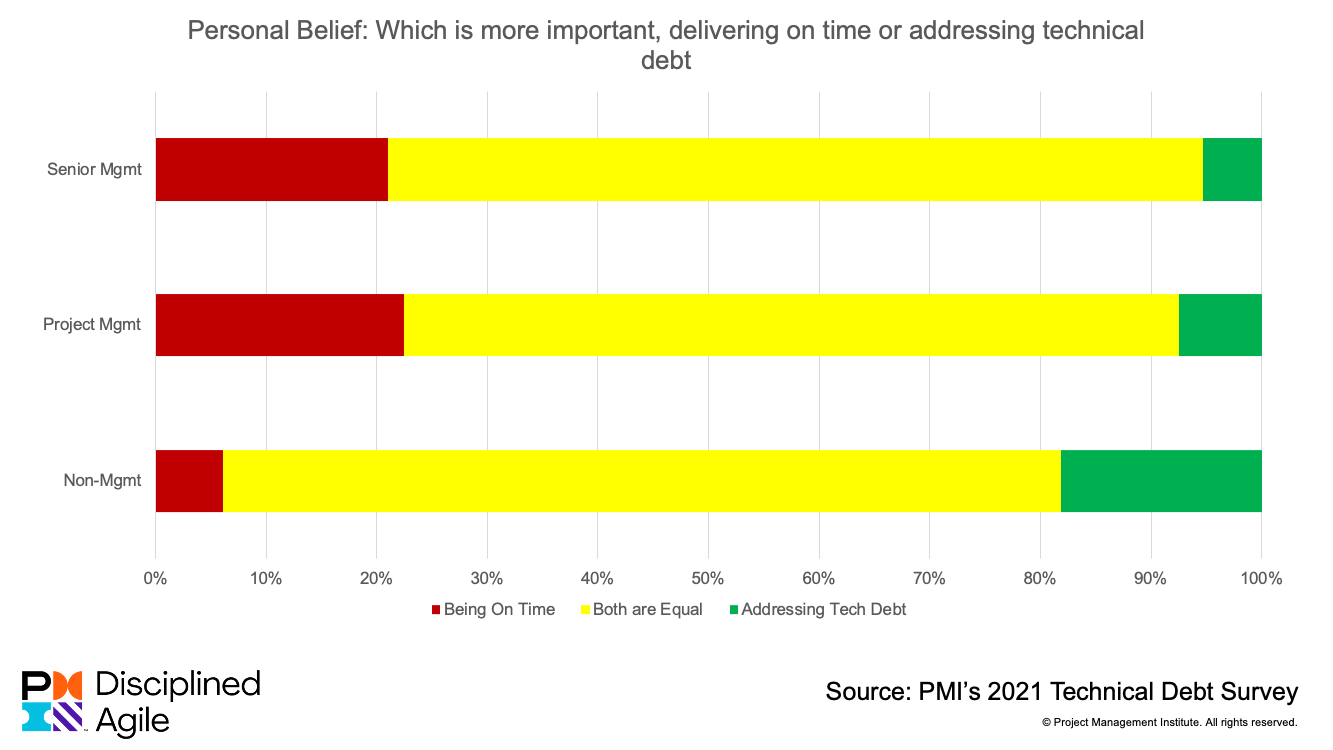
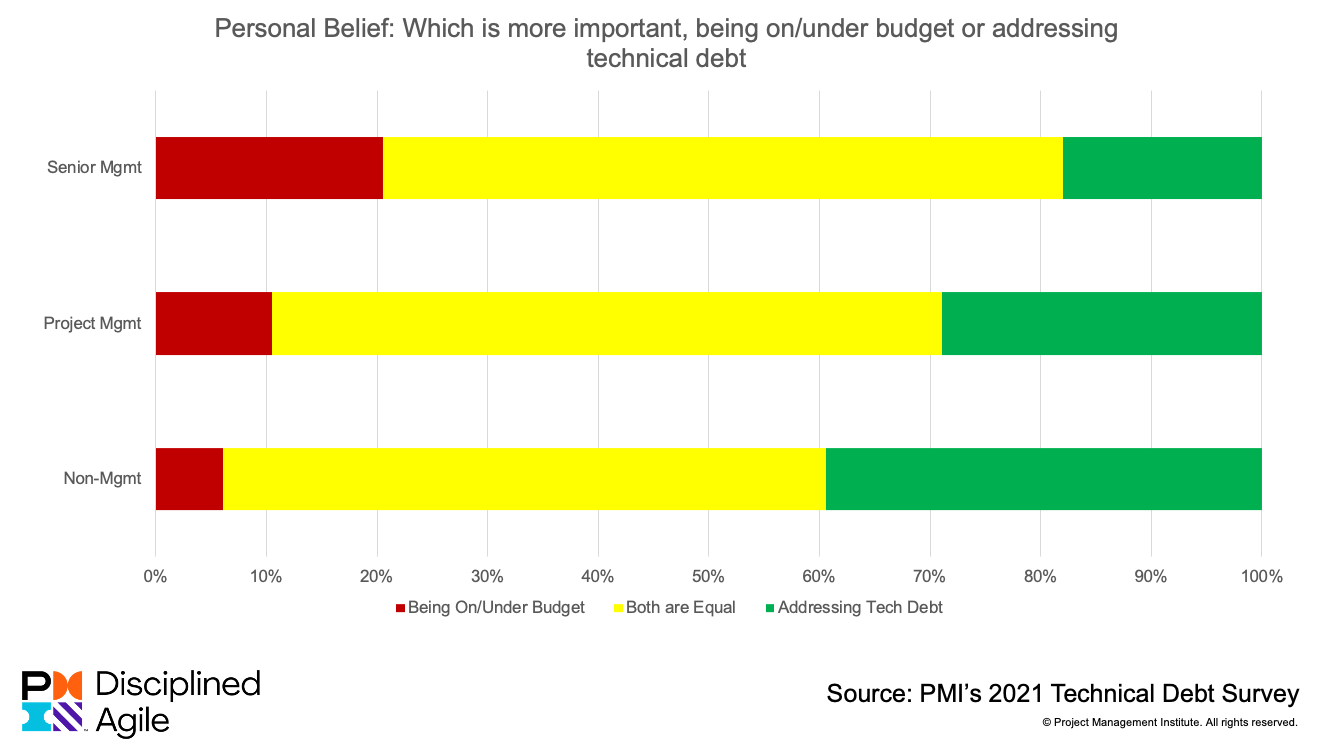
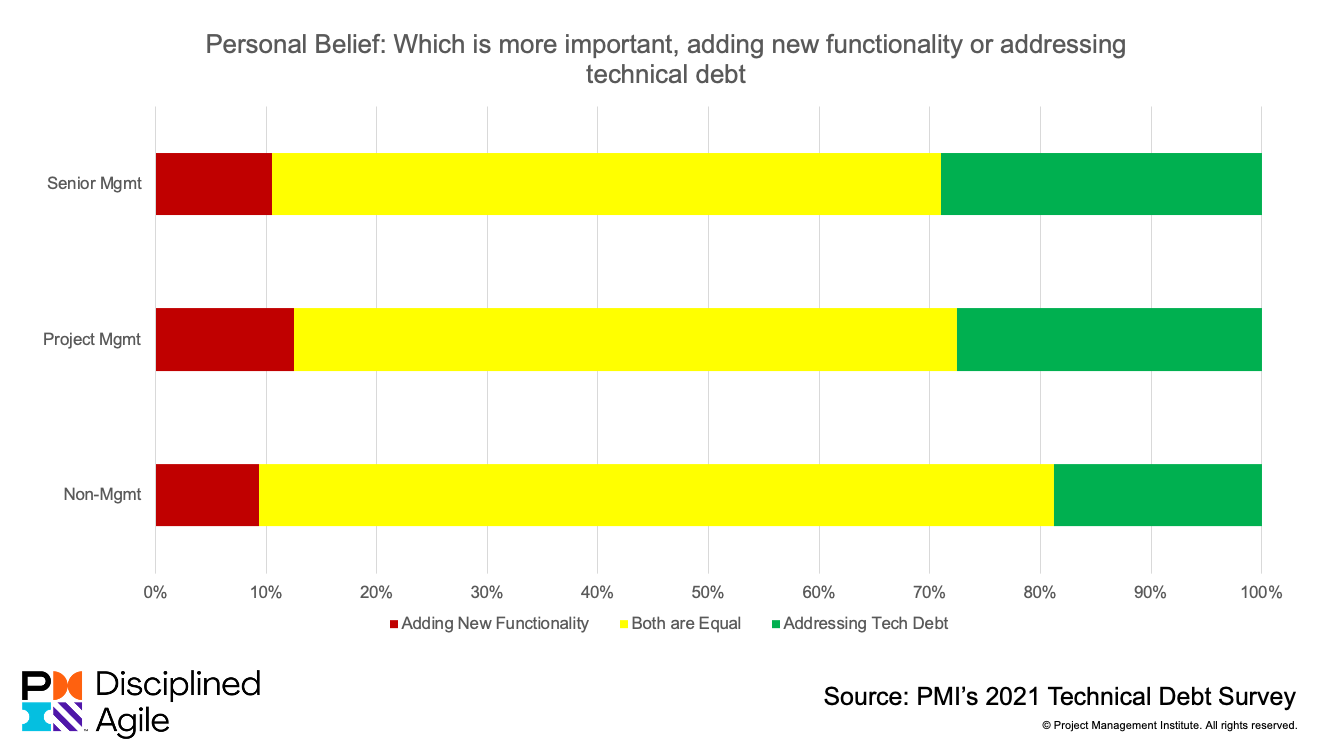
People Personally Believe Addressing Technical Debt is ImportantThe survey also included three questions that explored how people personally felt about how to prioritize addressing technical debt in comparison with other important management considerations. Figure 4 compares the way that people prioritize being on schedule versus addressing technical debt. Figure 5 compares the way that people prioritize being on budget versus addressing technical debt. Figure 6 compares the way that people prioritize delivering new functionality versus addressing technical debt.
Figure 4. Being on schedule vs. addressing technical debt.
Figure 5. Being on budget vs. addressing technical debt.
Figure 6. Adding new functionality vs. addressing technical debt.
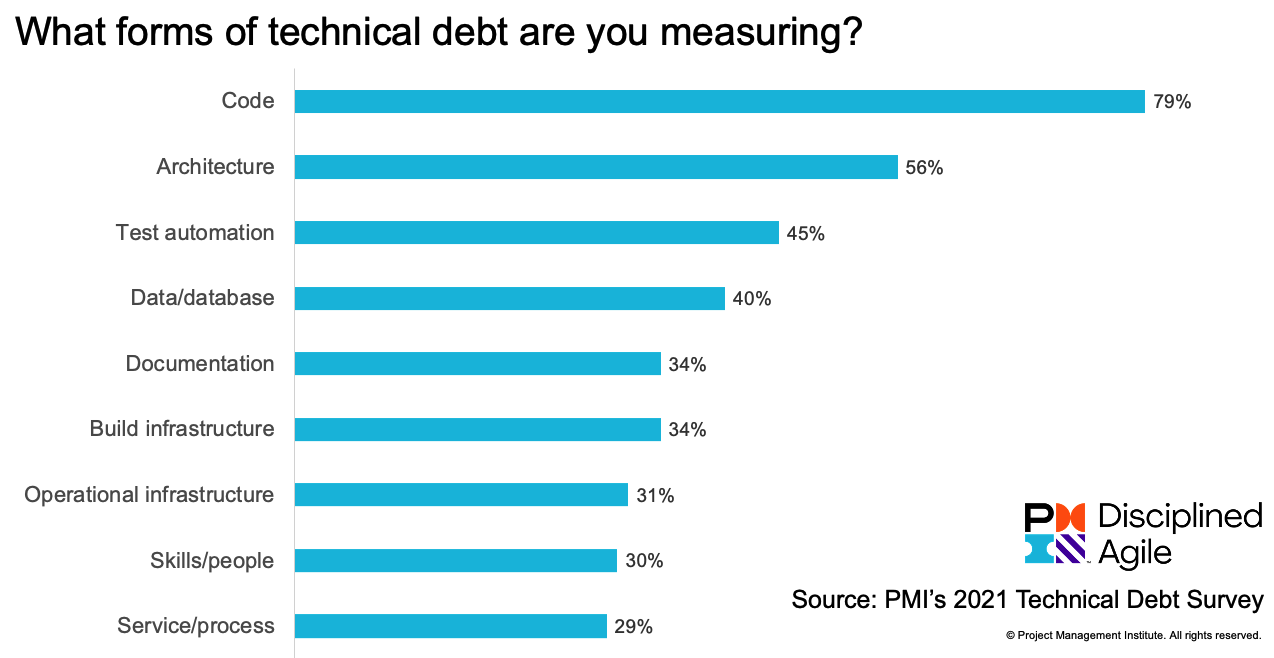
Technical Debt Measurement Needs to Become More RobustFigure 7 summarizes what forms of technical debt that organizations are measuring. Measuring technical debt in code is incredibly common because of the prevalence of tools and the fact that technical debt is often seen as a code issue. But as you see in Figure 7 there are many more opportunities to measure quality levels of various artifacts, but unfortunately not everyone is taking those opportunities. In Disciplined Agile (DA) we have two measurement-oriented process blades, Measure Outcomes and Organize Metrics that provide great insights for how to organize your metrics strategy.
Figure 7. Measuring technical debt.
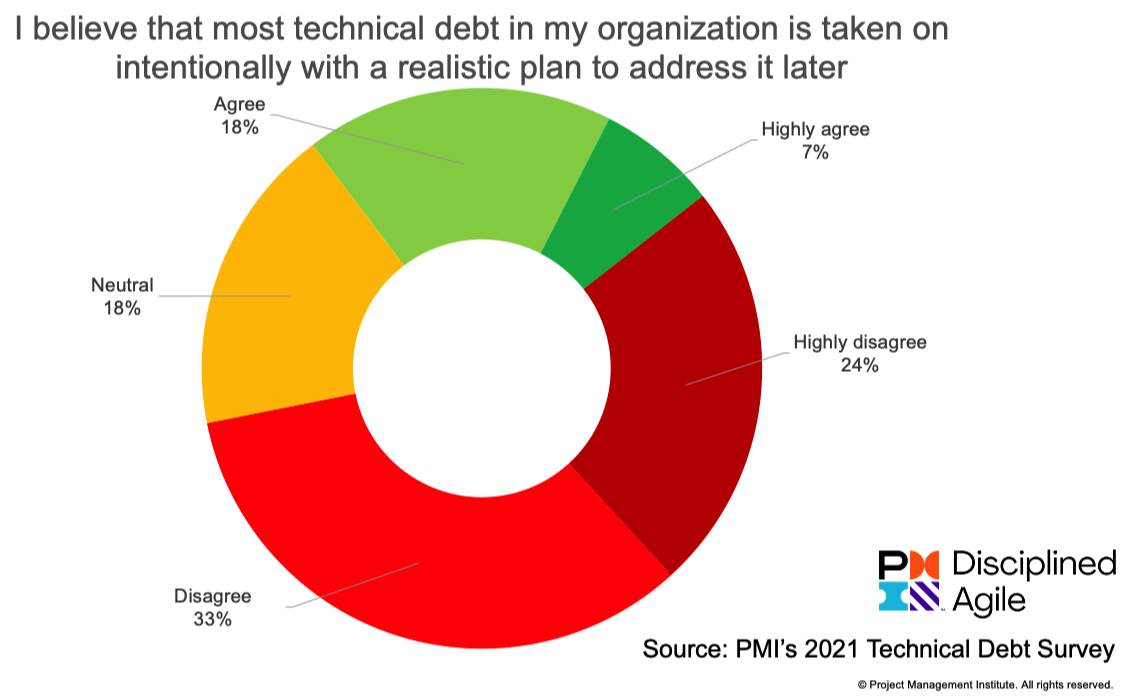
Is Technical Debt Taken on Intentionally or Accidentally?As Martin Fowler clearly points out with his Technical Debt Quadrant advice, you really want to take on technical debt intentionally. Intentional means that you take technical debt on in a prudent and deliberate manner where you understand the implications of doing so. Unfortunately, as you see in Figure 8, few organizations take on technical debt intentionally. This concerns me because it's a leading indicator that technical debt is getting out of control within organizations that aren't considering it intentionally.
Figure 8. Few organizations take on technical debt intentionally.
Technical Debt is a Management ProblemWe asked several questions about how well people agreed with certain statements. First the good news:
Now the bad news:
I believe that if we are ever to address technical debt effectively then management understanding about technical debt, and management behavior around it, needs to shift. My recommendation is to choose to deal with technical debt while you still have the opportunity to do so.
Technical Debt Resources
|