Introduction
Over the past number of months, I have been doing research into citizen development. In this blog, I will explore how citizen development can empower creative minds.
Entrepreneurship
Entrepreneurship is defined as the creation or extraction of value. It encapsulates the idea of setting up an enterprise to service needs. Traditionally, a multitude of steps must be taken if one is intent on becoming an entrepreneur. Research suggests that, at a minimum, most entrepreneurs must:
- Spot a gap in the market / find a large problem to solve
- Prototype the product / service
- Evaluate the product / service
- Identify the target audience
- Source Finance
- Consider risk
- Spend a lot of time & effort sourcing operational & human resources
- Create an enterprise.
My Ambition… but Reality Strikes
One of my lifelong ambitions was to become an entrepreneur. I am passionate about people and wanted to address the needs of those who are unfulfilled by adding value to their lives and making a meaningful difference. Until recently, my goal was clear. I was determined to take the necessary steps, and, ultimately create an enterprise that would address unfulfilled needs… until I discovered citizen development.
Citizen Development
Citizen Development, is a phenomenon that enables any user to create applications without coding experience. As I said in a previous blog: “You do not have to be a software developer or an IT specialist to create an app anymore. Literally, anyone can create an application using citizen development if you have the appetite to learn.”
Key Insights
Over recent months, I have had the opportunity to conduct research into citizen development. During that time, I have learned a tremendous amount! Out of everything I have read and experienced, there were two key takeaways that stood out to me:
- Anyone with the appetite to learn can upskill and create applications that fulfill needs
- Organizations should leverage citizen development to gain transient advantages
Setting up an enterprise takes a huge amount of time and effort (not to mention the risk and liability that is involved). Since learning about citizen development, my entrepreneurial ambition has not changed, however, my roadmap has.
Same Ambition, Different Roadmap
Since discovering citizen development, I firmly believe intrapreneurship is my calling. I do not need to create an enterprise to fulfill unmet needs. I can leverage citizen development to create applications that will enable me to achieve the same goal. I do not need to take the traditional entrepreneurial steps. I need to continue on my learning journey and gain more experience with citizen development to achieve my ambition.
Intrapreneurship
“Intrapreneurship, unlike entrepreneurship, is a concept that says you have the resources in your employees to solve most of your business challenges. It is more than just the concept, it is the execution of actions and activities that increase productivity and profitability within a company” (Herrmann, 2021). Innovative employees are at the core of intrapreneurship.
They are creative people within the organization who are determined to solve problems and develop sustainable solutions. Intrapreneurs can easily leverage citizen development to realize their ambition. At a macro level, they can:
- Identify the business problem that needs to be solved
- Create a project proposal
- Ideate (via Really Round Robin sessions, Ideathons or Hackathons)
- Create and deploy the application
Why Intrapreneurs should Leverage Citizen Development?
Intrapreneurs can create apps that will meet specific needs, at a lower cost and in a fraction of the time it would have traditionally taken to create an enterprise to fulfill a specific need. By leveraging this capability, risk and liability is minimized. On top of that, you won’t have to source extraordinary amounts of finance or spend years establishing an organization.
Case Study
Let’s take a look at a case study example of an intrapreneurial mind that leveraged citizen development to fulfill a business problem.
 Posted
by Maelisa Woulfe
on: March 29, 2021 07:25 AM
| Permalink |
Comments (3)
Posted
by Maelisa Woulfe
on: March 29, 2021 07:25 AM
| Permalink |
Comments (3)
| By Mario Trentim
In my previous article, I described the difference between "doing" and "the management of doing." In a way, citizen development is a broad discipline utilizing business analysis concepts, agile project management, software development, innovation, lean startup, and technology to create the future of work by leveraging digital transformation in all life and business areas.
Too much for your brain? Don't panic. This article will lay out a simple plan based on five tips to quickstart your citizen developer career.
Understanding the "Big Picture"
Citizen development is here to stay. And the PMI Community plays an essential role in shaping what comes next since we are a community of change-makers (project managers, business analysts, agilists, and more).
Citizen development is more than a framework and is more than a toolkit. We may understand citizen development as a life skill since every person engages with different technologies daily. Digital literacy is required if you are a student trying to attend online classes and deliver homework. Digital skills are even more critical to your job, considering you have to collaborate and work productively in an entirely new way with virtual and hybrid teams. And digital maturity is foundational to business models and organizational strategy because stakeholders' experience and behavior changed completely (digital employee experience, digital customer experience, and more).
So, before your profession and career are disrupted,
what should you do to become a citizen developer?
Five Tips to Help you Become a Citizen Developer
- Join Citizen Development training
Every time I find a new topic of interest that might impact my work or my organization, I look for a foundational course from an accredited source. Information is so abundant nowadays that you become quickly overwhelmed by Blog posts and Youtube videos on a particular topic.
If you don't have any background, you will waste a lot of time figuring out what citizen development is from sparse materials. Unless you have a technology background or some familiarity with software development, I don't recommend unsupervised learning by yourself.

Figure 1 – Citizen Developer Foundation Course

Figure 2 – Citizen Development Handbook
So, tip #1 is to look for a book and training. What will you learn from the references above? You will learn the Citizen Development Framework, equipping you with tools and techniques, processes, and steps to define, plan, organize, and manage citizen development projects.
What's next?
You will need a low-code / no-code platform to experiment, prototype and build your applications.
- Experiment with the no-code platform
As I explained in my previous article, a no-code / low-code platform allows you to develop applications without being proficient in a programming language (Low-Code vs. Citizen Development).
Instead of writing code (Figure 3), a low-code platform allows you to choose and configure components by simply dragging and dropping what you need.

Figure 3 – Programming Language (Wikipedia.org)

Figure 4 – Low-Code Platform, Microsoft Power Platform example.
To experiment with a low-code platform, you have to pick one of your choices. That's the reason why the first step is to get a foundation course. You will learn what citizen development is, why it is essential, and what platforms you can choose. Below there is a list of low-code platforms for you to start exploring.
- Appian
- Boomi
- Creatio
- Mendix
- OutSystems
- Quickbase
- WaveMaker
- Microsoft
- Oracle
- SalesForce
Although I will provide you more examples and guidance on my future blog posts, it is time to join a community of practice and get to know your IT team.
- Get to know your IT team
One of the primary reasons behind the citizen development revolution is the shortage of professional developers. As technology moves to the center of business models and the world run on software, more and more products and services need technology.
End-users need help from IT to develop applications for a variety of reasons. In the past, the so-called power-users were people from the business with some IT experience, developing solutions to solve their departments' needs. These solutions could be those monstrous spreadsheets or other applications, sometimes causing more harm than good because shadow-IT might be very dangerous.
It would be best if you got to know your IT team as soon as possible. They are probably already experimenting with citizen development and using low-code platforms for software development. They will be capable of helping you understand when and how to use citizen development to your needs.
Also, bear in mind that some low-code applications might be so complex and large that you would need to go for the Assisted path or IT Delivery path, both described at the PMI Citizen Development framework (Figure 5).

Figure 5 – Hyper-Agile SDLC Paths (PMI.org)
I will describe the Hyper-Agile SDLC in detail and provide examples in future blog posts. For now, you have to understand that the Fast Track path is adequate for medium/low complexity applications that you can build on your own without help from an IT department.
My next tip is to focus on problems and opportunities at hand in your business unit to acquire citizen development skills. Keep in touch with your IT team for guidance.
- Plan solutions to achieve business objectives
When I mention "citizen development," many people get confused and do not know where to start. The best way to learn citizen development is to focus on specific problems you want to solve related to your organization.
Take employee experience, for example. Because of the pandemic, most of the organizations adopted remote work. Not all organizations had the time or competencies to plan appropriately. The final result is less than satisfactory.
Imagine you worked at a small office with 50 people. You probably didn't need a specific application for the employees to select a health plan. They could stand up and walk to the Human Resources person (or team) and pick a health plan from a spreadsheet. Now that your company grew to 100 employees, all of them working from home, it is time-consuming and frustrating trying to make a video call or sending an email to the Human Resources team to select your health plan. There you have an excellent idea for a citizen development project!

Figure 6 – Health Plan Selector, Microsoft Power Apps
There are many low-code sample applications focused on human resources, onboarding and hiring processes, reimbursement. Or you can build your app from scratch.
You will also find more examples for operations, sales, and any other area or processes in your organization. Don't forget to work closely with your IT team and to continue sharpening your skills.
- Continuously improve your development skills
Last tip: citizen development is a lifelong learning journey. As you get more experienced with the PMI Citizen Development Framework and proficient in using specific low-code platforms from different vendors, you may choose different paths.
One career path might be to become a citizen development architect, responsible for large citizen development initiatives, with broad knowledge and experience to architect complex solutions. Another career path might be to become a citizen development strategist, someone who is thinking of digital strategies and digital transformation to your business and your organization as a whole.
You may provide guidance and coaching to other citizen developers in your company since some organizations establish Citizen Development Centers of Excellence and Digital Transformation Offices, a topic I will discuss next week in my article. Stay tuned.
Join the conversation below in the comments and let me know your thoughts. Also, feel free to reach out to me at Linkedin.com/in/trentim.
|
Posted
by Mario Trentim
on: March 25, 2021 12:00 PM
| Permalink |
Comments (3)
| By Mario Trentim
I often receive questions related to technical aspects of low-code software development and architecture as if these topics were part of citizen development. In this article, I want to address the difference between “doing” and “the management of doing”.
Considering “citizen development” is a new concept, an analogy with project management might be useful. Take for example an engineering project, is it mandatory that the project manager is an Engineer? The answer is no.
Low-code Software Development
Low-code is a visual approach to software development. How is that possible? Remember a couple of years ago when you wanted to create a website? You had to write the instructions using HTML:
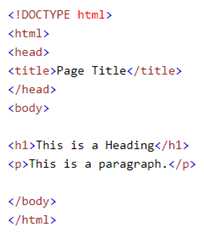
Figure 1 – HTML example.
Or maybe you would use PHP, a programming language, to develop your website. Low-code means that you can drag and drop components to build your application. In the example of a website, you may use a low-code platform like Wordpress, Wix, and others.
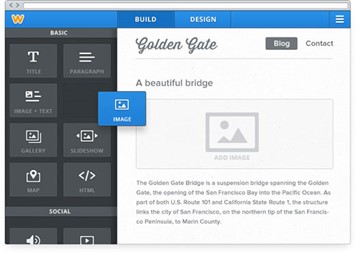
Figure 2 – WordPress Theme (Thimpress.com)
Low-code platforms are evolving. With the aid of artificial intelligence, you can develop a website by answering a few questions with zero-code, using Wix ADI for example. And you don´t have even to drag and drop components using a low-code editor.
 Figure 3 – Creating a website with ADI or Editor at Wix.com Figure 3 – Creating a website with ADI or Editor at Wix.com
In summary, low-code abstracts and automates every step of the application lifecycle to enable rapid delivery of a variety of software solutions, not only simple websites. In my next posts, I will provide low-code examples in different industries, processes, and professions.
According to IBM Research, “Software development refers to a set of computer science activities dedicated to the process of creating, designing, deploying and supporting software.”
In other words, software development, either low-code or pro-code,
refers to a set of computer science technical activities.
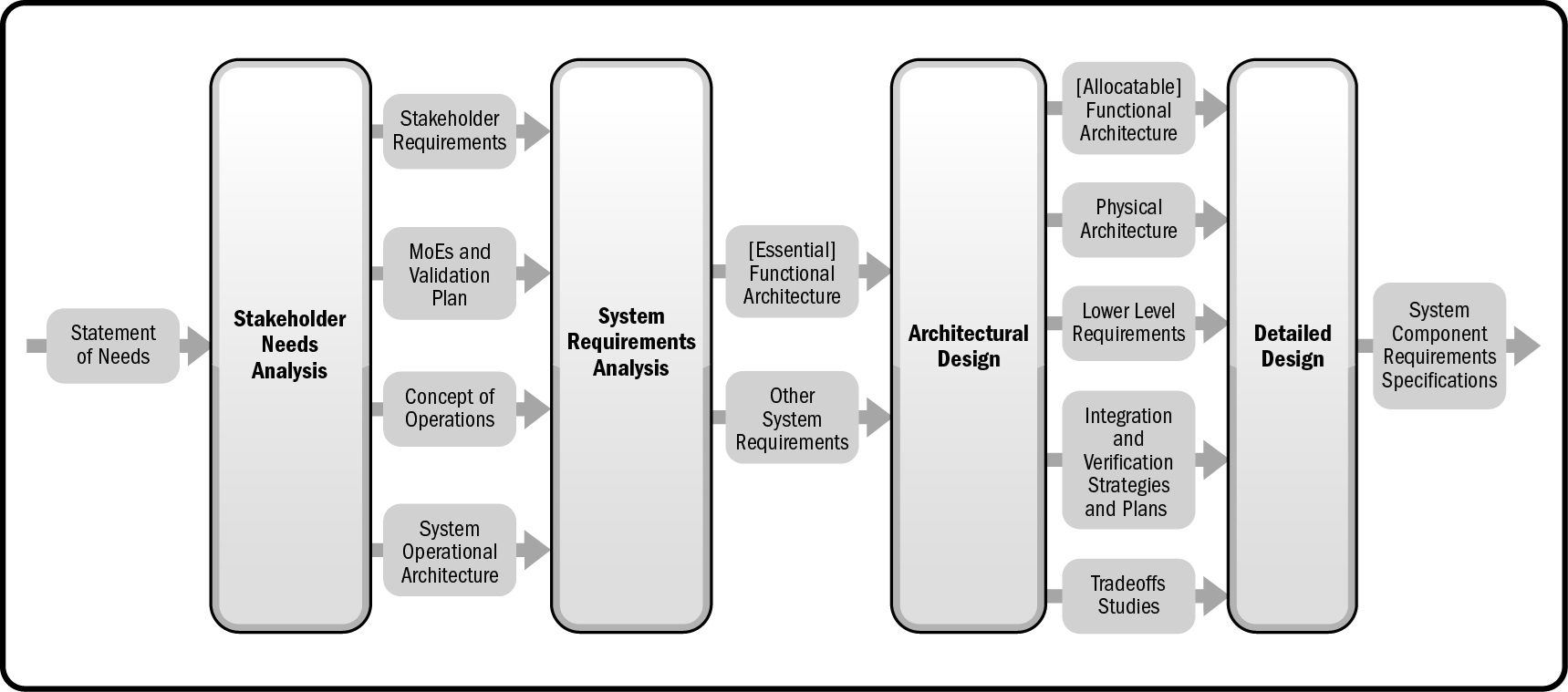
Figure 4 – Systems engineering processes overview (Trentim, 2015)
As a technical discipline, software development includes designing and building the final result. Figure 4 describes a high-level overview of the technical processes to develop a system. There are best practices and approaches tailored to software development
Software development is the “doing”. Citizen development is the “management of doing”.
While software development focuses on architecture and best practices to design, build, deploy, and service an application, citizen development, in analogy to project management, focuses on understanding the needs, engaging stakeholders, combining best practices to manage the project constraints delivering value.
Citizen Development
Because it is a new concept, there are various definitions and interpretations of “citizen development.” According to Gartner, “a citizen developer is a user who creates new business applications for consumption by others using development and runtime environments sanctioned by corporate IT.”
The PMI Citizen Development framework takes a step further. A citizen developer is someone who applies business analysis, project management, and agile project management best practices combined with lean approaches and prototyping with the help of technical experts and IT, as needed, to make digital transformation a reality.
In other words, it is much more than low-code software development. A citizen developer can understand how a variety of technologies, including the Internet of Things, Artificial Intelligence, and more, are impacting business models, processes, and the way we work. A citizen developer manages “technology and transformational projects,” keeping an eye on the big picture and trends.

Figure 5 – Citizen development.
If you pay attention the Figure 5, you will find steps beyond the software development cycle (“the doing” or application development). A citizen developer might work in partnership with professional developers and IT professionals to build the solution. The citizen developer might be responsible for feasibility and value delivery, besides assembling the team and organizing the work, following best practices from the PMI Citizen Development framework.
As you can imagine, the “citizen developer” role, profession,
or function has yet to be defined and tailored
by organizations according to their needs.
In some organizations, all team members are citizen developers, meaning they understand the PMI CD framework and technologies (including, but not restricted to, low-code). Other organizations may have business analysts and business users embracing citizen development competencies. Project managers can benefit by acquiring citizen development skills and working closely with citizen developers.
Conclusion
PMI is embarking on a journey to transform the way we work. Citizen development is a framework, and it is also a broader concept. To conclude with an analogy, remember the Agile Manifesto and the revolution that started agile practices? Back then, agility was people working on small IT projects. Currently, we have agile Human Resources, agile organizations, and agility are everywhere. Agile is a mindset, a collection of behaviors and practices that are not confined to project teams. It is a way of work.
Citizen development is a new revolution to transform agile
and business processes by accelerating technology
adoption and digital transformation.
Stay tuned because next week, I will publish a new article with tips and tricks on starting your career as a citizen developer. Let me know your thoughts on the comments below.
|
Posted
by Mario Trentim
on: March 19, 2021 11:14 AM
| Permalink |
Comments (1)
Citizen development: Critical Success Factors for Implementing Low-Code/No-Code Enterprise Applications
The idea of business users building their own solutions is not necessarily new. People have been self-building a myriad of solutions for decades. Albeit in recent years, citizen development enabled by technologies such as low-code/no-code tools have created better, more agile and sustainable ways to build more flexible solutions.
According to Gartner’s “Magic Quadrant for Enterprise Low-Code Application Platforms” research, by 2024, developing apps with low-code tools will account for approximately 65% of all application development. Certainly, this reflects not only the rise in low-code platforms but also, the adoption of a citizen development approach to developing business applications.
The emerging and growing adoption of citizen development is a great opportunity for organisations to respond to some of the obstacles associated with traditional software development. Delayed solution deliveries due to the lack of resources and high costs of implementing new systems are the two main issues citizen development can address.
Citizen development helps overcome these issues counteractively by empowering users with or without programming knowledge to create enterprise applications. With that said, the degree of success when implementing LCNC technologies ultimately depends on certain factors.
What are the critical success factors of implementing low-code/no-code technologies?
Organisations that understand the power of low-code/no-code technologies are captivated by the positive outcomes generated by citizen development. However, the absence of an implementation strategy to successfully adopt LCNC tools can create significant setbacks for companies.
For instance, some organisations get stuck in an experimental mindset with the fascination of the new technologies that they are adopting. As a result, they overlook the initial reason for adoption in the first place and have no sense of direction on where their digitalisation journey is going.
There are three fundamental factors to consider when adopting LCNC technologies: Technology, People and Continuous Improvement.

1- Technology
The choice of any new technology is always a complex decision to make for any organisation. It requires a lot of research by teams that are usually under tight timelines. So they might end-up looking at the wrong kind of information and choosing the wrong technology for the task.
We are at a time where the technology you adopt today needs to be able to evolve with you tomorrow.
Therefore, approaching this decision-making process without a bird’s-eye view only exposes you to potentially wrongful choices.
In my experience this choice has an immense weight on the success of any no-code/low-code digitalisation project. I see 3 main reasons why companies fail to choose the right technology:
1- Lack of flexibility
A major point of consideration regarding flexibility is who the platform is intended for. Low-code technologies may be a bit more suitable for IT professionals, helping them to shorten software development cycles and gain faster time-to-market. No-code tools on the other hand empower non-IT professionals/citizen developers to quickly and easily create enterprise applications, essentially freeing up time in the IT department.
While low-code and no-code have their differences with regards to programming requirements, each provider has its own individual differentiations. A tool without flexibility can provide a major source of complication and stress for teams. Even worse, it might only be discovered in later stages of building a solution. This often leaves teams having to fight or “hack” the platform.
It is important to choose something that not only provides the typical building blocks that no-code platforms offer, but that also provides the flexibility to build new building blocks in case the need arises.
2- Require a combination of tools to complete a task
Some existing low-code and no-code technologies that are available to help create enterprise applications require multiple tools to be put together just to provide the final product teams need.
As an example, you could have one tool for workflow, one tool for forms or interface development and another separate tool for process monitoring or analytics.
Although individually those tools work well, it creates the need for a higher degree of abstraction, architectural thinking and unforeseen incompatibilities or delays in building these digital solutions.
So, you might have initially adopted a low-code or no-code development platform for one or all of the following reasons:
- Reap the substantial cost saving benefits
- Shorten software development life-cycles
- Save time for more complex projects
However, working across a variety of separate tools can very much reverse the benefits. The delays that can occur due to the incompatibilities between the multiple tools can in actuality incur additional operational costs, extend the software development cycles and prevent any time from being preserved.
Therefore, it is vital to endorse a low-code or no-code tool that will allow you to efficiently complete tasks within a single platform.
3- Difficulty handling complex projects
Many no-code solutions follow a flowchart visualization methodology for building the actual solution. This works well when solutions are simple in nature. However, when it grows in complexity with many conditional branches and condition groups it becomes hard to visualize and maintenance becomes a challenge in itself.
Essentially, you should adopt a low-code or no-code development platform that is capable of navigating complexities.
2- People
Closely involving the right people in any business project or task is vital in order to generate best outcomes. No-code tools in particular reduce the gap in between the implementer and end-users of a business process. As a result, this creates an opportunity for a different composition of teams collaborating on projects.
Retrieving successful results when implementing no-code or low-code tools greatly depends on two aspects:
Stakeholders involved in a process must understand the process inside and out. The more in-depth knowledge into the process, the better the performance will be and the easier it will be to maintain long-term.
Before conducting any task in a business, it is imperative to approach the task knowingly and prepared. Thorough planning will assist with delivering a successful implementation and deployment.
3- Continuous Improvement
Lastly, maintenance is key.
Continuous improvement spans across the technology, the people and the process in question. Any project that you implement will require upkeep and much course correction. Fortunately, low-code/no-code technologies are easy to maintain.
Choosing a provider that allows you to be fast and pro-active will make improving processes much easier. Ensure that the technology allows you to be agile. The ability to build new features and test in multiple environments and even deploy those changes to a single process instance can be crucial.
Conclusion
In today’s competitive market, organisations are constantly seeking better approaches to addressing their digitalisation needs. IT departments continuously face high volumes of requests and demands, followed by mountains of pressure to complete these tasks.
No-code and low-code technologies are the answer to relieve these pressures by enabling citizen development to drive innovation. When this is implemented in the right way, the benefits for organisations are numerous.
Have you adopted a low-code or no-code solution? If so, please feel free to share your success below.
|
Posted
by Derya Sousa
on: March 17, 2021 11:44 AM
| Permalink |
Comments (6)
| Welcome to the world of citizen development.
Hello. I am glad you’re here.
Amazing things happen here in the world of citizen development. If you’ve been in it a while, you already know how incredible it is to watch an idea go from spark to screen in record time, sometimes in days or even hours. If you’re new to citizen development, get ready for a fascinating new reality.
This post is the fourth in a series, introducing you to elements on the PMI Citizen Development Canvas (see the graphic below). These posts are designed to inspire you, share tips and insight, and further your knowledge and experience. I welcome your questions and encourage you to share your own stories.
In the last post, I introduced you to the Suitability Assessment: Suitability Assessments- what are they and why are they important. In this post, I will introduce you to Business Analysis and Design.

You can learn more about the Citizen Development Canvas and its various components in the book Citizen Development: The Handbook for Creators and Change Makers.
Business Analysis and Design - what it is and why it is important
Business Analysis and Design gives you, the Citizen Developer, a crucial understanding of how potential applications will work within an organization.
With this understanding in mind, you can develop applications that are less likely to interfere with other parts of the organization. Insight into the broader impact of citizen development will also increase the likelihood of building an application that attracts organization-wide buy-in and wider adoption.
This involves the identification of stakeholders across all departments who are currently involved in the workflow and asking them relevant questions. It also involves reviewing documentation, understanding departmental dependencies, and gathering currently used documents, forms, and spreadsheets.
In some cases, processes have never been officially documented, they’ve just been handed down. In other instances, your questions and discoveries may reveal glitches or possibilities that were previously unknown.
When your app shifts the way something is done in one department, other departments can be affected, too, like it or not. Consider this ripple effect. You want your end-users to adopt the solution, so take the time to ask the right questions and gather the information you need to really understand the way work is done, by whom, and when. Giving thoughtful consideration to the wider impact of the proposed solution is at the heart of Business Analysis and Design.
Common questions in this process include:
- What are the current workflows?
- What systems (technology or otherwise) are currently used in the workflow/process?
- How has this workflow been managed in the past?
- What actions are being taken and by whom?
- Who and what will be impacted by this proposed solution?
- What are the relationships or dependencies between departments?
- Who is involved in the current workflow/process?
- What documents are being used or generated?
The answers to these questions will give you insight into the ripple effect your app will have throughout the organization. By analyzing all this information, you are better equipped to design an app that caters to the organization’s needs.
Let’s take a look at how one company used Business Analysis and Design and the results.
Situation: A design company wanted to create an app to support and upgrade their workflow process as it pertained to ordering, proofing, and tracking signage for its clients.
The company offered full design services for onsite events. The internal departments involved were creative services, customer success managers, event managers, shipping and delivery, onsite production, and accounting.
The Citizen Developer had already gathered information on goals and pain points but realized some critical information was missing. She wanted an even deeper understanding of what each department needed and what “workarounds” had been created to meet those needs. To gain that understanding, she began by asking questions to relevant stakeholders and gathering documentation.
Before: The Citizen Developer quickly learned that the files being created and managed were large with many tabs, all containing complicated formulas and instructions. The team members were consistently modifying the spreadsheets to meet their needs and then copying and pasting data between the original and their version. This resulted in broken formulas, inaccurate data, and missing information. In addition, documents were being shared without adequate security protocols, requests, update tracking was inconsistent, and the teams spent enormous amounts of time verifying all the data and tracking the versions.
Process: The Citizen Developer collected what was considered the “original” spreadsheet template, plus many of the “modified” versions created by the different departments. Sample project timelines, forms for submitting signage requests, email and document templates (both internal and external), checklists, image samples, task lists, and various types of reports were also gathered during this process.
By collecting these documents, the Citizen Developer:
- Identified additional data points to include in the app
- Gained further perspective of user types and their needs
- Clarified proofing and approval process
- Revealed data security issues
- Clarified cross-functional workflows and dependencies
- Revealed shadow IT systems
- Uncovered outdated processes and workflows
- Identified additional stakeholders
After: As a result of this analysis, the Citizen Developer was able to design a user-friendly signage management app that exceeded the expectations and requests of the team. It became the single source of truth for all stakeholders, provided the change-tracking that was needed, and offered the appropriate user views and security. The app improved the accuracy and consistency of data entry, was mobile-friendly, and provided real-time updates. It was an end-to-end solution that was quickly adopted by all teams because the Citizen Developer took the time to listen, explore, and implement based on the findings.
Business Analysis and Design Tips:
As a Citizen Developer, I rely on the Business Analysis and Design process to discover how workflows are really working and what the team needs to do their job. This process also minimizes misunderstandings and builds user adoption.
Some tips from my experience:
- More information is better because you can always rule out what’s unnecessary. If this is a brand new process, there may not be much documentation.
- As the Citizen Developer, you will get to flush it out. Lean on the relevant stakeholders to get you what you need.
- Talk to as many people who are involved in the process as possible.
- Gather historical data to see what’s been tried in the past.
Business Analysis and Design can provide huge insights for the Citizen Developer and will prove extremely helpful when building the app.
What did this post spark in you? Are you new to no-code/low-code app creation? Have you used a suitability assessment in your company? Please post your questions, comments, and stories below.
Want to learn more? Grab your copy of the newly released book Citizen Development: The Handbook for Creators and Change Makers.
|
Posted
by Jody Temple White
on: March 15, 2021 05:41 PM
| Permalink |
Comments (1)
|
Wow! They've got the internet on computers now!
- Homer Simpson
|
|




