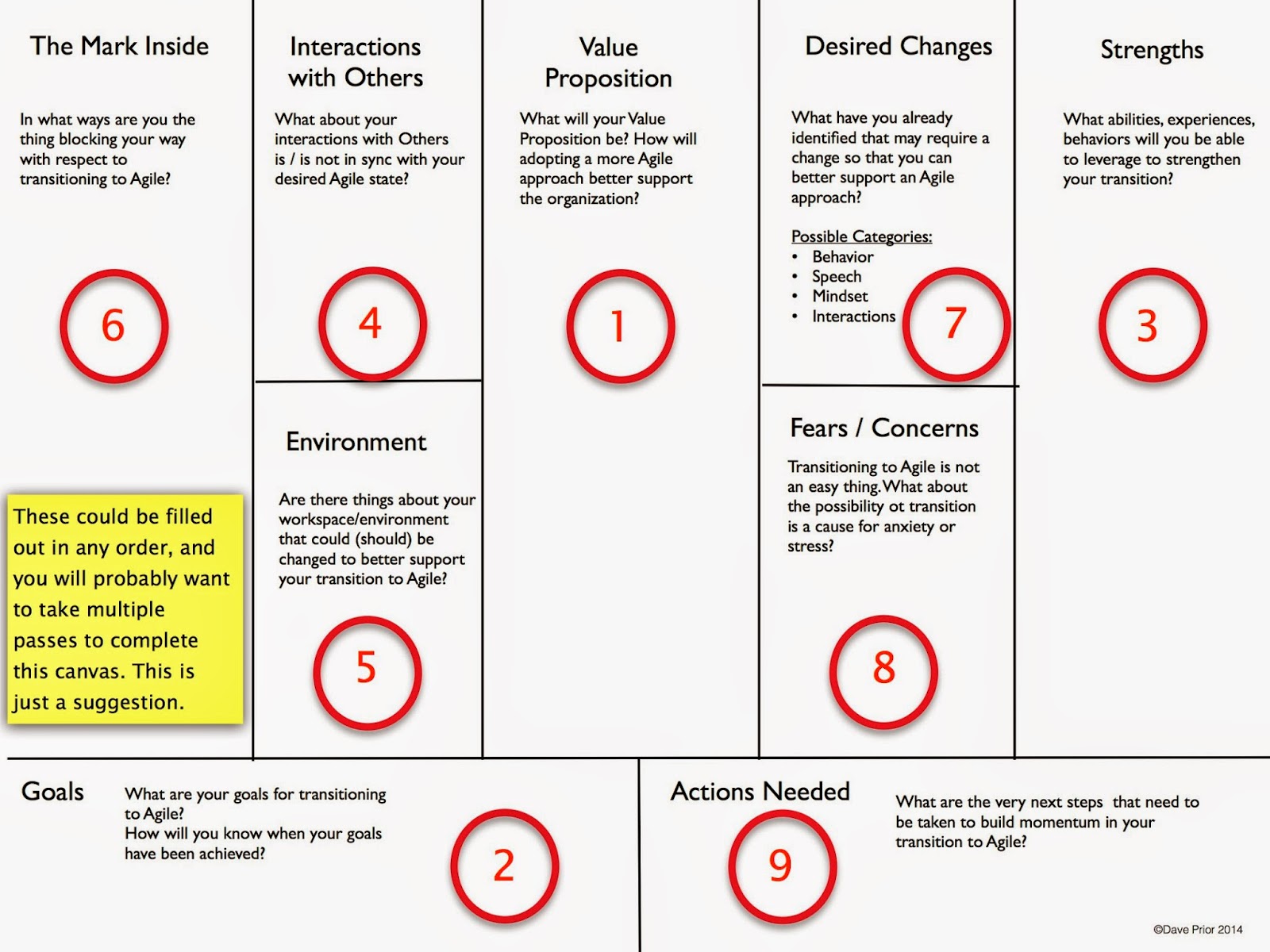
Personal Agility Canvas
From the Drunken PM Blog
by Dave Prior

Drunken Boxing for Project Managers
“The main feature of the drunkard boxing is to hide combative hits in drunkard-like, unsteady movements and actions so as to confuse the opponent. The secret of this style of boxing is maintaining a clear mind while giving a drunken appearance.”
Yeah... just like that… but with network diagrams and burndown charts… and a wee bit less vodka.
Recent Posts
Certified Agile Leadership Training with Olaf
Don Kim - I Think, Therefore I Plan
Agile Coach to Agile Gamer - Peter Saddington
Scrum in School - A Case Study of Grandview Prep's Transformation
Forecasting Tools Based on Team Performance with Troy Magennis
Categories
20 Hour,
211,
4-Hour Body,
4-Hour Chef,
4-Hour Work Week,
Aakash Srinivasan,
Aaron Smith,
Adam Weisbart,
Adrian Howard,
Agile,
agile digitalpm,
Agile 2010,
agile 2015,
Agile Alliance,
Agile Classroom,
Agile Enterprise,
Agile Mindset,
agile reporting,
agile transformation,
Agile Tribes,
agile2015,
AgileClassroom,
AgileCraft,
AgileScout,
AgileThinking,
Ainsley Nies,
Al Goernor,
Al Shalloway,
Alistair Cockburn,
Angela Harms,
Anna Beatrice Scott,
Ansley Nies,
AOW4PM,
apocalypse now,
apple,
art of war,
Bas De Baar,
Bas Vodde,
Beyond Legacy Code,
Big Visible,
BigVIsible,
bimodal,
Blackie,
Bob Sarni,
body language,
book review,
braintrust,
branding,
breaking gantt,
Brent Beer,
Brett Pohlman,
Brian Bozzuto,
brian flatow,
brian rabon,
business agility,
Business Model Canvas,
CAL,
Canvas,
capacity,
carson pierce,
Catherine Louis,
Center for Non-Violent Communication,
Certification,
Certified Agile Leadership,
certified scrum trainer,
Charter,
Chet Hendrickson,
Chris Li,
Chris Spagnuolo,
Christine Neidhardt,
cloud,
cloud worker,
co-working,
Coach's Clinic,
Coaching,
cochlear,
commitment,
conteneo,
Corkulous,
coworking,
Craig Larman,
Crystal,
CSM for PMP,
cst,
DAD,
Dan Brown,
Dan Greening,
dan markovitz,
data,
Dave Prior,
David Anderson,
David Bernstein,
David Bland,
David J Anderson,
Dean Leffingwell,
Dean Stevens,
Declan Whelan,
Denise Jacobs,
Dennis Stevens,
Designing Together Design,
Dhaval Panchal,
diana larsen,
Digital Pm Summit,
Digital Project Management,
digitalpm,
Disciplined Agile Delivery,
Distributed Teams,
Docs to Go,
Don Kim,
dpm,
dpm2013,
drunkenpm,
drunkenpm radio,
eduscrum,
Eight Shapes,
Elizabeth Harrin,
Elizabeth Hendrickson,
Elizabeth McClellan,
EMEA,
emotional intelligence,
Enterprise Scrum,
Essential Scrum,
esther derby,
EVEF,
Evernote,
Every Voice Engaged,
Experience,
Explore It!,
facebook,
field guide,
FIRM REPORT,
First 20 Hours,
Flight Levels,
Flipboard,
FocusedObjective,
forecast,
Forecasting,
Frank Illenberger,
Fred George,
fred kluth,
funny garbage,
Gil Broza,
Github,
Global Economics,
Grandview Prep,
Greg Balestrero,
GTD,
Happy Cog,
Heartline,
Howard Sublett,
hybrid,
I Think Therefore I Plan,
Iain Frasier,
ICAgile,
Idea Wallets,
improvisation,
InfoQ,
InspireMe!,
International Consortium for Agi,
IOS4,
iPad,
iPad 2,
iPad2,
iPhone,
IT&T SIG,
J.B. Rainsberger,
James Tamm,
Jason LIttle,
Jean Tabaka,
Jeff Patton,
Jesse Fewell,
Jessica Kerr,
Jessie Shternshus,
jim benson,
Jim Tamm,
johanna rothman,
John D Cook,
john miller,
Judith Lasater,
Jutta Eckstein,
kamal manglani,
kanban,
kanbanfor1,
kanbanpad,
Kate Sullivan,
Kathy Compton,
Ken Rubin,
Ken Schwaber,
Kenny Rubin,
Keynote,
Kuala Lumpur,
lacey,
Large Scale Scrum,
Larman,
Larry Maccherone,
Larsen,
Lasater,
Leadership Meeting,
LeadingAgile,
lean,
Lean Kanban University,
Lean Systems Engineering,
LeanKit,
Leffingwell,
LESS,
Liftoff,
Linda Rising,
Lithespeed,
Livescribe,
Livescribe Pulse,
LSE,
Luis Garcia,
luke hohmann,
lyssa adkins,
Mac,
MacWorld,
Macworld 2011,
Magennis,
Malaysia,
Malaysia Scrum User Group,
Management,
Managing the Unmanagable,
Manny Gonzalez,
Marc Johnson,
Marshall Rosenberg,
Martin Rosenqvist,
mashup,
matt barcomb,
MDEC,
Merlin,
metrics,
Michael Sahota,
Michele Sliger,
Mickey W. Mantle,
Mike Cohn,
Mike Cottmeyer,
Mike Sutton,
Mike Vizdos,
mitch lacey,
MITPM,
Mode 1,
Mode 2,
modus cooperandi,
Modus Institute,
Nanette Brown,
Natalie Warnert,
Nic Sementa,
NLP,
Non Violent Communication,
Non-violent communication,
Notes Plus,
NVC,
off shore,
Offshore,
Olaf Lewitz,
Open Space,
Oredev,
Øredev,
oredev 2013,
organizational agility,
Organizational Change,
overcommitment,
pag,
Panda Transport,
Panel Picker,
Papershow,
Paul Hammond,
personal agility canvas,
personal branding,
personal kanban,
personal productivity,
personal project management,
personal projectmanagement,
Peter Saddington First15,
Petra Goltz,
Philamade,
pk,
Planning,
PM4Girls,
PMI,
PMI Portugal,
PMP,
podcast,
Product Owner,
Product Ownership,
productivity,
Project,
project management,
project manaqement,
project planning,
Project Potion,
Projects At Work,
projectshrink,
ProjectWizards,
Projet Chartering,
pulse,
rachel howard,
Radical Collaboration,
reach the peak,
Rebecca Wirfs-Brock,
review,
riaan rottier,
Ricardo Vargas,
Robyn Meredith,
Ron Jeffries,
Ron Lichty,
Rosenberg,
SAFE,
Safety,
Sam Barnes,
Sanjiv Augustine,
Scaled Agile Framework,
Schneider and Associates,
School of Rock,
Scott Ambler,
Scrum,
Scrum Alliance,
scrum but,
scrum field guide,
Scrum Gathering,
Scrum in Education,
Scrum in Schools,
scrum in waterfall,
ScrumFest,
Shane Hastie,
Showing Up,
SK Khor,
social media,
SolutionsIQ,
sprint planning,
Steffan Surdek,
stephen denning,
Steve Elliott,
Stewart Copeland,
Story Mapping,
Sun Tzu,
Swarming,
SXSW,
SXSW2012,
Tabaka,
Team Performance,
Teams,
Telecommunications,
Telepresence,
Temenos,
Test Obsessed,
the adstore,
The Ron,
theStrayMuse Louder than Ten,
Thierry Holoweck,
Things,
Thushara,
Tim Ferriss,
Tim Ferriss Experiment,
To Be Agile,
Tobias Mayer,
Tom Kealey,
Tom Mellor,
Tom Perry,
Tom Smallwood,
Tribes,
Tricia Broderick,
troy magennis,
TrustTemenos,
twitter,
Unicat,
User Stories,
value,
VCP,
video conferencing,
Virgin Digital,
Vivek Angiras,
VLC,
vocal technique,
waste,
Weisbart,
What We Say Matters,
Wijewardena,
WIzewerks,
Woody Zuill,
WWDC,
yellowpencil,
Zeldman
Date
“What kind of idiot would ask if they were Agile enough? What a stupid question.” ~ Random guy I heard talking at an Agile conference
It was kind of a troublesome moment for me. (I have lots of those whenever I find myself in a crowd of Agile banty roosters who all want to play “mine’s bigger” with their Agile-ocity-ness-ish.)
For me, I ask that question all the time. I wear my hard earned experience in waterfall as a scarlet PMP that has been seared into my soul. When I was taught about project management, the guy who taught it to me started by saying “When I’m done with you… everything is a project.” And with that statement, he began to re-wire my brain. Once you learn to see things the way a PM does, there is no going back. And no matter how long I practice Agile, that will always be with me. I am a project manager in recovery.
|

|
|
http://www.gonemovies.com/WWW/MyWebFilms/Oorlog/ApocalypseWillard1.jpg
|
The good part is, that if the question is “How will I know when I am Agile enough?”, I already know the answer… Never. The moment you think you’ve got Agile sorted is the moment you stop being Agile. So, somewhere in the back of the Agile recesses in the brain, you need to nurture your inner Captain Willard.
I often get the question about being Agile enough when I am teaching Scrum classes to PMs or people who are deep with the waterfall. They either want to know the “right” way to do it, or when they are “done” learning it and can say they are Agile.
I decided to work on developing some way to address the question that would be both simple to use and relevant for people who are just stepping out of the waterfall, and people who have been doing Agile for awhile.
The Personal Agility Canvas is modeled after the Business Model Canvas (which you can learn more about here. I kept the basic layout because I thought it might be somewhat familiar and that might make it easier for people to digest. The Personal Agility Canvas is intended to be a way to personally reflect on your ability to improve your approach to Agile, establish goals, and develop a plan to achieve them. It is not intended to be something you fill out and then are done with. This is intended to be something you come back to again and again as part of your own personal effort to inspect and adapt.
In teaching the Personal Agility Canvas during the Redefining the PMO workshops, I have found that not providing step by step guidance on how to work through the different boxes can cause result in stress for the students. To help get you started, here is an example which has the boxes numbered (hyperlink) according to the order in which I normally teach them. In my own use of it, I begin with Goals, then move to Value Proposition and iterate repeatedly through the boxes until I am ready to define the Action Plan. If you are creating your own Personal Agility Canvas, I’d recommend working through the boxes in whatever way makes the most sense to you. As long as you end up with a measurable Action Plan at the end, it’s all good.
Here is a description of each box:
Value Proposition - What is your personal value proposition? How do you deliver value to the teams you work with, the company you work for? How will an improved approach to Agile better enable you to serve your team(s) and organization?
Goals - What are your goals with moving further in your transition to (adoption of) Agile? How will you know when these goals have been achieved? (You need clearly measurable acceptance criteria for this to work.)
Strengths - What abilities, experiences, behaviors will you be able to leverage to strengthen your transition to Agile?
Desired Changes - What have you already identified that needs to change in order for you to better support an Agile approach? (This may include things like behavior, speech, mindset, interaction patterns)
Fears/Concerns - What about Agile, or transitioning to Agile causes you anxiety or stress? How does this impact you?
Interactions with Others - In evaluating your interactions with other people (teams, clients, peers, etc.) what is not in sync with the principles of Agile? (You may need assistance with seeing this clearly.)
Environment - What about your (individual and/or team) physical workspace is impeding your ability to improve your approach to Agile?
The Mark Inside - This will likely be the most difficult box to complete. William Burroughs said “Hustlers of the world, there is one Mark you cannot beat: The Mark Inside.” The idea here is that whether we are aware of it or not, each of us is often our own worst enemy. We con ourselves without even realizing it. How are you blocking yourself from truly embracing an Agile approach? Where are you second guessing the thought leaders who have come before you or hedging your bets with your practice?
Actions Needed - After completing all the other boxes and re-reviewing your goals, you need to develop a plan. These should be concrete steps you can take in the short term to help you move towards becoming more Agile. Once you have completed these actions and achieved the goals, it is time to start your canvas all over again.
One last suggestion. Find someone you trust who will give you honest feedback and hold a mirror up to show you things you cannot see. By sharing your canvas with an accountability partner, you can make a commitment to someone other than yourself. Ideally, each of you will pursue these goals because this is something you are committed to, but there may be times when your motivation lags. When this happens, it may help to have a voice in the back of your head reminding you that you promised someone you’d have it done and that they are expecting to hear from you when it is finished.
And on that note… here is an example of a Personal Agility Canvas I completed for myself earlier this Spring.
If you have any feedback on the canvas, how it is working for you, what might make it better, please let me know. I do not expect that this current version will be the final one, but it is the one I am using now.
If you’d like to learn more about how the Personal Agility Canvas works, it is part of the session I am leading for Redefining the PMO and I will also be giving a presentation on it at Agile 2014 this summer.
Posted on: June 30, 2014 10:24 PM |
Permalink
Comments (3)
Please login or join to subscribe to this item
What a cool idea! I might try using this with some managers.

Dave Prior
Trainer/Consultant| LeadingAgile
New York, Ny, United States
Thanks Allison. If you have any questions along the way, just let me know. After you've worked with it, any feedback you can offer would be great too.
Dave

arlene trimble
Assistant IT Director| Local Government
Alamo, Ca, United States
I like one-page templates. Your Personal Agility canvas is worth emulating as it is easy to understand and easy to use! It is also non-threatening at first glance even though it touches on the soft skills of PM. I will certainly use this. Thank you for sharing.
Please Login/Register to leave a comment.
|
Half this game is ninety percent mental.
- Yogi Berra
|