Project Management 2.0
by Dave Garrett

New technologies, concepts, and Web 2.0 tools are popping up everywhere. How can you use them to help your project team collaborate, communicate - or just give your project an extra boost? [Contact Dave]
Recent Posts
Are You Prepping For The PMP 24/7?
Are You Just Too Darn Busy?
Eliciting Requirements... Creatively!
What To Expect When Your Stakeholders Are Expecting
8 More Templates to Save You Time
Categories
Advice,
Certification,
Collaboration Tools,
Decision Making,
Estimating,
Interviews,
Learning,
Management Approaches,
New Templates,
Personal Productivity,
PM Software,
PPM Software,
Presentation Tools,
Reporting Tools,
Requirements Management,
Research,
Risk Management,
Scheduling Software,
Security,
shameless self promotion,
Techie Tools,
Time Killers,
Time Tracking Software,
Training,
Virtual Team Tools,
Web-based Tools,
workshops
Date
|
Situation: Your team is getting pulled in too many different directions.
 We often say that knowing the right questions to ask can be even more important than "knowing" what to do. For that reason, in Project Headway, each task level activity includes a section called "Questions that you ask of yourself and others". The section below lists out the questions we currently include in Resolving Resource Conflicts. What would you add or remove from this list? We often say that knowing the right questions to ask can be even more important than "knowing" what to do. For that reason, in Project Headway, each task level activity includes a section called "Questions that you ask of yourself and others". The section below lists out the questions we currently include in Resolving Resource Conflicts. What would you add or remove from this list?
Questions to ask of yourself and others
Is the conflict:o Internal within the project?
Between your project and another project?
External of the project?
Who are the parties involved in the conflict?
What is the root cause of the problem?
What are the perceptions of the various parties?
How can the problem be solved to everyone’s satisfaction?
Is this a problem that you can solve or does it need to be escalated to the level of the project manager?
Are there larger political or organization issues at play that are driving the conflict?
Task Description
Settle conflicting resource assignments and allocations within the project team and across external projects. Ensure that the project‘s interests are protected so that the project may be executed as planned. This activity may arise at any time during the project.
Settle intra-team resource conflicts internally. Settle inter-team resource conflicts across external projects with the project sponsor and other development coordination organizations that exist within the enterprise. Projects may be related in several ways, through task dependency links or through the sharing of common resources. Consequently, events outside of the control of the project manager may affect the project, causing unexpected delays. Monitor these inter-project relationships carefully to ensure that the use of shared resources adheres to agreed upon allocations.
Tips and Tricks
Like in life, there will be conflict, particularly if you work in a functional organization where you don’t have direct control over the project staff. In that event, consider some of the following:
-
Barter. There may be an opportunity to barter or ‘horse-trade’ with other projects or departments to ensure you get the resources you need when you need them. Other organizations may need something that you have or can facilitate getting. There may be an opportunity to share or assist each other, whether now or going forward.
-
Consider escalation. In some cases, you may have to escalate resourcing conflicts to the sponsor. Part of the role of the sponsor is to ensure that your project receives adequate funding, schedule and resources. If you are not getting what you need, you many want to call in the sponsor to help.
|
Posted on: October 03, 2013 09:38 AM
|
Permalink |
Comments (3)
|
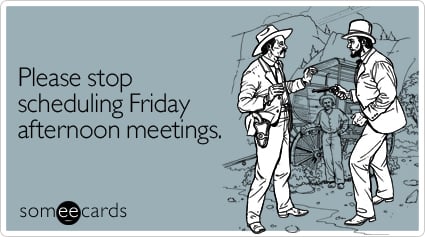
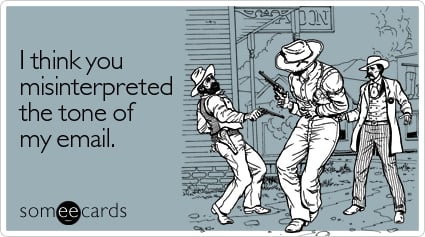
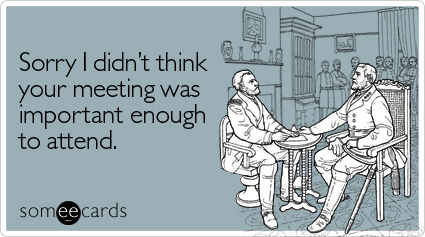
Situation: You could use a laugh
You might not want to send the following cards to people you work with, but they're still funny. Others your team members might want to send to you.. (If you'd actually like to send one, just click on it.)


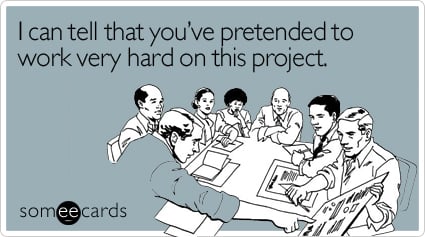

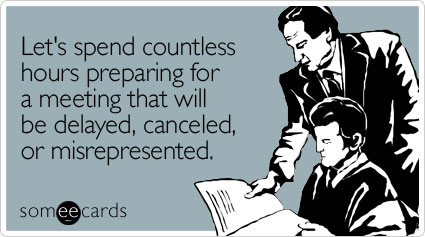
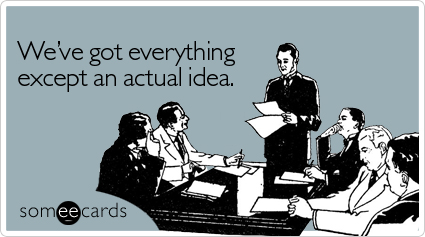









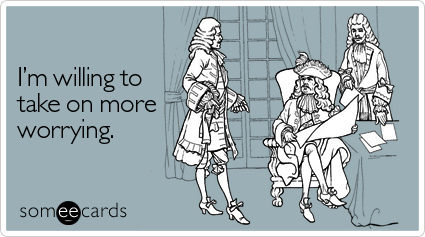





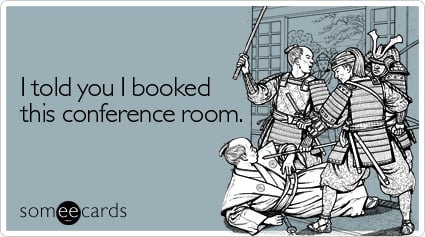
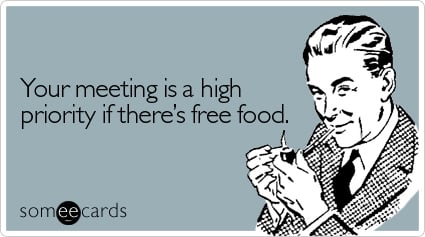

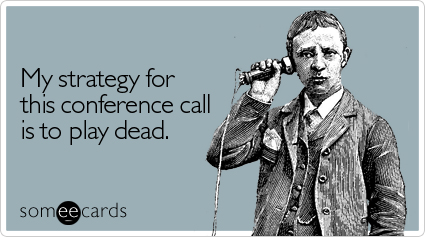
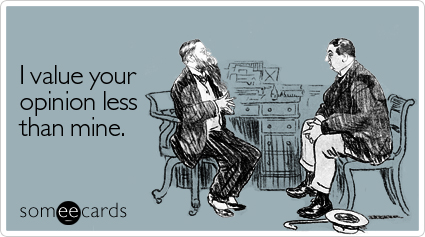





|
Posted on: September 20, 2013 08:03 PM
|
Permalink |
Comments (23)
|
Situation: You need your team to come together quickly.
 We often say that knowing the right questions to ask can be even more important than "knowing" what to do. For that reason, in Project Headway, each task level activity includes a section called "Questions that you ask of yourself and others". The section below lists out the questions we currently include in Creating Incentives for Teamwork. What would you add or remove from this list? We often say that knowing the right questions to ask can be even more important than "knowing" what to do. For that reason, in Project Headway, each task level activity includes a section called "Questions that you ask of yourself and others". The section below lists out the questions we currently include in Creating Incentives for Teamwork. What would you add or remove from this list?
Questions to Ask of Yourself and Others
To better understand how to create incentives for teamwork, consider asking yourself the following questions:
-
How are you encouraging teamwork on the project?
-
Are your team members working well together?
-
Where are their areas of conflict?
-
Do you understand what needs to be in place to promote teamwork on this team?
Consider asking your HR person, trusted colleague, or the team member the same questions.
Task Description
Build a team; develop teamwork. Encourage individual participants to work with others as a team, giving the team the authority to act within their level of responsibility. Facilitate communication between individuals and foster an attitude of cooperation. Ensure that team members have a clear understanding of their own tasks, the tasks assigned to other team members, and the relationships between the two. Let the team balance individual empowerment and group collaboration. Allow individuals to control their own style of work, while encouraging team members to develop methods of coordination.
Consider team assignments carefully. Weigh individual strengths and weaknesses carefully in making team assignments. Vary the roles played by each individual and the groups of individuals who work together as a team on project tasks. Reward effective teamwork.
Tips and Tricks
Obviously, you want to encourage people to work more as a team. Consider the following:
-
Understand incentives. Before you go and offer incentives, be sure that people actually see it as an incentive. Offering the team tickets to an upcoming soccer game may appeal to some people, but not everyone. Find out from the team what they appreciate and value as incentives and means of recognition.
-
Vary partners. There may be opportunities to have people work together as partners or in smaller groups. Vary the groups on a periodic basis to given people the opportunity to work closely with others on the team.
-
Caution: Don’t change things too often. Change for the sake of change is not always a good thing. If things are working really well, consider staying in a holding pattern for a while longer.
|
Posted on: September 19, 2013 01:07 PM
|
Permalink |
Comments (0)
Happy September & thank you again for being Members of the ProjectManagement.com community!
Download these quick before they're back in the PREMIUM library! These are all examples of premium content available 24/7 to our Premium Members. However, they are free to every registered member through Friday, September 20th. We hope these make your life a bit easier – helping us fulfill our mission of making YOU more successful. If you are not already a Premium Plus member but would like to be,Premium Plus membership is available at a $50 discount using the code "KEEP50".
The following premium templates are available to all ProjectManagement.com members until 9/20. We hope you find them useful.
Stakeholder Relationship Organizer (NEW THIS MONTH!)
PREMIUM DELIVERABLE
By completing and referencing this template, you will gain an improved understanding of the project from the perspective of each stakeholder. You will find this template indispensable throughout the project for managing and getting the most out of your stakeholder relationships.
Change HEADWAY Change Readiness Document
PREMIUM DELIVERABLE
This document provides a high-level Change Readiness Summary to be inserted to the Business Case. For smaller projects the Change Readiness Assessment may be more useful to relate this change to the other changes planned or underway in the area of the organization affected, contributing to the cumulative change picture. For large projects this represents a key element where absolute clarity is required at the senior decision-making level prior to embarking upon detailed planning of the change.
Requirements Candidate Summary (NEW THIS MONTH!)
PREMIUM DELIVERABLE
This planning guide will help you with the review and selection of project requirements to be included in the current scope. All requirements candidates are captured here, along with some basic information about them. Each candidate is then scored based on a number of different factors. The completed template provides a validation that the requirements ultimately approved are the ones that are the most appropriate for inclusion.
Team Operating Agreement
PREMIUM DELIVERABLE
This Team Operating Agreement will document the team’s agreement around: values, decision-making, communication, problem-solving and commitments.
Project Closeout Survey Template (NEW THIS MONTH!)
PREMIUM DELIVERABLE
What is the most neglected phase of a project? Get help with your closeout survey using this template in combination with one of the many online survey tools available. The survey is easy to implement, repeatable, customizable, anonymous and valuable for getting better at what we do.
Sample RFP for Replacing an Information System
PREMIUM DELIVERABLE
Is your company about to select and implement a new information system? This sample RFP, taken from real life, was originally designed to address the current and future financial, trading and distribution operations needs of a large international company dealing with foreign countries, languages and currencies. But even if you don't have a large, international business, you'll find lots of good ideas on how to write your own killer RFP.
List of Common Schedule Risks
PREMIUM DELIVERABLE
This list and overview of common schedule risks will help you maintain vigilance against pitfalls that can interrupt, stop or ruin your software development project.
Application Maintenance Manual
PREMIUM DELIVERABLE
The Application Maintenance Manual presents information on your system and describes the programs in technical detail to assist the maintenance programmer. It is written for personnel who are responsible for the maintenance of the system and who need to understand the operating environment, security and control requirements.
Calculating Earned Value
PREMIUM DELIVERABLE
Earned value is a project technique you can use to monitor, track and report on the performance of any project. This document is a cheat-sheet of formulas you can use to confidently calculate earned value.
Calculating the Long-Term COSTS of a Layoff
PREMIUM DELIVERABLE
While no one likes to do it, laying off people sometimes is a cost-effective way of saving a business in a struggling economy. If you are thinking about laying people off (and we sincerely hope you don't have to), calculate the long-term costs involved in such a drastic move.
Calculating the Long-Term SAVINGS of a Layoff
PREMIUM DELIVERABLE
While no one likes to do it, laying off people sometimes is a cost-effective way of saving a business in a struggling economy. If you are thinking about laying people off (and we sincerely hope you don't have to), calculate the long-term savings your company could reap from such a drastic move.
Calculator for Multi-Criteria Decision-Making
PREMIUM DELIVERABLE
Here in Excel form is a handy calculator for multi-criteria decision-making (e.g. build or buy decisions).
|
Posted on: September 11, 2013 11:49 AM
|
Permalink |
Comments (1)
|
Situation: Your Company Needs to Invest More in Project Management Training
My last posting "Does Formal Training Matter", generated a lot of discussion and a really great solution from one of our members, Michael Stanleigh. It was good enough that I felt I had to share it with you. Another member had just asked how he measured training effectiveness...
"I have the participants bring their projects into the workshop. Commonly these are projects that are already underway, sometimes they're in trouble. As they learn how to scope it, form the team, develop the WBS, assess risk, etc. in the workshop, they apply the learning directly to their projects. I follow-up with them afterwards, managing any questions or concerns. In every case they have said that as a result of the training they got their projects completed within their constraints. Problems projects have been brought right on track. "
Some organizations have preferred to use generic project case studies. I still do the follow-ups to see how they have applied this knowledge to their actual projects. In every case they have said that they have measurably improved project performance. That is, they are managing them within their constraints of time, cost and resources.
In some instances I have gone in and completed an audit on their project and then helped to implement the recommendations. In one recent case, the project was significant in that if they didn't complete it on time the company thought they may not survive. It was beyond crisis mode. However, the audit got to the root causes of the problems and our coaching got it right back on track. It has been an enormous success for them. |
|
By Michael Stanleigh |
Would this approach work for you? Why or why not?
|
Posted on: August 20, 2013 12:59 PM
|
Permalink |
Comments (2)
|
"In the fight between you and the world, back the world."
- Kafka
|




