Rethinking Agile as Bold, Kind and Human


|
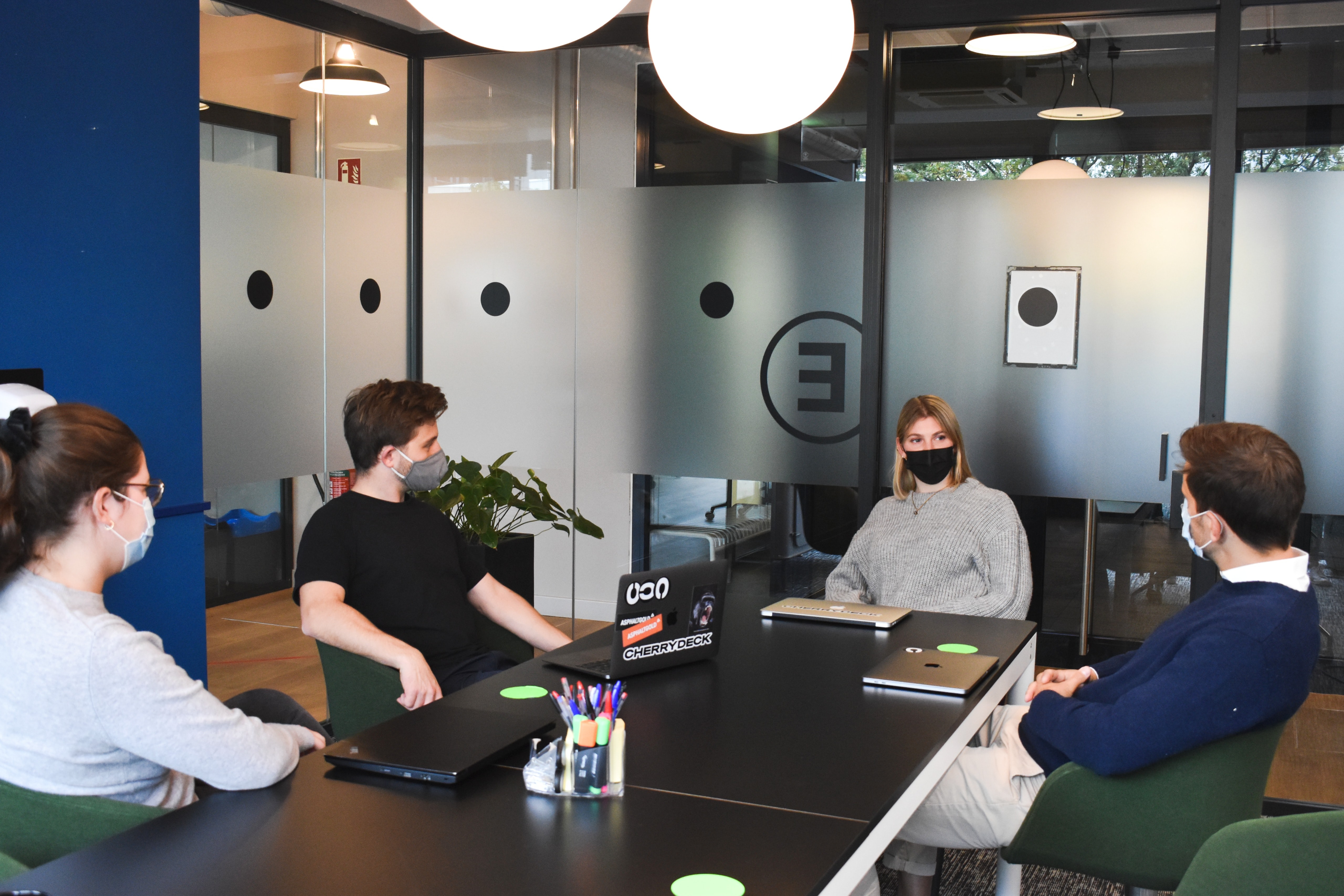
by Soma Bhattacharya Agile has become ubiquitous in project management, with teams using it to spark out-of-the-box thinking and drive countless projects across the finish line. Yet almost as quickly as the approach popped up, companies and project leaders began to oversell it—and what seemed to be a radical way of thinking has become mired in repetition and monotony. Agile was about being open and transparent, and people having the utmost importance in the process. Now, if you ask anyone about agile, it’s all about the three questions: What have you completed since the last meeting? What do you plan to complete by the next meeting? What’s getting in your way? There’s also the fear of being constantly monitored and the fact your performance is measured by your team’s velocity. Breaking out of this mold can prove difficult—who has the time? But with much of the world working from home, now might be the best chance to rethink agile as bold, kind and human. Let’s look at how that might work. Agile is bold: Challenge the process. Question what’s right for your team and be open to experiment. To get everyone engaged, encourage team members to ask questions. And try incorporating at least one fun icebreaker in each team standup to get people to open up and spark discussion. Agile is kind: Just because the data seems all over the place or you don’t achieve a desired project outcome, the team is not always wrong. Look for insights, do anonymous retrospectives, dig deeper and listen more. Avoid making assumptions. Instead, remain empathetic and open as you talk through challenges and navigate team members to arrive at a solution. Agile is human: Agile won’t work if the team can’t work together and it’s up to leaders to foster a sense of camaraderie. One way to build this spirit of collaboration and rapport is through simple exercises, like using a sticky note or sharable spreadsheet where team members anonymously write one thing they’re good at or that they’re proud of outside of work. Then allow other team members to guess that person’s identity. This isn’t about who wins, but it gets the entire team to communicate in a low-stakes environment. What are the biggest challenges your team has come across with agile—and how have you overcome them? |

Race to the Red Planet—And Why Mars Matters
|
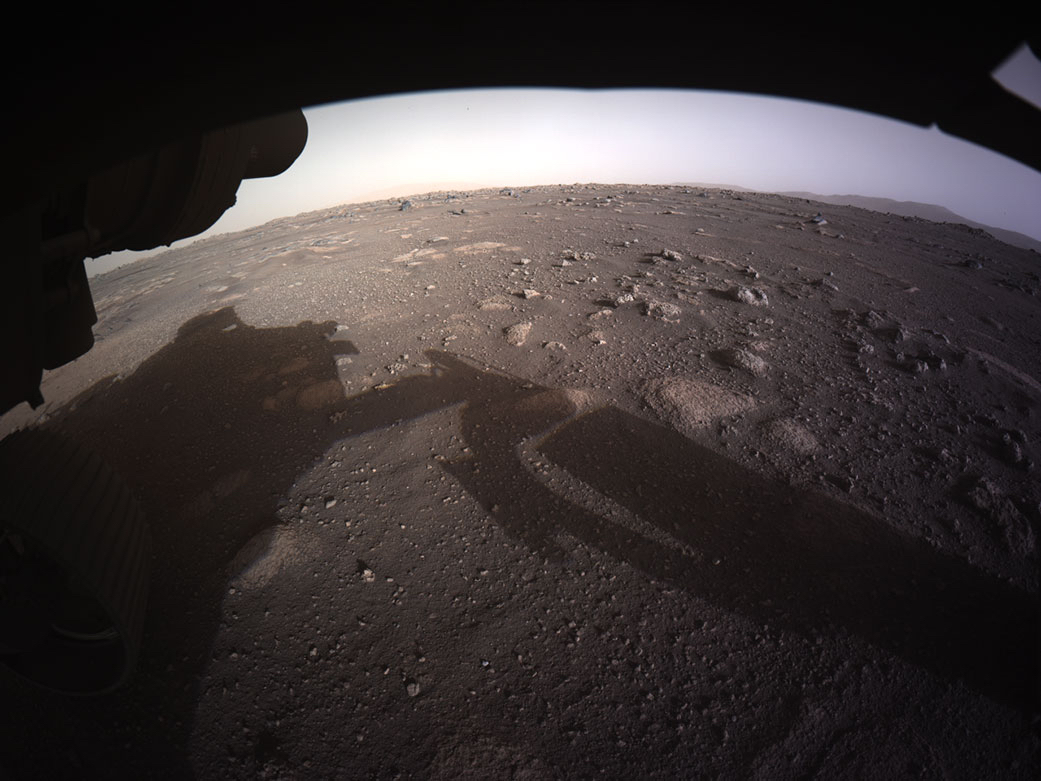
by Cyndee Miller Like most kids, I was obsessed with space. The thought of wandering the solar system blew my wee little mind. That sense of sheer wonderment hasn’t diminished—I’m a space geek for life. And there’s certainly been plenty to pique our interest. Look no further than PMI’s 2020 top 10 list for Most Influential Projects in space. And now there’s a new space race among the earthlings. Last July, Earth and Mars aligned at their closest points in two years—and space agencies around the world jumped at the chance to explore the Red Planet. Following successful launches last July, spacecrafts from China, the United Arab Emirates and the United States are all now officially checking out Earth’s closest neighbor. Another mission, ExoMars by the European Space Agency and Russia’s Roscosmos, aimed to join the action but ran into delays and must now wait for the next opportune planetary alignment in 2022. Following seven or so months of travel, the UAE’s first interplanetary spacecraft, Hope, and China’s Tianwen-1 were already exploring the Marian orbit by mid-February—and sending back amazing pictures of volcanoes and other features. And so it was that last Thursday I found myself cranking Bowie’s Life on Mars? and watching NASA’s Perseverance make its amazing touchdown. Entry, descent and landing is often dubbed the “seven minutes of terror” because of the precision required—and Perseverance was headed to “the most challenging Martian terrain ever targeted,” according to NASA. But the rover landed—and now even has its own Twitter feed. (Hobbies: Photography, collecting rocks, off-roading.) China’s space agency plans to place its lander and rover later this year. Some might question the wisdom of investing all these dollars, dirham, euros and yuan into such an esoteric pursuit, especially in the middle of a pandemic and one of the worst economic meltdowns of the past century. NASA alone estimates it spent roughly US$2.4 billion to build and launch Perseverance. It’s a fair question, although awfully short-sighted. And it also overlooks all the benefits space exploration can bring to life here on good old Earth. NASA estimates more than 1,600 innovations grew out of the Apollo space program—changing the trajectory on everything from mattresses to mobile phone cameras. (There’s a reason it came in at number 3 on PMI’s list of Most Influential Projects of the past 50 years.) And the Mars program is no slouch, either. Just one example: Autonomous navigation on the planet requires complex neural networks and deep learning algorithms—tech the space agency says can also be used here on Earth in cars, drones and toys. And it doesn’t stop there. Along with its trip to Mars, NASA is ready to embark on the first foray into extraterrestrial construction, joining forces with U.S. construction tech firm Icon, U.S. startup SEArch+ and Danish architecture hotshots Bjarke Ingels Group (BIG). The goal for Project Olympus is to develop a space-based construction system for creating small cities—complete with landing pads, habitats and roads—on the moon and eventually Mars. But all that pioneering of new frontiers “materially, technologically and environmentally” may also help advance construction on Earth, too, said Bjarke Ingels, BIG founder and creative director. “The answers to our challenges on Earth very well might be found on the moon.” At the same time, we have a slew of private companies— SpaceX, Blue Origin, Virgin Galactic—plotting out the business of space tourism. Now that coffeemaker Lavazza and the Italian Space Agency figured out how to make zero-gravity espresso, I’m good to go. Do I expect to be packing my bags for an interplanetary trip anytime soon? Nah. For right now, though, the Mars missions spark new ways of thinking—a much-needed dose of joy and astonishment to an exhausted humankind. And that’s some impressive ROI. What do you think of the Mars projects? Can they help teams here on Earth deliver more innovation? |
5 Must-Know Megatrends for Project Leaders
|
by Cyndee Miller Will 2021 truly be the year of epic charcuterie? Or maybe it’s the citizen care pod? Searching for The Next Big Thing has sent me down many an internet rabbit hole. And truth be told, the ROI is often not great. So in the spirit of uber efficiency, I present PMI’s latest report: Megatrends 2021. It has the scoop on the big trends, but it’s also specifically curated for project leaders so you can see how these tectonic shifts are actually playing out across projects. “We know the world changed significantly in 2020, but our research confirmed the long-term impact of how these trends are changing how the world does business,” said PMI President and CEO Sunil Prashara. “There is virtually no industry and no geography that is untouched by the five megatrends outlined in this report. From COVID-19 to the climate crisis to the mainstream use of AI, these forces are driving change across sectors, requiring leaders to embrace new ways of thinking and working. As changemakers in their organizations and communities, project leaders are in a unique position to tackle these challenges and embrace new possibilities.” Without further ado, here are the 5 big megatrends you should be watching: No doubt, this one’s pretty obvious. The health impact alone is staggering: More than 2.3 million people have died as of early February. But it’s also the way that the virus has exposed deep systemic inequalities in income, wealth, employment, healthcare access and digital access that's forcing companies to rethink and reinvent. Megatrend in action: Learning Passport “The world of education got knocked 30 years ahead overnight,” said Mac Glovinsky, program manager at UNICEF. With schools in more than 190 countries closed, he and his team worked with Microsoft, the University of Cambridge and Dubai Cares to quickly expand an existing digital platform that would meet the pandemic-fueled demands of stuck-at-home students in underprivileged areas. Again, this one shouldn’t be a big shocker, but the pandemic put it front and center—and made it abundantly clear that we’re running out of time. Perhaps the biggest existential threat humanity has ever faced, the climate crisis can be mitigated only with ambitious, innovative initiatives—and the project talent to make those plans reality. Megatrend in action: Stella McCartney The ecoluxe designer began testing out a new tool from Google Cloud that uses data analytics and machine learning to give brands a more comprehensive view of their supply chain. For sustainability-driven McCartney, the project is an opportunity to lead the notoriously wasteful fashion industry in better measuring the impacts of its raw material sourcing on air pollution, greenhouse gas emissions, land use and water scarcity. CIVIL, CIVIC AND EQUALITY MOVEMENTS I’m old enough to remember a time—and it wasn’t that long ago—when organizations taking a stand on social issues was considered bad business or strictly the province of more “progressive” companies. The massive global protests of 2020—the latest in a decade of large-scale protests covering a whole host of societal issues—changed all that. Silence is no longer an option—and change is a question of when, not if. Megatrend in action: Bandages for All As discussions over diversity and inclusion dominated, leaders of Johnson & Johnson’s Band-Aid brand released a new line of bandages representing non-white skin tones. It was actually a retread of a previous project—that happened to be in lock-step with consumer sentiment growing louder by the day. The century-old brand had previously released a range of bandages in multiple skin tones in 2005, but discontinued them three years later. Smaller companies had tried to fill the gap, but the new project is a powerful statement from a major consumer brand. SHIFTING GLOBALIZATION DYNAMICS Emerging markets have rocketed onto the global stage. But these up-and-comers need serious infrastructure and education investments to avoid being mired in middle-income status—and to help their large, young populations find decent work. That’s where project leaders can really make a difference. Megatrend in action: UN Office for Project Services To move the needle in emerging markets, the organization invests in a range of projects, from improving irrigation in drought-stricken countries to improving internet access. “Every project is different but they all follow the same logic: create sustainable opportunities in the community to generate revenue and reduce poverty,” said Farhad Abdollahyan, head of the org’s project management office. MAINSTREAM ARTIFICIAL INTELLIGENCE AI is now table stakes for many companies. Even my Yves Saint Laurent lipstick will soon use AI to deliver a bespoke hue just for moi. While that’s lovely, the seamless integration of algorithms into peoples’ daily lives means encoded opinions don’t get noticed, let alone questioned. To combat bias being built into AI, project leaders need to double down on building diverse teams and including different POVs and perspectives. Megatrend in action: BigUp.AI Leaders at UK global creative agency AnalogFolk saw how language could affect how people are perceived—and that women often choose wording that makes them sound passive. So the agency developed its BigUp.AI tool that uses natural language processing and machine learning to analyze blocks of text and offer users more powerful wording. The world is only beginning to ponder the post-pandemic reality, but there’s no doubt these five megatrends will dominate The Project Economy. And it’s up to project leaders and changemakers to be up on emerging developments so they can find business opportunities—and make the world a better place. How are you seeing these trends manifest on your projects? |
Project Controls for an Unknowable Future
|
by Lynda Bourne One thing we learned from 2020 is that it's difficult to make predictions, especially about the future. (Danish physicist Niels Bohr’s words from 1971 still ring true.) Still, the world doesn’t stand still, and project managers need to keep looking ahead. That’s the whole purpose of a project controls function: to produce information that helps us make decisions about the future. In many respects, project plans (schedules, budgets, etc.) are similar to economic forecasts. For decades, both have been used to make predictions more academically rigorous through mathematical techniques. The problem is these models are suited to the stationary physical world, where everything that happens is governed by the unchanging laws of physics—or to games of chance, in which the probability of something happening can be calculated fairly easily and accurately. They do not neatly apply to the intricacies of a dynamic project or economy. Two leading British economists, professor John Kay of Oxford University and professor Mervyn King, a former governor of the Bank of England, recently launched a critique of the unrealistic assumptions their peers have added to conventional economics in the book, Radical Uncertainty: Decision-Making for an Unknowable Future. Their view is that making predictive models more mathematical does not improve the accuracy of the predictions. The models assume the decision-maker and all of the other actors will follow the logic underpinning the model. But we all know the people being modeled do not behave rationally and rarely, if ever, actually work to the plan. Kay and King call this type of modeling “small world,” as the right and wrong answers can be clearly identified. Projects (and economies) operate in a “large world” occupied by consumers, businesses and government policymakers, and characterized by what they call “radical uncertainty.” People in the large world have to make decisions based on a small part of the information actually needed about both the present and the future. Most of the time we can never really know if we made the best decision, even after the event. Fortunately, like Alice in Wonderland facing the appearing and disappearing Cheshire cat, people are very good at coping with uncertain situations. And it’s amazing how often we get it right. Kay and King conclude: “Our knowledge of context and our ability to interpret it has been acquired over thousands of years. These capabilities are encoded in our genes, taught to us by our parents and teachers, enshrined in the social norms of our culture.” Human intelligence is effective at understanding complex problems within an imperfectly defined context, and at finding courses of action that are good enough to get us through the remains of the day and the rest of our lives. They are not necessarily the best solutions, but they’re ones that are good enough. So where does that leave project controls? We have predictable tools such as earned value, critical path and the like built on the basis of predictable calculations. Unfortunately, these calculations are rather bad at accurately predicting actual future outcomes. But is the imprecise information useful? My thinking is that control tools can provide useful insights, but only if you accept there will always be a difference between the prediction and reality as the future unfolds. How do you use project controls to chart paths forward into the unknown? |

How Will You Become a Better Project Leader in 2021?
|
by Dave Wakeman, PMP I’ve worked on political campaigns, in sports, in theater, in ticketing, in marketing and a lot more. I like to consider myself a good example of all the ways a Project Management Professional (PMP®) certification can be helpful in industries of all sorts. Over the last month or so, I did some research to figure out how I could grow my skills in 2021. While the focus of my research directly related to my work as a marketer, the data still has some utility for project managers. First, the details. In looking to see what CEOs thought of their marketing departments, I found that in a survey of over 500 mid-to-large businesses, 80 percent of CEOs didn’t trust their marketing departments. That was stunning and I went to look to see what I could make out of it by checking out the marketing and strategy folks to see where their heads were. In a sample of just over 1,100 marketers, 73 percent were looking to grow their businesses in 2021, 40 percent don’t have a strategy and 53 percent who want to grow don’t know where to start. I’m sure you’re wondering where I’m going with this. Project managers should pay attention to these numbers for a few reasons. First, in our roles, we have to win the support of our sponsors. I don’t know if the number of sponsors who are uncertain about what their project leaders are doing is similar to my research findings, but the bigger question is: Are we making certain that we have the trust of our sponsors? The second point here is that we need to know what we want to achieve—and we need a plan to get there. That’s reflected in the marketing survey: Folks know they want to grow, but about 40 percent of them don’t have a plan to get started. As project professionals, this hits close to home, because if we aren’t careful, our plans get overrun by other activities. It’s our job to always keep our goals in mind as we move forward. Finally, if we don’t know where we’re heading or how to get somewhere, it’s totally fine to ask for help. In fact, doing our jobs well means we need to ask for help. For me, these discoveries led to brand articulation for the new year built around being a more focused, effective and profitable project manager. What are your biggest goals or areas of growth you’ve identified for 2021? |