Get help you with your PMP Exam Prep. Let me help you make this journey easier with tips and tricks on how to prepare for and pass the exam as well as efficiently earning your PDUs once you are certified.
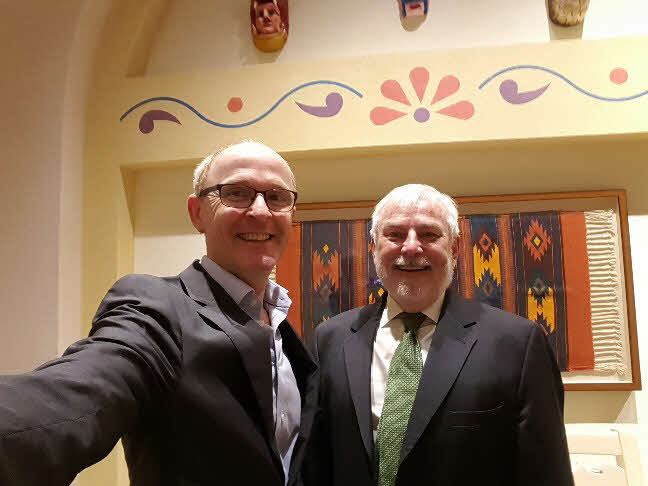
This interview with Frank Parth was recorded at the 2015 PMI Global Congress in Orlando, Florida. We discuss his paper and presentation "Successful Projects Depend on the Business". Here is the paper's abstract:
This paper looks at the literature on successful critical projects and examines the impact of decision making on project success. When are the most critical decisions made? Who makes them? Where are the sensitive areas that can have a huge impact on project success? Research in this area shows that the only part of the effort where traditional project management approaches makes sense is in the later stages, the engineering and EPC stages. The earlier stages require a different approach to ensure success.
While all projects are dependent on decisions made outside the project, large projects are particularly susceptible to this because of the increased number of stakeholders and increase complexity. This paper will focus on the pre-project decision process for large construction, engineering, and infrastructure projects. We will examine how these projects are most effectively divided into several stages and compare the approaches promulgated by both academic research as well as by private industry. They are all consistent with each other in where the critical decision points are.
We will examine those critical points, the data needed to receive a “go” decision, and who should be involved in those decisions. We will see that the data needs to be increasingly complete and accurate the later in the life cycle the decision is made. Giving the engineers and the contractors bad data will ensure cost and schedule overruns as well as claims. Yet the most critical decisions are done when we have the least amount of accurate data, before the project managers ever get involved.
We will look at four areas and provide recommendations for the project manager at the end:
The business environment
Current research
Approaches to assessing the adequacy of the early planning